


Giới thiệu hoạt động học ngoại ngữ, tần suất thực hiện và lý do bắt đầu.
Mô tả trải nghiệm làm trợ giảng, giao tiếp với giáo viên bản ngữ và sử dụng tiếng Anh trong thực tế.
Giải thích cách môi trường sử dụng ngôn ngữ thường xuyên giúp cải thiện phát âm, độ trôi chảy và sự tự tin.
Describe a thing you did to learn another language | Bài mẫu kèm từ vựng
“Describe a thing you did to learn another language” thuộc nhóm chủ đề “Work/ study (công việc/ học tập)” là đề bài quan trọng trong bài thi nói học thuật như IELTS Speaking Part 2. Bài viết dưới đây sẽ gợi ý bài mẫu cho chủ đề “Describe a thing you did to learn another language” cùng những dạng câu hỏi thường gặp và hướng dẫn trả lời mạch lạc, trôi chảy cho chủ đề này.
Key takeaways
Bài nói mẫu cho chủ đề “Describe something you do to learn a foreign language” tập trung mô tả một hoạt động giúp bạn cải thiện ngoại ngữ, bao gồm cách thực hiện, tần suất và lý do bắt đầu. Bài nói khai thác trải nghiệm làm trợ giảng tại trung tâm tiếng Anh để làm rõ cách vận dụng kiến thức vào thực tế và phát triển kỹ năng ngôn ngữ.
Thông qua việc kết hợp giữa mô tả hoạt động, chia sẻ động lực cá nhân và giải thích hiệu quả của phương pháp học, người học có thể rèn luyện cách trình bày mạch lạc, vận dụng từ vựng về học ngoại ngữ và môi trường làm việc, đồng thời thể hiện sự tiến bộ và tự tin trong IELTS Speaking Part 2.
You should say:
|
Bài mẫu chủ đề Describe a thing you did to learn another language
As you know, English is a compulsory subject in Vietnam and every Vietnamese child has to study English from primary school. Learning a foreign language at an early age was a huge challenge for me. I have to admit that I felt like such an English dummy back then because I couldn't make heads nor tails of any grammar theory. If I recall correctly, the situation got worse when I needed to pass my 7th grade final English exam. Most of the questions were about grammar but I literally forgot everything I knew about it. Fortunately, just 2 weeks right before D-day, I went online and found an interesting study method called “Mind Mapping”, a technique that can help you to cram knowledge in a short period by using colorful graphs. After finding out about Mind Mapping, I decided to apply it immediately, and you know, this method was a true life-saver. By organizing my lesson in different colors and using drawings to illustrate the vocabulary and grammar, I could memorize things faster and revise my notes easier. In the end, I passed the test with flying colors and since then English was no longer been a nightmare to me. I honestly was so proud of myself and have been using this method to learn other subjects since then.
Context (Bối cảnh) | Là một thử thách vì không hiểu lý thuyết Bài kiểm tra cuối kì năm lớp 7 |
Content (Nội dung) | Phương pháp học ‘Mind mapping’ (sơ đồ tư duy) -> vị cứu tinh Sử dụng màu sắc và hình vẽ minh hoạ Ghi nhớ và ôn tập nhanh hơn |
Conclusion (Kết thúc) | Đạt kết quả tốt, không còn sợ tiếng Anh Tự hào về bản thân |

Context | English is a compulsory subject in Vietnam and every Vietnamese child has to study English from primary school. Learning a foreign language at an early age was a huge challenge for me. I have to admit that I felt like such an English dummy back then because I couldn't make heads nor tails of any grammar theory. If I recall correctly, the situation got worse when I needed to pass my 7th grade final English exam. Most of the questions were about grammar but I literally forgot everything I knew about it. |
Content | Fortunately, just 2 weeks right before D-day, I went online and found an interesting study method called “Mind Mapping”, a technique that can help you to cram knowledge in a short period by using colorful graphs. After finding out about Mind Mapping, I decided to apply it immediately, and you know, this method was a true life-saver. By organizing my lesson in different colors and using drawings to illustrate the vocabulary and grammar, I could memorize things faster and revise my notes easier. |
Conclusion | In the end, I passed the test with flying colors and since then English was no longer been a nightmare to me. I honestly was so proud of myself and have been using this method to learn other subjects since then. |
Từ vựng chủ đề Describe a thing you did to learn another language
dummy (n) /ˈdʌm.i/ : người ngu ngốc
I'm the only English dummy in the class
make heads nor tails (idiom) : không hiểu điều gì đó
I can't make heads nor tails of what my mom has been yelling at me
D-day (n) /ˈdiː.deɪ/ : ngày quan trọng mà sự kiện gì đó xảy ra
I get nervous as D-day is coming
cram (v) /kræm/ : học nhồi nhét
I had to cram 10 pages of history lessons for the test last week
a life saver : vị cứu tinh
My mom was a true lifesaver when I learnt how to cook
pass the test with flying colors (idiom) : đạt kết quả tốt trong kì thi
My sister passed the test with flying colors thanks to her hard work
Describe something that you are interested to learn or improve
IELTS Speaking Part 3 Sample
1. What difficulties do people face when learning a language?
Maybe it's how to pronounce the language exactly. For example, while English has voiced and unvoiced sounds, Vietnamese doesn't so it is a challenge for beginners to “make" sounds that don't exist in their mother tongue. Other than that, learning grammar also takes lots of time.
mother tongue : ngôn ngữ mẹ đẻ
She can speak English but her mother tongue is Chinese
2. Do you think language learning is important? Why?
Definitely. Language is key to building relationships so the more languages you know, the more power you hold. Besides, learning a language can improve memory, concentration and even your confidence, because you have to practice speaking the language.
Tác giả hy vọng thông qua bài viết, người học đã nắm được cách triển khai ý cho đề bài Describe a thing you did to learn another language.
Bài mở rộng
Describe something you do to learn a foreign language.
You should say:
what it is
how often you do it
how you started doing it
and explain why you think it is effective for learning a foreign language.
Tham khảo: Tổng hợp bài mẫu IELTS Speaking 2026
Phân tích đề bài
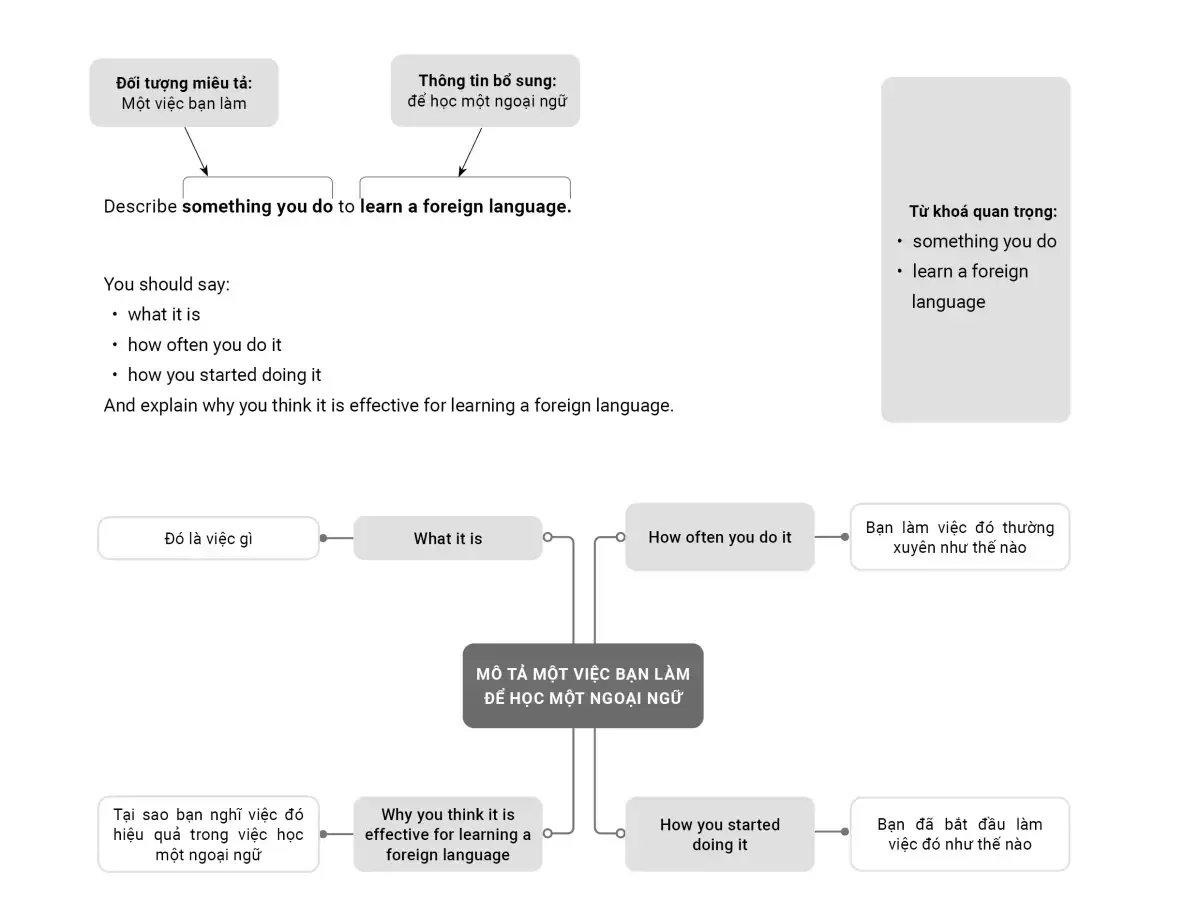
Lên ý tưởng & Ghi chú
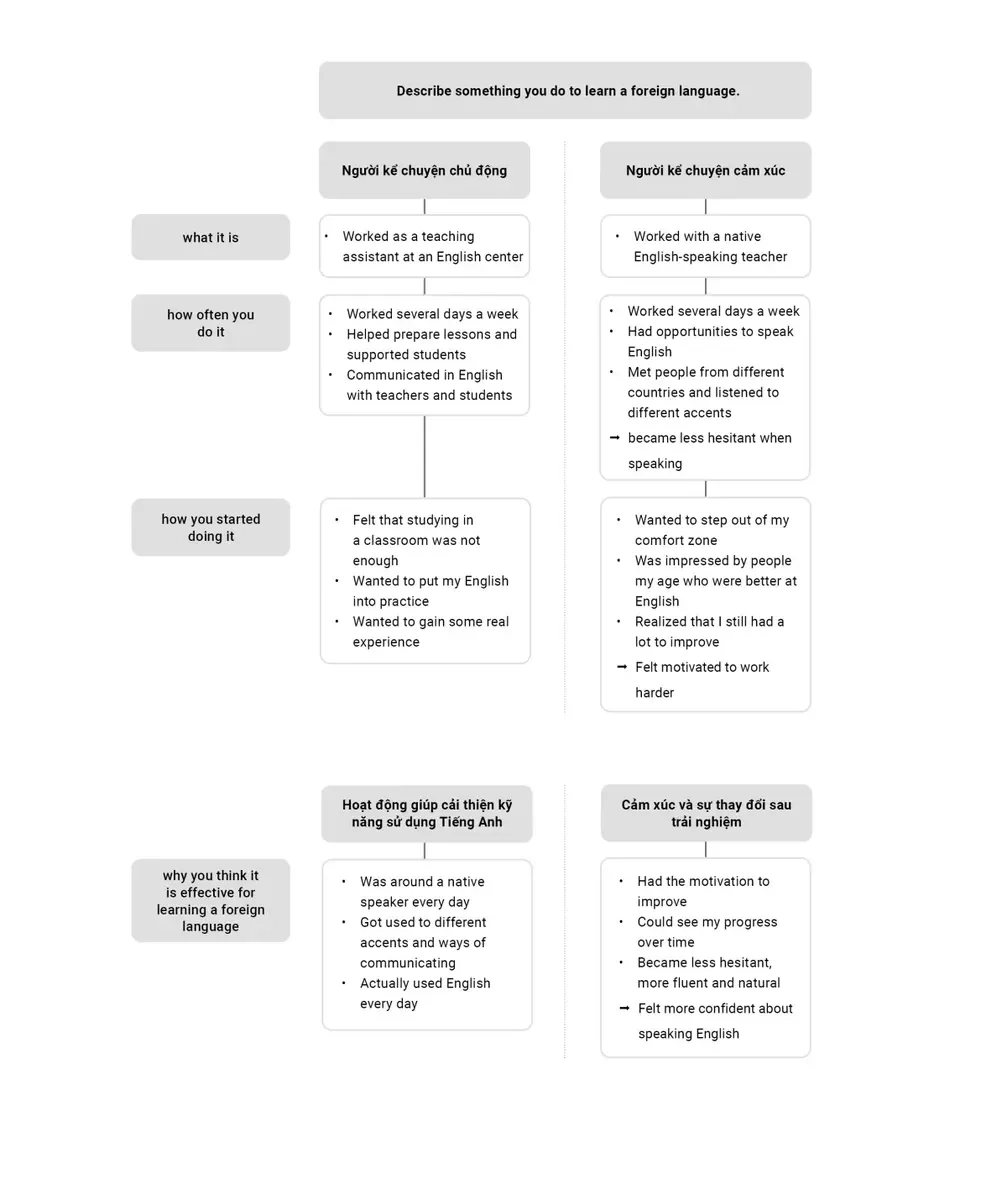
Bài mẫu
Simple answer
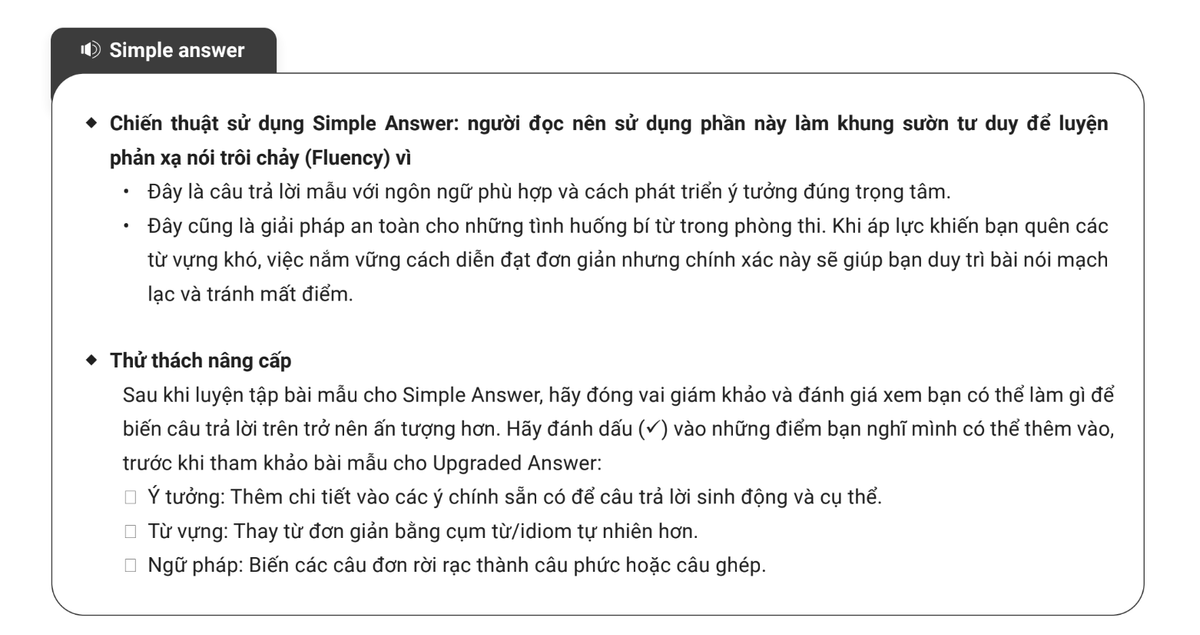
Người đọc có thể kết hợp các phiên bản tùy ý để tạo ra nhiều bài mẫu Part 2 khác nhau từ cùng một đề.
Mở bài và Thân bài | Ver. 1 Người kể chuyện chủ động | Ver. 2 Người kể chuyện cảm xúc |
|---|---|---|
One thing I did to improve my English was working as a teaching assistant at an English center when I was in my second year of university. I worked alongside a native English-speaking teacher, so I had a lot of chances to listen to and use English in a real environment. I usually worked several days a week, helping the teacher prepare lessons, supporting students, and communicating with both teachers and students in English. I started doing this because I felt that simply sitting in a classroom at university was not enough. I wanted to put my English into practice and gain some real experience. | One thing I did to improve my English was working as a teaching assistant at an English center when I was in my second year of university. I worked with a native English-speaking teacher, and the experience really pushed me to improve myself. I started doing this because I felt that studying at university alone wasn't enough. I wanted to step out of my comfort zone and actually use English in real life. I was also impressed by some members who were around my age but were much better at English and much more enthusiastic about learning. Seeing them made me realize that I still had a lot to improve, and that gave me the motivation to work harder. I worked there several days a week and had to communicate in English with teachers and students. I also met people from different countries, so I had more opportunities to speak English and listen to different accents. Little by little, I became less hesitant when speaking. |
Kết bài | Ver. 1 Hoạt động giúp cải thiện kỹ năng sử dụng Tiếng Anh | Ver. 2 Cảm xúc và sự thay đổi sau trải nghiệm |
|---|---|---|
What helped me the most was being around a native speaker every day. I could listen to their pronunciation and accent and gradually make my own English sound more natural. I also met people from different countries, so I got used to different accents and ways of communicating. I think it was effective because I wasn't just studying English from books. I was actually using it every day. Over time, I became much more comfortable and natural when speaking English. | I think it was effective because I had both the motivation and the environment to improve. I could see my progress over time, especially in the way I spoke. My English gradually became more fluent and natural. |
Upgraded answer
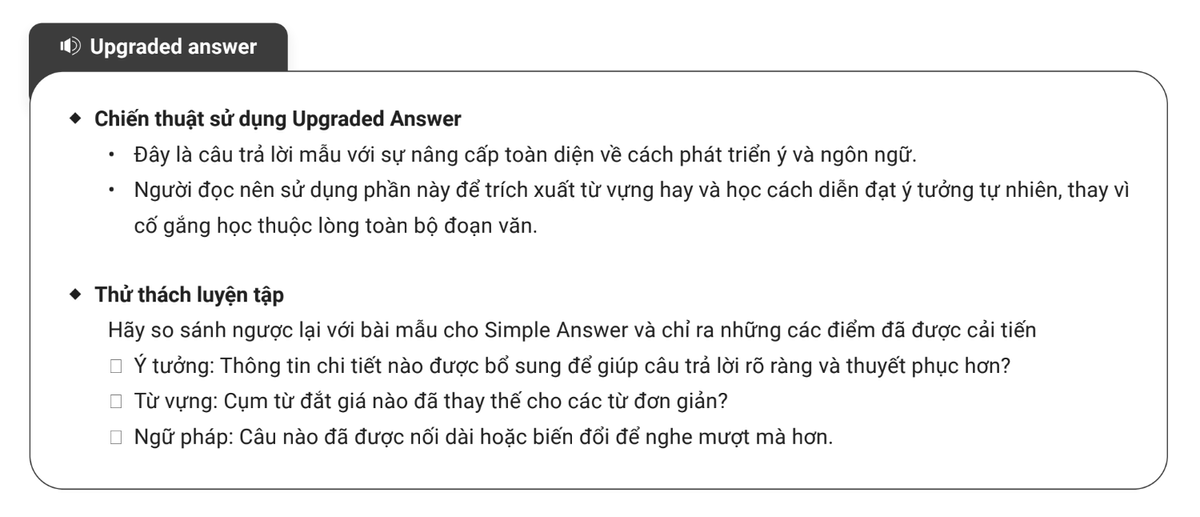
Người đọc có thể kết hợp các phiên bản tùy ý để tạo ra nhiều bài mẫu Part 2 khác nhau từ cùng một đề.
Mở bài và Thân bài | Ver. 1 Người kể chuyện chủ động | Ver. 2 Người kể chuyện cảm xúc |
|---|---|---|
One thing I did to improve my English was working as a teaching assistant at an English center when I was in my second year of university. I worked alongside a native English-speaking teacher, so I was constantly exposed to natural pronunciation, expressions, and different ways of communicating. I usually worked several days a week, helping the teacher prepare lessons, supporting students, and communicating with them in English. To be honest, I felt that just sitting in a university classroom wasn't enough for me. I wanted to step outside the classroom and put what I had learned into practice. At the same time, I wanted to gain some hands-on experience and sharpen my English skills. | One thing I did to improve my English was working as a teaching assistant at an English center when I was in my second year of university. I worked with a native English-speaking teacher, and looking back, that experience really pushed me to step up my game. I decided to take the job because I felt that studying at university alone wasn't enough. I wanted to put myself in a more challenging environment and see how well I could actually use English in real life. What really struck me, though, was seeing some colleagues who were around my age but were far more fluent and much more enthusiastic about learning. Instead of feeling discouraged, I took it as a wake-up call. It made me realize that if I wanted to improve, I had to put in more effort. I worked there several days a week, communicating with teachers and students and meeting people from different countries. Being surrounded by English on a regular basis gradually helped me loosen up when speaking. I became less worried about making mistakes and more willing to speak up and express myself. |
Kết bài | Ver. 1 Hoạt động giúp cải thiện kỹ năng sử dụng Tiếng Anh | Ver. 2 Cảm xúc và sự thay đổi sau trải nghiệm |
|---|---|---|
What made the biggest difference was working closely with a native speaker. I could pick up their pronunciation and accent simply by listening to them every day. I also got to meet people from different countries, so I gradually became more comfortable with different accents and speaking styles. Looking back, I think it was effective because I was learning by doing rather than just memorizing things from textbooks. Little by little, I became more fluent, and my English started to sound much more natural. Most importantly, I was able to build up my confidence through constant practice. | In the end, I think the experience was effective because it gave me both the motivation and the opportunity to improve. I could actually see myself making progress, especially in terms of fluency and pronunciation. My English gradually became more natural, and I felt much more confident using it in everyday situations. |
Lọc và phân tích từ vựng
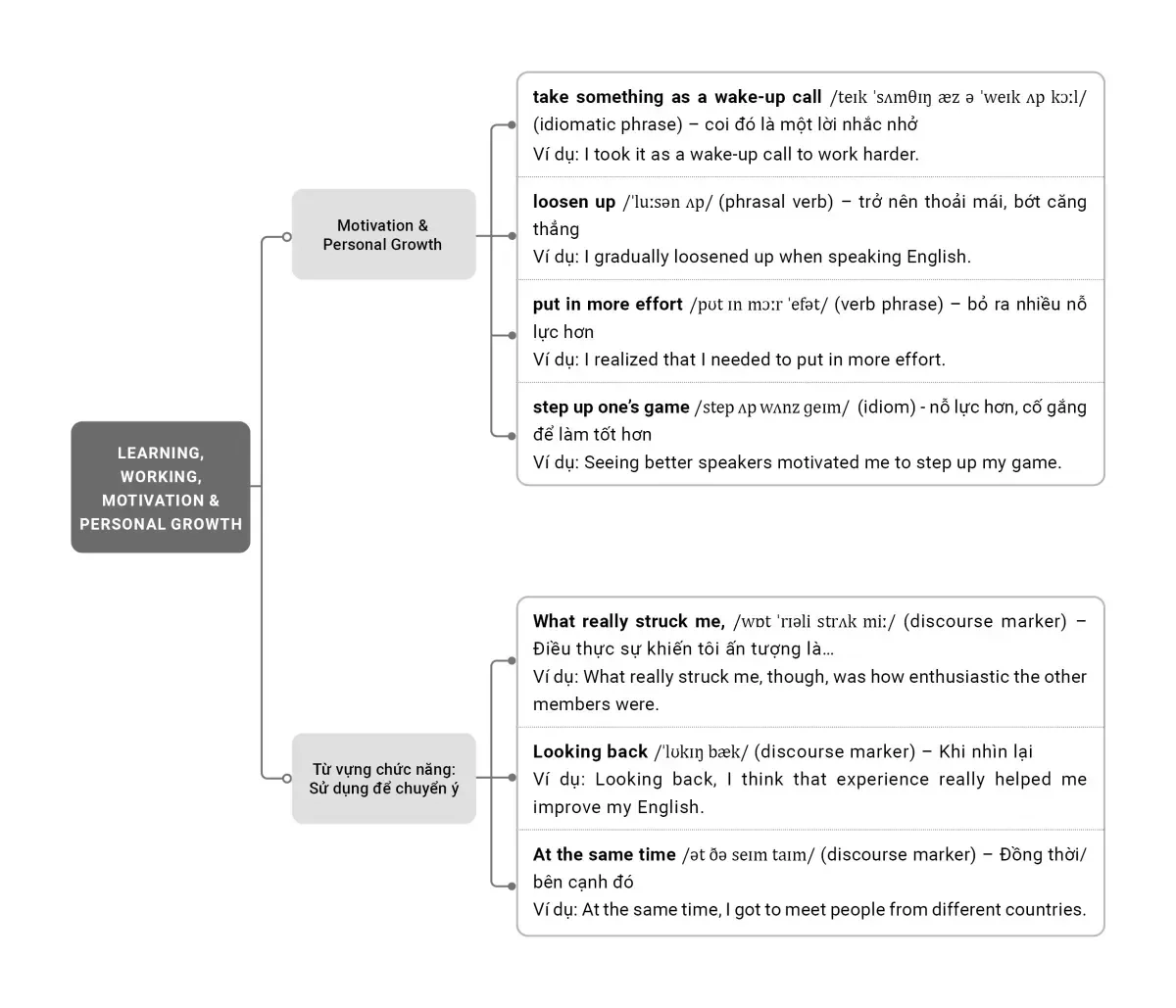
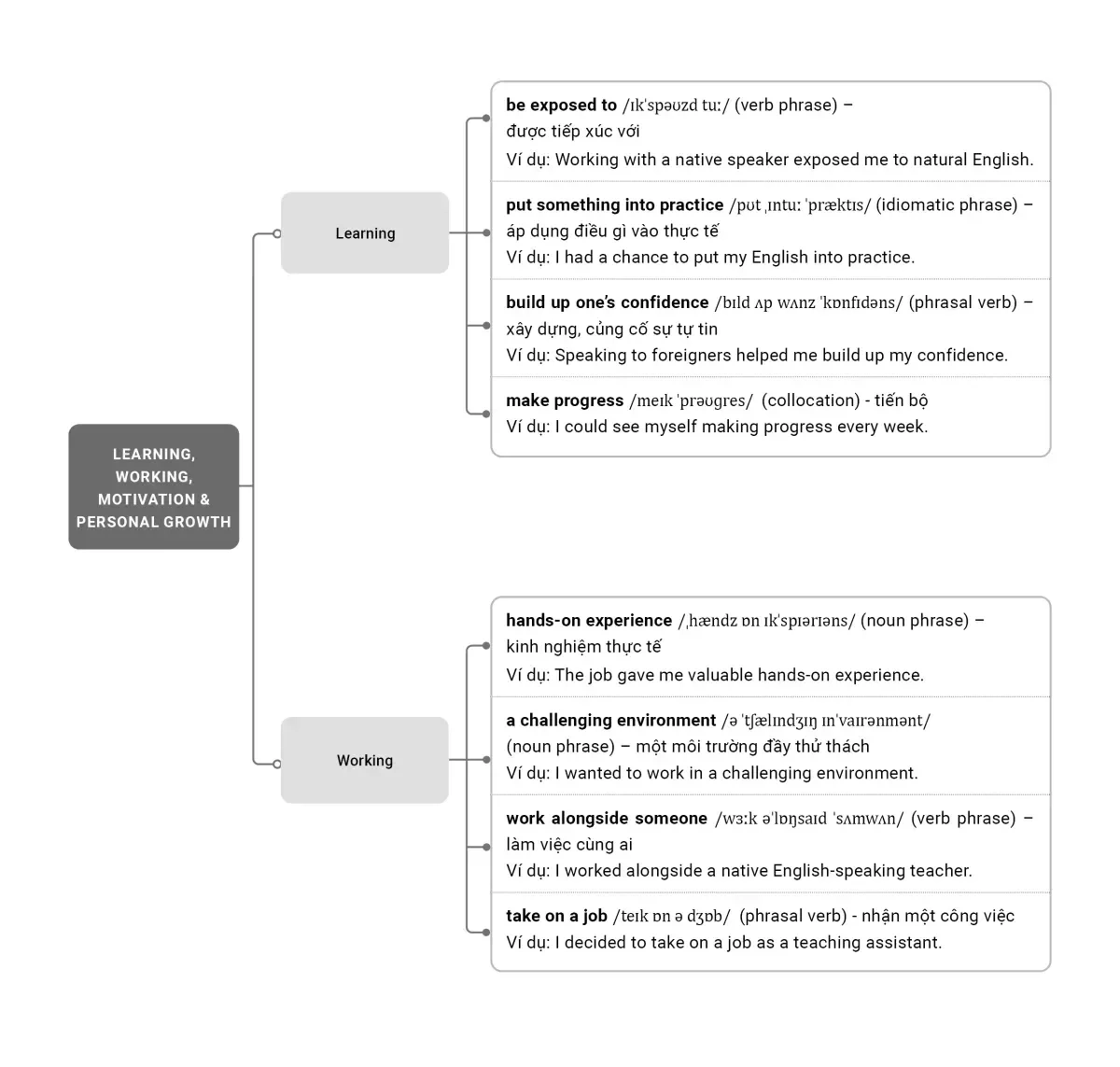
Nhật ký Từ vựng & Ý tưởng
Ghi chú sau khi luyện tập nói về chủ đề trên
Từ vựng/Ý tưởng (Chọn các từ vựng/ý tưởng mà bạn tâm đắc nhất) | Kỉ niệm cá nhân (Gán các từ vựng/ý tưởng đã chọn với kỉ niệm của bản thân) |
|---|---|
Ví dụ: take something as a wake-up call → coi đó là một lời nhắc nhở | Người đọc tự đặt các câu hỏi cho bản thân, ví dụ:
→ I took seeing other students who were much better at English as a wake-up call. It made me realize that I needed to put in more effort and step up my game. |
Khoảng trống diễn đạt | Giải pháp |
|---|---|
Ví dụ: | Ví dụ: Sử dụng AI với câu lệnh: |
Người đọc có thể tìm từ vựng bằng từ điển ZIM Dictionary.
Các lỗi ngữ pháp thường gặp
Lỗi thường gặp: I was constantly exposed with natural pronunciation, expressions, and different ways of communicating.
Cách dùng đúng:
I was constantly exposed to natural pronunciation, expressions, and different ways of communicating.
Lý do sai:
Người học thường có thói quen dịch word-for-word cụm “tiếp xúc với” → với = with
Tuy nhiên, “be exposed to something” là một cụm cố định, không thể chọn giới từ bằng cách dịch từng từ sang tiếng Việt. → I was constantly exposed to natural pronunciation…
Lỗi thường gặp: I wanted to put me in a more challenging environment…
Cách dùng đúng:
I wanted to put myself in a more challenging environment
Lý do sai:
Đối với cấu trúc “put + someone + in + something,” để tự nhiên hơn, phần tân ngữ ở đây cần dùng đại từ phản thân. → I wanted to put myself in…
Lỗi thường gặp: I became less worried about making mistakes and be more willing to speak up and express myself.
Cách dùng đúng:
I became less worried about making mistakes and more willing to speak up and express myself.
Lý do sai:
Trong câu, động từ “became” đã đóng vai trò là động từ chính và có thể đi với hai tính từ/cụm tính từ được nối bằng “and”. Đôi khi, khi quá tập trung, người nói có thể vô tình thêm “be” vào trước tính từ thứ 2 được liệt kê.
Sau “and”, không cần dùng thêm “be” vì “become” đã được dùng chung cho cả hai vế. → I became less worried about making mistakes and more willing to…
Các chủ đề liên quan
Chủ đề liên quan để sử dụng từ vựng và ý tưởng:
Describe something you do to improve your English
(Liên quan đến language learning, real-life practice, exposure to English, building confidence)Describe a useful skill you learned
(Liên quan đến hands-on experience, putting knowledge into practice, making progress, putting in more effort)Describe a difficult thing you learned to do
(Liên quan đến a challenging environment, making mistakes, building up one's confidence, putting in more effort, stepping up one's game)
Từ vựng có thể ứng dụng: be exposed to, put something into practice, build up one's confidence, make progress, hands-on experience, a challenging environment, work alongside someone, take on a job, take something as a wake-up call,...
Ý tưởng
Tôi đã nhận một công việc trợ giảng tại một trung tâm tiếng Anh khi đang học năm hai đại học để có nhiều cơ hội được tiếp xúc với tiếng Anh trong môi trường thực tế.
Tôi bắt đầu công việc này vì cảm thấy việc chỉ học tiếng Anh ở trường đại học là chưa đủ. Tôi muốn áp dụng kiến thức của mình vào thực tế và có thêm kinh nghiệm thực hành.
Ban đầu, đây là một môi trường khá thử thách vì tôi phải thường xuyên sử dụng tiếng Anh và giao tiếp với nhiều người khác nhau.
Làm việc cùng giáo viên bản ngữ giúp tôi được tiếp xúc với cách phát âm, ngữ điệu và cách sử dụng tiếng Anh tự nhiên hằng ngày.
Tôi cũng gặp những người bằng tuổi mình nhưng giỏi tiếng Anh hơn và có thái độ học tập rất tích cực. Tôi coi đó như một lời cảnh tỉnh và nhận ra rằng mình vẫn còn rất nhiều điều cần cải thiện.
Điều đó thúc đẩy tôi nỗ lực nhiều hơn và nâng cao trình độ của bản thân.
Ban đầu, tôi khá ngại nói, nhưng sau một thời gian, tôi dần thả lỏng hơn và xây dựng được sự tự tin khi giao tiếp.
Tôi có thể thấy sự tiến bộ của mình theo thời gian, đặc biệt là khả năng nói tiếng Anh ngày càng trôi chảy và tự nhiên hơn.
Tôi nghĩ đây là một cách học hiệu quả vì tôi không chỉ học lý thuyết mà còn thực sự sử dụng tiếng Anh trong những tình huống thực tế mỗi ngày.
Trên đây là phân tích đề Describe something you do to learn a foreign language, giúp người học hình dung cách triển khai ý tưởng và sử dụng ngôn ngữ học thuật hiệu quả. Hy vọng những phân tích và gợi ý trong bài viết sẽ hỗ trợ người học nâng cao kỹ năng viết, từ đó tự tin hơn khi bước vào phòng thi. Nếu người học mong muốn nâng cao kỹ năng IELTS với lộ trình học tập cá nhân hóa, Hệ thống giáo dục ZIM cung cấp các khóa học luyện thi IELTS cam kết đầu ra 4 kỹ năng, giúp tiết kiệm đến 80% thời gian tự học. Để được tư vấn chi tiết, liên hệ hotline 1900-2833 (nhánh số 1) hoặc truy cập Khóa học IELTS.
Bình luận - Hỏi đáp