


Chủ đề IELTS Speaking Part 1: School Rules.
Bài mẫu cho nhóm câu hỏi:
Did your school have many rules?
Importance of school rules?
Rules you disliked?
Should rules be stricter today?
Nhóm từ vựng: Topic Vocabulary: Rules & discipline, Common rules, School environment, và Attitudes.
Bài mẫu IELTS Speaking Part 1 Topic “School Rules” kèm từ vựng
Trong bài viết này, tác giả sẽ gợi ý bài mẫu cho Topic “School Rules” và phân tích các từ vựng ghi điểm cho phần thi IELTS Speaking Part 1.
Key takeaways
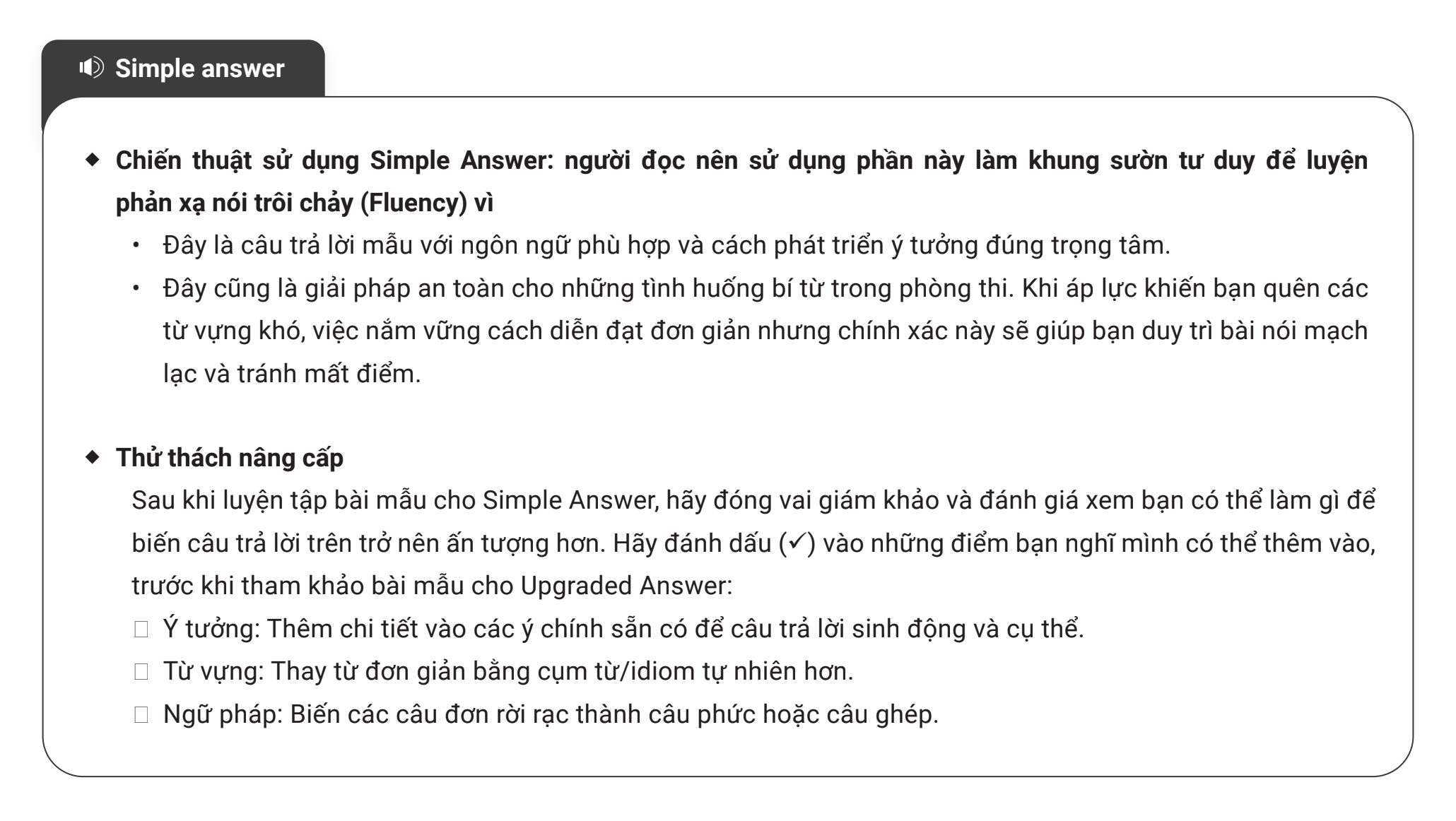
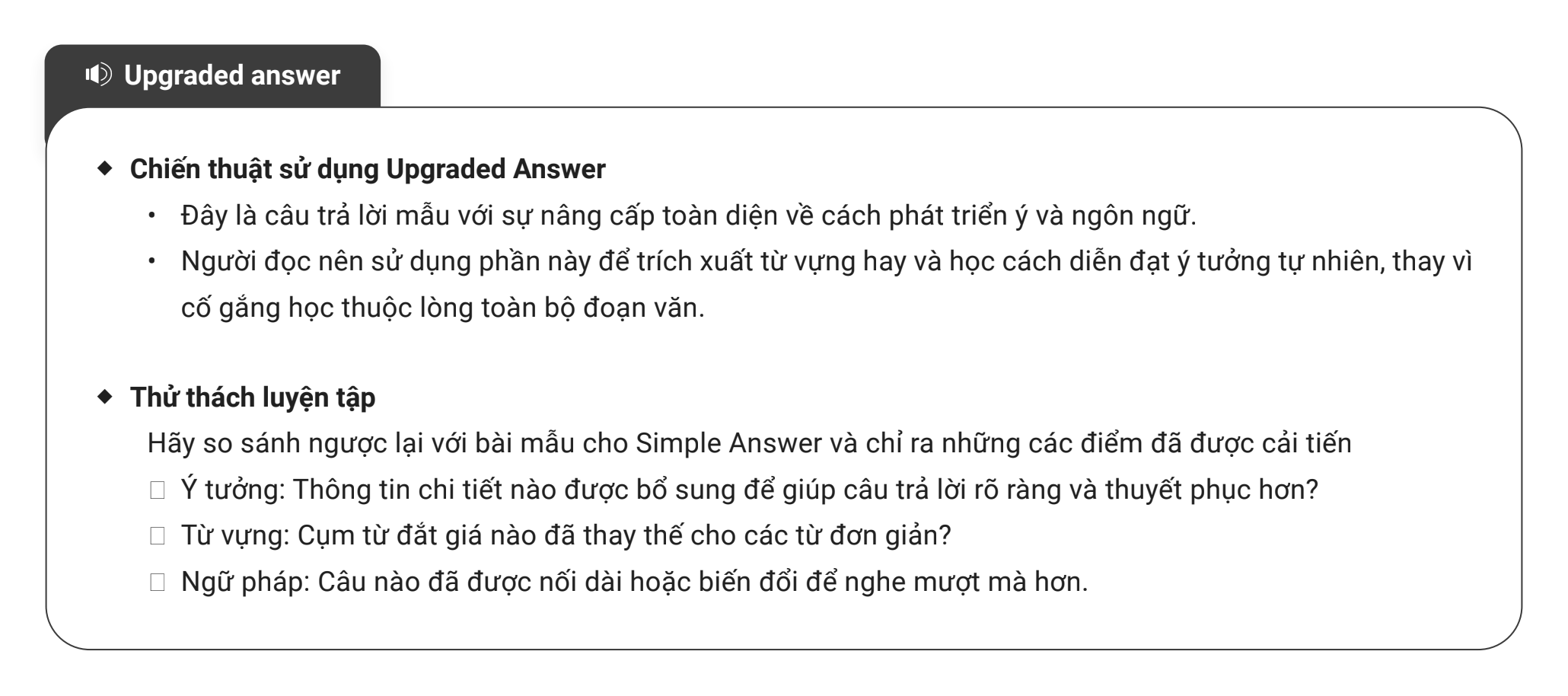
Bài viết sau đây sẽ cung cấp các câu trả lời mẫu theo khung sườn tư duy (Simple Answer) cùng các thử thách nâng cấp (Upgraded Answer) về cả ý tưởng, từ vựng và ngữ pháp để người học lựa chọn được câu trả lời phù hợp với bản thân, sẵn sàng cho các tình huống trong phòng thi. Bài phân tích này sẽ dẫn dắt người học đi qua các câu trả lời mẫu IELTS Speaking Part 1 Topic School Rules, từ những quy định phổ biến như “punctuality” (đúng giờ), “uniforms” (đồng phục) đến các góc nhìn sâu sắc hơn về tính hiệu quả của kỷ luật như “self-discipline” (tự giác) hay những tình huống quy định có thể “backfire” (phản tác dụng), giúp người học chinh phục giám khảo bằng sự mạch lạc và ngôn ngữ tự nhiên.
IELTS Speaking Part 1 Topic “School Rules” - Sample Answers
Simple Answer
1. Did your school have many rules?
If yes: Yes, it did. We had rules about uniforms, being on time, and behaviour in class. Teachers were quite strict about them. | If no: Not really. My school had some basic rules, but it wasn’t too strict. Students had more freedom in daily activities. |
Dịch nghĩa: Có. Trường em có nhiều quy định về đồng phục, đi học đúng giờ và thái độ trong lớp. Thầy cô cũng khá nghiêm về các quy định đó. | Dịch nghĩa: Không hẳn. Trường em có vài quy định cơ bản nhưng không quá nghiêm. Học sinh có nhiều tự do hơn trong sinh hoạt hằng ngày. |
2. Do you think school rules are important? Why or why not?
If yes (important): Yes, I think they are important. Rules help students stay disciplined and keep the school safe. They also make classes more organised. | If no (not always): Sometimes, but not all rules are necessary. Some rules can be too strict and make students feel stressed. Schools should have rules, but they should be reasonable. |
Dịch nghĩa: Có, em nghĩ quy định rất quan trọng. Quy định giúp học sinh có kỷ luật và giúp trường học an toàn hơn. Nó cũng làm lớp học trật tự hơn. | Dịch nghĩa: Đôi khi có, nhưng không phải quy định nào cũng cần. Một số quy định quá nghiêm có thể làm học sinh căng thẳng. Trường nên có quy định nhưng phải hợp lý. |
3. Were there any school rules that you disliked?
If yes (you disliked some): Yes, I disliked some rules, like strict haircut rules or being punished for small mistakes. It felt unfair sometimes. | If no (you were okay with them): Not really. Most rules were fine and helped students behave better. I understood why the school had them. |
Dịch nghĩa: Có. Em không thích vài quy định như bắt tóc tai quá nghiêm hoặc bị phạt vì lỗi nhỏ. Đôi khi em thấy không công bằng. | Dịch nghĩa: Không hẳn. Hầu hết quy định đều ổn và giúp học sinh cư xử tốt hơn. Em hiểu vì sao trường đặt ra những quy định đó. |
4. Do you think schools today should have stricter rules than in the past?
If yes (stricter): Maybe yes. Students today have more distractions, like phones and social media. Stricter rules can help them focus on studying. | If no: I don’t think so. Rules should be clear, but too many strict rules can cause pressure. Schools should also teach students responsibility, not only punish them. |
Dịch nghĩa: Maybe yes. Students today have more distractions, like phones and social media. Stricter rules can help them focus on studying. | Dịch nghĩa: Em không nghĩ vậy. Quy định nên rõ ràng, nhưng quá nghiêm sẽ tạo áp lực. Trường cũng nên dạy học sinh trách nhiệm chứ không chỉ phạt. |
Tham khảo: Tổng hợp bài mẫu IELTS Speaking 2026
Upgraded answer
1. Did your school have many rules?
If yes: Yeah, it did, quite a few. We had rules about uniforms, punctuality, and behaviour in class, and teachers didn’t really let anything slide. Honestly, it kept things organised, but sometimes it felt a bit strict. Overall though, it wasn’t too bad. | If no: Not really, to be honest. We had a few basic rules, but the school wasn’t strict about every little thing. Students had more freedom, as long as we behaved and did our work. It felt more relaxed. |
Dịch nghĩa: Dạ có, khá nhiều. Trường em có quy định về đồng phục, đi học đúng giờ và thái độ trong lớp, thầy cô cũng không “dễ bỏ qua” lỗi. Thật ra nó giúp mọi thứ trật tự hơn, nhưng đôi lúc hơi nghiêm. Nhìn chung thì vẫn ổn. | Dịch nghĩa: Thật ra thì không nhiều. Trường em có vài quy định cơ bản nhưng không quá soi từng chuyện nhỏ. Học sinh được thoải mái hơn miễn là cư xử đúng và làm bài đầy đủ. Cảm giác khá dễ chịu. |
2. Do you think school rules are important? Why or why not?
If yes (important): Yes, I’d say they’re important. Without rules, things can get out of hand, especially in big schools. Rules help keep students safe and make lessons run smoothly. That said, they should still be reasonable, not overly strict. | If no (not always): Well, rules matter, but I don’t think every rule is necessary. Some rules are too strict and can make students feel pressured for no good reason. In my opinion, schools should focus more on teaching responsibility than just punishing. |
Dịch nghĩa: Có, em nghĩ là quan trọng. Không có quy định thì mọi thứ dễ “vỡ trận”, nhất là trường đông. Quy định giúp an toàn hơn và giờ học trôi chảy hơn. Tuy vậy, quy định vẫn nên hợp lý chứ không quá khắt khe. | Dịch nghĩa: Well, rules matter, but I don’t think every rule is necessary. Some rules are too strict and can make students feel pressured for no good reason. In my opinion, schools should focus more on teaching responsibility than just punishing. |
3. Were there any school rules that you disliked?
If yes (you disliked some): Yeah, definitely. I didn’t like rules about haircuts or small things like socks and accessories—it felt a bit too controlling. Sometimes students got punished for minor mistakes, which was really annoying. I think the school could’ve been more flexible. | If no (you were okay with them): Not really. Most rules seemed fair, and they helped students behave better. Even if I didn’t love every rule, I could see the point of them. They basically kept things in order. |
Dịch nghĩa: Yeah, definitely. I didn’t like rules about haircuts or small things like socks and accessories—it felt a bit too controlling. Sometimes students got punished for minor mistakes, which was really annoying. I think the school could’ve been more flexible. | Dịch nghĩa: Không hẳn. Hầu hết quy định đều khá công bằng và giúp học sinh cư xử tốt hơn. Dù em không thích 100% mọi quy định, em vẫn hiểu mục đích của nó. Nói chung là để giữ trật tự. |
4. Do you think schools today should have stricter rules than in the past?
If yes (stricter): Maybe, yes, to some extent. These days students have more distractions, like phones and social media, so it’s easier to lose focus. Stricter rules, especially about phone use, could help create a better learning environment. Of course, they still need to be fair and clear. | If no: Honestly, I don’t think stricter rules are the answer. Too many strict rules can backfire and make students feel stressed or rebellious. I’d rather schools set clear rules and encourage self-discipline. In the long run, that’s more effective. |
Dịch nghĩa: Có thể là có, ở một mức độ nào đó. Bây giờ học sinh bị xao nhãng nhiều hơn như điện thoại và mạng xã hội nên dễ mất tập trung. Quy định nghiêm hơn, đặc biệt về việc dùng điện thoại, có thể giúp môi trường học tốt hơn. Tất nhiên vẫn phải công bằng và rõ ràng. | Dịch nghĩa: Honestly, I don’t think stricter rules are the answer. Too many strict rules can backfire and make students feel stressed or rebellious. I’d rather schools set clear rules and encourage self-discipline. In the long run, that’s more effective. |
Phân tích từ vựng
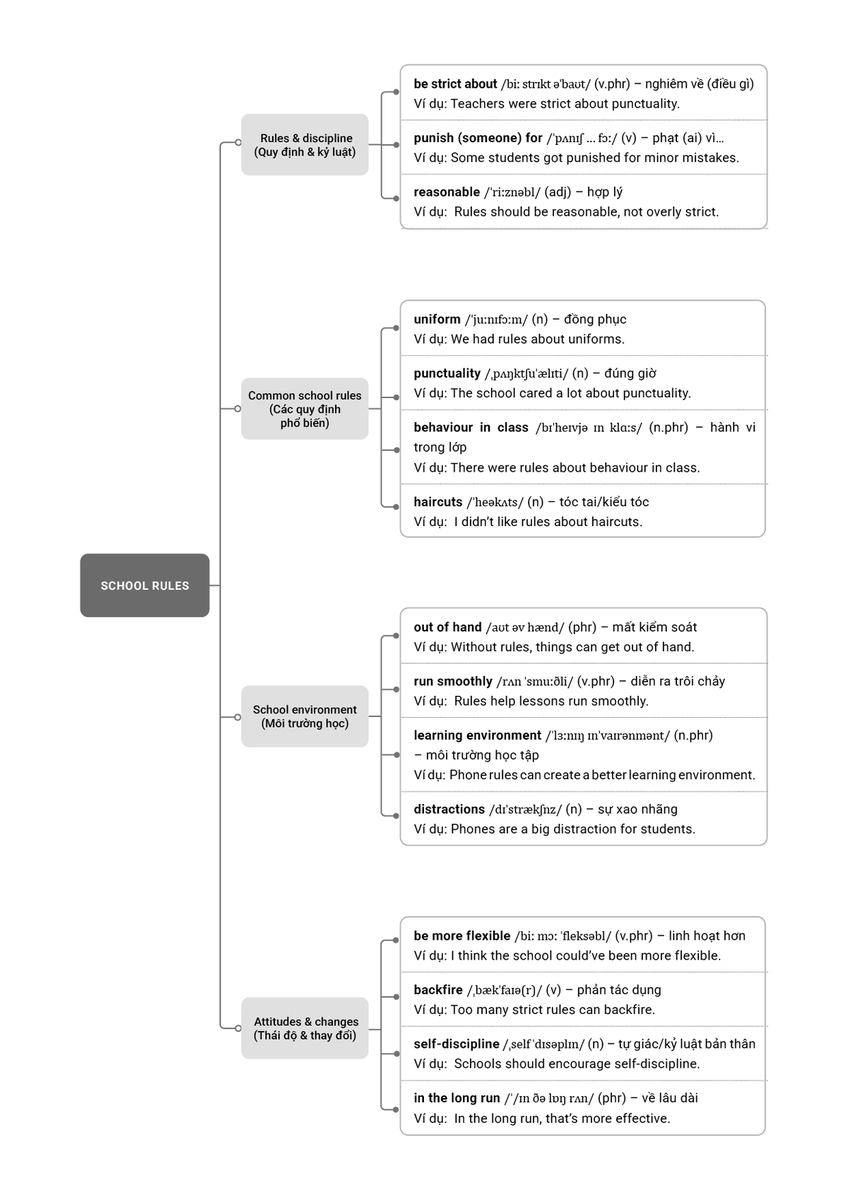
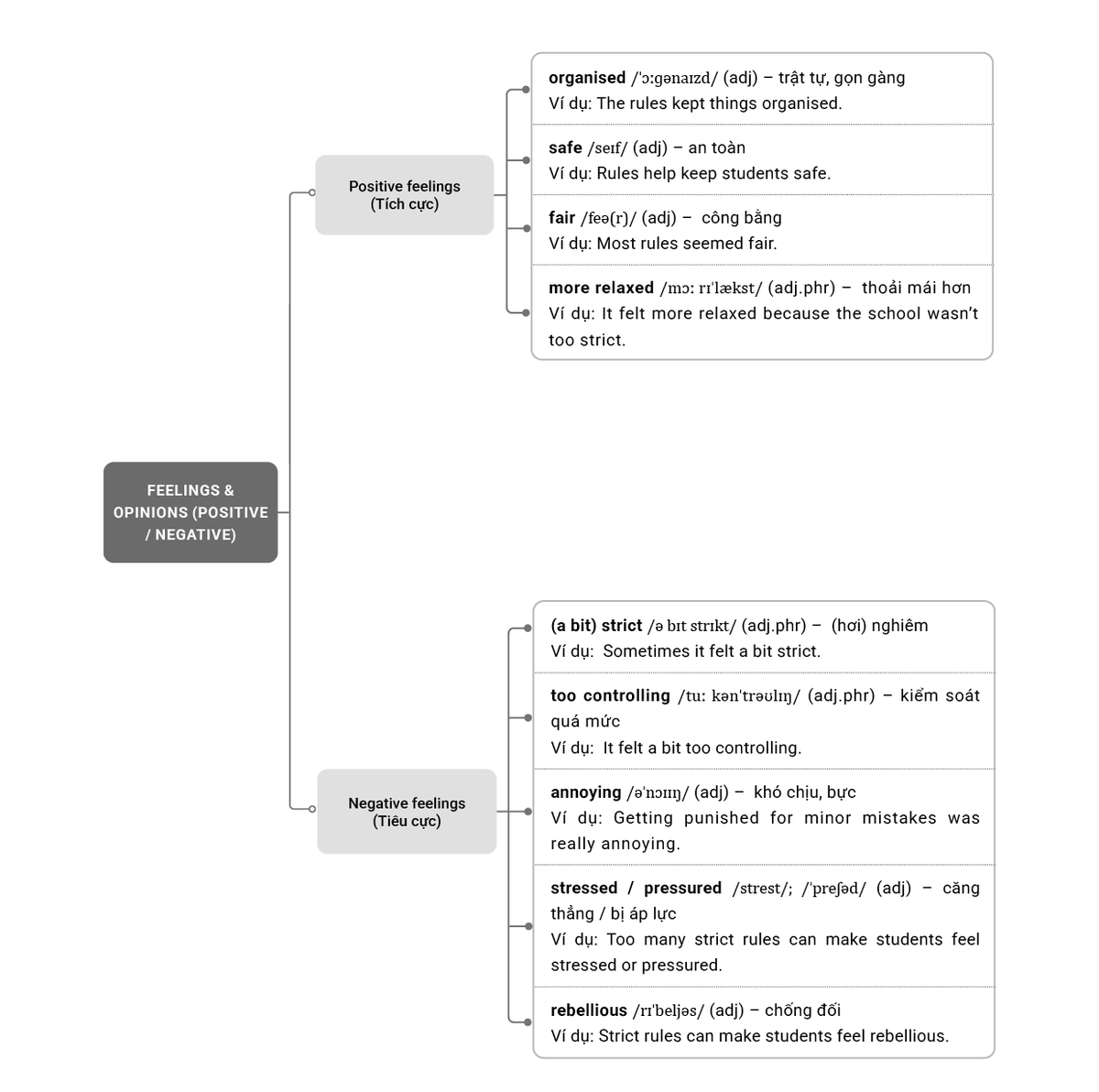
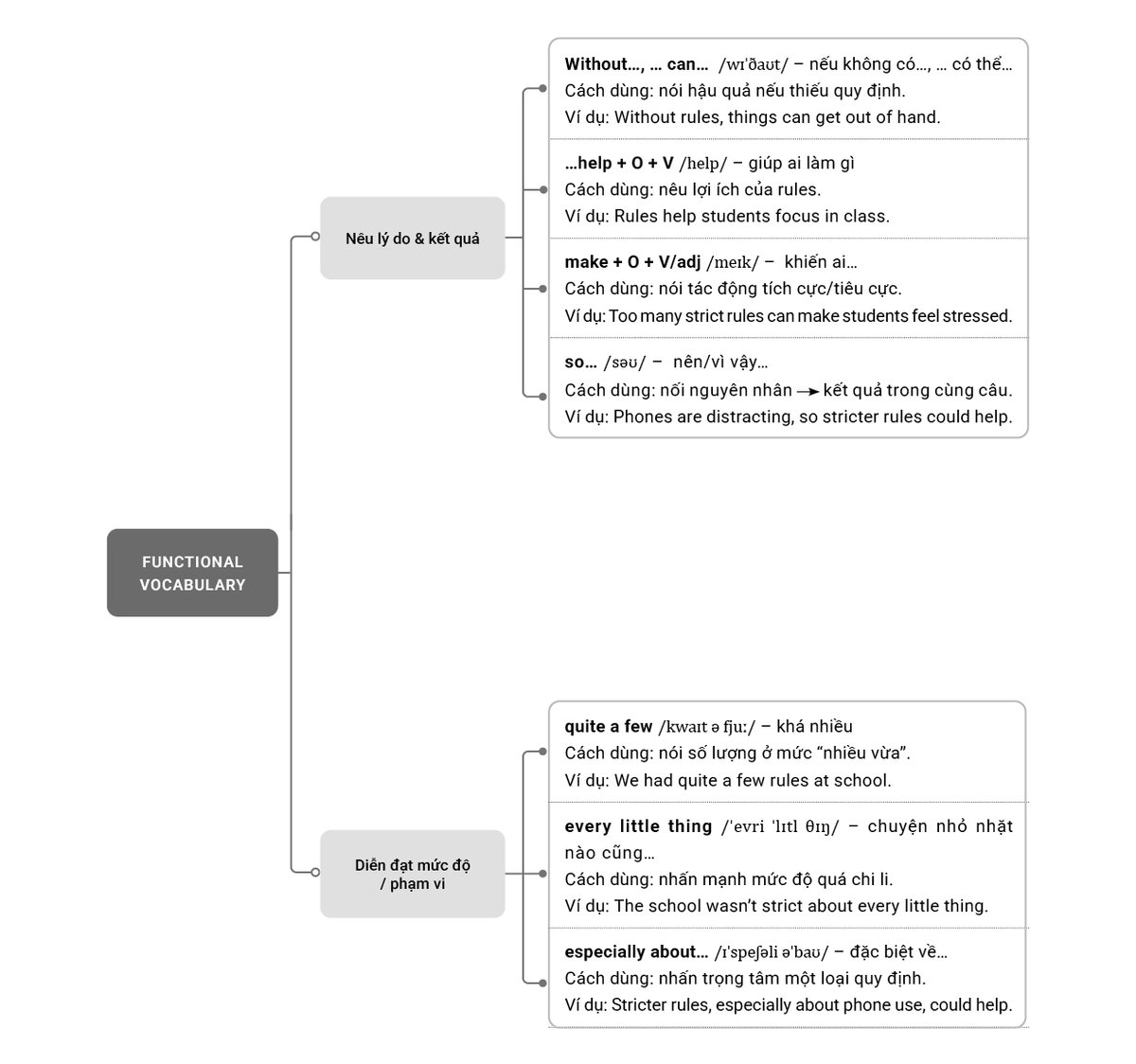
Tham khảo thêm: Tổng hợp từ vựng tiếng Anh về trường học
Nhật ký từ vựng & ý tưởng
Ghi chú sau khi luyện tập nói về chủ đề trên
Từ vựng/Ý tưởng (Chọn các từ vựng/ý tưởng mà bạn tâm đắc nhất) | Kỉ niệm cá nhân (Gán các từ vựng/ý tưởng đã chọn với kỉ niệm của bản thân) |
|---|---|
Ví dụ: self-discipline /ˌself ˈdɪsəplɪn/ – tự giác/kỷ luật bản thân | Người đọc tự đặt các câu hỏi cho bản thân, ví dụ:
→ My school had quite a few rules about uniforms and punctuality, and teachers were really strict about them. I didn’t mind most rules because they kept things organised, but I disliked rules about haircuts—it felt too controlling. These days, I think phone use is a big distraction, so schools need clear rules. That said, overly strict rules can backfire, so it’s better to encourage self-discipline in the long run. |
Khoảng trống diễn đạt (Phần khiến bạn ngập ngừng khi nói về chủ đề trên) | Giải pháp (Giải pháp cho các khoảng trống diễn đạt) |
Ví dụ: Mình muốn nói: “Quy định giúp lớp học trật tự nhưng nếu quá nghiêm thì phản tác dụng,” hoặc “Trường nên dạy tự giác hơn là chỉ phạt,” nhưng mình bí các từ vựng diễn đạt những điều này. | Ví dụ: Dùng từ điển của ZIM để tìm cụm từ cần sử dụng tương ứng hoặc áp dụng từ vựng ở các câu trả lời mẫu trong bài này:
→ Without rules, things can get out of hand, especially in big schools. That said, overly strict rules can backfire and make students stressed. In the long run, it’s better to teach responsibility and encourage self-discipline. |
Người đọc có thể tìm từ vựng bằng từ điển của ZIM: ZIM Dictionary
Các lỗi ngữ pháp thường gặp
1. strict vs strictly (tính từ vs trạng từ)
Lỗi thường gặp: “Teachers were strictly about uniforms.”
→ gạch chân lỗi: strictly
Cách dùng đúng:
strict (adj) + about
strictly (adv) thường đi với V hoặc quy định: strictly follow rules
✅ Câu đúng: Teachers were strict about uniforms.
Lý do sai: Sau be cần tính từ (strict), không dùng trạng từ strictly.
2 . be strict about + noun/V-ing (không dùng strict with trong trường hợp này)
Lỗi thường gặp: “My school was strict with phone use.”
→ gạch chân lỗi: with
Cách dùng đúng:
be strict about + something (rules, punctuality, phone use)
✅ Câu đúng: My school was strict about phone use.
Lý do sai: Nói “nghiêm về điều gì” dùng strict about. (strict with thường dùng với người: strict with students.)
3. so that + clause (không dùng so that to V)
Lỗi thường gặp: “Schools need stricter rules so that to help students focus.”
→ gạch chân lỗi: to help
Cách dùng đúng:
so that + S + V
hoặc dùng so + clause / to + V (mục đích) nhưng không trộn
✅ Câu đúng:
Schools need stricter rules so that students can focus.
Schools need stricter rules to help students focus.
Lý do sai: so that phải đi với mệnh đề đầy đủ (có S + V), không theo sau bằng to V.
Mini practice |
|---|
Dùng đúng cấu trúc trong ngoặc
|
Các chủ đề liên quan
Chủ đề liên quan để sử dụng từ vựng & ý tưởng:
Education & learning (Giáo dục & học tập)
Discipline & behaviour (Kỷ luật & hành vi)
Teenagers & parenting (Tuổi teen & cách nuôi dạy)
Người đọc có thể sử dụng:
Từ vựng: uniform, punctuality, behaviour in class, be strict about, strict with students, punish someone for, minor mistakes, reasonable, overly strict, out of hand, run smoothly, learning environment, distractions, phone use, be more flexible, backfire, self-discipline, responsibility, in the long run, stressed/pressured, rebellious ...
Ý tưởng:
Nội quy giúp lớp học run smoothly và tránh mọi thứ get out of hand, đặc biệt ở trường đông học sinh.
Quy định nên reasonable; nếu overly strict có thể backfire, khiến học sinh stressed hoặc rebellious.
Thời nay học sinh bị distractions nhiều (điện thoại/mạng xã hội) → cần quy định rõ về phone use để bảo vệ learning environment.
Thay vì chỉ phạt, trường nên dạy responsibility và khuyến khích self-discipline (hiệu quả in the long run).
Mini practice |
|---|
Sử dụng từ vựng và ý tưởng ở trên để trả lời các câu hỏi sau
|
Đọc thêm: Bài mẫu IELTS Speaking Part 1 Topic “Mirrors” kèm từ vựng
Tổng kết
Hy vọng rằng qua việc phân tích hai cấp độ trả lời từ Simple Answer để đảm bảo sự trôi chảy đến Upgraded Answer để ghi điểm ấn tượng, bạn đã nắm vững được lộ trình để chinh phục chủ đề School Rules trong IELTS Speaking Part 1. Bằng cách cá nhân hóa các câu trả lời thông qua "Nhật ký Từ vựng & Ý tưởng", bạn sẽ xây dựng được sự tự tin. Đừng quên thực hành các bài tập nhỏ (mini practice) để khắc phục những lỗi ngữ pháp thường gặp và làm chủ ngôn ngữ của mình nhé!
Nếu bạn muốn nâng cao kỹ năng IELTS Speaking theo lộ trình cá nhân hóa, Hệ thống giáo dục ZIM cung cấp các khóa luyện thi IELTS cam kết đầu ra, giúp bạn tối ưu hiệu quả học tập và tiết kiệm đến 80% thời gian tự học. Để được tư vấn chi tiết, vui lòng liên hệ hotline 1900-2833 (nhánh 1) hoặc truy cập Khóa học IELTS.
Nguồn tham khảo
1
“Bài mẫu IELTS Speaking Part 1 kèm từ vựng.” OpenAI, chatgpt.com/share/e/6961b6c8-4368-8002-995c-cd65b4729b18. Accessed 4 April 2026.
Bình luận - Hỏi đáp