Phân tích đề IELTS Speaking Part 2 Tháng 1/2026 - Đề số 1
Bài viết cung cấp các câu trả lời mẫu cho IELTS Speaking Part 2 theo định hướng cá nhân hóa, được chia thành hai cấp độ: Simple Answer (tập trung phản xạ và độ trôi chảy) và Upgraded Answer (nâng cấp từ vựng, ngữ pháp). Đi kèm với mỗi câu trả lời là file audio hỗ trợ luyện phát âm chuẩn xác. Ngoài ra, phần phân tích chi tiết sẽ giúp người học hệ thống hóa từ vựng, khắc phục lỗi ngữ pháp và linh hoạt áp dụng vào các chủ đề tương tự.
Chủ đề IELTS Speaking Part 2: “Describe a good habit that a friend of yours has and that you would like to develop yourself.” với các hướng trả lời sau:
Mở bài và Thân bài:
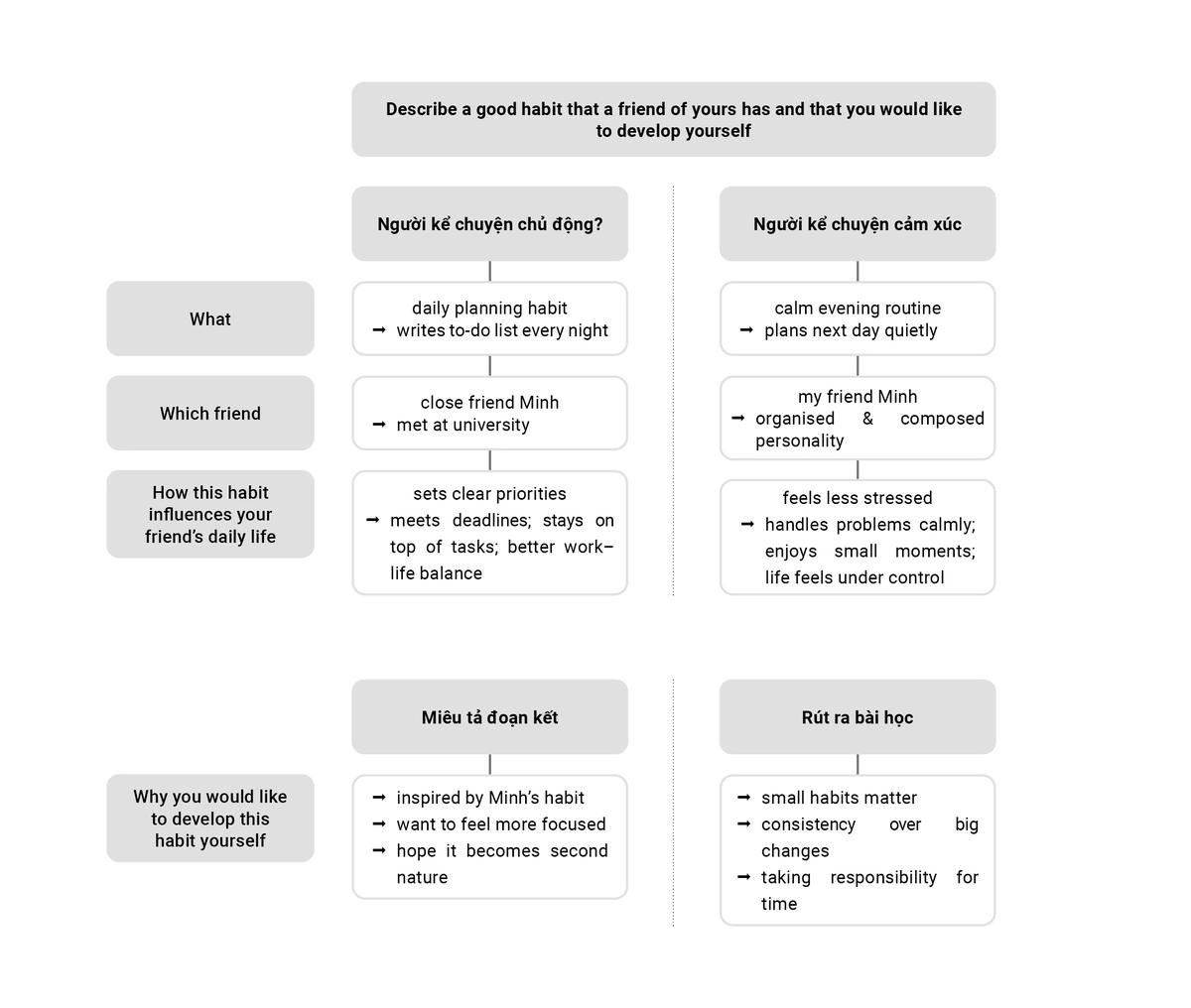
Kể chuyện chủ động
Kể chuyện cảm xúc
Kết bài:
Miêu tả đoạn kết
Rút ra bài học
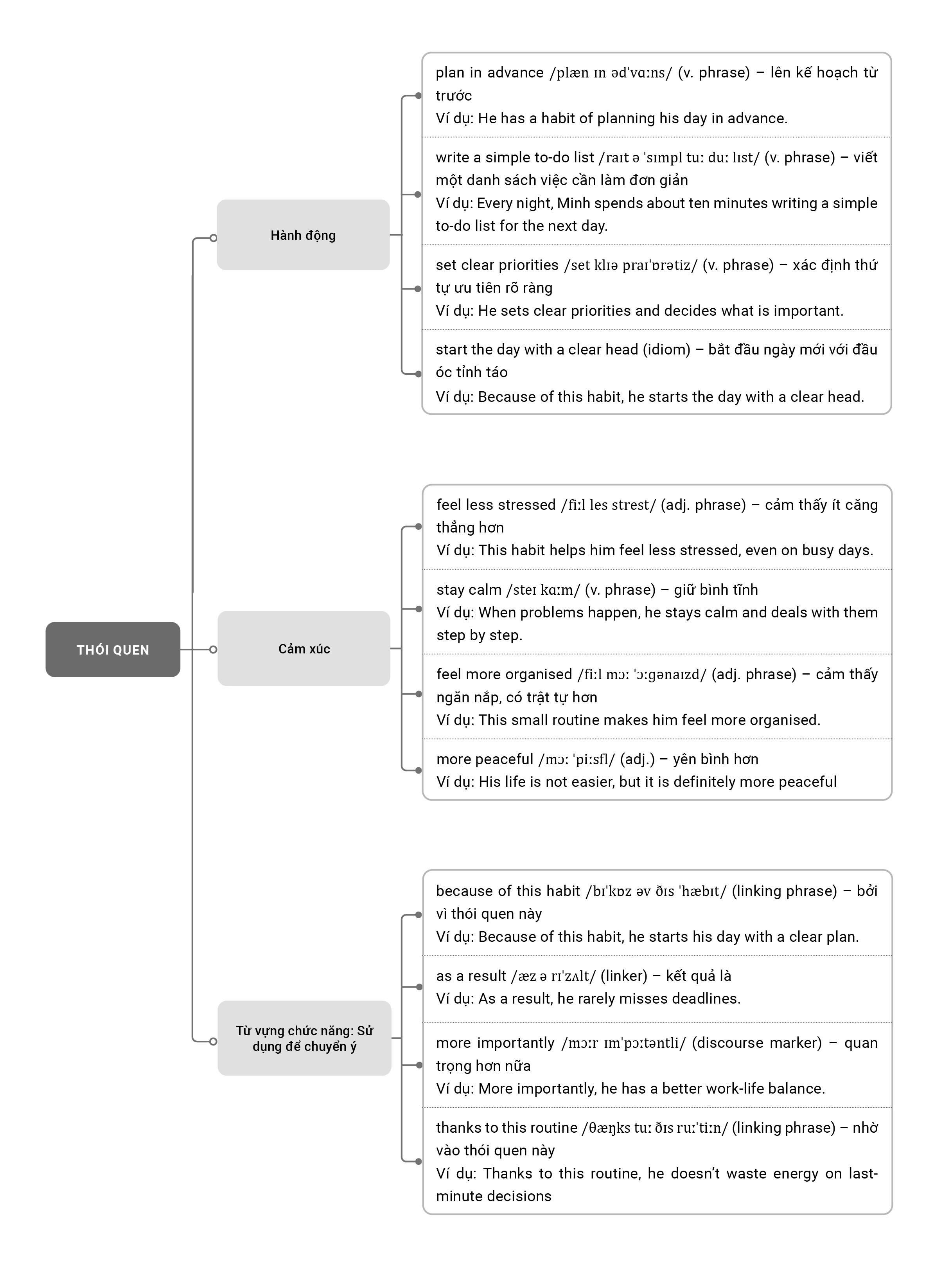
Nhóm từ vựng: Actions and Feelings related to Habits
Đề bài “Describe a good habit that a friend of yours has and that you would like to develop yourself” trong IELTS Speaking Part 2 yêu cầu thí sinh miêu tả một thói quen tích cực của bạn bè và giải thích lý do muốn học theo. Chủ đề này liên quan đến khả năng quan sát, đánh giá thói quen và tự nhận thức về phát triển bản thân, song thí sinh có thể gặp khó khăn trong việc giải thích lý do muốn học hỏi thói quen đó một cách thuyết phục.
Bài viết cung cấp phương pháp phân tích đề bài chi tiết, bài mẫu hoàn chỉnh với từ vựng chuyên biệt về thói quen và phát triển cá nhân, giúp người học xây dựng câu trả lời logic và ấn tượng.
Đề bài
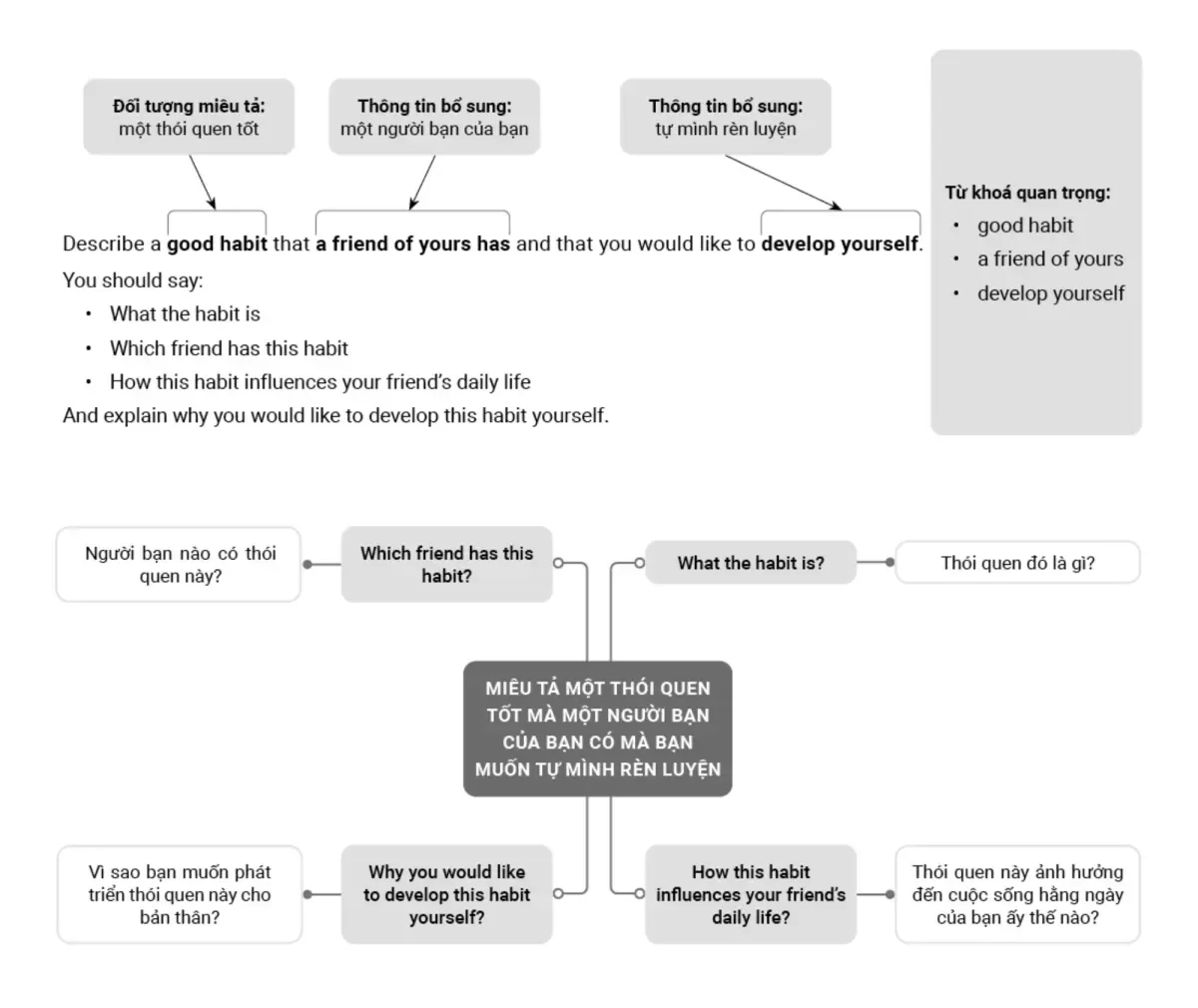
Describe a good habit that a friend of yours has and that you would like to develop yourself.
You should say:
what the habit is
which friend has this habit
how this habit influences your friend’s daily life
And explain why you would like to develop this habit yourself.
Phân tích đề bài
Lên ý tưởng & ghi chú
Bài mẫu
Simple answer
Người đọc có thể kết hợp các phiên bản tùy ý để tạo ra nhiều bài mẫu Part 2 khác nhau từ cùng một đề.
Mở bài
và
Thân bài
Ver. 1
Người kể chuyện chủ động
Ver. 2
Người kể chuyện cảm xúc
I’d like to talk about a good habit that my friend Minh has, which is planning his day in advance. I noticed this habit when I worked on a group project with him at university. He always seemed well-prepared and calm, so I became curious about how he managed his time so well.
Every night, Minh spends about ten minutes writing a simple to-do list for the next day. He decides what is important and what can wait. Because of this habit, he starts his day with a clear plan. He finishes his tasks on time and rarely feels rushed. This also helps him balance studying and relaxing, which makes his daily life more comfortable.
There is a habit that my friend Minh has that I really admire. He plans his day every evening, and this small routine makes him feel very organised. Whenever I spend time with him, I feel less stressed, because he always knows what he needs to do next.
This habit has a very positive effect on Minh’s daily life. He doesn’t look stressed, even on busy days. When problems happen, he stays calm and deals with them step by step. Thanks to planning ahead, he has more time to rest and enjoy simple things, like having meals slowly or talking with friends.
Kết bài
Ver. 1
Miêu tả đoạn kết
Ver. 2
Rút ra bài học
Seeing how this habit helps Minh live a more organised life makes me want to try it myself. I believe that planning my day in advance will help me feel more relaxed and focused, especially when I have many tasks to do.
From Minh, I’ve learned that good habits don’t need to be complicated. A small action, like planning your day, can make a big difference. This habit reminds me that if I want a better daily routine, I need to start with simple changes.
Upgraded answer
Người đọc có thể kết hợp các phiên bản tùy ý để tạo ra nhiều bài mẫu Part 2 khác nhau từ cùng một đề.
Mở bài
và
Thân bài
Ver. 1
Người kể chuyện chủ động
Ver. 2
Người kể chuyện cảm xúc
One good habit that really impressed me actually belongs to my close friend Minh, who I met in my first year at university. To be honest, what makes him stand out is that he plans pretty much every single day the night before. I mean, instead of waking up and just going with the flow or reacting to whatever happens, he really takes the reins and manages his time with a clear schedule.
So, basically, Minh spends around fifteen minutes every night writing a simple to-do list for the next day. He sets priorities, blocks out time for studying, working out, and even resting—and he tries to stick to it as much as he can. And you know, this habit helps him start each morning with a clear head instead of feeling overwhelmed or like he’s all over the place. Because of that, he rarely misses deadlines and always stays on top of things. What’s more, he seems to have a better work-life balance, because he doesn’t let his schedule get out of hand.
There is a small but surprisingly powerful habit that my friend Minh has, and honestly, it’s something that has really stuck with me over time. You see, he has this calm routine of planning his day every evening, and in a way, it perfectly mirrors how he lives his life in general. Whenever I’m around him, things just seem more organised and, well, less of a mad rush.
What I really admire is how this habit quietly shapes Minh’s daily life without making a big fuss about it. Because he plans ahead, he goes through the day with a sense of confidence rather than constantly feeling under pressure. Even when unexpected problems pop up, he doesn’t lose his cool, he just takes things in his stride. On top of that, this habit gives him the mental space to enjoy the little things, like sitting down for a proper meal or having a relaxed chat with friends. Watching him makes me realise that his life isn’t necessarily easier than others’, but it’s definitely more peaceful and, most importantly, under control.
Kết bài
Ver. 1
Miêu tả đoạn kết
Ver. 2
Rút ra bài học
At the end of the day, this routine saves him from making a bunch of last-minute decisions, and honestly his days run like clockwork. It’s one of those small habits that really pays off in the long run.
From Minh, I’ve come to realise that success doesn’t always come from dramatic changes, but from small habits that you stick to day after day.. In the end, this habit taught me that being organised isn’t about putting pressure on yourself, but about giving yourself more freedom to breathe and live better.
→ Câu hoàn chỉnh: She has a lot of self-discipline, so she always wakes up early and avoids procrastination.
Người đọc có thể tìm từ vựng bằng từ điển ZIM Dictionary.
Các lỗi ngữ pháp thường gặp
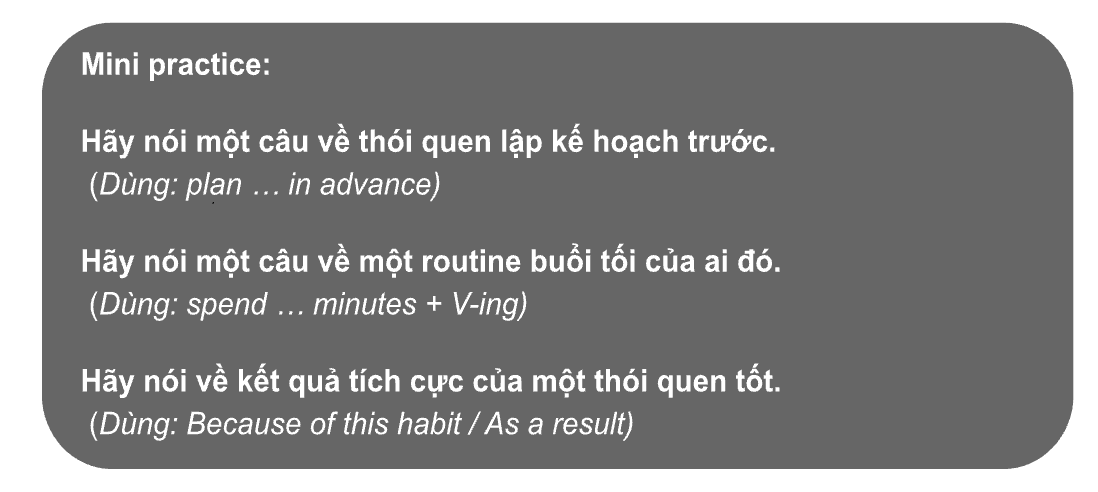
Lỗi thường gặp: “planning his day advance” / “planning his day before”
Cách dùng đúng: planning his day in advance
Lý do sai:
in advance là cụm cố định, không được bỏ in.
before dùng một mình khiến câu không tự nhiên khi nói về thói quen.
Lỗi thường gặp: “spends about ten minutes to write a simple to-do list”
Cách dùng đúng: spends about ten minutes writing a simple to-do list
Lý do sai: Sau spend + thời gian → bắt buộc dùng V-ing, không dùng to V.
Lỗi thường gặp: “Because this habit, he starts his day with a clear plan.”
Cách dùng đúng: because of this habit, he starts his day with a clear plan
Lý do sai:
because of + noun phrase
because + clause (S + V)
→ this habit là danh từ, nên phải dùng because of.
Các chủ đề liên quan
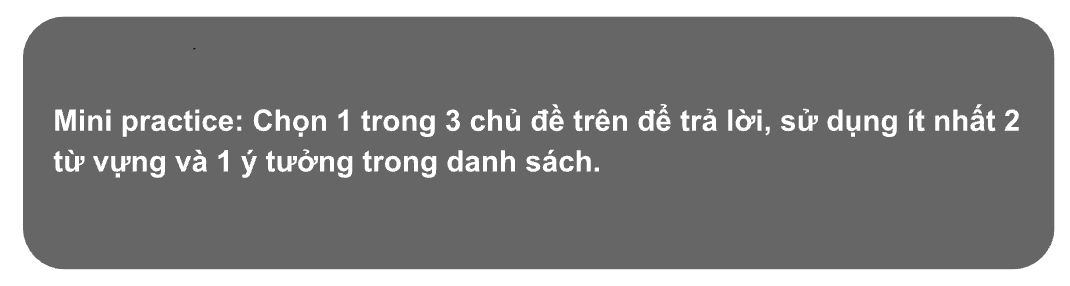
Chủ đề liên quan để sử dụng từ vựng và ý tưởng:
Describe a person who is well-organised. (Liên quan đến thói quen hàng ngày và khả năng quản lý thời gian.)
Describe a habit that changed your daily routine. (Liên quan đến việc một thói quen nhỏ tạo ra tác động tích cực.)
Describe something you learned from a friend. (Liên quan đến việc học hỏi từ hành động và lối sống của người khác.)
Người đọc có thể sử dụng:
Từ vựng: well-organised, daily routine, plan in advance, to-do list, clear plan, stay calm, feel less stressed, manage time, small habits.
Ý tưởng:
một người bạn có thói quen lập kế hoạch mỗi ngày
thói quen đó giúp cuộc sống gọn gàng và bớt căng thẳng
quan sát thói quen này trong quá trình học tập / làm việc chung
nhận ra thói quen nhỏ có thể tạo ra thay đổi lớn.
Tổng kết
Qua bài viết, thí sinh đã nắm được cách phân tích và triển khai câu trả lời mạch lạc cho chủ đề “Describe a good habit that a friend of yours has and that you would like to develop yourself”. Từ vựng và cấu trúc được cung cấp không chỉ phù hợp cho đề bài này mà còn áp dụng hiệu quả cho các chủ đề liên quan như “person who is well-organised” hay "“habit that changed your routine”. Người học có thể mở rộng vốn từ vựng bằng cách nghiên cứu thêm các collocations về self-improvement và personal development để tự tin hơn trong phần thi Speaking.
Đối với thí sinh đang trong giai đoạn chuẩn bị cho kỳ thi IELTS, việc trải nghiệm một bài thi thử có cấu trúc và độ khó tương đương với đề thi thật là bước chuẩn bị quan trọng. Thi thử IELTS tại ZIM Academy mang đến đánh giá chính xác với đề thi có cấu trúc giống 100% bài thi thật. Chat trực tiếp trên website để được tư vấn nhanh chóng và đăng ký lịch thi phù hợp.



Bình luận - Hỏi đáp