


Chủ đề IELTS Speaking: Part 3: Elderly People and Their Lives.
Bài mẫu cho các nhóm câu hỏi:
Daily activities of elderly people?
Lifestyle differences: elderly vs. young people?
Better quality of life than in the past?
Common problems faced in daily life?
Lessons younger people can learn from elders?
Nhóm từ vựng trọng tâm (Topic Vocabulary):
Routines & Pace, Health & Mobility, Independence & Quality, và Wisdom & Traditions.
Bài mẫu IELTS Speaking Part 3 topic Elderly People and Their Lives
Bài viết cung cấp các câu trả lời mẫu cho IELTS Speaking Part 3 (Elderly People and Their Lives) theo định hướng cá nhân hóa, được chia thành hai cấp độ: Simple Answer (tập trung phản xạ và độ trôi chảy) và Upgraded Answer (nâng cấp từ vựng, ngữ pháp). Đi kèm với mỗi câu trả lời là file audio hỗ trợ luyện phát âm chuẩn xác. Ngoài ra, phần phân tích chi tiết sẽ giúp người học hệ thống hóa từ vựng, khắc phục lỗi ngữ pháp và linh hoạt áp dụng vào các chủ đề tương tự.
Key takeaways
Bài viết sau đây sẽ cung cấp các câu trả lời mẫu theo khung sườn tư duy (Simple Answer) cùng các thử thách nâng cấp (Upgraded Answer) về cả ý tưởng, từ vựng và ngữ pháp để người học lựa chọn được câu trả lời phù hợp với bản thân, sẵn sàng cho các tình huống trong phòng thi. Bài phân tích này sẽ dẫn dắt người học đi qua chủ đề Elderly People and Their Lives, từ thói quen sinh hoạt thích ứng với nhịp sống chậm rãi (a slower pace of life), quá trình đối mặt với tình trạng sức khỏe suy giảm (declining health) và hạn chế vận động (limited mobility), cho đến vai trò của việc duy trì kết nối xã hội (maintain social connections) cũng như truyền dạy những kinh nghiệm sống vô giá (pass down skills) cho thế hệ trẻ, giúp người học chinh phục giám khảo bằng sự mạch lạc và ngôn ngữ tự nhiên.
IELTS Speaking Part 3: Elderly People and Their Lives
Simple answer
1. What do elderly people usually do in their daily lives?
|
I think many elderly people spend time doing light exercise, taking care of their homes, and meeting friends. These activities help them stay active and keep them busy. For example, some go for a walk in the morning or look after their grandchildren. Their routines often involve both relaxation and spending time with others. |
2. How is the lifestyle of elderly people different from that of young people?
|
I’d say elderly people often have a slower pace of life, especially after retirement. They usually have more time for hobbies, while younger people are often busy with work or study. For example, a retired person might spend the afternoon gardening, whereas a young adult may be working at an office. |
3. Do you think elderly people today have a better quality of life than in the past?
|
In many ways, yes. Better healthcare and more convenient services can make their lives easier. For example, elderly people can have regular health checks and use video calls to stay in touch with family. Overall, these improvements can help older people live more comfortably. |
4. What problems do elderly people commonly face in their daily lives?
|
Some common problems are poor health and loneliness. Physical difficulties can make everyday tasks harder, while living alone may mean having fewer people to talk to. For example, an older person with knee pain might struggle to go shopping or visit friends. This can make it harder for them to live independently. |
5. What can younger people learn from elderly people?
|
Younger people can learn practical skills and ways to deal with problems from elderly people. Older people have experienced many different situations, so they often have useful advice to share. For example, grandparents might teach their grandchildren how to save money or prepare traditional dishes. These lessons can be helpful in everyday life. |
Tham khảo: Tổng hợp bài mẫu IELTS Speaking 2026
Upgraded answer
1. What do elderly people usually do in their daily lives?
|
I’d say many older people build their daily routines around light exercise, household tasks, and social activities, especially once they’ve retired. Without the demands of a full-time job, they often have more time to pursue hobbies or help out with family responsibilities. For example, they might start the day with a walk, spend some time gardening, and then pick up their grandchildren from school. Of course, their routines vary depending on their health and interests, but staying active and maintaining social connections are often important parts of their lives. |
2. How is the lifestyle of elderly people different from that of young people?
|
The biggest difference is probably the pace of life and how people spend their time. Older people who have retired often have greater control over their schedules and can devote more time to hobbies or family. Younger people, by contrast, tend to juggle work, study, and social commitments. For instance, a retired person might enjoy a leisurely afternoon in the garden, while a young professional is rushing to meet a deadline. That said, age doesn’t determine everything; some older people lead very busy lives, particularly if they’re still working or caring for relatives. |
3. Do you think elderly people today have a better quality of life than in the past?
|
In many respects, yes. Compared with previous generations, many older people today have access to better healthcare and services that make everyday life more manageable. Technology can also help them stay connected with relatives who live far away. For example, grandparents can video-call their grandchildren regularly rather than wait for an occasional visit. However, these benefits aren’t equally available to everyone, especially those with limited incomes or difficulties using digital devices. Overall, I think life has become more comfortable for many older people, although there are still gaps in the support they receive. |
4. What problems do elderly people commonly face in their daily lives?
|
Two common challenges are declining health and social isolation, and these can reinforce each other. When someone has limited mobility, everyday activities like shopping or visiting friends may become difficult, leaving them with fewer opportunities to socialise. For example, an older person with persistent knee pain might stop attending a local club because getting there is too tiring. If their family also lives far away, they may spend long periods alone. So, the difficulty isn’t just managing physical problems; it’s also maintaining their independence and a sense of connection with others. |
5. What can younger people learn from elderly people?
|
Younger people can learn both practical skills and valuable ways of dealing with setbacks from older generations. Having experienced different stages of life, many elderly people can offer perspective on problems that younger people may find overwhelming. For example, grandparents might share how they managed on a tight budget or stayed patient during a difficult period at work. They can also pass down skills such as preparing traditional dishes. I think these exchanges are valuable because they give young people useful guidance while helping preserve family knowledge and traditions. |
Xem thêm: Ứng dụng Phản đề (Counterargument) vào IELTS Speaking Part 3
Lọc và phân tích từ vựng
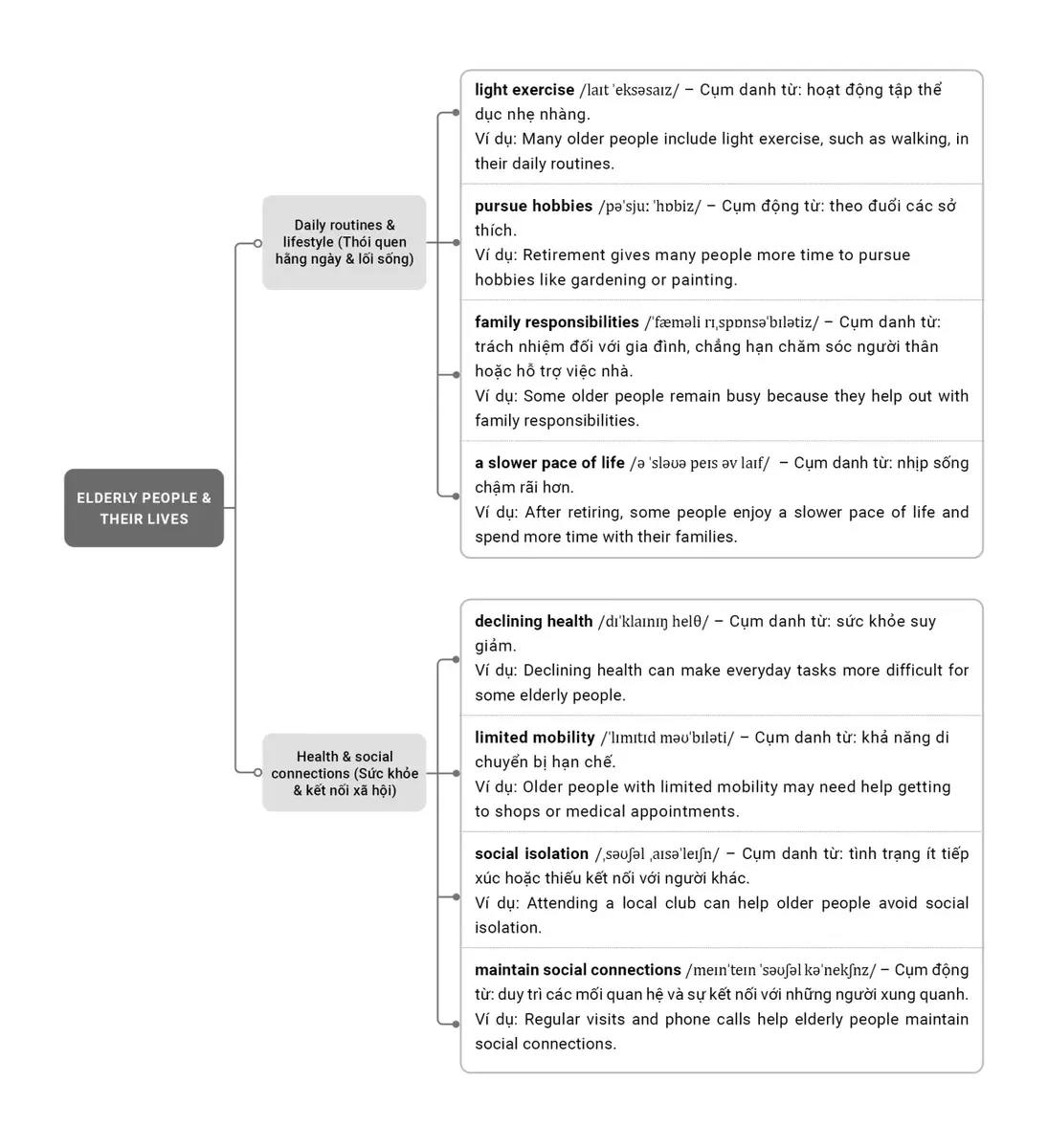
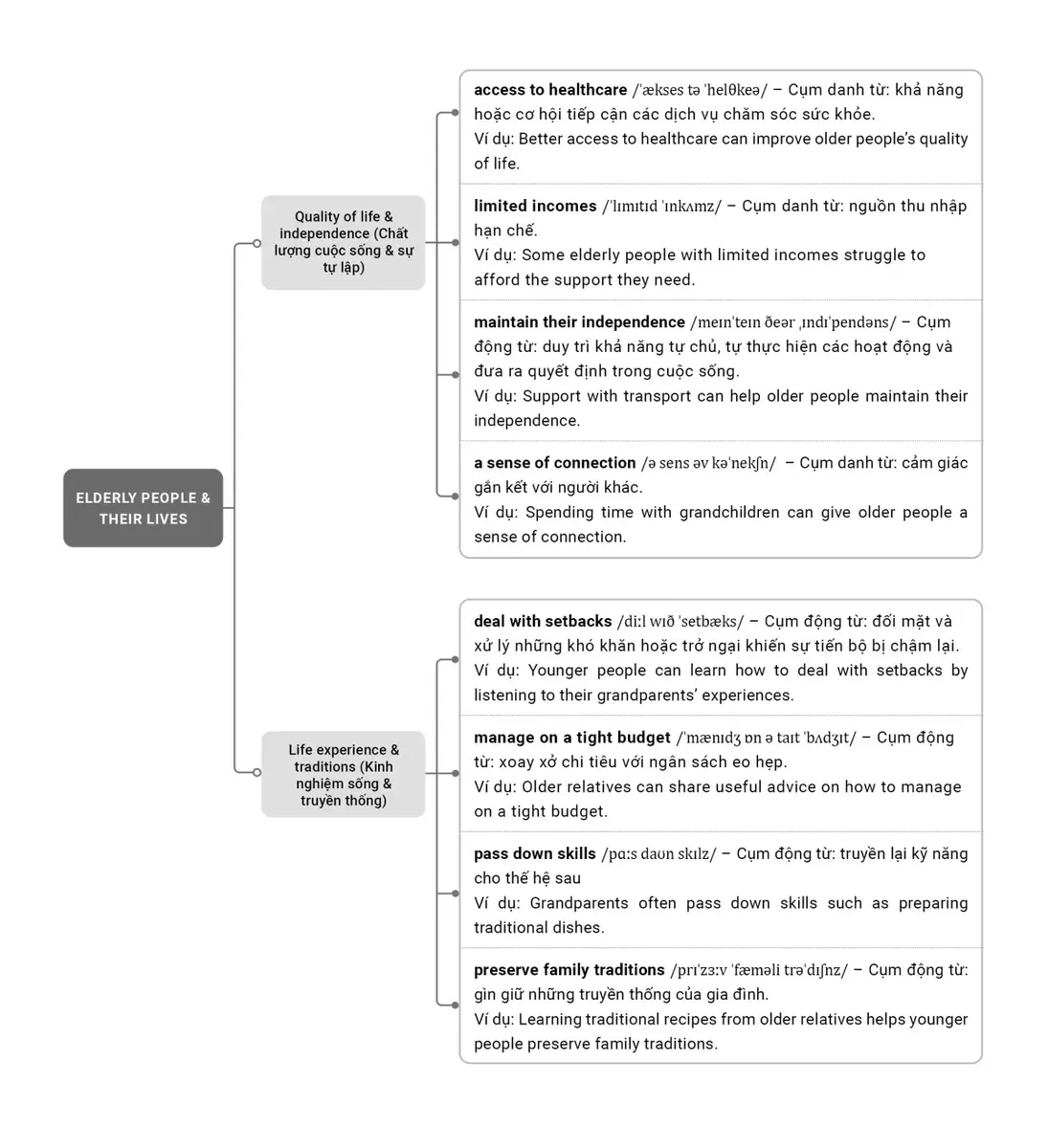
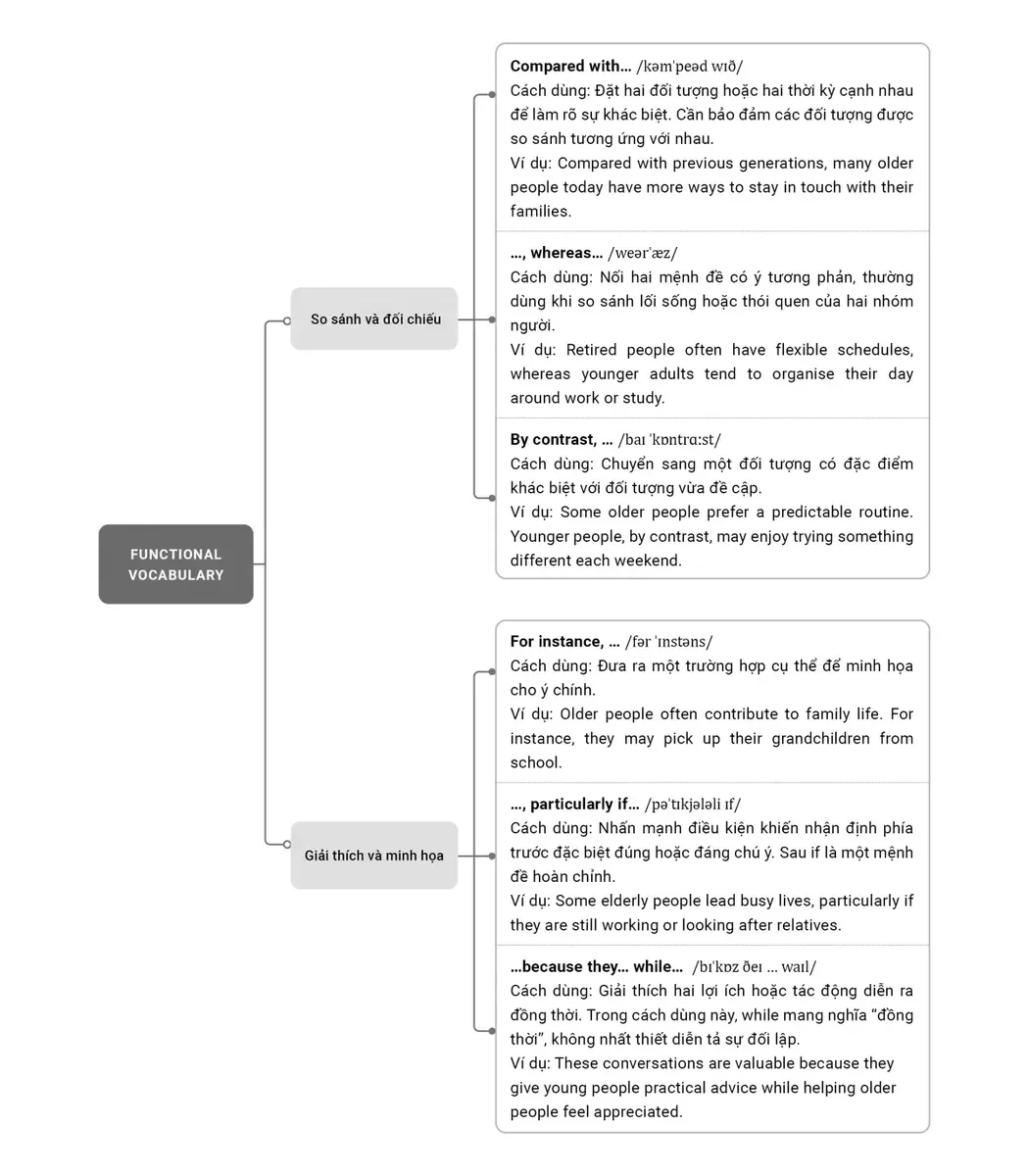
Nhật ký Từ vựng & Ý tưởng
Ghi chú sau khi luyện tập nói về chủ đề trên
Từ vựng/Ý tưởng (Chọn các từ vựng/ý tưởng mà bạn tâm đắc nhất) | Kỉ niệm cá nhân (Gán các từ vựng/ý tưởng đã chọn với kỉ niệm của bản thân) |
|---|---|
Ví dụ: Ý tưởng: Những hoạt động đơn giản như đi bộ cùng bạn bè hoặc trò chuyện với con cháu giúp người cao tuổi duy trì sự năng động và cảm thấy gắn bó với mọi người. | Người đọc tự đặt các câu hỏi cho bản thân, ví dụ:
→ Since retiring, my grandfather has enjoyed a slower pace of life. He does light exercise in the park and meets his friends most mornings. These activities help him maintain social connections. He also teaches me how to prepare traditional dishes and shares advice on managing money. His experiences have shown me that older people can stay active and pass down skills that are useful to younger generations. |
Khoảng trống diễn đạt (Phần khiến bạn ngập ngừng khi nói về chủ đề trên) | Giải pháp (Giải pháp cho các khoảng trống diễn đạt) | ||
|---|---|---|---|
Ví dụ: Tôi thiếu từ vựng để nói về khó khăn trong việc đi lại và tình trạng ít giao tiếp của người cao tuổi. | Ví dụ: Dùng từ điển của ZIM hoặc chép các cách diễn đạt từ bài mẫu ở các phần trên để có được cụm từ mà bạn cần. → Thay vì nói “find it hard to move around”, có thể dùng have limited mobility khi muốn nói về khả năng di chuyển bị hạn chế. → Thay vì nói “have little contact with other people”, có thể dùng experience social isolation. |
Người đọc có thể tìm từ vựng bằng từ điển ZIM Dictionary.
Các lỗi ngữ pháp/từ vựng thường gặp
1. Dùng sai chủ ngữ trong cấu trúc “Having + V3/ed”
❌ Lỗi thường gặp:
Having experienced many difficulties, useful advice can be shared by elderly people.
✅ Cách dùng đúng:
Having + V3/ed…, chủ ngữ + động từ…
Chủ thể thực hiện hoặc trải qua hành động trong cụm Having + V3/ed phải trùng với chủ ngữ của mệnh đề chính.
Cấu trúc này nhấn mạnh trải nghiệm xảy ra trước và có liên quan đến nhận định phía sau.
✔ Câu đúng:
Having experienced many difficulties, elderly people can share useful advice.
Having managed on a tight budget, some grandparents can teach younger people how to save money.
📌 Lý do sai:
Trong câu sai, chủ ngữ của mệnh đề chính là useful advice, khiến câu mang nghĩa lời khuyên đã trải qua khó khăn. Người có trải nghiệm là elderly people, nên họ phải làm chủ ngữ của mệnh đề chính.
2. Dùng sai cấu trúc song song với “both…and…”
❌ Lỗi thường gặp:
Younger people can both learn practical skills and learning how to deal with setbacks.
Spending time with grandparents helps young people both understand family traditions and preserving them.
✅ Cách dùng đúng:
both + thành phần A + and + thành phần B: cả A lẫn B.
Hai thành phần được nối cần có cấu trúc ngữ pháp song song, chẳng hạn cùng là danh từ, cùng là động từ nguyên mẫu hoặc cùng là V-ing.
Vị trí của both cần phù hợp với hai thành phần muốn nhấn mạnh.
✔ Câu đúng:
Younger people can both learn practical skills and learn how to deal with setbacks.
Spending time with grandparents helps young people both understand family traditions and preserve them.
📌 Lý do sai:
Các câu sai nối một động từ nguyên mẫu với một động từ dạng V-ing: learn – learning, understand – preserving. Trong các câu này, hai hành động có cùng vai trò ngữ pháp nên cần dùng dạng song song: learn – learn, understand – preserve.
3. Nhầm “experience” và “experiences”
❌ Lỗi thường gặp:
Many elderly people have a lot of life experiences, so they can offer useful advice.
My grandmother often shares interesting experience from her working life.
✅ Cách dùng đúng:
experience không đếm được: kinh nghiệm, kiến thức hoặc kỹ năng tích lũy qua thời gian.
an experience / experiences đếm được: một hoặc nhiều trải nghiệm, sự việc từng trải qua.
a lot of life experience: nhiều kinh nghiệm sống.
share interesting experiences: chia sẻ những trải nghiệm thú vị.
✔ Câu đúng:
Many elderly people have a lot of life experience, so they can offer useful advice.
My grandmother often shares interesting experiences from her working life.
📌 Lý do sai:
Nếu muốn nhấn mạnh kinh nghiệm sống tích lũy, dùng life experience không đếm được. Life experiences vẫn đúng khi nói về những trải nghiệm cụ thể, nhưng mang nghĩa khác. Ở câu thứ hai, khi experience chỉ một sự việc từng trải qua, cần dùng an interesting experience hoặc dạng số nhiều interesting experiences.
Xem thêm: Collocation với Experience
Mini practice |
|---|
Dùng đúng cấu trúc trong ngoặc
|
Các chủ đề liên quan
Chủ đề liên quan để sử dụng từ vựng & ý tưởng:
Family and relationships (Gia đình & các mối quan hệ)
Work and retirement (Công việc & nghỉ hưu)
Health and quality of life (Sức khỏe & chất lượng cuộc sống)
Người đọc có thể sử dụng:
Từ vựng: light exercise, pursue hobbies, family responsibilities, a slower pace of life, limited mobility, social isolation, maintain social connections, access to healthcare, maintain their independence, pass down skills, manage on a tight budget, preserve family traditions ...
Ý tưởng:
Dành thời gian trò chuyện và tham gia các hoạt động chung giúp các thế hệ trong gia đình hiểu nhau và duy trì sự gắn kết.
Người cao tuổi có thể truyền lại kỹ năng thực tế, kinh nghiệm quản lý tiền bạc và những truyền thống của gia đình cho người trẻ.
Nghỉ hưu giúp nhiều người có thêm thời gian theo đuổi sở thích, tập thể dục và chăm sóc gia đình.
Một số người vẫn bận rộn sau khi nghỉ hưu vì tiếp tục làm việc hoặc đảm nhận trách nhiệm chăm sóc người thân.
Khả năng di chuyển bị hạn chế có thể khiến người cao tuổi ít gặp gỡ bạn bè hơn, làm tăng nguy cơ bị cô lập về mặt xã hội.
Dịch vụ chăm sóc sức khỏe và sự hỗ trợ phù hợp giúp người cao tuổi duy trì khả năng sống độc lập.
Chất lượng cuộc sống không chỉ phụ thuộc vào sức khỏe thể chất mà còn liên quan đến sự kết nối với những người xung quanh.
Mini practice |
|---|
Sử dụng từ vựng và ý tưởng ở trên để trả lời các câu hỏi sau
|
Hy vọng rằng qua việc phân tích hai cấp độ trả lời từ Simple Answer để đảm bảo sự trôi chảy đến Upgraded Answer để ghi điểm ấn tượng, bạn đã nắm vững được lộ trình để chinh phục chủ đề Elderly People and Their Lives (Part 3). Bằng cách cá nhân hóa các câu trả lời thông qua "Nhật ký Từ vựng & Ý tưởng", bạn sẽ xây dựng được sự tự tin. Đừng quên thực hành các bài tập nhỏ (mini practice) để khắc phục những lỗi ngữ pháp thường gặp và làm chủ ngôn ngữ của mình nhé!
Nếu bạn muốn nâng cao kỹ năng IELTS Speaking theo lộ trình cá nhân hóa, Hệ thống giáo dục ZIM cung cấp các khóa luyện thi IELTS cam kết đầu ra, giúp bạn tối ưu hiệu quả học tập và tiết kiệm đến 80% thời gian tự học. Để được tư vấn chi tiết, vui lòng liên hệ hotline 1900-2833 (nhánh 1) hoặc truy cập Khóa học IELTS.
Nguồn tham khảo
1
“Bài mẫu IELTS Speaking Part 3.” OpenAI, https://chatgpt.com/share/e/6961b6c8-4368-8002-995c-cd65b4729b18. Accessed 19 September 2026.
Bình luận - Hỏi đáp