


Chủ đề IELTS Speaking: Part 3: Traffic Congestion.
Bài mẫu cho các nhóm câu hỏi:
Main causes of traffic jams in big cities?
What problems does congestion cause?
How can governments reduce traffic jams?
Can public transport help reduce traffic?
Will congestion get better or worse in the future?
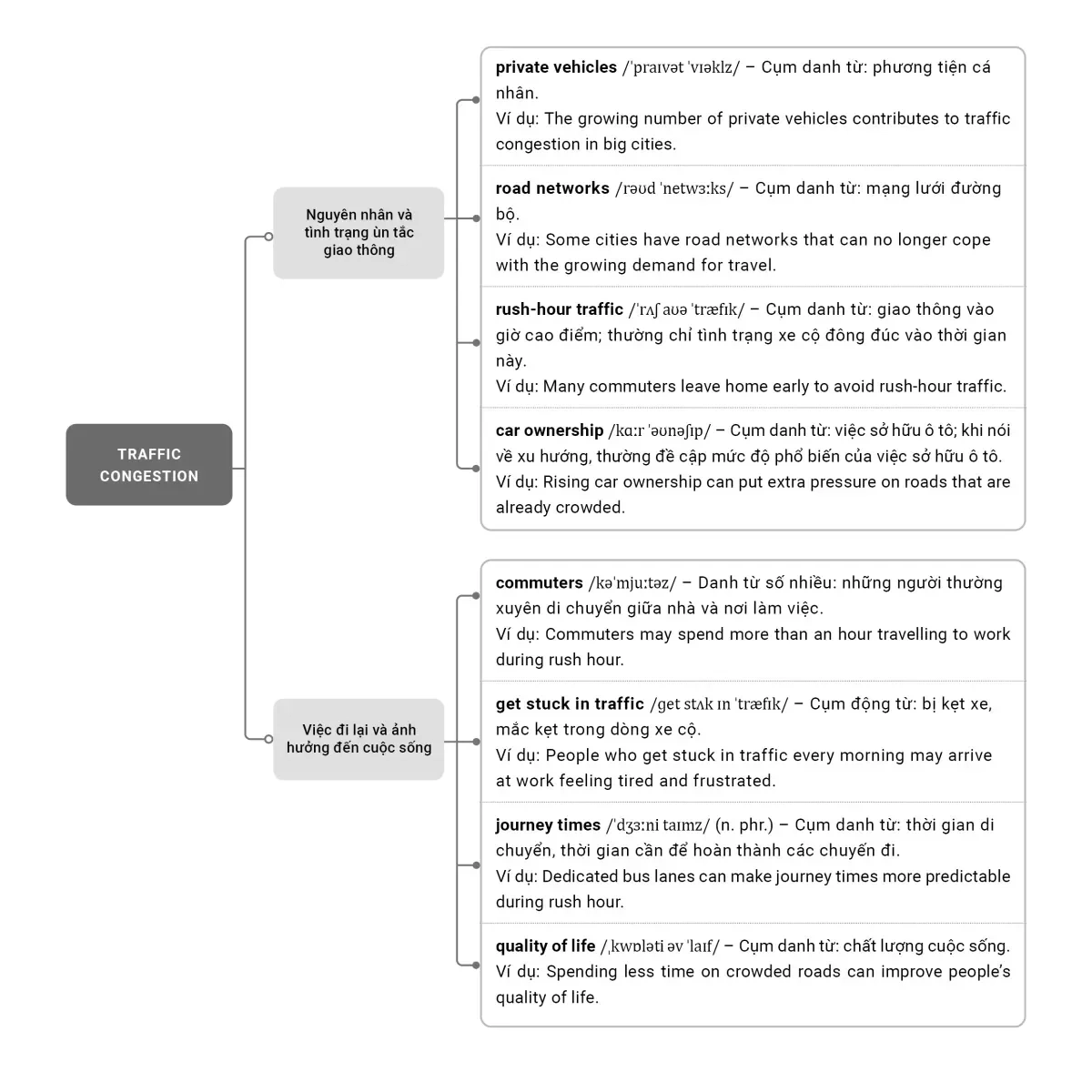
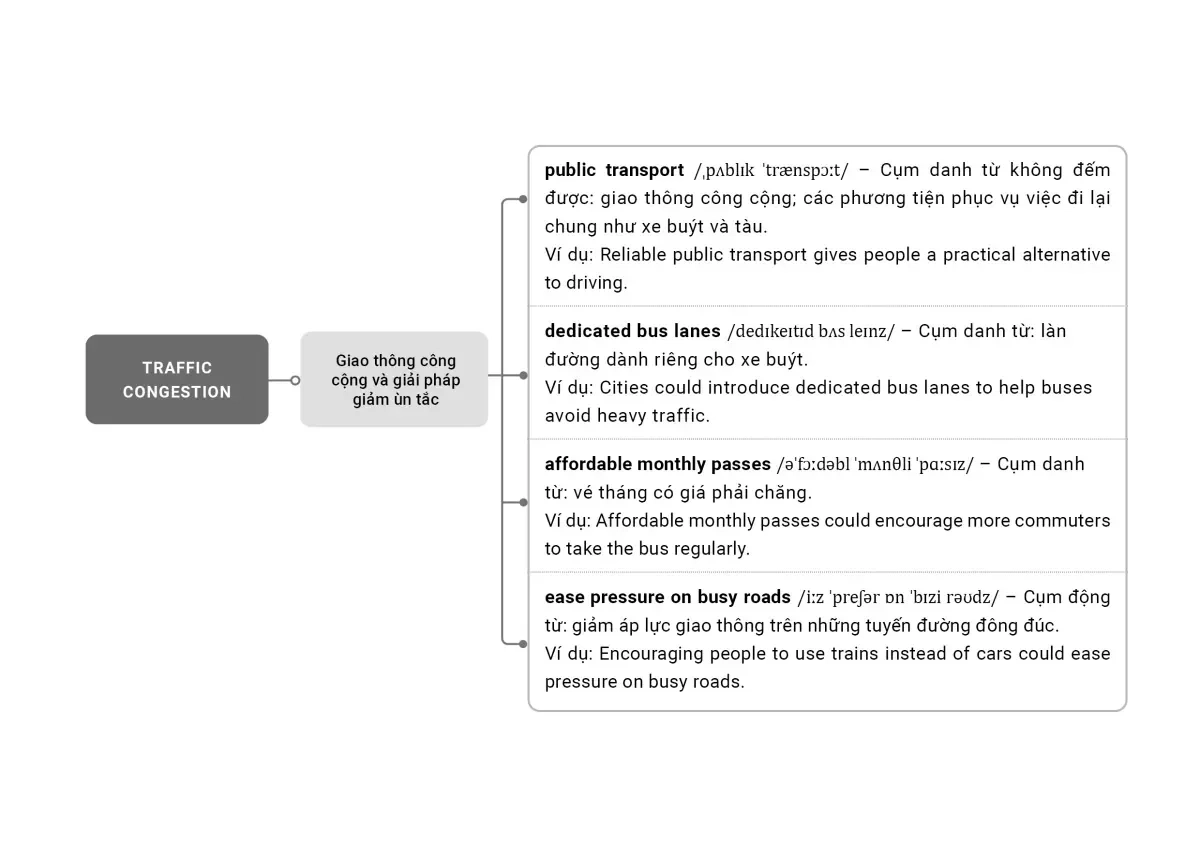
Nhóm từ vựng trọng tâm (Topic Vocabulary): Causes & Traffic, Commuting & Impact, và Public Transport Solutions.
Bài mẫu IELTS Speaking Part 3 Traffic Congestion kèm từ vựng
Bài viết cung cấp các câu trả lời mẫu cho IELTS Speaking Part 3 (Traffic Congestion) theo định hướng cá nhân hóa, được chia thành hai cấp độ: Simple Answer (tập trung phản xạ và độ trôi chảy) và Upgraded Answer (nâng cấp từ vựng, ngữ pháp). Đi kèm với mỗi câu trả lời là file audio hỗ trợ luyện phát âm chuẩn xác. Ngoài ra, phần phân tích chi tiết sẽ giúp người học hệ thống hóa từ vựng, khắc phục lỗi ngữ pháp và linh hoạt áp dụng vào các chủ đề tương tự.
Key takeaways
Bài viết sau đây sẽ cung cấp các câu trả lời mẫu theo khung sườn tư duy (Simple Answer) cùng các thử thách nâng cấp (Upgraded Answer) về cả ý tưởng, từ vựng và ngữ pháp để người học lựa chọn được câu trả lời phù hợp với bản thân, sẵn sàng cho các tình huống trong phòng thi. Bài phân tích này sẽ dẫn dắt người học đi qua chủ đề Traffic Congestion, từ nguyên nhân gây ra sự quá tải giao thông do sự bùng nổ của các phương tiện cá nhân (private vehicles) và mạng lưới đường bộ thiếu đồng bộ (road networks), đến những ảnh hưởng tiêu cực khiến thời gian di chuyển trở nên khó dự đoán (unpredictable journey times), đồng thời đề xuất các giải pháp thiết lập làn đường riêng cho xe buýt (dedicated bus lanes) nhằm giảm bớt áp lực cho các tuyến đường trọng điểm, giúp người học chinh phục giám khảo bằng sự mạch lạc và ngôn ngữ tự nhiên.
IELTS Speaking Part 3: Traffic Congestion
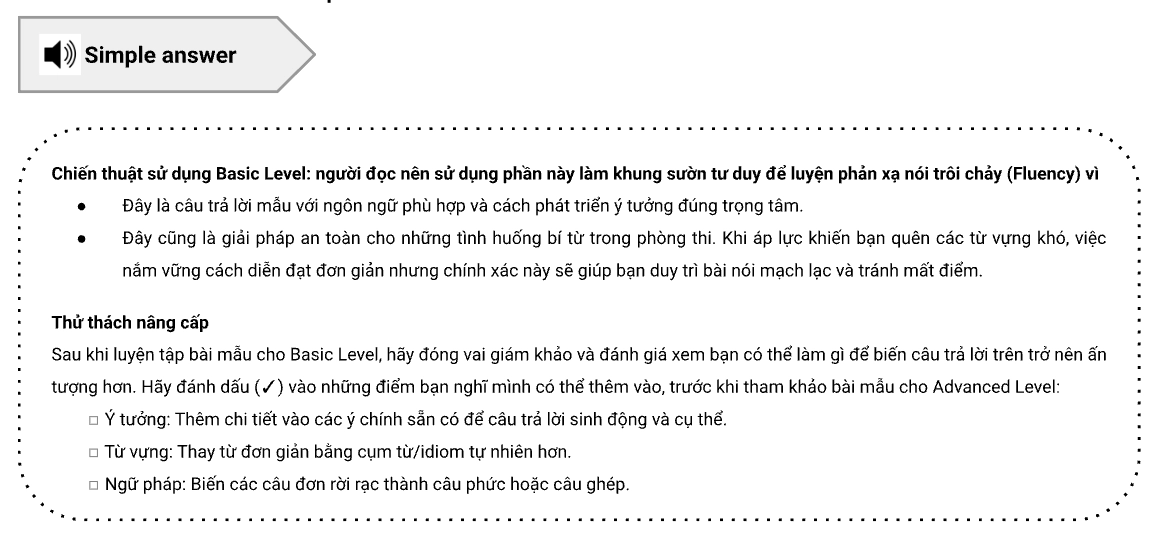
Simple answer
1. What are the main causes of traffic jams in big cities?
|
I think the main causes are too many private vehicles and limited road space. Many people drive to work, so the roads get crowded during rush hour. For example, hundreds of cars may try to enter the city centre at the same time. As a result, traffic moves very slowly. |
2. What problems can traffic congestion cause for people?
|
Traffic congestion can waste people’s time and make them feel stressed. When people are stuck in traffic, they have less time for work or rest. For example, someone might arrive late for an important meeting even if they leave home early. This can make daily life more tiring and difficult. |
3. What can governments do to reduce traffic congestion?
|
I think governments should make public transport more convenient and affordable. This would encourage more people to leave their cars at home. For example, cities could add bus routes to busy residential areas and offer cheaper monthly passes. If more people took the bus, there would be fewer cars on the road. |
4. Do you think improving public transport can help reduce traffic jams? Why or why not?
|
Yes, I think it can help a lot. People are more likely to use buses and trains if they are reliable and comfortable. For example, if a train gets someone to work faster than driving, they may choose it instead. So, better public transport can reduce the number of private vehicles on busy roads. |
5. Do you think traffic congestion will become better or worse in the future? Why?
|
I think traffic congestion will probably get worse in many big cities. Their populations are growing, and more people may want to own cars. For example, new apartment buildings can bring thousands of extra residents to areas where roads are already crowded. Without better transport planning, traffic jams could become more common. |
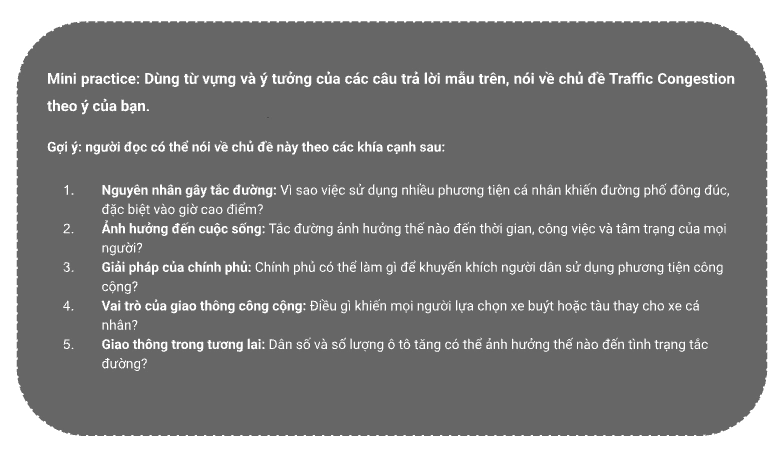
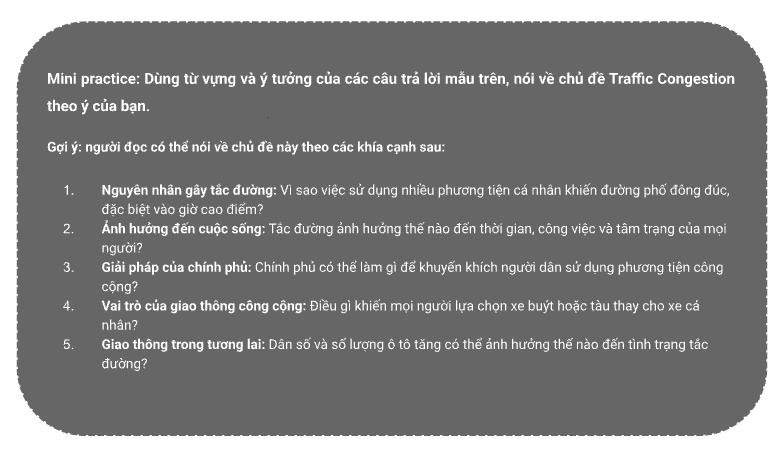
Tham khảo: Tổng hợp bài mẫu IELTS Speaking 2026
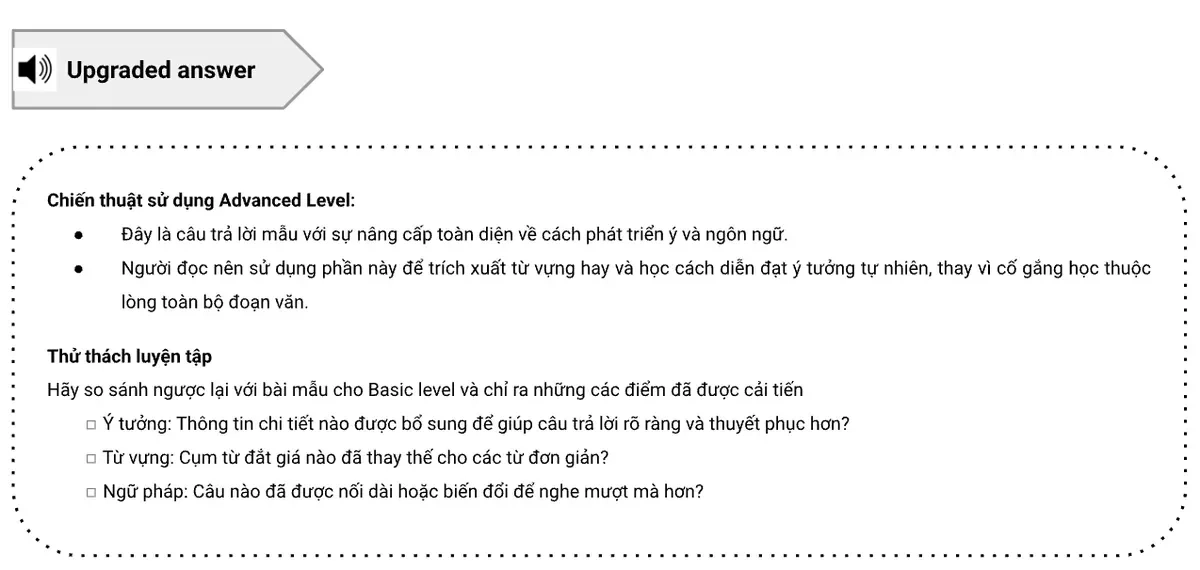
Upgraded answer
1. What are the main causes of traffic jams in big cities?
|
I’d say the main causes are the growing number of private vehicles and road networks that can’t cope with the demand. Many people rely on their cars because public transport doesn’t offer a convenient alternative. For instance, someone living far from a bus stop may have little choice but to drive to work, adding to the rush-hour traffic. When thousands of commuters make the same decision, the roads quickly become overloaded. So, congestion is partly a result of limited road space, but also a lack of practical alternatives to driving. |
2. What problems can traffic congestion cause for people?
|
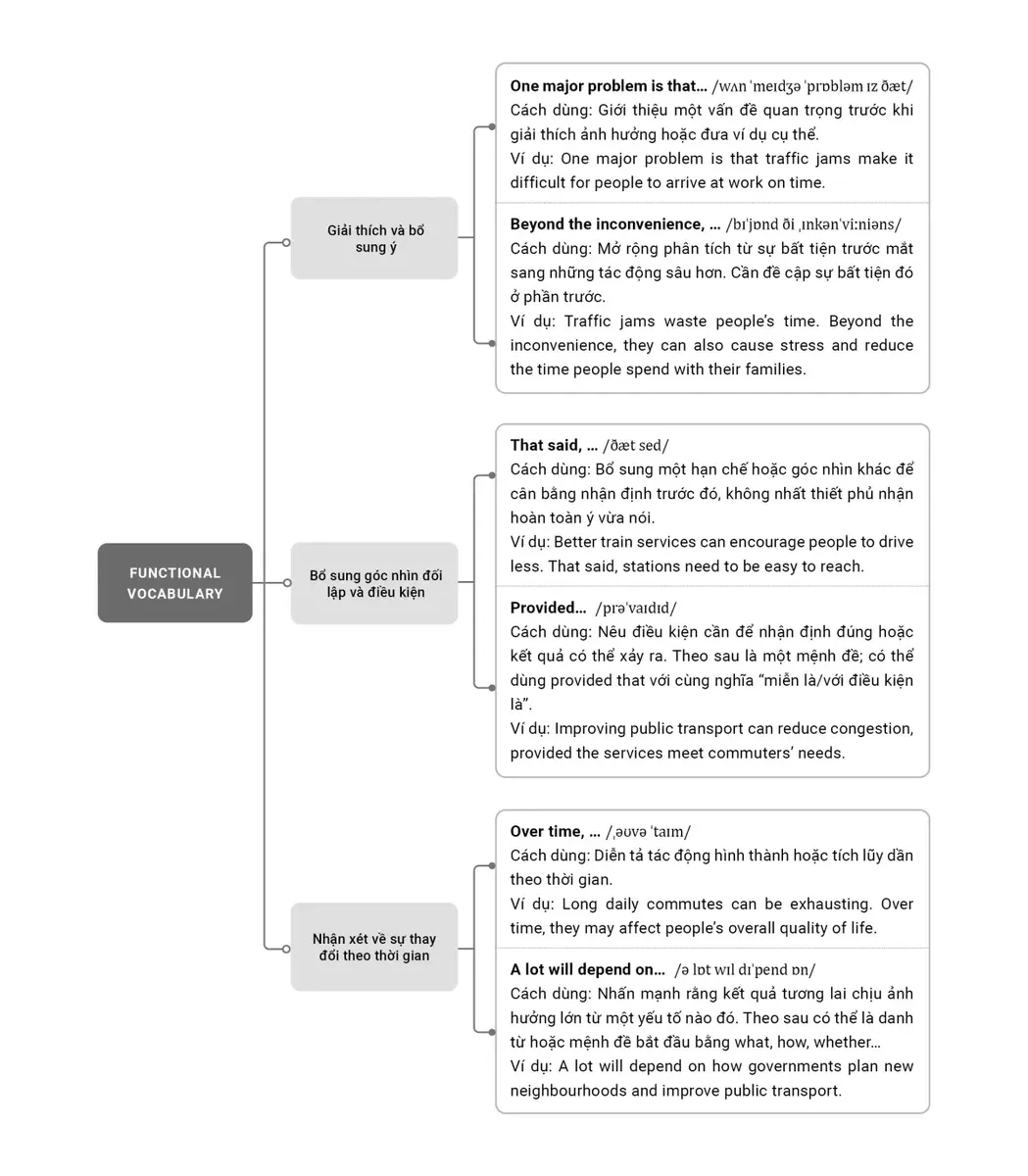
Well, one major problem is that traffic congestion makes daily journeys both time-consuming and unpredictable. People often have to leave much earlier than necessary, yet they can still arrive late. For example, a parent who gets stuck in traffic after work might struggle to pick up their child on time. Beyond the inconvenience, spending hours behind the wheel can be frustrating and leave people with less time to relax or be with their families. Over time, this can affect their mood and overall quality of life. |
3. What can governments do to reduce traffic congestion?
|
I think governments should focus on making public transport a practical and affordable alternative to driving. Simply asking people to use their cars less is unlikely to work if buses are infrequent or overcrowded. For example, cities could introduce more direct bus routes from residential areas to business districts, along with affordable monthly passes. Dedicated bus lanes could also make journey times more reliable during rush hour. These improvements would give commuters a stronger reason to leave their cars at home, helping to ease pressure on busy roads. |
4. Do you think improving public transport can help reduce traffic jams? Why or why not?
|
Yes, I think it can make a significant difference, provided the improvements meet commuters’ needs. People are more willing to switch to public transport when it saves them time and offers a comfortable journey. For instance, a reliable train service that takes twenty minutes would be an attractive alternative to an hour-long drive in heavy traffic. That said, even a modern train system may have limited appeal if stations are difficult to reach. So, public transport needs to be accessible as well as efficient to persuade more people to stop driving. |
5. Do you think traffic congestion will become better or worse in the future? Why?
|
If current patterns continue, I think congestion will probably get worse in many big cities. As urban populations grow, more people need to travel, and car ownership may rise faster than transport systems can develop. For example, building large apartment complexes without improving nearby bus services could put extra pressure on already crowded roads. However, this outcome isn’t inevitable. Cities that invest in reliable public transport and plan new neighbourhoods carefully may be able to manage the demand. So, I’m fairly pessimistic overall, but a lot will depend on the decisions governments make. |
Lọc và phân tích từ vựng
Nhật ký Từ vựng & Ý tưởng
Ghi chú sau khi luyện tập nói về chủ đề trên
Từ vựng/Ý tưởng (Chọn các từ vựng/ý tưởng mà bạn tâm đắc nhất) | Kỉ niệm cá nhân (Gán các từ vựng/ý tưởng đã chọn với kỉ niệm của bản thân) |
|---|---|
Ví dụ: get stuck in traffic – bị kẹt xe. | Người đọc tự đặt các câu hỏi cho bản thân, ví dụ:
→ Last month, I got stuck in traffic on my way to meet a friend in the city centre. I thought I had left early enough, but the rush-hour traffic was much worse than expected. As a result, I arrived almost half an hour late and felt quite stressed. Since then, I’ve tried taking the train for similar trips because the journey times are more predictable. I’d use public transport more often if there were a station closer to my home. |
Khoảng trống diễn đạt (Phần khiến bạn ngập ngừng khi nói về chủ đề trên) | Giải pháp (Giải pháp cho các khoảng trống diễn đạt) | ||
|---|---|---|---|
Ví dụ:
| Ví dụ: Dùng từ điển của ZIM hoặc chép các cách diễn đạt từ bài mẫu ở các phần trên để có được cụm từ mà bạn cần. → unpredictable journey times: thời gian di chuyển khó dự đoán. → make it difficult to plan my journey: khiến tôi khó lên kế hoạch cho chuyến đi. |
Người đọc có thể tìm từ vựng bằng từ điển ZIM Dictionary.
Các lỗi ngữ pháp/từ vựng thường gặp
1. Dùng sai cấu trúc “encourage someone to do something”
❌ Lỗi thường gặp:
Better public transport can encourage people use their cars less.
Affordable monthly passes encourage commuters taking the bus.
✅ Cách dùng đúng:
encourage + someone + to V: khuyến khích ai đó làm gì.
✔ Câu đúng:
Better public transport can encourage people to use their cars less.
Affordable monthly passes encourage commuters to take the bus.
📌 Lý do sai:
Khi có tân ngữ chỉ người sau encourage, dùng to V để diễn tả hành động được khuyến khích. Người học thường bỏ to hoặc dùng nhầm V-ing ở vị trí này.
2. Nhầm “the number of” và “a number of”
❌ Lỗi thường gặp:
The number of private vehicles are increasing.
A number of commuters prefers driving to work.
✅ Cách dùng đúng:
the number of + danh từ số nhiều + động từ số ít: số lượng của một nhóm người hoặc vật.
a number of + danh từ số nhiều + động từ số nhiều: một số người hoặc vật.
✔ Câu đúng:
The number of private vehicles is increasing.
A number of commuters prefer driving to work.
📌 Lý do sai:
Người học dễ chia động từ theo danh từ số nhiều đứng ngay trước nó. Tuy nhiên, the number of nhấn mạnh một con số nên đi với động từ số ít; a number of mang nghĩa “một số” nên đi với động từ số nhiều.
3. Dùng sai dạng từ khi nói “giảm ùn tắc”
❌ Lỗi thường gặp:
Better bus services can reduction traffic congestion.
Cities need to reduce in the number of cars on busy roads.
✅ Cách dùng đúng:
reduce + danh từ: giảm điều gì.
a reduction in + danh từ: sự sụt giảm về số lượng hoặc mức độ của điều gì.
Sau động từ khuyết thiếu can, dùng động từ nguyên mẫu reduce, không dùng danh từ reduction.
✔ Câu đúng:
Better bus services can reduce traffic congestion.
Cities need to reduce the number of cars on busy roads.
Better public transport could lead to a reduction in the number of cars on busy roads.
📌 Lý do sai:
Người học thường nhầm động từ reduce với danh từ reduction, đồng thời chuyển giới từ in của cụm a reduction in sang cấu trúc động từ. Reduce nhận tân ngữ trực tiếp nên không thêm in trước đối tượng cần giảm.
Mini practice |
|---|
Dùng đúng cấu trúc trong ngoặc
|
Các chủ đề liên quan
Chủ đề liên quan để sử dụng từ vựng & ý tưởng:
Public transport (Giao thông công cộng)
City life and urban planning (Cuộc sống đô thị & quy hoạch đô thị)
Work and daily routines (Công việc & sinh hoạt hằng ngày)
Người đọc có thể sử dụng:
Từ vựng: private vehicles, road networks, rush-hour traffic, commuters, get stuck in traffic, journey times, quality of life, public transport, dedicated bus lanes, affordable monthly passes, ease pressure on busy roads ...
Ý tưởng:
Nhiều người phụ thuộc vào phương tiện cá nhân vì giao thông công cộng chưa đáp ứng nhu cầu đi lại của họ.
Thời gian di chuyển kéo dài và khó dự đoán khiến mọi người căng thẳng, dễ đến muộn và có ít thời gian nghỉ ngơi hơn.
Phương tiện công cộng cần đáng tin cậy, dễ tiếp cận và có giá hợp lý để thu hút người sử dụng.
Làn đường riêng cho xe buýt có thể giúp thời gian di chuyển ổn định hơn vào giờ cao điểm.
Việc xây dựng khu dân cư mới cần đi kèm với cải thiện kết nối giao thông để tránh gây thêm áp lực lên đường sá.
Giảm thời gian đi lại giúp mọi người có thêm thời gian dành cho gia đình và cải thiện chất lượng cuộc sống.
Mini practice |
|---|
Sử dụng từ vựng và ý tưởng ở trên để trả lời các câu hỏi sau:
|
Hy vọng rằng qua việc phân tích hai cấp độ trả lời từ Simple Answer để đảm bảo sự trôi chảy đến Upgraded Answer để ghi điểm ấn tượng, bạn đã nắm vững được lộ trình để chinh phục chủ đề Traffic Congestion (Part 3). Bằng cách cá nhân hóa các câu trả lời thông qua "Nhật ký Từ vựng & Ý tưởng", bạn sẽ xây dựng được sự tự tin. Đừng quên thực hành các bài tập nhỏ (mini practice) để khắc phục những lỗi ngữ pháp thường gặp và làm chủ ngôn ngữ của mình nhé!
Nếu bạn muốn nâng cao kỹ năng IELTS Speaking theo lộ trình cá nhân hóa, Hệ thống giáo dục ZIM cung cấp các khóa luyện thi IELTS cam kết đầu ra, giúp bạn tối ưu hiệu quả học tập và tiết kiệm đến 80% thời gian tự học. Để được tư vấn chi tiết, vui lòng liên hệ hotline 1900-2833 (nhánh 1) hoặc truy cập Khóa học IELTS.
Nguồn tham khảo
1
“Bài mẫu IELTS Speaking Part 3.” OpenAI, https://chatgpt.com/share/e/6961b6c8-4368-8002-995c-cd65b4729b18. Accessed 13 September 2026.
Bình luận - Hỏi đáp