Bài mẫu IELTS Speaking Part 3 Work and lifestyle kèm từ vựng
Bài viết cung cấp các câu trả lời mẫu cho IELTS Speaking Part 3 (Work and lifestyle) theo định hướng cá nhân hóa, được chia thành hai cấp độ: Simple Answer (tập trung phản xạ và độ trôi chảy) và Upgraded Answer (nâng cấp từ vựng, ngữ pháp). Đi kèm với mỗi câu trả lời là file audio hỗ trợ luyện phát âm chuẩn xác. Ngoài ra, phần phân tích chi tiết sẽ giúp người học hệ thống hóa từ vựng, khắc phục lỗi ngữ pháp và linh hoạt áp dụng vào các chủ đề tương tự.
Chủ đề IELTS Speaking: Part 3: Work and Lifestyle.
Bài mẫu cho các nhóm câu hỏi:
Remote work vs. office work?
Is money the top factor?
What else motivates workers?
Remote work for new parents?
How companies support families?
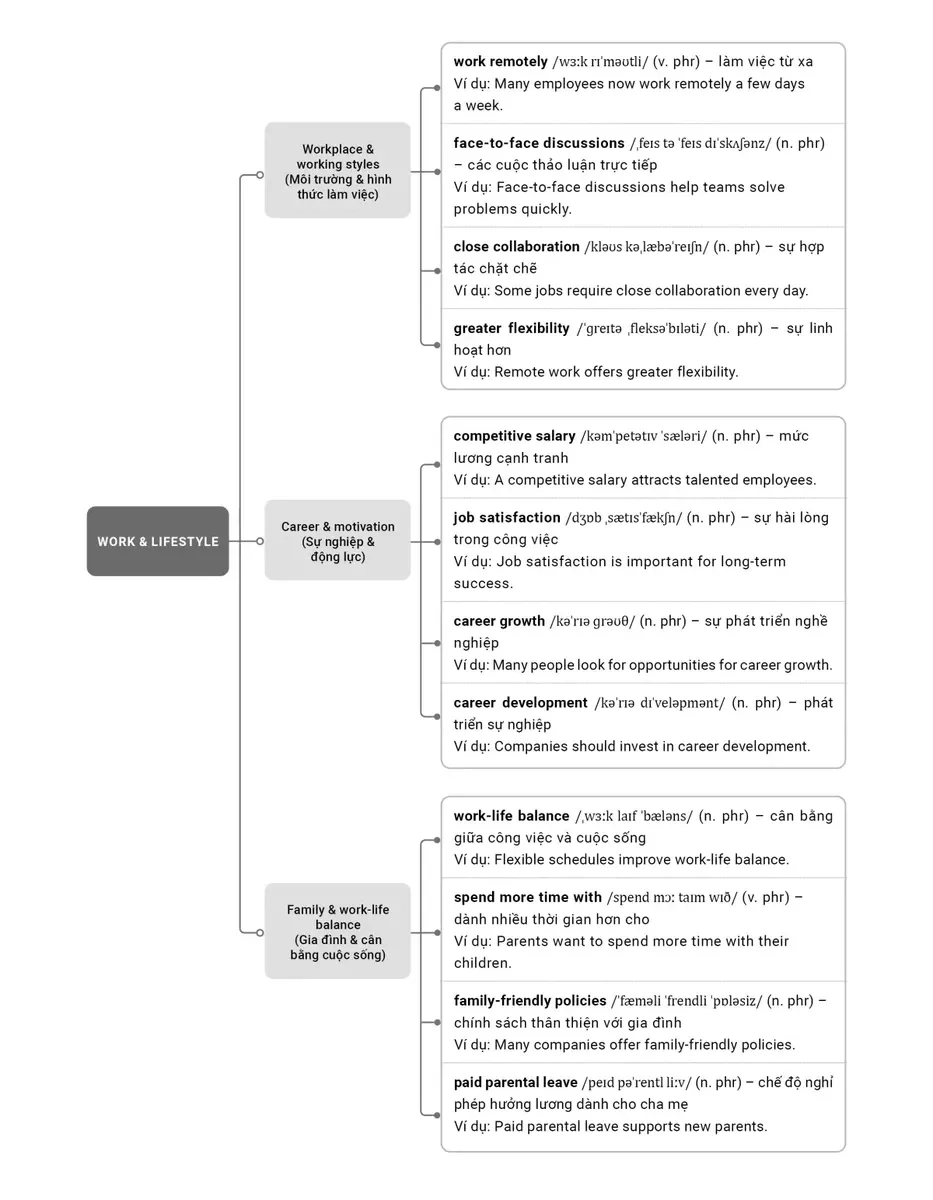
Nhóm từ vựng trọng tâm (Topic Vocabulary): Workplace & Styles, Career & Motivation, và Balance & Benefits.
Bài viết sau đây sẽ cung cấp các câu trả lời mẫu theo khung sườn tư duy (Simple Answer) cùng các thử thách nâng cấp (Upgraded Answer) về cả ý tưởng, từ vựng và ngữ pháp để người học lựa chọn được câu trả lời phù hợp với bản thân, sẵn sàng cho các tình huống trong phòng thi. Bài phân tích này sẽ dẫn dắt người học đi qua chủ đề Work and Lifestyle, từ việc cân nhắc giữa hiệu quả của thảo luận trực tiếp (face-to-face discussions) tại công sở với tính linh hoạt cao (greater flexibility) khi làm việc từ xa (work remotely), cho đến các giải pháp dung hòa giữa mức lương cạnh tranh (competitive salary), sự hài lòng trong công việc (job satisfaction) và việc thiết lập các chính sách thân thiện với gia đình (family-friendly policies), giúp người học chinh phục giám khảo bằng sự mạch lạc và ngôn ngữ tự nhiên.
IELTS Speaking Part 3: Work and lifestyle
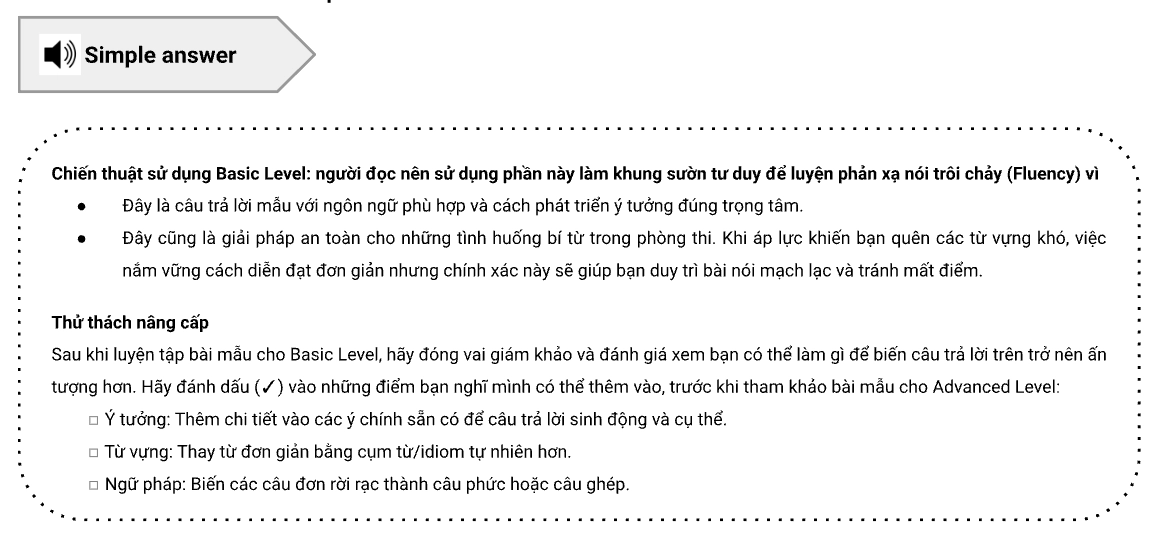
Simple answer
1. Do you think it is better to work remotely or in an office?
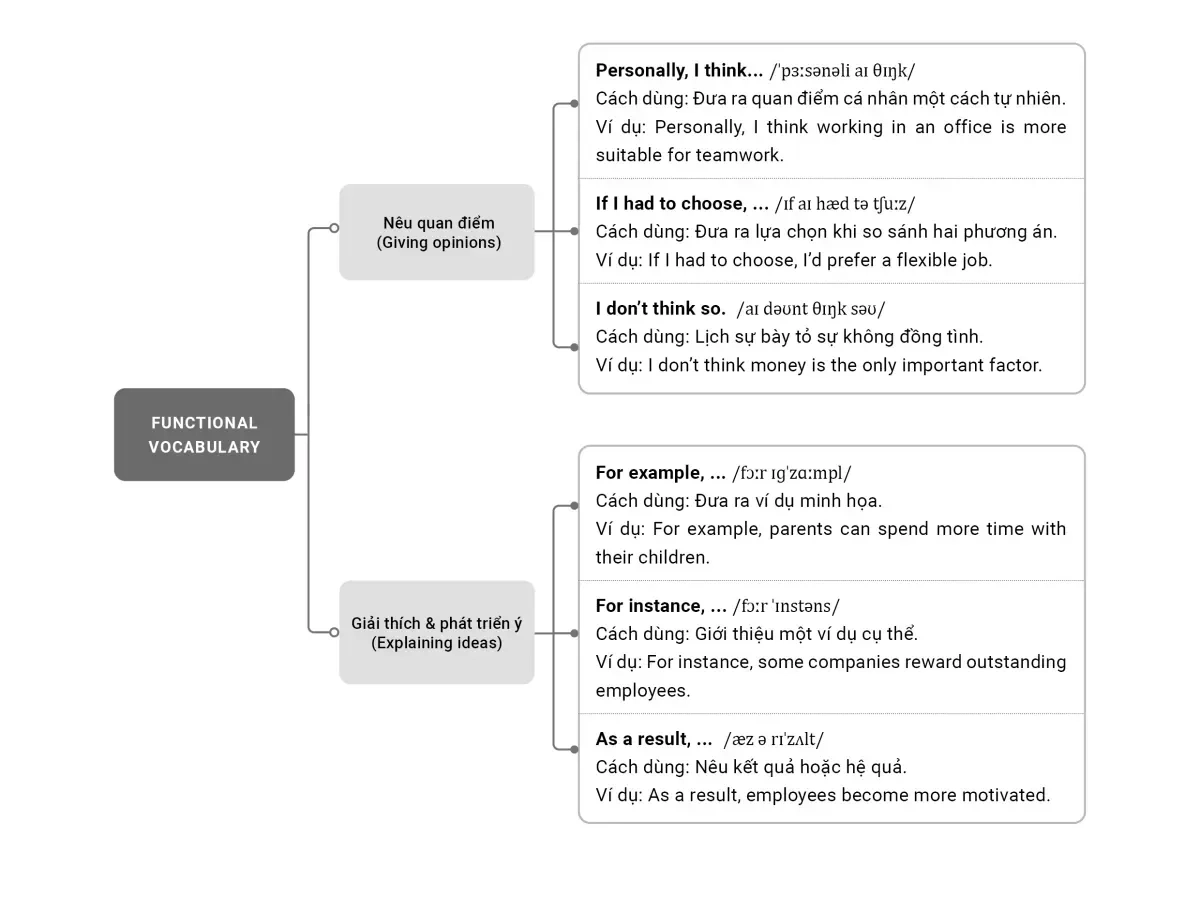
I think it depends on the job, but I slightly prefer working in an office. It's easier to communicate with colleagues and solve problems face to face. For example, team meetings are often more effective in person. So, I think office work is better for teamwork.
2. Is money the most important factor when choosing a job?
No, I don't think so. A good salary is important, but job satisfaction also matters. For example, many people choose jobs they enjoy even if the salary is a little lower. I think finding a balance is more important.
3. What other factors can motivate people to work hard?
Loại câu hỏi: Explanation
Cấu trúc gợi ý: Main factor → Reason → Example → Conclusion
Besides money, opportunities for career growth can motivate people. Many employees work harder if they know they can get promoted. For example, companies often reward good performance with higher positions. This encourages people to do their best.
4. Do you think parents should work from home after having children? Why or why not?
Yes, if their job allows it. Working from home gives parents more time to take care of their children while still earning an income. For example, they can pick up their children from school or spend more time with them during the day. So, I think it can improve work-life balance.
5. How can companies support employees with families?
Loại câu hỏi: Solution / Explanation
Cấu trúc gợi ý: Main solution → Reason → Example → Conclusion
Companies can offer flexible working hours and allow employees to work from home when possible. For example, parents may need time to take their children to school or look after them when they are sick. These policies can reduce stress and help employees work more effectively.
Personally, I think both options have their advantages, but if I had to choose, I'd probably prefer working in an office. Being in the same workplace makes communication much smoother and encourages better teamwork. For example, it's often easier to brainstorm ideas or solve unexpected problems through face-to-face discussions rather than online meetings. That being said, remote work offers greater flexibility and saves commuting time. Overall, I think office work is more suitable for jobs that require close collaboration.
2. Is money the most important factor when choosing a job?
I don't think so. While a competitive salary is certainly important, it's not the only thing people care about. Many employees also value job satisfaction, opportunities for career growth, and a healthy work-life balance. For example, some people choose to work for non-profit organisations because they find the work meaningful, even though the pay may not be particularly high. In the long run, I believe enjoying your job is just as important as earning a good income.
3. What other factors can motivate people to work hard?
Loại câu hỏi: Explanation
Cấu trúc gợi ý: Main factor → Reason → Example → Conclusion
Besides financial rewards, recognition and career development are strong sources of motivation. When employees feel that their efforts are appreciated, they're usually more willing to stay committed to their work. For instance, companies that offer promotion opportunities or recognise outstanding performance often have more motivated staff. As a result, employees are likely to work harder and remain loyal to the company.
4. Do you think parents should work from home after having children? Why or why not?
Yes, provided that their job can be done remotely. Working from home allows parents to spend more time with their children while continuing their careers. For example, they can look after young children, prepare meals, or pick them up from school without spending hours commuting. Of course, separating work from family life can sometimes be challenging. Even so, I think the flexibility of remote work is extremely valuable for parents with young children.
5. How can companies support employees with families?
Loại câu hỏi: Solution / Explanation
Cấu trúc gợi ý: Main solution → Reason → Example → Conclusion
I think the best way is to introduce more family-friendly policies. Flexible working hours, remote working options, and paid parental leave can make a huge difference to employees with children. For example, allowing parents to adjust their schedules makes it easier for them to attend school events or care for a sick child without worrying about work. These measures not only reduce stress but also improve employee satisfaction and loyalty, which ultimately benefits both workers and employers.
Kỉ niệm cá nhân (Gán các từ vựng/ý tưởng đã chọn với kỉ niệm của bản thân)
Ví dụ:career growth – cơ hội phát triển nghề nghiệp
Người đọc tự đặt các câu hỏi cho bản thân, ví dụ:
Nếu được lựa chọn, tôi thích làm việc từ xa hay tại văn phòng? Vì sao?
Điều gì quan trọng nhất với tôi khi chọn một công việc trong tương lai?
Tôi từng có trải nghiệm nào về làm việc nhóm hoặc làm việc trực tuyến chưa?
Theo tôi, công ty lý tưởng nên hỗ trợ nhân viên có gia đình như thế nào?
Tôi sẽ ưu tiên mức lương cao hay một công việc mang lại sự cân bằng cuộc sống?
→ If I had the chance, I'd probably choose a job with greater flexibility because I value a healthy work-life balance. Although a competitive salary is important, job satisfaction and career growth matter just as much to me. In the future, I'd also like to work for a company that offers family-friendly policies and promotion opportunities.
Khoảng trống diễn đạt
(Phần khiến bạn ngập ngừng khi nói về chủ đề trên)
Giải pháp
(Giải pháp cho các khoảng trống diễn đạt)
Ví dụ:
Tôi thường chỉ nói "high salary" mà chưa biết diễn đạt các yếu tố khác khi chọn nghề.
Ví dụ: Dùng từ điển của ZIM hoặc chép các cách diễn đạt từ bài mẫu ở các phần trên để có được cụm từ mà bạn cần.
→ Thay vì chỉ nói high salary, hãy dùng competitive salary, job satisfaction hoặc career growth.
Người đọc có thể tìm từ vựng bằng từ điển ZIM Dictionary.
Từ vựng: work remotely, face-to-face discussions, close collaboration, greater flexibility, competitive salary, job satisfaction, career growth, work-life balance, family-friendly policies, paid parental leave, promotion opportunities, outstanding performance, employee satisfaction, remain loyal ...
Ý tưởng:
Làm việc tại văn phòng phù hợp với những công việc cần giao tiếp trực tiếp và hợp tác chặt chẽ.
Mức lương quan trọng, nhưng sự hài lòng trong công việc, cơ hội phát triển và cân bằng cuộc sống cũng ảnh hưởng lớn đến quyết định nghề nghiệp.
Nhân viên thường có động lực hơn khi được ghi nhận thành tích và có cơ hội thăng tiến.
Làm việc từ xa giúp cha mẹ dành nhiều thời gian hơn cho con cái và cân bằng giữa công việc với gia đình.
Các chính sách như giờ làm việc linh hoạt, làm việc từ xa và nghỉ phép dành cho cha mẹ giúp giảm căng thẳng, nâng cao sự hài lòng và giữ chân nhân viên.
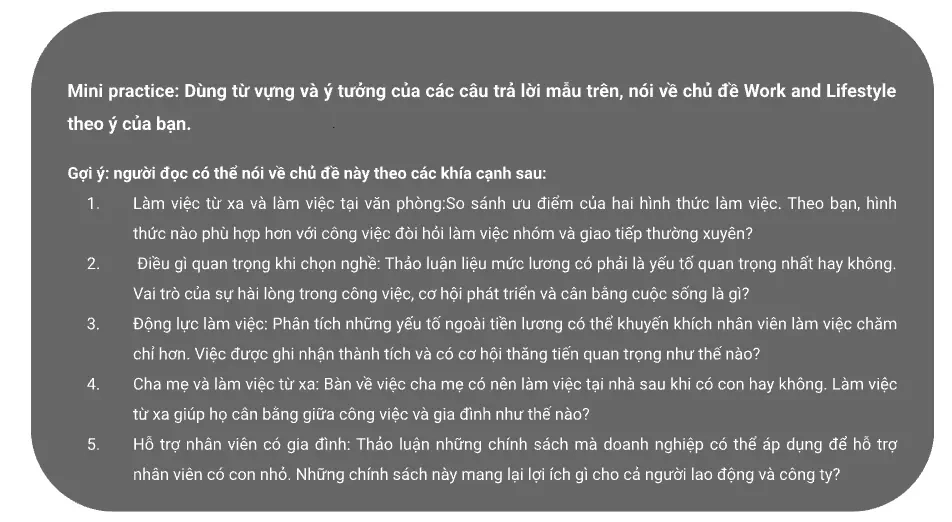
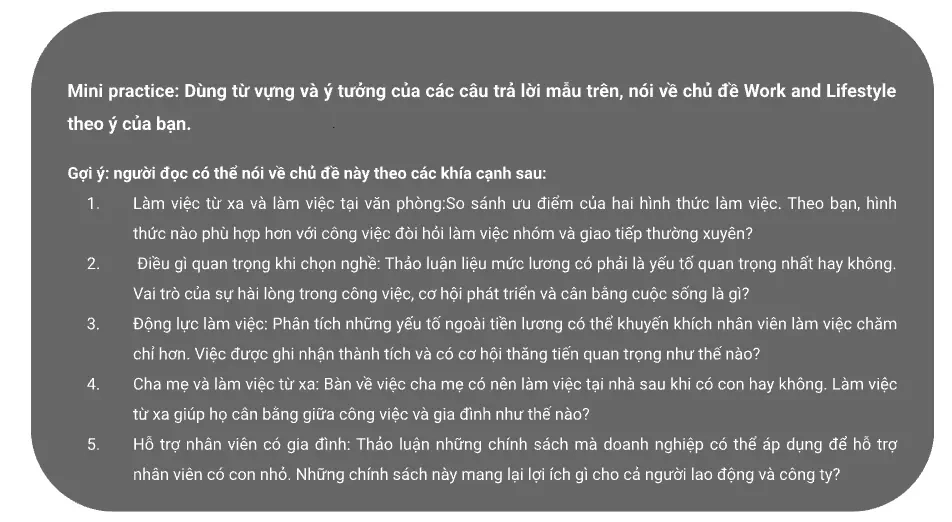
Mini practice: Sử dụng từ vựng và ý tưởng ở trên để trả lời các câu hỏi sau
What makes a company an attractive place to work? (Gợi ý: competitive salary, job satisfaction, career growth)
What are the advantages and disadvantages of working remotely? (Gợi ý: work remotely, greater flexibility, close collaboration)
Why is work-life balance becoming more important nowadays? (Gợi ý: work-life balance, spend more time with family, demanding work schedules)
Tổng kết
Hy vọng rằng qua việc phân tích hai cấp độ trả lời từ Simple Answer để đảm bảo sự trôi chảy đến Upgraded Answer để ghi điểm ấn tượng, bạn đã nắm vững được lộ trình để chinh phục chủ đề Work and lifestyle (Part 3). Bằng cách cá nhân hóa các câu trả lời thông qua "Nhật ký Từ vựng & Ý tưởng", bạn sẽ xây dựng được sự tự tin. Đừng quên thực hành các bài tập nhỏ (mini practice) để khắc phục những lỗi ngữ pháp thường gặp và làm chủ ngôn ngữ của mình nhé!
Nếu bạn muốn nâng cao kỹ năng IELTS Speaking theo lộ trình cá nhân hóa, Hệ thống giáo dục ZIM cung cấp các khóa luyện thi IELTS cam kết đầu ra, giúp bạn tối ưu hiệu quả học tập và tiết kiệm đến 80% thời gian tự học. Để được tư vấn chi tiết, vui lòng liên hệ hotline 1900-2833 (nhánh 1) hoặc truy cập Khóa học IELTS.
Nguồn tham khảo
1
OpenAI. “Bài mẫu IELTS Speaking Part 3.” OpenAI,https://chatgpt.com/share/e/6961b6c8-4368-8002-995c-cd65b4729b18. Accessed 5 July 2026.



Bình luận - Hỏi đáp