


Chủ đề IELTS Speaking: Part 3: Children and Teamwork.
Bài mẫu cho các nhóm câu hỏi:
How do children work in groups?
What can children learn from teamwork?
Should schools offer more group opportunities?
Qualities of a good team leader?
Can everyone become a good leader?
Nhóm từ vựng trọng tâm (Topic Vocabulary): Group Collaboration, Teamwork Skills, và Leadership Traits.
IELTS Speaking Part 3 topic Children and Teamwork kèm từ vựng
Bài viết cung cấp các câu trả lời mẫu cho IELTS Speaking Part 3 (Children and Teamwork) theo định hướng cá nhân hóa, được chia thành hai cấp độ: Simple Answer (tập trung phản xạ và độ trôi chảy) và Upgraded Answer (nâng cấp từ vựng, ngữ pháp). Đi kèm với mỗi câu trả lời là file audio hỗ trợ luyện phát âm chuẩn xác. Ngoài ra, phần phân tích chi tiết sẽ giúp người học hệ thống hóa từ vựng, khắc phục lỗi ngữ pháp và linh hoạt áp dụng vào các chủ đề tương tự.
Key takeaways
Bài viết sau đây sẽ cung cấp các câu trả lời mẫu theo khung sườn tư duy (Simple Answer) cùng các thử thách nâng cấp (Upgraded Answer) về cả ý tưởng, từ vựng và ngữ pháp để người học lựa chọn được câu trả lời phù hợp với bản thân, sẵn sàng cho các tình huống trong phòng thi. Bài phân tích này sẽ dẫn dắt người học đi qua chủ đề Children and Teamwork, từ cách trẻ phân chia nhiệm vụ (divide tasks) và đóng góp vào mục tiêu chung (contribute to a shared goal) cho đến quá trình tôi luyện kỹ năng lắng nghe, đạt được sự thỏa hiệp (reach a compromise) cũng như nghệ thuật điều phối, truyền động lực (motivate the team) của một trưởng nhóm tài năng, giúp người học chinh phục giám khảo bằng sự mạch lạc và ngôn ngữ tự nhiên.
IELTS Speaking Part 3: Children and Teamwork
Simple answer
1. How do children usually work together in groups?
|
Well, children usually work together by sharing tasks and helping each other. In a group, one child may write, another may give ideas, and someone else may present the final answer. For example, when doing a class project, they often divide the work so everyone has something to do. So, teamwork helps children learn how to cooperate with others. |
2. What can children learn from working in a team?
|
Children can learn many useful skills from teamwork. They learn how to listen to others, share ideas, solve problems, and take responsibility for their tasks. For example, if two children have different opinions, they need to discuss the problem and find a solution together. So, teamwork can help children become more cooperative and responsible. |
3. Do you think schools should give children more opportunities to work in groups? Why or why not?
|
Yes, I think schools should give children more chances to work in groups. Group activities can help students improve their communication skills and learn how to cooperate with different people. For example, students can work together on presentations, science projects, or classroom games. So, group work can prepare children for situations they may face in the future. |
4. What qualities does a good team leader need to have?
|
A good team leader should be responsible, patient, and good at communicating. They should listen to everyone’s ideas and make sure each person has a role in the group. For example, if two members disagree, a good leader should stay calm and help them find a solution. So, a good leader needs both communication and problem-solving skills. |
5. Do you think everyone can become a good leader? Why or why not?
|
I think most people can become better leaders, but not everyone will be equally good at it. Leadership skills can be learned through practice and experience, but some people may naturally be more confident or better at communicating. For example, a shy student can become a better leader after taking part in more group activities. So, leadership can be developed, but it may be easier for some people than others. |
Tham khảo: Tổng hợp bài mẫu IELTS Speaking 2026
Upgraded answer
1. How do children usually work together in groups?
|
Well, children usually work together by dividing tasks and taking on different roles. Some children may be good at coming up with ideas, while others may prefer organising the work or presenting the final result. For example, in a school project, one child might do the research, another could prepare the slides, and someone else could speak for the group. On top of that, they also need to communicate regularly and help one another when someone has difficulty with a task. So overall, group work helps children learn how to cooperate and contribute to a shared goal. |
2. What can children learn from working in a team?
|
Children can learn a wide range of useful skills from teamwork. They can improve their communication, learn how to listen to others, and become more responsible for their own tasks. They can also develop patience and problem-solving skills when different opinions come up. For example, if two children disagree, they need to discuss the problem and reach a compromise instead of simply insisting on their own idea. Another benefit is that teamwork teaches children how to respect people with different personalities and ways of thinking. So, these skills can prepare them for future situations at school, university, and work. |
3. Do you think schools should give children more opportunities to work in groups? Why or why not?
|
Yes, definitely. I think schools should give children more opportunities to work in groups because teamwork is an important skill in both education and daily life. Group activities encourage students to communicate, exchange ideas, and work with different personalities. For example, they can complete science projects, prepare presentations, or solve practical problems together. That said, group work is not always effective because sometimes one or two students may end up doing most of the work while others contribute very little. So, schools should provide more group activities, but teachers also need to make sure that everyone has a clear role and takes responsibility. |
4. What qualities does a good team leader need to have?
|
I think a good team leader needs to be responsible, patient, and good at communicating. They should listen to different opinions, divide tasks fairly, and make sure everyone feels involved. For example, if two members disagree, a good leader should stay calm, understand both sides, and help them find a reasonable solution. On top of that, they should also know how to motivate the team, especially when people feel tired or lose interest. So, effective leadership is mainly about guiding and supporting the team rather than simply telling people what to do. |
5. Do you think everyone can become a good leader? Why or why not?
|
To some extent, yes. I believe most people can improve their leadership skills through practice, experience, and feedback. Skills such as communication, decision-making, and problem-solving can all be developed over time. For example, a shy student may become more confident after leading several group projects. On the other hand, some people may naturally find leadership easier because they are more organised, confident, or comfortable making decisions. So, almost anyone can become a better leader, but not everyone will necessarily become an outstanding one. |
Xem thêm: 3 cách thức tư duy câu trả lời IELTS Speaking Part 3
Lọc và phân tích từ vựng
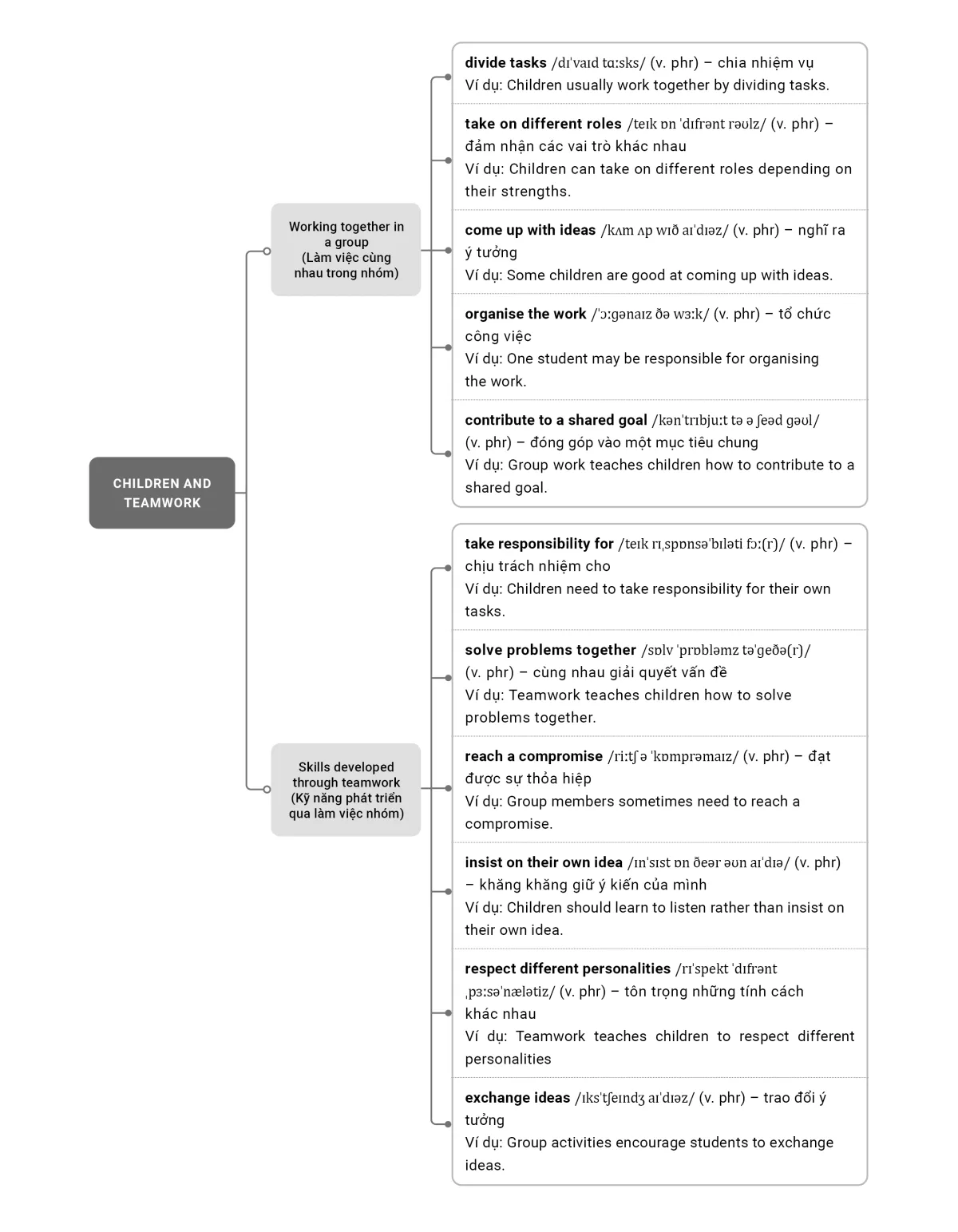
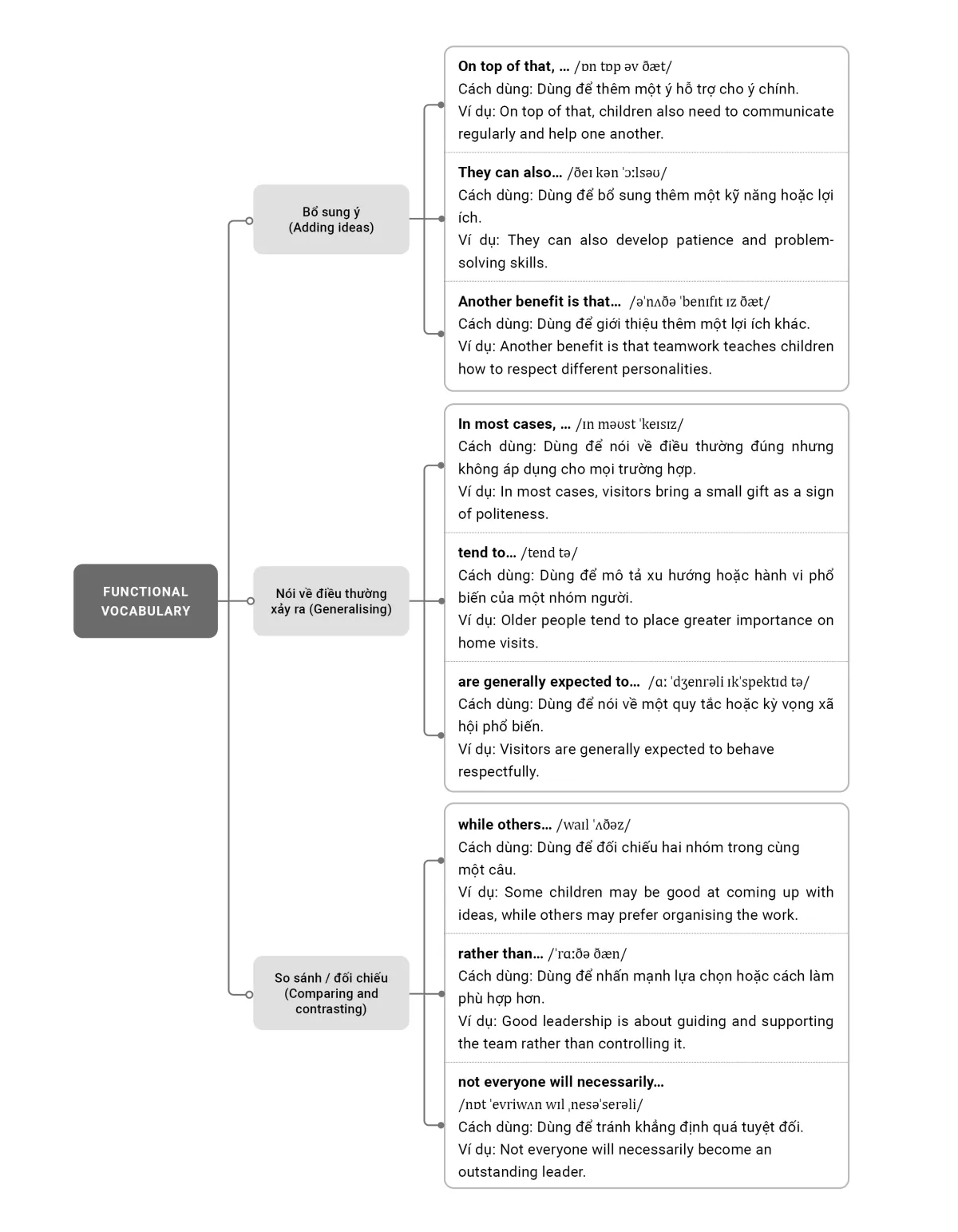
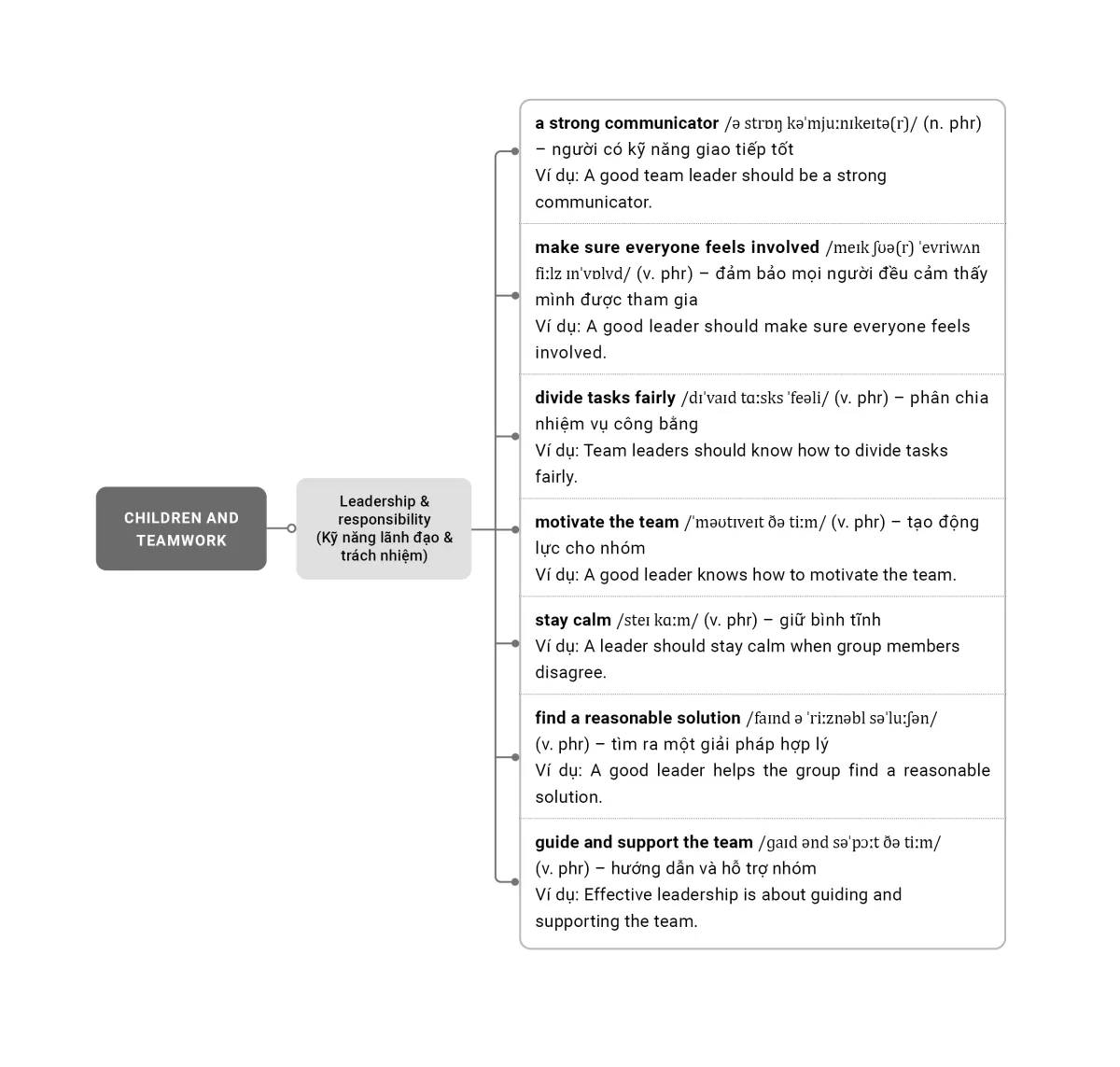
Nhật ký Từ vựng & Ý tưởng
Ghi chú sau khi luyện tập nói về chủ đề trên
Từ vựng/Ý tưởng (Chọn các từ vựng/ý tưởng mà bạn tâm đắc nhất) | Kỉ niệm cá nhân (Gán các từ vựng/ý tưởng đã chọn với kỉ niệm của bản thân) |
|---|---|
Ví dụ: reach a compromise – đạt được sự thỏa hiệp | Người đọc tự đặt các câu hỏi cho bản thân, ví dụ:
→ I often work in groups at school, especially for presentations and projects. I usually help organise the work and make sure everyone has a clear task. Sometimes, group members have different opinions, so we need to discuss the problem and reach a compromise. These experiences have helped me become more confident and improve my communication skills. I also think teamwork has taught me how to take responsibility for my own part of the work. |
Khoảng trống diễn đạt (Phần khiến bạn ngập ngừng khi nói về chủ đề trên) | Giải pháp (Giải pháp cho các khoảng trống diễn đạt) | ||
|---|---|---|---|
Ví dụ:
| Ví dụ: Dùng từ điển của ZIM hoặc chép các cách diễn đạt từ bài mẫu ở các phần trên để có được cụm từ mà bạn cần. → Thay vì chỉ nói work together → dùng divide tasks / take on different roles / contribute to a shared goal |
Người đọc có thể tìm từ vựng bằng từ điển ZIM Dictionary.
Các lỗi ngữ pháp/từ vựng thường gặp
1. Dùng sai cấu trúc “be responsible for + V-ing”
❌ Lỗi thường gặp:
Each student is responsible to complete their own task.
The leader is responsible for divide the work fairly.
✅ Cách dùng đúng:
be responsible for + noun
be responsible for + V-ing
✔ Câu đúng:
Each student is responsible for completing their own task.
The leader is responsible for dividing the work fairly.
📌 Lý do sai:
“Responsible” đi với giới từ “for”, và nếu phía sau là động từ thì phải dùng V-ing.
2. Dùng sai cấu trúc “encourage someone to do something”
❌ Lỗi thường gặp:
Group activities encourage students communicate with each other.
Teachers should encourage children working together more often.
✅ Cách dùng đúng:
encourage + someone + to V
✔ Câu đúng:
Group activities encourage students to communicate with each other.
Teachers should encourage children to work together more often.
📌 Lý do sai:
Sau “encourage + someone”, cần dùng “to + động từ nguyên mẫu”.
3. Dùng sai mệnh đề thời gian với “when”
❌ Lỗi thường gặp:
When two students will disagree, they need to discuss the problem.
When children will work in groups, they can learn how to cooperate.
✅ Cách dùng đúng:
when + present simple, main clause
✔ Câu đúng:
When two students disagree, they need to discuss the problem.
When children work in groups, they can learn how to cooperate.
📌 Lý do sai:
Trong mệnh đề thời gian với “when”, thường không dùng “will” để nói về tình huống tương lai thông thường.
Mini practice |
|---|
Dùng đúng cấu trúc trong ngoặc
|
Các chủ đề liên quan
Chủ đề liên quan để sử dụng từ vựng & ý tưởng:
School education (Giáo dục ở trường)
Communication skills (Kỹ năng giao tiếp)
Leadership and responsibility (Lãnh đạo và trách nhiệm)
Người đọc có thể sử dụng:
Từ vựng: divide tasks, take on different roles, contribute to a shared goal, take responsibility for, reach a compromise, exchange ideas, motivate the team, guide and support the team, decision-making skills, become more confident ...
Ý tưởng:
Làm việc nhóm giúp trẻ học cách chia sẻ nhiệm vụ và phối hợp với người khác.
Trẻ có thể cải thiện kỹ năng giao tiếp, giải quyết vấn đề và chịu trách nhiệm cho phần việc của mình.
Trường học nên tạo thêm cơ hội làm việc nhóm vì đây là kỹ năng hữu ích trong học tập và công việc sau này.
Một leader tốt cần biết lắng nghe, phân chia công việc công bằng và hỗ trợ các thành viên.
Kỹ năng lãnh đạo có thể được phát triển qua luyện tập, kinh nghiệm và phản hồi.
Mini practice |
|---|
Sử dụng từ vựng và ý tưởng ở trên để trả lời các câu hỏi sau:
|
Hy vọng rằng qua việc phân tích hai cấp độ trả lời từ Simple Answer để đảm bảo sự trôi chảy đến Upgraded Answer để ghi điểm ấn tượng, bạn đã nắm vững được lộ trình để chinh phục chủ đề Children and Teamwork (Part 3). Bằng cách cá nhân hóa các câu trả lời thông qua "Nhật ký Từ vựng & Ý tưởng", bạn sẽ xây dựng được sự tự tin. Đừng quên thực hành các bài tập nhỏ (mini practice) để khắc phục những lỗi ngữ pháp thường gặp và làm chủ ngôn ngữ của mình nhé!
Nếu bạn muốn nâng cao kỹ năng IELTS Speaking theo lộ trình cá nhân hóa, Hệ thống giáo dục ZIM cung cấp các khóa luyện thi IELTS cam kết đầu ra, giúp bạn tối ưu hiệu quả học tập và tiết kiệm đến 80% thời gian tự học. Để được tư vấn chi tiết, vui lòng liên hệ hotline 1900-2833 (nhánh 1) hoặc truy cập Khóa học IELTS.
Nguồn tham khảo
1
“Bài mẫu IELTS Speaking Part 3.” OpenAI, https://chatgpt.com/share/e/6961b6c8-4368-8002-995c-cd65b4729b18. Accessed 15 August 2026.
Bình luận - Hỏi đáp