


Chủ đề IELTS Speaking Part 3: Famous People.
Bài mẫu cho nhóm câu hỏi:
Why are people interested in celebrities?
Positive vs. Negative influence of famous people?
Popular types of famous people in your country?
Impact on young people vs. older people?
How social media changed celebrity interaction?
Nhóm từ vựng: Topic Vocabulary: Public interest, Influence, Popularity & Media, và Interaction.
Bài mẫu IELTS Speaking Part 3 Topic “Famous People” kèm từ vựng
Trong bài viết này, tác giả sẽ gợi ý bài mẫu cho Topic “Famous People” và phân tích các từ vựng ghi điểm cho phần thi IELTS Speaking Part 3.
Key takeaways
Bài viết sau đây sẽ cung cấp các câu trả lời mẫu theo khung sườn tư duy (Simple Answer) cùng các thử thách nâng cấp (Upgraded Answer) về cả ý tưởng, từ vựng và ngữ pháp để người học lựa chọn được câu trả lời phù hợp với bản thân, sẵn sàng cho các tình huống trong phòng thi. Bài phân tích này sẽ dẫn dắt người học đi qua các câu trả lời mẫu cho chủ đề IELTS Speaking Part 3 Famous People, từ những khái niệm về sự nổi tiếng như 'in the spotlight', 'public figures' đến những thảo luận về tác động xã hội như 'constructive change' hay 'intense scrutiny', giúp người học chinh phục giám khảo bằng sự mạch lạc và ngôn ngữ tự nhiên.
IELTS Speaking Part 3: Famous People
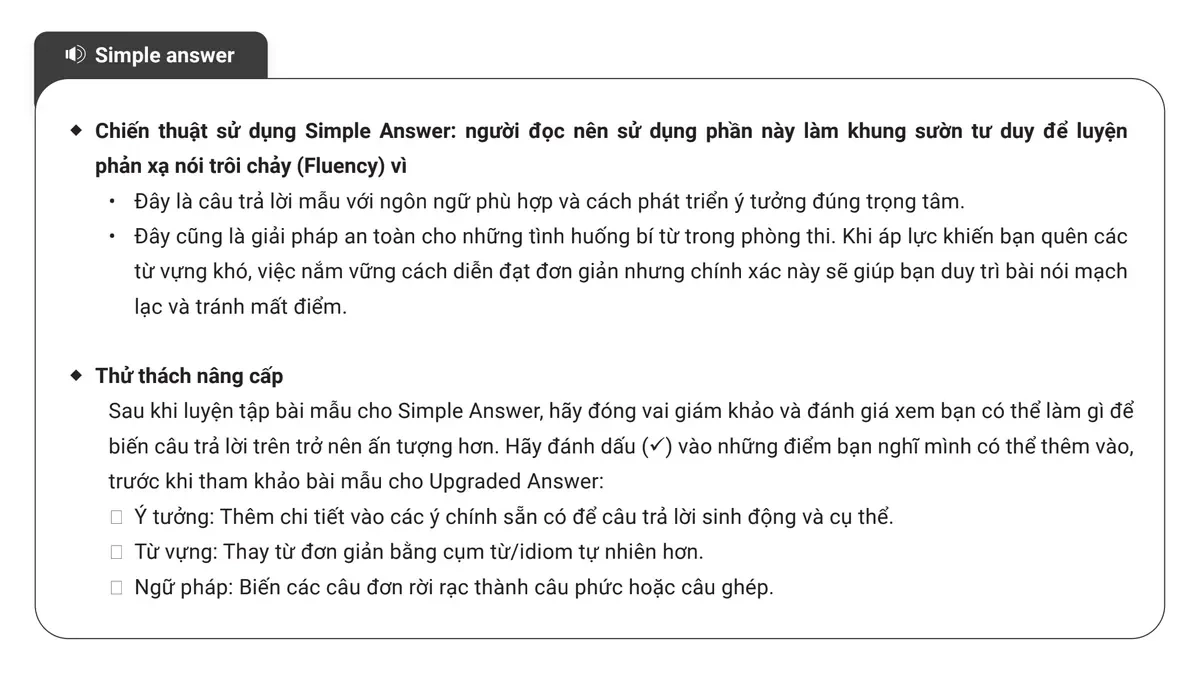
Simple answer
1. Why are some people interested in famous celebrities or public figures?
|
I think many people are interested in celebrities because they are successful and have exciting lifestyles. People often admire their talent, achievements, and fashion sense. For example, fans may follow famous singers like Taylor Swift to keep up with her music and personal life. So overall, celebrities attract attention because they are inspiring and entertaining. |
2. Do you think famous people have a positive influence on the public? Why or why not?
|
Yes, I believe famous people can have a positive influence on the public. The main reason is that they often use their popularity to promote good causes such as charity, education, and environmental protection. For instance, many celebrities encourage people to donate to disaster relief funds or adopt healthier lifestyles. Therefore, they can inspire positive changes in society. |
3. What kinds of famous people are most popular in your country?
|
In my country, singers, actors, and social media influencers are the most popular. Many young people follow pop stars and movie celebrities because of their talent and attractive lifestyles. For example, well-known singers often gain millions of followers on social media. Overall, entertainers are the most widely admired public figures. |
4. Do you think young people are more influenced by famous people than older people?
|
Yes, I think young people are more influenced by famous people. This is because teenagers and young adults spend a lot of time on social media, where they constantly see celebrities’ lifestyles, opinions, and fashion trends. For example, many young people buy clothes or products recommended by their favorite influencers. So, celebrities tend to have a stronger impact on younger generations. |
5. How has social media changed the way famous people interact with the public?
|
Social media has made communication between celebrities and the public much faster and more direct. In the past, fans could only see famous people on TV or in newspapers, but now they can interact through platforms like Instagram, TikTok, and Facebook. For example, celebrities can reply to comments, livestream, or share daily updates. As a result, the relationship between famous people and their fans has become closer and more personal. |
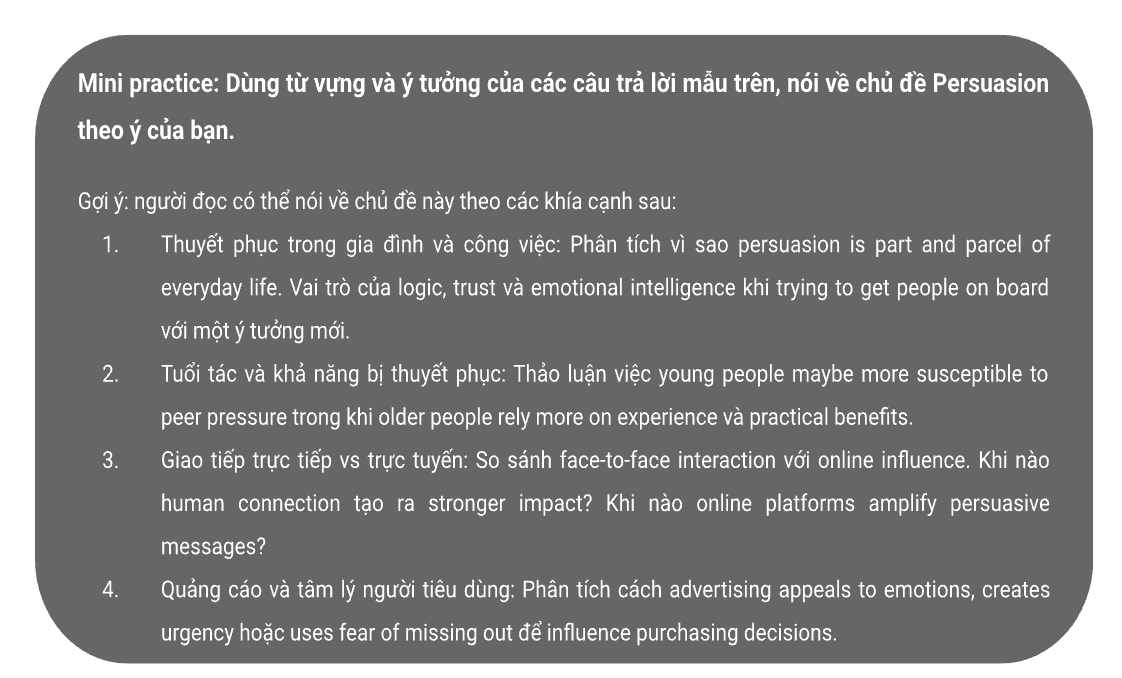
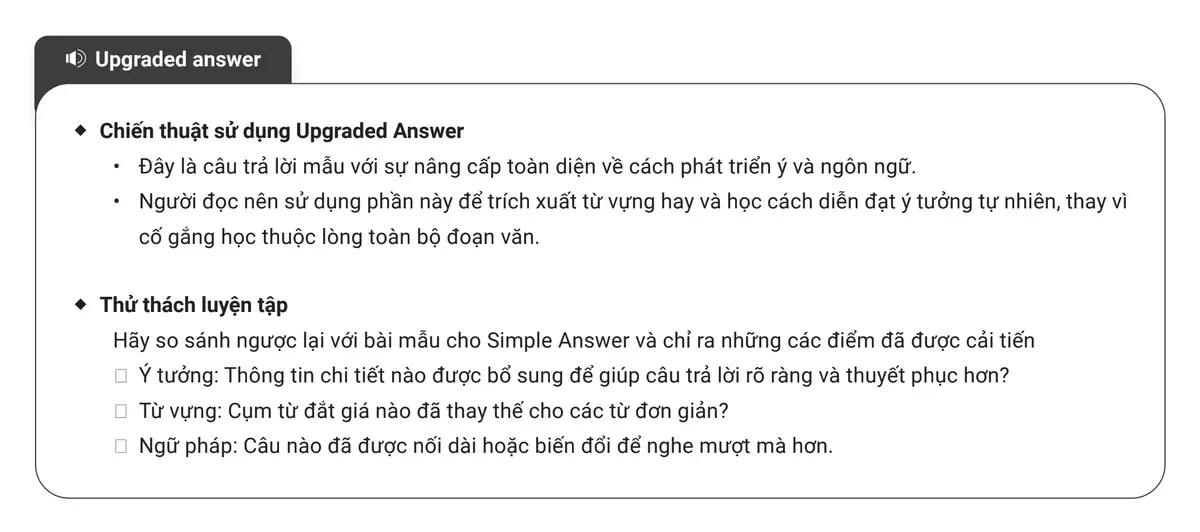
Upgraded answer
1. Why are some people interested in famous celebrities or public figures?
|
Well, I’d say it mainly stems from admiration and human curiosity. Celebrities often embody success, talent, and a lifestyle that many people aspire to. Beyond that, the media constantly places them in the spotlight, which naturally fuels public interest. For example, global icons like Beyoncé or Messi are admired not just for their talent but also for their personal journeys and work ethic. In short, people are drawn to individuals who seem to live extraordinary lives. |
2. Do you think famous people have a positive influence on the public? Why or why not?
|
I do believe famous people can have a positive influence, especially when they use their platform responsibly. Many celebrities advocate for meaningful causes such as environmental protection or mental health awareness. For instance, some actors actively support climate campaigns and encourage sustainable living. That said, not all influence is beneficial—some public figures promote unrealistic lifestyles or materialism. Even so, when guided by strong values, celebrities can genuinely inspire constructive change. |
3. What kinds of famous people are most popular in your country?
|
In my country, entertainers—particularly singers, actors, and online influencers—tend to dominate public attention. This is largely because they have a strong presence on social media and television, making them more relatable and visible to the public. For example, several pop singers consistently top music charts and attract millions of followers online. While athletes and entrepreneurs are also respected, entertainers arguably enjoy the widest appeal due to their constant exposure in the media. |
4. Do you think young people are more influenced by famous people than older people?
|
Yes, generally speaking, young people are more susceptible to celebrity influence. They tend to spend more time on social media platforms, where influencers and public figures shape trends in fashion, behavior, and even opinions. For example, it’s quite common for teenagers to purchase products endorsed by their favorite influencers without much hesitation. Older individuals, on the other hand, are usually more critical and less easily swayed. So overall, the impact of celebrities is significantly stronger among younger generations. |
5. How has social media changed the way famous people interact with the public?
|
Well, I believe social media has fundamentally reshaped celebrity–public interaction by making it far more direct and immediate. In the past, communication was largely one-directional and filtered through traditional media outlets. Nowadays, celebrities can post updates, host live sessions, and even respond to fans in real time. For instance, many public figures livestream daily activities or interact through comment sections, which creates a sense of closeness. However, this constant visibility also subjects them to intense scrutiny. Even so, social media has undeniably made interactions more dynamic and personal than ever before. |
Đọc thêm: IELTS Speaking Part 3 Topic Smiling and Emotions
Lọc và phân tích từ vựng
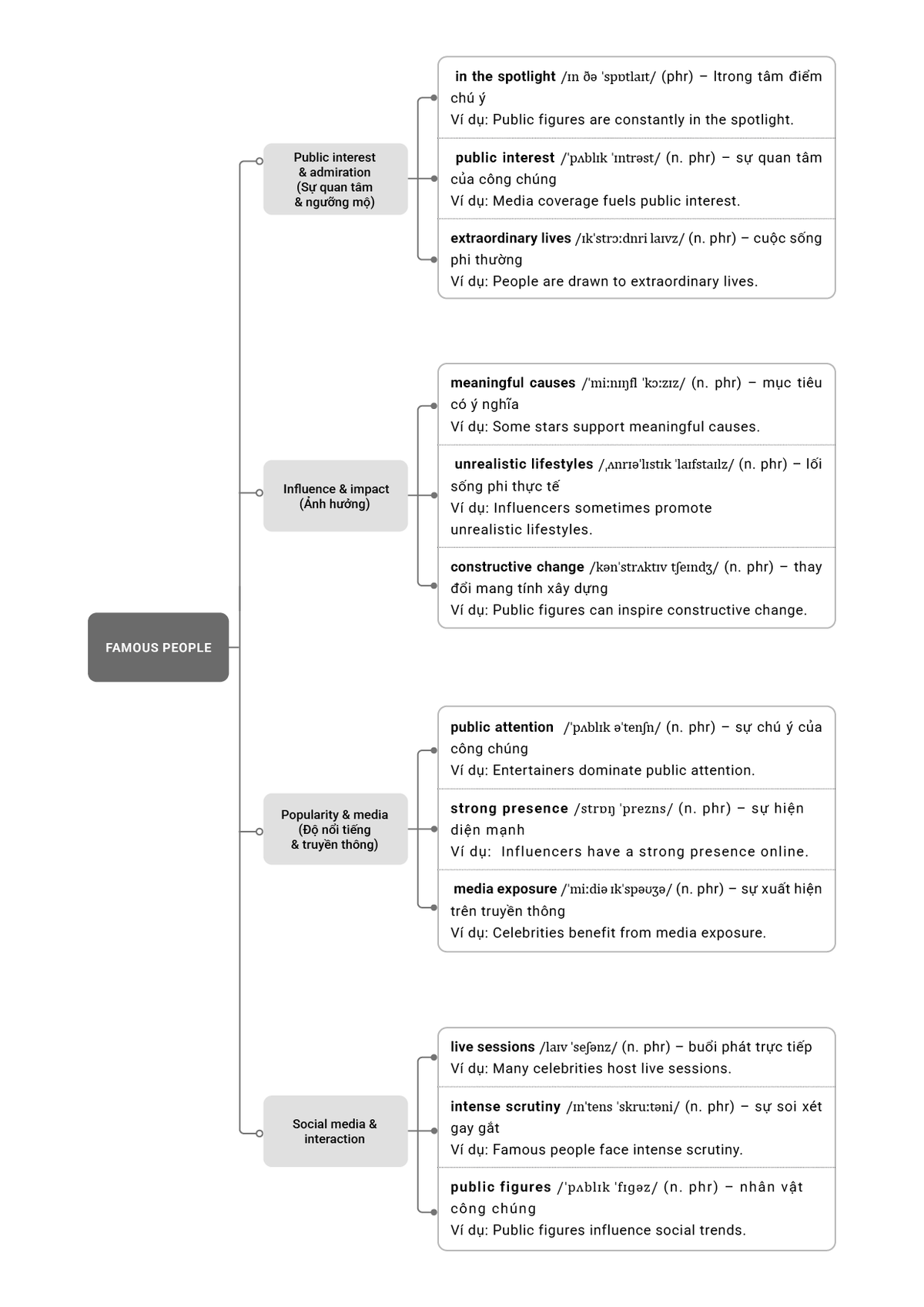
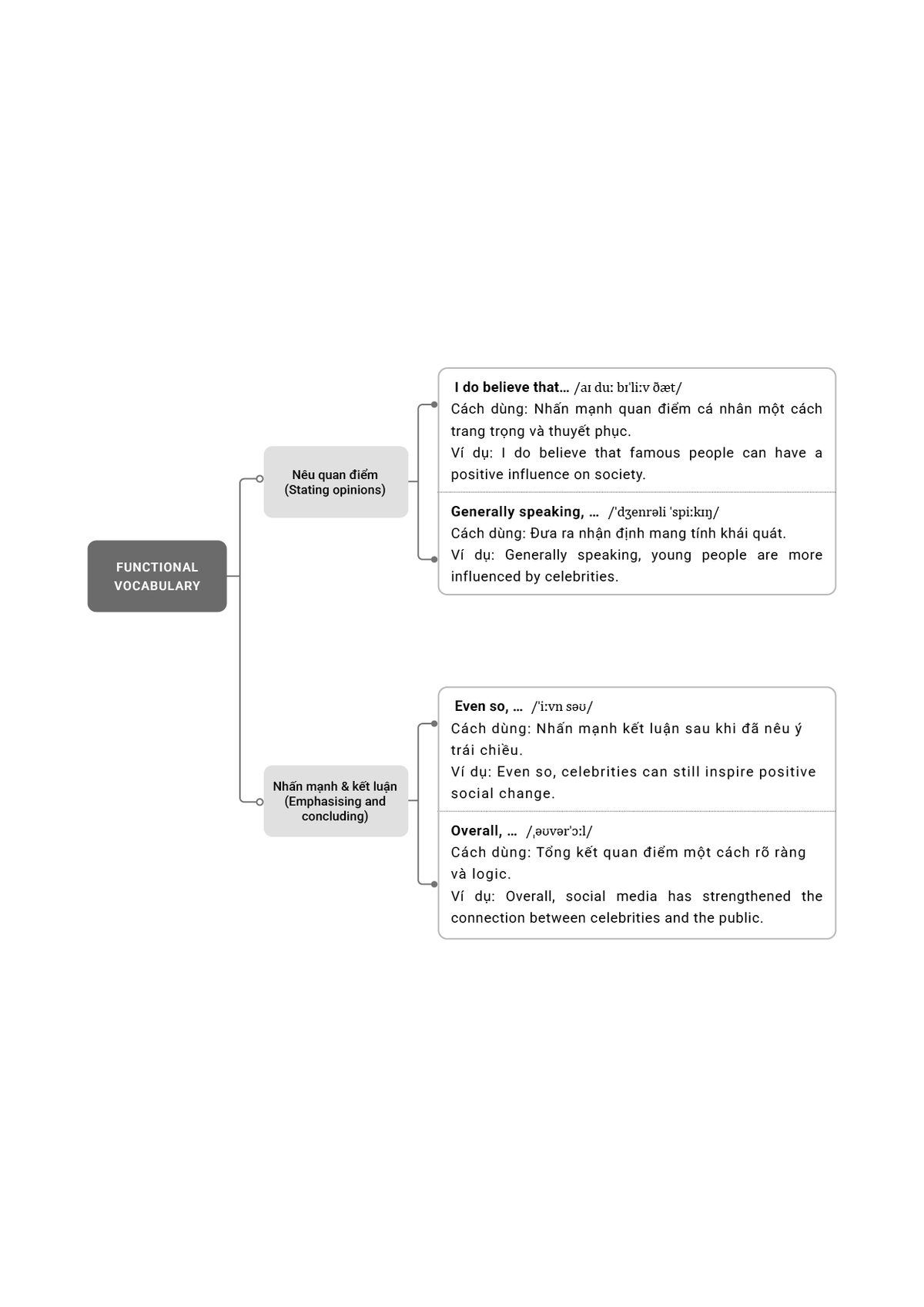
Nhật ký Từ vựng & Ý tưởng
Ghi chú sau khi luyện tập nói về chủ đề trên
Từ vựng/Ý tưởng (Chọn các từ vựng/ý tưởng mà bạn tâm đắc nhất) | Kỉ niệm cá nhân |
|---|---|
Ví dụ: in the spotlight – ở trong tâm điểm chú ý | Người đọc tự đặt các câu hỏi cho bản thân, ví dụ:
→ When I was in high school, I really admired a famous football player who was always in the spotlight but still remained humble. He often supported meaningful causes, especially charity projects for children. Because of his positive influence, I started taking part in volunteer activities at school. Social media also allowed fans like me to interact with him through posts and live sessions, which created a strong sense of connection. |
Khoảng trống diễn đạt (Phần khiến bạn ngập ngừng khi nói về chủ đề trên) | Giải pháp (Giải pháp cho các khoảng trống diễn đạt) |
|---|---|
Ví dụ:
| Ví dụ: Dùng từ điển của ZIM hoặc chép các cách diễn đạt từ bài mẫu ở các phần trên để có được cụm từ mà bạn cần. → Thay vì nói “very famous” → dùng in the spotlight / well-known public figure → Thay vì nói “influence people a lot” → dùng have a positive influence on / inspire constructive change. |
Người đọc có thể tìm từ vựng bằng từ điển ZIM Dictionary.
Các lỗi ngữ pháp thường gặp
1. Dùng sai “influence” (danh từ) và “influence” (động từ)
❌ Lỗi thường gặp:
Celebrities have a big influence to young people.
Celebrities influence on young people a lot.
✅ Cách dùng đúng:
have an influence on + someone (danh từ)
influence + someone (động từ, không có “on”)
✔ Câu đúng:
Celebrities have a big influence on young people.
Celebrities influence young people a lot.
📌 Lý do sai:
Người học dễ nhầm lẫn giữa cấu trúc của danh từ và động từ “influence”, dẫn đến việc dùng sai hoặc thừa giới từ “on”.
2. Dùng sai mệnh đề quan hệ với người: “who” và “which”
❌ Lỗi thường gặp:
Famous people which appear on social media attract a lot of attention.
✅ Cách dùng đúng:
who / that → dùng cho người
which → dùng cho vật
✔ Câu đúng:
Famous people who appear on social media attract a lot of attention.
Famous people that appear on social media attract a lot of attention.
📌 Lý do sai:
Người học thường dùng “which” cho mọi danh từ. Tuy nhiên, khi nói về con người, cần dùng “who” hoặc “that”.
3. Dùng sai cấu trúc so sánh hơn với “more”
❌ Lỗi thường gặp:
Young people are more easier to be influenced by celebrities.
✅ Cách dùng đúng:
Không dùng more với tính từ ngắn đã có đuôi -er.
Dùng: easier hoặc more likely to be influenced (tự nhiên hơn trong Speaking).
✔ Câu đúng:
Young people are easier to influence than older people.
Young people are more likely to be influenced by celebrities.
📌 Lý do sai:
Người học thường kết hợp “more” với tính từ dạng so sánh hơn (easier, better, faster), tạo thành lỗi “double comparison”.
Mini practice |
|---|
Dùng đúng cấu trúc trong ngoặc 1. Hãy nói rằng người nổi tiếng có ảnh hưởng lớn đến giới trẻ. (Dùng: have an influence on / influence + someone – không dùng “influence on” với động từ) 2. Hãy nói về những người nổi tiếng xuất hiện trên mạng xã hội và thu hút nhiều sự chú ý. (Dùng: who / that cho người – không dùng “which”) 3. Hãy nói rằng người trẻ dễ bị ảnh hưởng bởi người nổi tiếng hơn người lớn tuổi. (Dùng: easier / more likely – không dùng “more easier”) |
Các chủ đề liên quan
Chủ đề liên quan để sử dụng từ vựng & ý tưởng:
Social media and technology (Mạng xã hội & công nghệ)
Role models and young people (Hình mẫu & giới trẻ)
Culture and entertainment (Văn hóa & giải trí)
Người đọc có thể sử dụng:
Từ vựng: lavish lifestyle, in the spotlight, public interest, meaningful causes, unrealistic lifestyles, constructive change, public attention, strong presence, media exposure, live sessions, intense scrutiny, public figures...
Ý tưởng:
Người nổi tiếng thu hút sự chú ý vì tài năng, danh tiếng và lối sống hấp dẫn.
Người nổi tiếng có thể tạo ảnh hưởng tích cực bằng cách ủng hộ các hoạt động xã hội và truyền cảm hứng cho công chúng.
Nghệ sĩ và influencer là những nhân vật nổi tiếng phổ biến nhất nhờ sự hiện diện mạnh mẽ trên mạng xã hội.
Giới trẻ dễ bị ảnh hưởng bởi người nổi tiếng hơn do họ sử dụng mạng xã hội thường xuyên và có xu hướng bắt chước thần tượng.
Mini practice |
|---|
Sử dụng từ vựng và ý tưởng ở trên để trả lời các câu hỏi sau 1. How does persuasion play an important role in business and marketing? (Gợi ý: build trust, brand image, consumer behaviour, emotional appeal, logical reasoning) 2. Do you think social media makes people easier to persuade? Why or why not? (Gợi ý: peer pressure, shape public opinion, sway someone's opinion, fear of missing out, online influence) 3. Should schools teach students how to resist persuasion? Why? (Gợi ý: critical thinking skills, media literacy, emotional appeal, logical reasoning, make informed decisions) |
Tìm hiểu thêm: Thi thử IELTS - Trải nghiệm chuẩn thi thật tại Anh Ngữ ZIM
Tổng kết
Hy vọng rằng qua việc phân tích hai cấp độ trả lời từ Simple Answer để đảm bảo sự trôi chảy đến Upgraded Answer để ghi điểm ấn tượng, bạn đã nắm vững được lộ trình để chinh phục chủ đề Famous People (Part 3). Bằng cách cá nhân hóa các câu trả lời thông qua "Nhật ký Từ vựng & Ý tưởng", bạn sẽ xây dựng được sự tự tin. Đừng quên thực hành các bài tập nhỏ (mini practice) để khắc phục những lỗi ngữ pháp thường gặp và làm chủ ngôn ngữ của mình nhé!
Nếu bạn muốn nâng cao kỹ năng IELTS Speaking theo lộ trình cá nhân hóa, Hệ thống giáo dục ZIM cung cấp các khóa luyện thi IELTS cam kết đầu ra, giúp bạn tối ưu hiệu quả học tập và tiết kiệm đến 80% thời gian tự học. Để được tư vấn chi tiết, vui lòng liên hệ hotline 1900-2833 (nhánh 1) hoặc truy cập Khóa học IELTS.
Nguồn tham khảo
1
“Bài mẫu IELTS Speaking Part 3.” OpenAI, https://chatgpt.com/share/e/6961bf62-bf88-8002-9512-8fe28a8cdcf4. Accessed 10 April 2026.
Bình luận - Hỏi đáp