


Chủ đề IELTS Speaking: Part 3: Time, Money & Pressure.
Bài mẫu cho các nhóm câu hỏi:
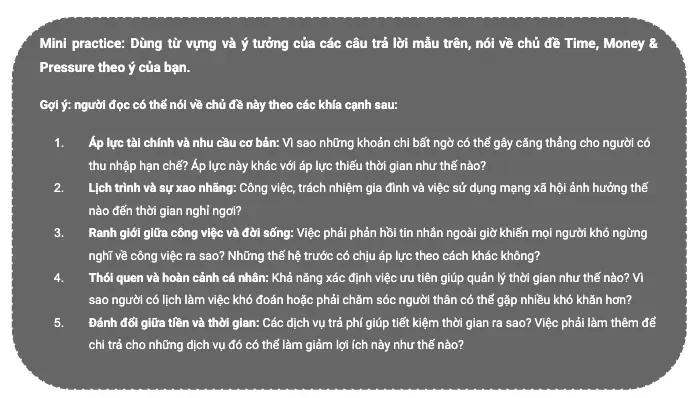
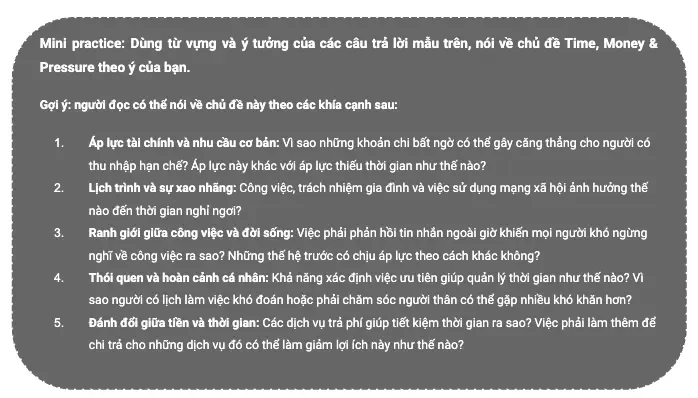
Lack of time or money puts more pressure?
Why do people feel lack of time nowadays?
Under more time pressure than in the past?
Why are some people better at time management?
Can having more money help save time?
Nhóm từ vựng trọng tâm (Topic Vocabulary):
Financial Pressure, Busy Schedules & Boundaries, và Time Management.
Bài mẫu IELTS Speaking Part 3 topic Time, Money & Pressure
Bài viết cung cấp các câu trả lời mẫu cho IELTS Speaking Part 3 (Elderly People and Their Lives) theo định hướng cá nhân hóa, được chia thành hai cấp độ: Simple Answer (tập trung phản xạ và độ trôi chảy) và Upgraded Answer (nâng cấp từ vựng, ngữ pháp). Đi kèm với mỗi câu trả lời là file audio hỗ trợ luyện phát âm chuẩn xác. Ngoài ra, phần phân tích chi tiết sẽ giúp người học hệ thống hóa từ vựng, khắc phục lỗi ngữ pháp và linh hoạt áp dụng vào các chủ đề tương tự.
Key takeaways
Bài viết sau đây sẽ cung cấp các câu trả lời mẫu theo khung sườn tư duy (Simple Answer) cùng các thử thách nâng cấp (Upgraded Answer) về cả ý tưởng, từ vựng và ngữ pháp để người học lựa chọn được câu trả lời phù hợp với bản thân, sẵn sàng cho các tình huống trong phòng thi. Bài phân tích này sẽ dẫn dắt người học đi qua chủ đề Time, Money & Pressure, từ việc đặt lên bàn cân so sánh giữa áp lực do thiếu hụt tài chính để đáp ứng các nhu cầu cơ bản (meet basic needs) với việc đối mặt với lịch trình dày đặc (demanding schedules), cho đến nguyên nhân khiến ranh giới giữa công việc và đời sống cá nhân dần bị xóa mờ (the boundary between work and personal life), giúp người học chinh phục giám khảo bằng sự mạch lạc và ngôn ngữ tự nhiên.
IELTS Speaking Part 3: Time, Money & Pressure
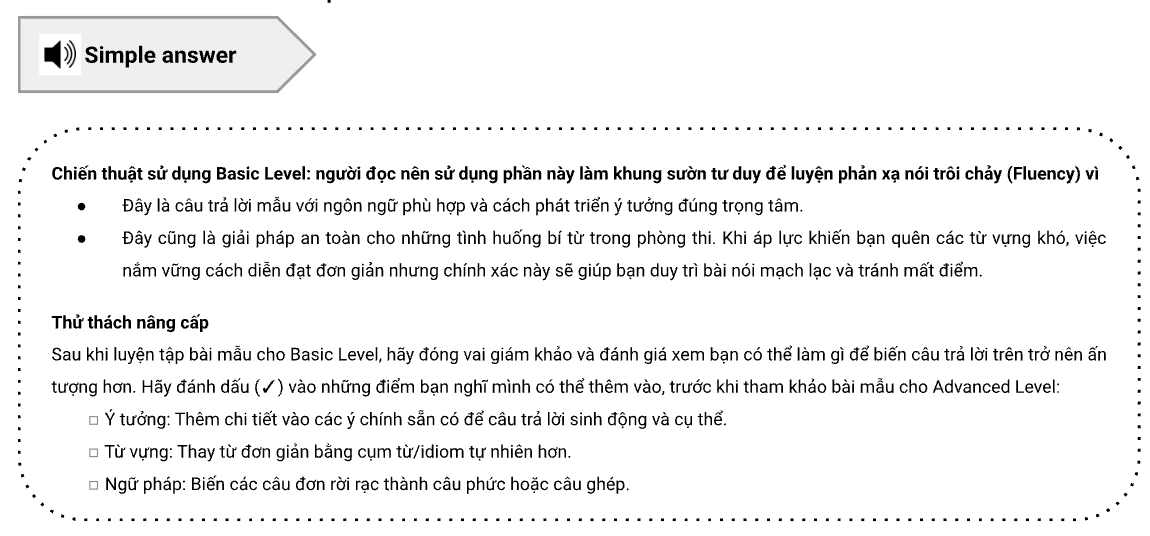
Simple answer
1. Which puts more pressure on people, a lack of time or a lack of money?
|
I think a lack of money usually puts more pressure on people because it affects their basic needs. Without enough money, it can be difficult to pay for food, housing, or healthcare. For example, someone might worry about paying the rent every month. So, financial problems can make everyday life very stressful. |
2. Why do many people feel that they don't have enough time nowadays?
|
I think many people have busy schedules and too many things to do. They have to balance work, family responsibilities, and personal activities. For example, someone who works all day may still need to cook and look after their children in the evening. This leaves them with little time to relax. |
3. Do you think people are under more time pressure now than in the past?
|
Yes, I think many people are, especially because of work. In the past, it was often easier to leave work behind at the end of the day. Now, people may receive work messages on their phones even during dinner. As a result, they can feel that they’re always busy and never really have a break. |
4. Why are some people better at managing their time than others?
|
One reason is that some people have better planning habits. They decide which tasks are important and try to avoid distractions. For example, they might make a daily list and put their phones away while working. These habits help them finish tasks on time and leave more room for other activities. |
5. Do you think having more money can help people save time?
|
Yes, I think it can. People with more money can pay for services that reduce the time they spend on everyday tasks. For example, they can hire a cleaner or order meals instead of doing everything themselves. This gives them more time to rest, work, or spend with their families. |
Tham khảo: Tổng hợp bài mẫu IELTS Speaking 2026
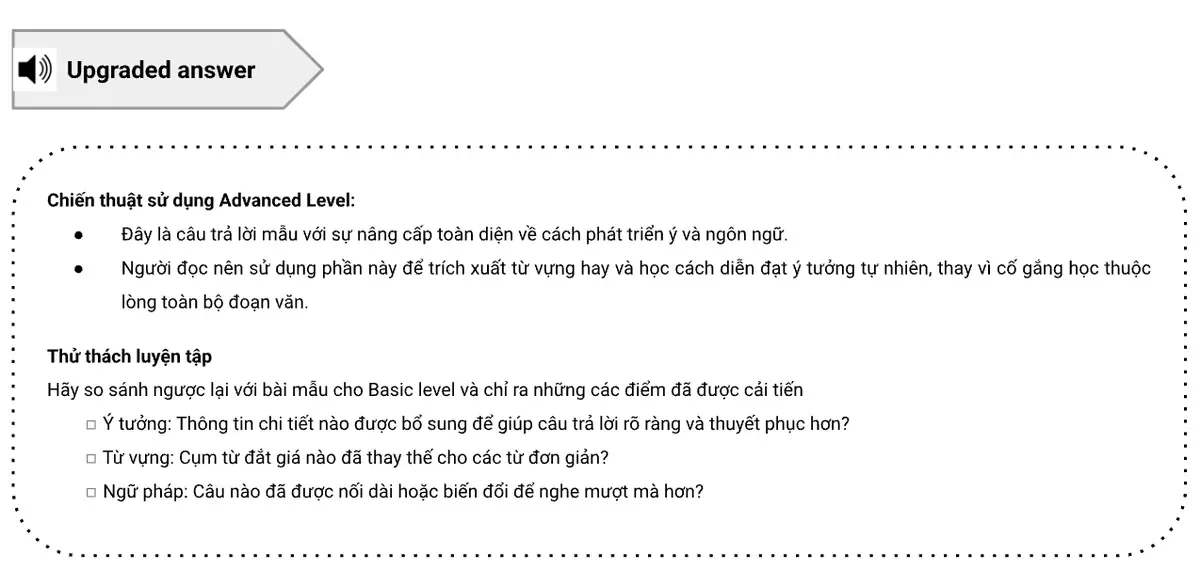
Upgraded answer
1. Which puts more pressure on people, a lack of time or a lack of money?
|
I’d say a lack of money generally creates more pressure because it can threaten people’s ability to meet their basic needs. When someone struggles to cover essential expenses, even small unexpected costs can become a major source of stress. For example, a broken fridge might force a family to choose between replacing it and paying the rent. Of course, a shortage of time can also be exhausting, especially for people juggling several responsibilities. But I think financial insecurity is often harder to cope with because the consequences can be so immediate. |
2. Why do many people feel that they don't have enough time nowadays?
|
I think it’s a combination of demanding schedules and constant distractions. Many people have to juggle work, household tasks, and family commitments, so there’s already very little room for rest. On top of that, notifications and social media can take up more time than they realise. For instance, someone might finish a long working day, prepare dinner, and then spend an hour scrolling instead of doing something they had planned. So, the feeling of having too little time can come from both genuine responsibilities and the way people use their remaining free time. |
3. Do you think people are under more time pressure now than in the past?
|
For many people, particularly office workers, I think the pressure has increased. In the past, leaving the workplace often meant being less available until the next working day. Now, smartphones allow work messages to follow people home, and there can be an expectation of a quick response. That said, earlier generations also faced long working hours and household tasks that took considerable effort. So, I wouldn’t say everyone is busier today, but the boundary between work and personal life has become less clear for many people, making it harder to switch off. |
4. Why are some people better at managing their time than others?
|
One important reason is that some people have developed stronger planning habits. They can identify their priorities, estimate how long tasks will take, and avoid leaving everything until the last minute. For example, they might set aside a specific period for focused work and turn off notifications during that time. However, circumstances matter too: someone with unpredictable working hours or caring responsibilities may have less control over their schedule. So, effective time management depends partly on personal habits and partly on how much flexibility a person actually has. |
5. Do you think having more money can help people save time?
|
Yes, to a certain extent. Having more money allows people to pay for convenience and delegate tasks they would otherwise have to do themselves. For instance, hiring a cleaner or using a laundry service can free up several hours for rest or family activities. However, earning that extra money may involve working longer hours, which could cancel out the time saved. So, money can give people more control over their time, but the overall benefit depends on how they earn it and what they choose to spend it on. |
Lọc và phân tích từ vựng
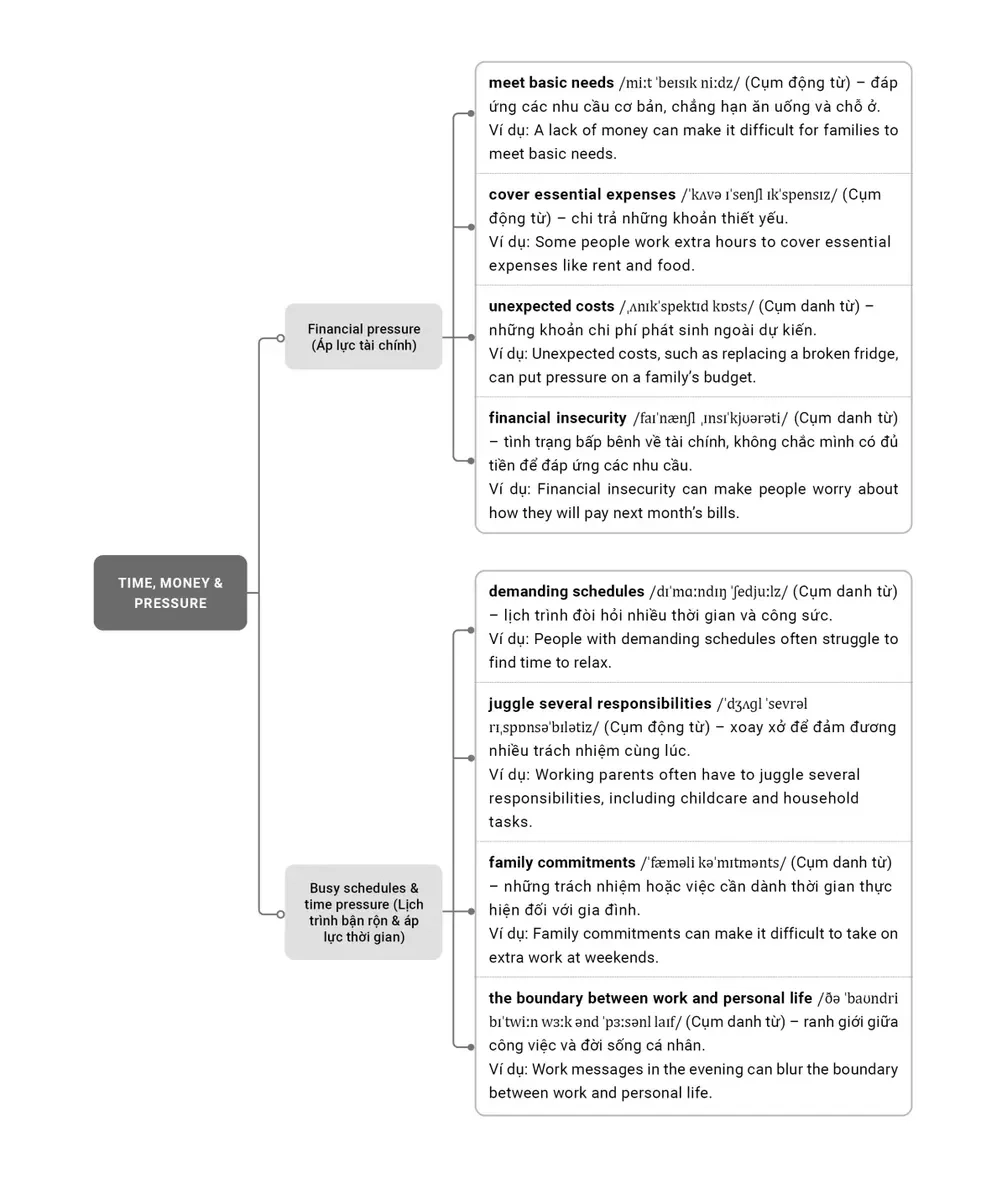
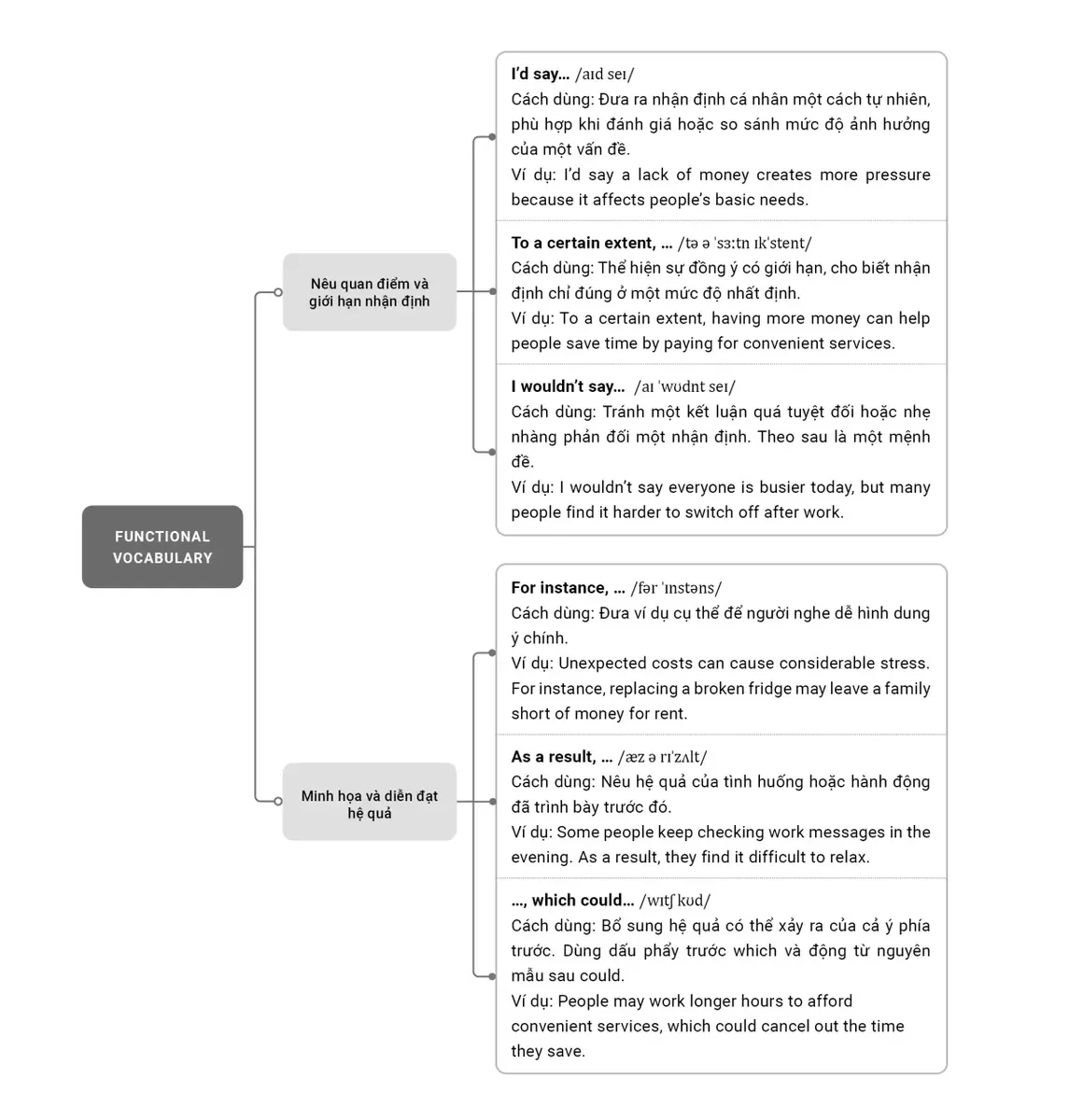
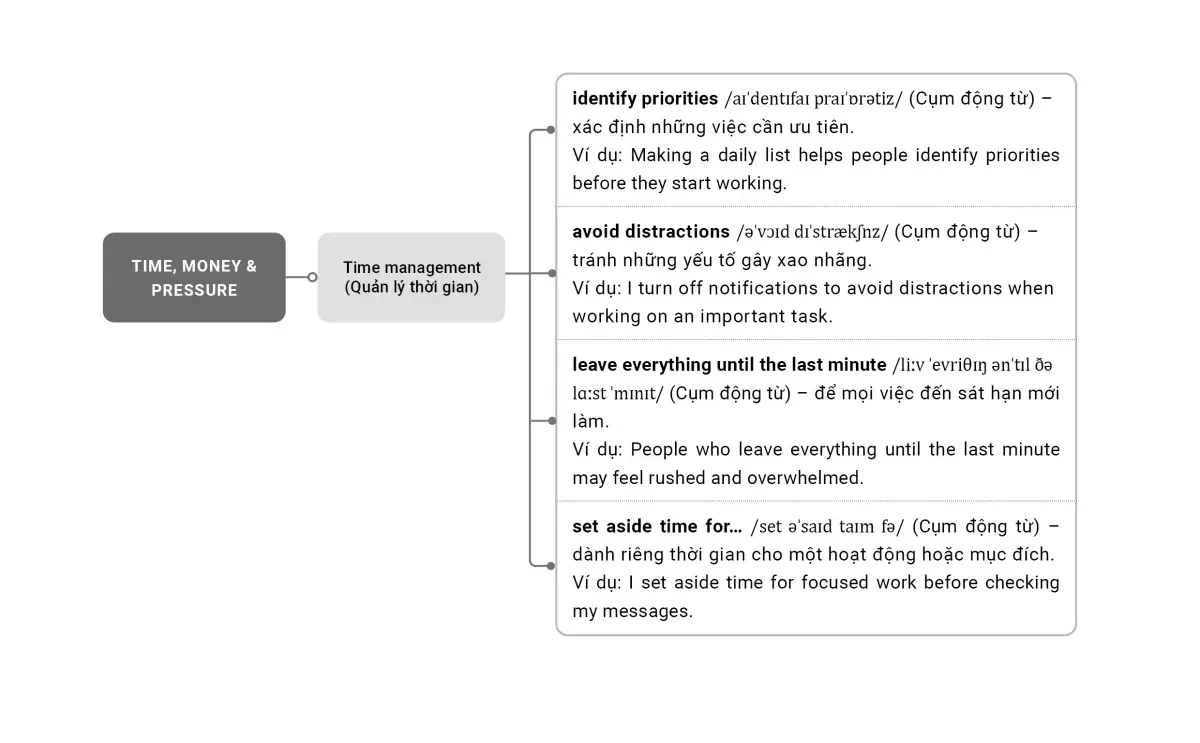
Nhật ký Từ vựng & Ý tưởng
Ghi chú sau khi luyện tập nói về chủ đề trên
Từ vựng/Ý tưởng (Chọn các từ vựng/ý tưởng mà bạn tâm đắc nhất) | Kỉ niệm cá nhân (Gán các từ vựng/ý tưởng đã chọn với kỉ niệm của bản thân) |
|---|---|
Ví dụ: set aside time for – dành riêng thời gian cho một hoạt động hoặc mục đích. | Người đọc tự đặt các câu hỏi cho bản thân, ví dụ:
→ Last month, I had to finish a work project while helping my family prepare for a gathering. I found it difficult to juggle several responsibilities, especially because I kept checking my phone. I started making a daily list to identify priorities and set aside time for focused work. We also ordered food for the gathering to free up time. This experience showed me that better planning and paying for convenience can both reduce time pressure, although not everyone can afford extra services. |
Khoảng trống diễn đạt (Phần khiến bạn ngập ngừng khi nói về chủ đề trên) | Giải pháp (Giải pháp cho các khoảng trống diễn đạt) | ||
|---|---|---|---|
Ví dụ: Tôi thiếu từ vựng để nói về việc phải xoay xở nhiều trách nhiệm cùng lúc và dành được thêm thời gian nhờ sử dụng dịch vụ trả phí. | Ví dụ: Dùng từ điển của ZIM hoặc chép các cách diễn đạt từ bài mẫu ở các phần trên để có được cụm từ mà bạn cần. → Thay vì nói “deal with many responsibilities at the same time”, có thể dùng juggle several responsibilities. → Thay vì nói “make more time available for other activities”, có thể dùng free up time for other activities. |
Người đọc có thể tìm từ vựng bằng từ điển ZIM Dictionary.
Các lỗi ngữ pháp/từ vựng thường gặp
1. Dùng sai cấu trúc “would otherwise have to…”
❌ Lỗi thường gặp:
A cleaner can handle tasks that people would otherwise have do themselves.
Without paid services, people would otherwise have to doing everything themselves.
✅ Cách dùng đúng:
would otherwise have to + V: nếu không thì sẽ phải làm gì.
Otherwise đề cập tình huống giả định khi không có giải pháp hoặc điều kiện vừa nêu.
Sau have to, dùng động từ nguyên mẫu.
✔ Câu đúng:
A cleaner can handle tasks that people would otherwise have to do themselves.
Paid services can save people time. Without these services, people would have to do everything themselves.
📌 Lý do sai:
Câu đầu thiếu to trong have to do; câu thứ hai dùng sai dạng doing sau have to. Ngoài ra, khi đã dùng without these services để nêu rõ điều kiện giả định, không cần thêm otherwise để lặp lại cùng ý.
2. Dùng sai mệnh đề quan hệ bổ sung với “which”
❌ Lỗi thường gặp:
People may work longer hours to afford a cleaner, that could cancel out the time saved.
People keep checking work messages at home, which it makes it harder to relax.
✅ Cách dùng đúng:
Mệnh đề chính, which + động từ…
Which có thể thay cho toàn bộ sự việc được nêu trong mệnh đề phía trước và bổ sung nhận xét hoặc hệ quả.
Không dùng that thay which trong mệnh đề quan hệ bổ sung sau dấu phẩy.
Khi which đã làm chủ ngữ, không thêm it ngay sau đó để lặp chủ ngữ.
✔ Câu đúng:
People may work longer hours to afford a cleaner, which could cancel out the time saved.
People keep checking work messages at home, which makes it harder to relax.
📌 Lý do sai:
Ở câu đầu, which đề cập đến việc làm thêm giờ, không phải riêng a cleaner. Đây là mệnh đề bổ sung nên không dùng that. Ở câu thứ hai, which đã làm chủ ngữ của makes, vì vậy it đứng ngay sau which là thừa. Tuy nhiên, it trong makes it harder to relax vẫn cần thiết.
3. Dùng sai cấu trúc song song sau “depend on”
❌ Lỗi thường gặp:
Effective time management depends partly on personal habits and partly how much flexibility people have.
The benefit depends on how people earn their money and what do they spend it on.
✅ Cách dùng đúng:
depend partly on + A + and partly on + B: phụ thuộc một phần vào A và một phần vào B.
Sau on, có thể dùng danh từ, cụm danh từ hoặc mệnh đề bắt đầu bằng how, what, whether…
Trong các mệnh đề này, dùng trật tự từ để hỏi + chủ ngữ + động từ, không đảo trợ động từ như câu hỏi trực tiếp.
Khi dùng dạng rút gọn depend on A and B, một giới từ on có thể dùng chung cho cả hai thành phần.
✔ Câu đúng:
Effective time management depends partly on personal habits and partly on how much flexibility people have.
The benefit depends on how people earn their money and what they spend it on.
📌 Lý do sai:
Câu đầu thiếu on trong vế thứ hai của cấu trúc đối xứng partly on… and partly on…. Câu thứ hai giữ trật tự của câu hỏi trực tiếp “What do they spend it on?”. Khi làm thành phần sau depends on, cần chuyển thành what they spend it on.
Mini practice |
|---|
Dùng đúng cấu trúc trong ngoặc
|
Các chủ đề liên quan
Chủ đề liên quan để sử dụng từ vựng & ý tưởng:
Money and spending habits (Tiền bạc & thói quen chi tiêu)
Người đọc có thể sử dụng:
Từ vựng: cover essential expenses, unexpected costs, financial insecurity, demanding schedules, juggle several responsibilities, family commitments, identify priorities, avoid distractions, set aside time for, delegate tasks, free up time, pay for convenience ...
Ý tưởng:
Công việc và trách nhiệm gia đình có thể khiến mọi người còn rất ít thời gian để nghỉ ngơi hoặc theo đuổi sở thích.
Việc phải trả lời tin nhắn công việc ngoài giờ làm mờ ranh giới giữa công việc và đời sống cá nhân, khiến mọi người khó thư giãn.
Công nghệ giúp hoàn thành nhiều công việc nhanh hơn, nhưng thông báo và mạng xã hội cũng có thể gây xao nhãng và tiêu tốn thời gian.
Xác định việc ưu tiên và dành riêng thời gian tập trung giúp mọi người quản lý lịch trình hiệu quả hơn.
Những khoản chi bất ngờ có thể gây áp lực lớn khi thu nhập chỉ vừa đủ đáp ứng các nhu cầu thiết yếu.
Trả tiền cho dịch vụ dọn dẹp, giặt là hoặc giao đồ ăn có thể giúp mọi người dành thêm thời gian cho gia đình và nghỉ ngơi.
Nếu phải làm thêm nhiều giờ để chi trả cho các dịch vụ tiện lợi, lợi ích về thời gian tiết kiệm được có thể giảm đi.
Mini practice: Sử dụng từ vựng và ý tưởng ở trên để trả lời các câu hỏi sau
What can people do to achieve a better balance between work and personal life?
(Gợi ý: identify priorities, family commitments, set aside time for)Does technology always help people use their time more effectively?
(Gợi ý: avoid distractions, demanding schedules, free up time)Why are some people willing to pay more for convenient services?
(Gợi ý: pay for convenience, delegate tasks, juggle several responsibilities)
Tổng kết
Hy vọng rằng qua việc phân tích hai cấp độ trả lời từ Simple Answer để đảm bảo sự trôi chảy đến Upgraded Answer để ghi điểm ấn tượng, bạn đã nắm vững được lộ trình để chinh phục chủ đề Time, Money & Pressure (Part 3). Bằng cách cá nhân hóa các câu trả lời thông qua "Nhật ký Từ vựng & Ý tưởng", bạn sẽ xây dựng được sự tự tin. Đừng quên thực hành các bài tập nhỏ (mini practice) để khắc phục những lỗi ngữ pháp thường gặp và làm chủ ngôn ngữ của mình nhé!
Nếu bạn muốn nâng cao kỹ năng IELTS Speaking theo lộ trình cá nhân hóa, Hệ thống giáo dục ZIM cung cấp các khóa luyện thi IELTS cam kết đầu ra, giúp bạn tối ưu hiệu quả học tập và tiết kiệm đến 80% thời gian tự học. Để được tư vấn chi tiết, vui lòng liên hệ hotline 1900-2833 (nhánh 1) hoặc truy cập Khóa học IELTS.
Nguồn tham khảo
1
“Bài mẫu IELTS Speaking Part 3.” OpenAI, https://chatgpt.com/share/e/6961b6c8-4368-8002-995c-cd65b4729b18. Accessed 26 September 2026.
Bình luận - Hỏi đáp