


Chủ đề IELTS Speaking: Part 3: Transport and Travel habits.
Bài mẫu cho các nhóm câu hỏi:
• Kinds of transport usually used?
• More people buying cars nowadays?
• Pros and cons of car ownership?
• How has transportation changed?
• Will public transport be more popular?Nhóm từ vựng trọng tâm (Topic Vocabulary): Commuting & Commuters, Private Vehicles, và Infrastructure & Future.
Bài mẫu IELTS Speaking Part 3 Transport and Travel habits kèm từ vựng
Bài viết cung cấp các câu trả lời mẫu cho IELTS Speaking Part 3 (Transport and Travel habits) theo định hướng cá nhân hóa, được chia thành hai cấp độ: Simple Answer (tập trung phản xạ và độ trôi chảy) và Upgraded Answer (nâng cấp từ vựng, ngữ pháp). Đi kèm với mỗi câu trả lời là file audio hỗ trợ luyện phát âm chuẩn xác. Ngoài ra, phần phân tích chi tiết sẽ giúp người học hệ thống hóa từ vựng, khắc phục lỗi ngữ pháp và linh hoạt áp dụng vào các chủ đề tương tự.
Key takeaways
Bài viết sau đây sẽ cung cấp các câu trả lời mẫu theo khung sườn tư duy (Simple Answer) cùng các thử thách nâng cấp (Upgraded Answer) về cả ý tưởng, từ vựng và ngữ pháp để người học lựa chọn được câu trả lời phù hợp với bản thân, sẵn sàng cho các tình huống trong phòng thi. Bài phân tích này sẽ dẫn dắt người học đi qua chủ đề Transport and Travel habits, từ vị thế độc tôn của xe máy khi là phương tiện giao thông phổ biến nhất (means of transport) giúp người dân luồn lách qua các cung đường đông đúc (crowded streets), cho đến xu hướng chuyển dịch sở hữu ô tô cá nhân do mức sống tăng cao (living standards) và định hướng phát triển hệ thống giao thông công cộng như một giải pháp bền vững (sustainable solution) cho tương lai, giúp người học chinh phục giám khảo bằng sự mạch lạc và ngôn ngữ tự nhiên.
IELTS Speaking Part 3: Transport and Travel habits
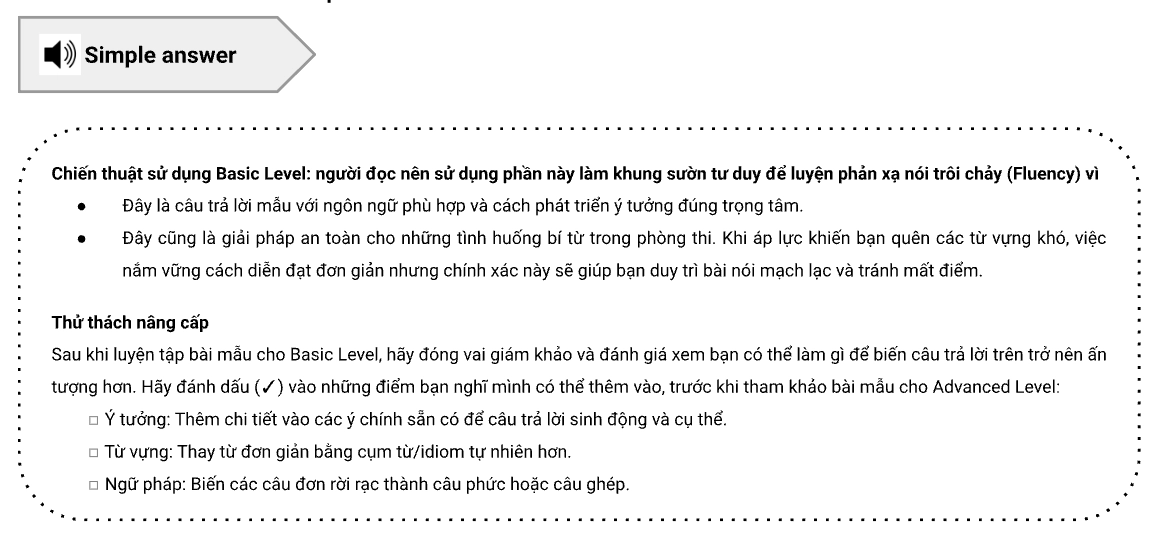
Simple answer
1. What kinds of transport do people usually use in your country?
|
In my country, people mainly use motorbikes because they are convenient and affordable. In big cities, buses are also quite common, especially among students and office workers. For example, many people ride motorbikes to work every day because they can avoid traffic more easily. So, motorbikes are still the most popular form of transport. |
2. Do you think more people want to buy cars nowadays?
|
Yes, I think so. As people's incomes increase, more families can afford to buy a car. For example, many young couples buy a car because it's more comfortable and convenient for travelling with children. That's why car ownership is becoming more common. |
3. What are the advantages and disadvantages of owning a car?
|
Well, owning a car is very convenient because you can travel comfortably and don't have to depend on public transport. However, it can be expensive because of fuel, parking fees, and maintenance costs. For example, many people spend a lot of money on car insurance every year. So, owning a car has both benefits and drawbacks. |
4. How has transportation changed in your country over the years?
|
I think transportation has improved a lot in recent years. There are more highways, better public transport, and modern ride-hailing services. For example, many people now use apps like Grab instead of traditional taxis. As a result, travelling has become much easier and faster. |
5. Do you think public transport will become more popular in the future?
|
Yes, I believe it will. Many cities are investing in better buses and metro systems to reduce traffic congestion. For example, if public transport becomes faster and more reliable, more people will choose it instead of driving. I think it will become a more popular option in the future. |
Tham khảo: Tổng hợp bài mẫu IELTS Speaking 2026
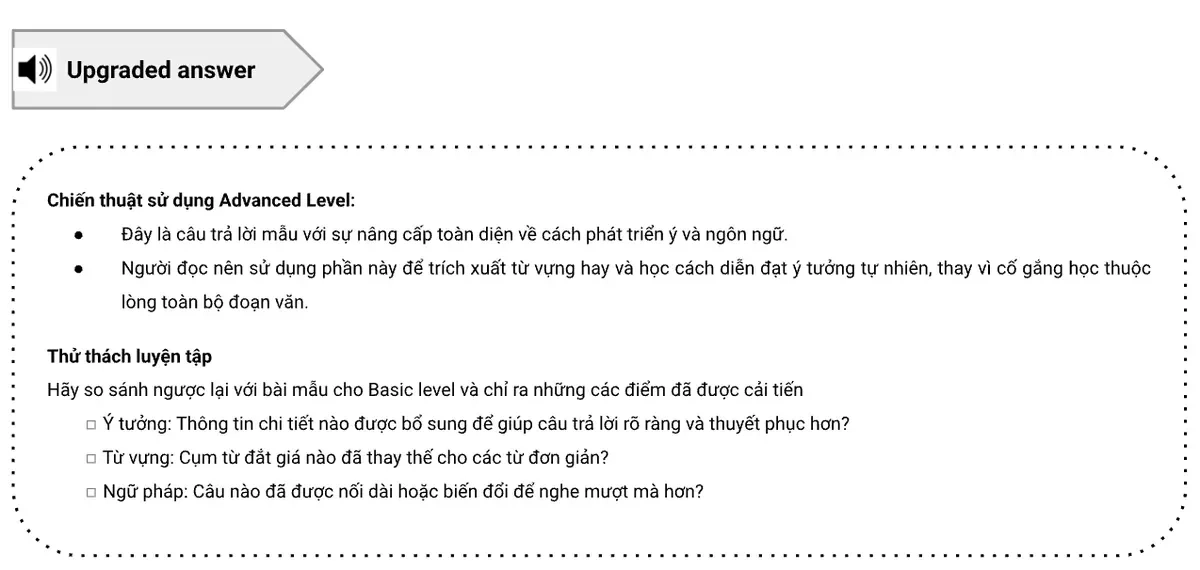
Upgraded answer
1. What kinds of transport do people usually use in your country?
|
In Vietnam, motorbikes are still by far the most common means of transport. They're relatively affordable, easy to park, and practical for navigating heavy traffic, especially in large cities. For example, during rush hour in Ho Chi Minh City, it's much easier for motorbikes to move through crowded streets than cars. Although buses are becoming more convenient, I think motorbikes will remain the preferred choice for most people for the foreseeable future. |
2. Do you think more people want to buy cars nowadays?
|
Yes, definitely. As living standards continue to improve, owning a car has become a realistic goal for many families. Besides providing greater comfort, a car offers privacy and convenience, especially for people with young children or elderly family members. For instance, many middle-class families now choose to buy a car for weekend trips or family holidays. That being said, the high cost of ownership and traffic congestion still discourage some people. Even so, I believe the demand for private cars will continue to grow. |
3. What are the advantages and disadvantages of owning a car?
|
Well, owning a car offers a great deal of convenience because people can travel comfortably, regardless of the weather, and don't have to rely on public transport. It's also particularly useful for families travelling with children or carrying heavy luggage. However, owning a car comes with significant expenses, including fuel, insurance, maintenance, and parking fees. On top of that, if too many people drive, traffic congestion and air pollution can become much worse. Overall, I think owning a car is beneficial, but it also comes with considerable responsibilities. |
4. How has transportation changed in your country over the years?
|
I think transportation has developed significantly over the past decade. The government has invested heavily in new highways, airports, and urban transport systems, making travel much faster and more convenient. In addition, technology has completely changed the way people get around. For example, ride-hailing apps like Grab have become extremely popular because they allow users to book a ride within seconds. As a result, travelling today is far more efficient than it used to be. |
5. Do you think public transport will become more popular in the future?
|
Yes, I believe it will, especially in major cities. As traffic congestion and environmental problems become more serious, governments are likely to invest more in reliable public transport systems. For example, expanding metro lines and improving bus services could encourage more people to leave their cars at home. Of course, this will only happen if public transport is clean, safe, and punctual. Overall, I think public transport will play an increasingly important role in the future because it's a more sustainable solution for growing cities. |
Đọc thêm: 3 cách thức tư duy câu trả lời IELTS Speaking Part 3
Lọc và phân tích từ vựng
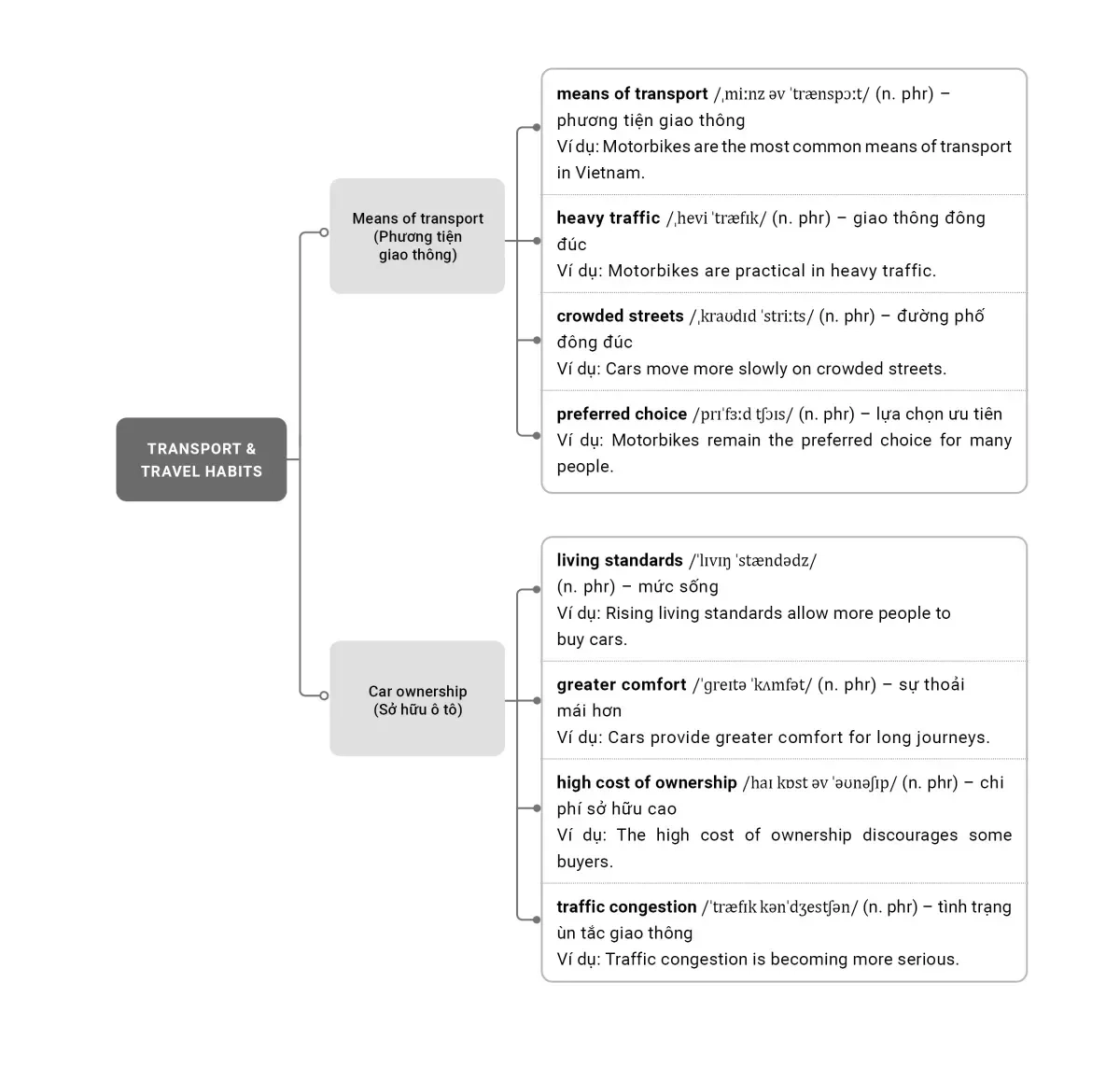
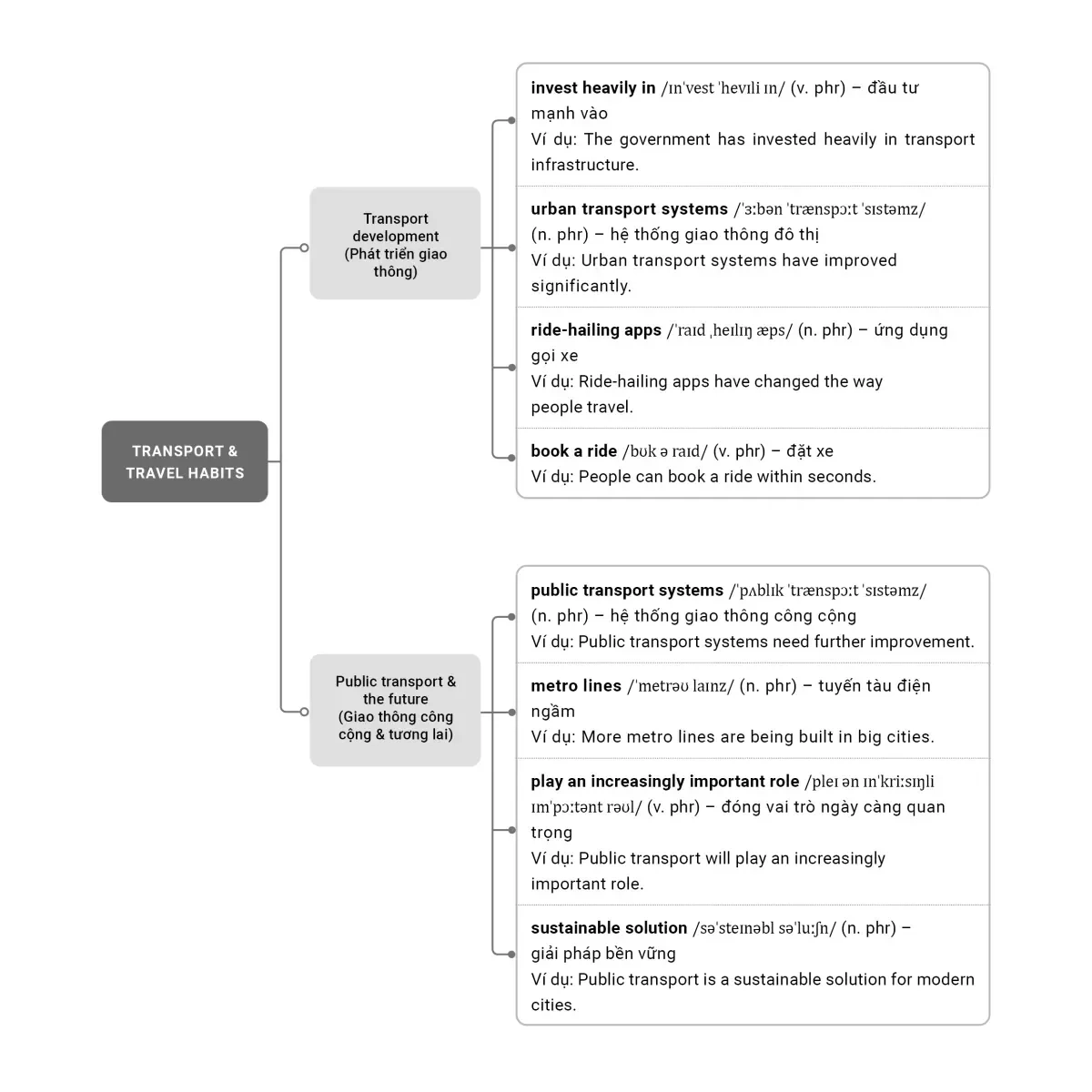
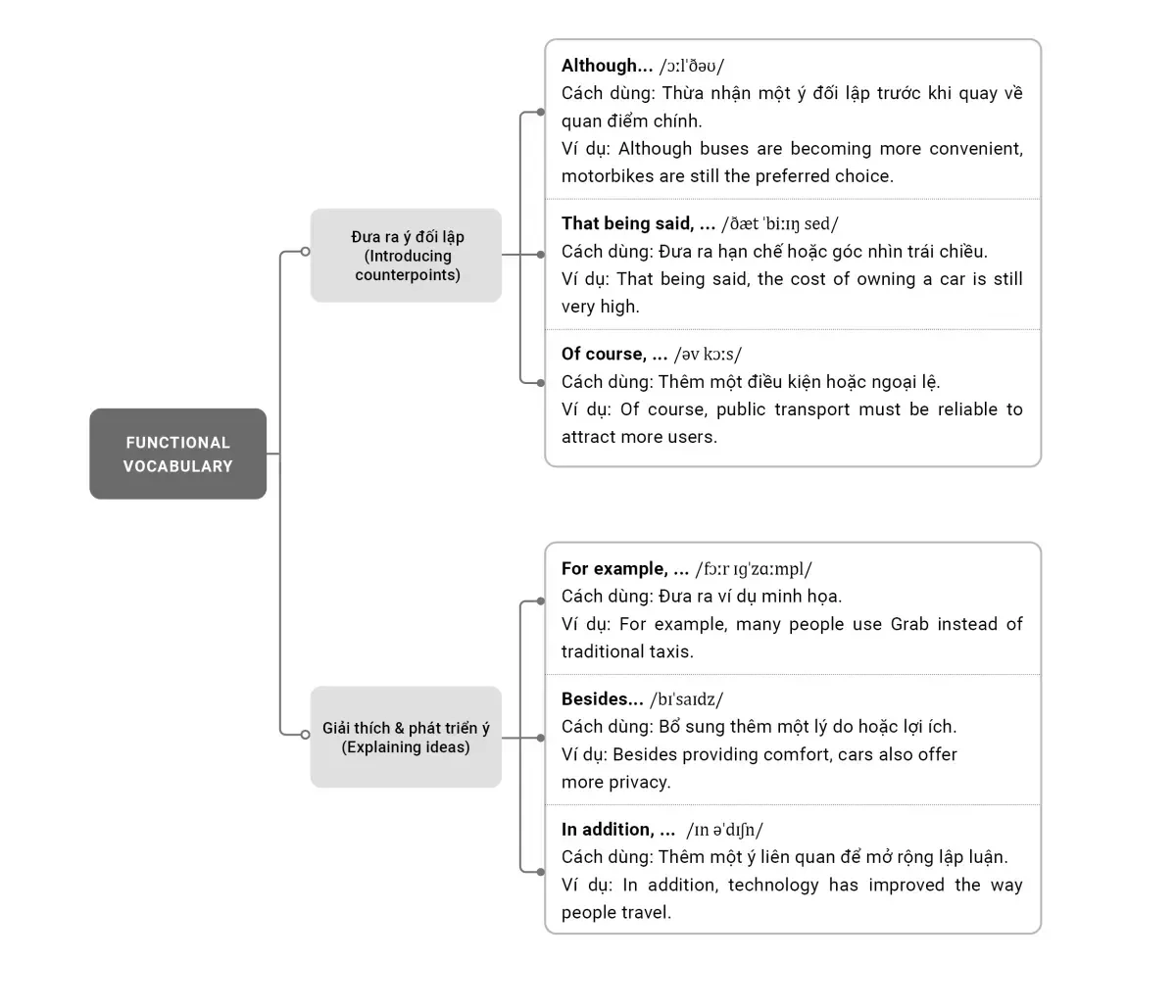
Đọc thêm: Collocations trong IELTS Speaking theo chủ đề Transportation
Nhật ký Từ vựng & Ý tưởng
Ghi chú sau khi luyện tập nói về chủ đề trên
Từ vựng/Ý tưởng (Chọn các từ vựng/ý tưởng mà bạn tâm đắc nhất) | Kỉ niệm cá nhân |
|---|---|
Ví dụ: ride-hailing apps – ứng dụng gọi xe | Người đọc tự đặt các câu hỏi cho bản thân, ví dụ: • Tôi thường sử dụng phương tiện gì để đi học hoặc đi làm? Vì sao? • Tôi đã từng gặp tình trạng kẹt xe nghiêm trọng chưa? Điều đó ảnh hưởng đến tôi như thế nào? • Nếu có đủ điều kiện, tôi có muốn mua ô tô không? Vì sao? • Tôi đã từng sử dụng xe buýt, tàu điện hoặc ứng dụng gọi xe chưa? Trải nghiệm của tôi như thế nào? • Theo tôi, giao thông ở nơi mình sống cần cải thiện điều gì nhất? → I usually travel by motorbike because it's the fastest way to get through heavy traffic in my city. Although I sometimes use ride-hailing apps, I still prefer riding my own vehicle because it's more convenient. In the future, I hope public transport will improve and play an increasingly important role in reducing traffic congestion. |
Khoảng trống diễn đạt (Phần khiến bạn ngập ngừng khi nói về chủ đề trên) | Giải pháp (Giải pháp cho các khoảng trống diễn đạt) |
|---|---|
Ví dụ:
| Ví dụ: Dùng từ điển của ZIM hoặc chép các cách diễn đạt từ bài mẫu ở các phần trên để có được cụm từ mà bạn cần. → Thay vì chỉ nói traffic jam, hãy dùng traffic congestion hoặc heavy traffic. |
Người đọc có thể tìm từ vựng bằng từ điển ZIM Dictionary.
Các lỗi ngữ pháp/từ vựng thường gặp
1. Dùng sai danh từ đếm được và không đếm được với transport
❌ Lỗi thường gặp:
There are many public transports in my city.
People use many transports to go to work.
✅ Cách dùng đúng:
transport (không đếm được) → phương tiện giao thông nói chung
means of transport / modes of transport → các loại phương tiện giao thông
✔ Câu đúng:
There is a good public transport system in my city.
People use different means of transport to go to work.
📌 Lý do sai:
Nhiều người học nhầm transport là danh từ đếm được và thêm -s. Thực tế, transport là danh từ không đếm được khi nói về hệ thống hoặc hình thức giao thông nói chung. Nếu muốn nói đến nhiều loại phương tiện, nên dùng means of transport, modes of transport hoặc gọi tên từng phương tiện như cars, buses, trains, motorbikes.
2. Dùng sai cấu trúc "be likely to"
❌ Lỗi thường gặp:
More people are likely buy electric cars in the future.
✅ Cách dùng đúng:
✔ Câu đúng:
More people are likely to buy electric cars in the future.
📌 Lý do sai:
Sau be likely phải có to + động từ nguyên mẫu. Cấu trúc này rất thường dùng trong Part 3 để đưa ra dự đoán về xu hướng trong tương lai.
3. Dùng sai cấu trúc "instead of + V-ing / noun"
❌ Lỗi thường gặp:
More people should use buses instead of drive their own cars.
✅ Cách dùng đúng:
instead of + V-ing
instead of + noun
✔ Câu đúng:
More people should use buses instead of driving their own cars.
Hoặc:
Many commuters choose the metro instead of their private cars.
📌 Lý do sai:
Sau instead of, người học thường dùng động từ nguyên mẫu thay vì V-ing.
Mini practice |
|---|
Dùng đúng cấu trúc trong ngoặc 1. Hãy nói rằng thành phố của bạn có một hệ thống giao thông công cộng khá tốt. (Dùng: transport là danh từ không đếm được hoặc means of transport – không dùng transports.) 2. Hãy nói rằng trong tương lai, nhiều người có khả năng sẽ sử dụng xe điện. (Dùng: be likely to + V.) 3. Hãy nói rằng nhiều người nên đi xe buýt thay vì lái xe riêng. (Dùng: instead of + V-ing / noun – không dùng động từ nguyên mẫu.) |
Các chủ đề liên quan
Chủ đề liên quan để sử dụng từ vựng & ý tưởng:
Environmental protection (Bảo vệ môi trường)
Technology in daily life (Công nghệ trong cuộc sống)
Urbanisation (Đô thị hóa)
Người đọc có thể sử dụng:
Từ vựng: means of transport, heavy traffic, crowded streets, preferred choice, living standards, greater comfort, high cost of ownership, traffic congestion, invest heavily in, urban transport systems, ride-hailing apps, public transport systems, metro lines, sustainable solution, play an increasingly important role ...
Ý tưởng:
Xe máy vẫn là phương tiện phổ biến nhất ở nhiều thành phố vì giá cả phải chăng và thuận tiện khi di chuyển trong điều kiện giao thông đông đúc.
Việc sở hữu ô tô mang lại nhiều lợi ích nhưng cũng kéo theo chi phí cao và góp phần làm gia tăng ùn tắc giao thông.
Những năm gần đây, chính phủ đã đầu tư mạnh vào cơ sở hạ tầng và các hệ thống giao thông công cộng để cải thiện việc đi lại.
Trong tương lai, giao thông công cộng có thể trở nên phổ biến hơn nếu dịch vụ nhanh hơn, đáng tin cậy hơn và thân thiện với môi trường.
Mini practice: Sử dụng từ vựng và ý tưởng ở trên để trả lời các câu hỏi sau
Why is traffic congestion becoming a serious problem in many cities?
(Gợi ý: living standards, traffic congestion, high cost of ownership, private cars)How has technology changed the way people travel?
(Gợi ý: ride-hailing apps, book a ride, urban transport systems)What can governments do to encourage people to use public transport?
(Gợi ý: invest heavily in, public transport systems, metro lines)
Tổng kết
Hy vọng rằng qua việc phân tích hai cấp độ trả lời từ Simple Answer để đảm bảo sự trôi chảy đến Upgraded Answer để ghi điểm ấn tượng, bạn đã nắm vững được lộ trình để chinh phục chủ đề Transport and Travel habits (Part 3). Bằng cách cá nhân hóa các câu trả lời thông qua "Nhật ký Từ vựng & Ý tưởng", bạn sẽ xây dựng được sự tự tin. Đừng quên thực hành các bài tập nhỏ (mini practice) để khắc phục những lỗi ngữ pháp thường gặp và làm chủ ngôn ngữ của mình nhé!
Nếu bạn muốn nâng cao kỹ năng IELTS Speaking theo lộ trình cá nhân hóa, Hệ thống giáo dục ZIM cung cấp các khóa luyện thi IELTS cam kết đầu ra, giúp bạn tối ưu hiệu quả học tập và tiết kiệm đến 80% thời gian tự học. Để được tư vấn chi tiết, vui lòng liên hệ hotline 1900-2833 (nhánh 1) hoặc truy cập Khóa học IELTS.
Nguồn tham khảo
1
“Bài mẫu IELTS Speaking Part 3.” OpenAI, https://chatgpt.com/share/e/6961b6c8-4368-8002-995c-cd65b4729b18. Accessed 11 July 2026.
Bình luận - Hỏi đáp