Phân tích đề IELTS Speaking Part 2 Tháng 1/2026 - Đề số 2
Bài viết cung cấp các câu trả lời mẫu cho IELTS Speaking Part 2 theo định hướng cá nhân hóa, được chia thành hai cấp độ: Simple Answer (tập trung phản xạ và độ trôi chảy) và Upgraded Answer (nâng cấp từ vựng, ngữ pháp). Đi kèm với mỗi câu trả lời là file audio hỗ trợ luyện phát âm chuẩn xác. Ngoài ra, phần phân tích chi tiết sẽ giúp người học hệ thống hóa từ vựng, khắc phục lỗi ngữ pháp và linh hoạt áp dụng vào các chủ đề tương tự.
Chủ đề IELTS Speaking Part 2: “Describe a person you know who has moved to a new accommodation.” với các hướng trả lời sau:
Mở bài và Thân bài:
Kể chuyện chủ động
Kể chuyện cảm xúc
Kết bài:
Miêu tả đoạn kết
Rút ra bài học
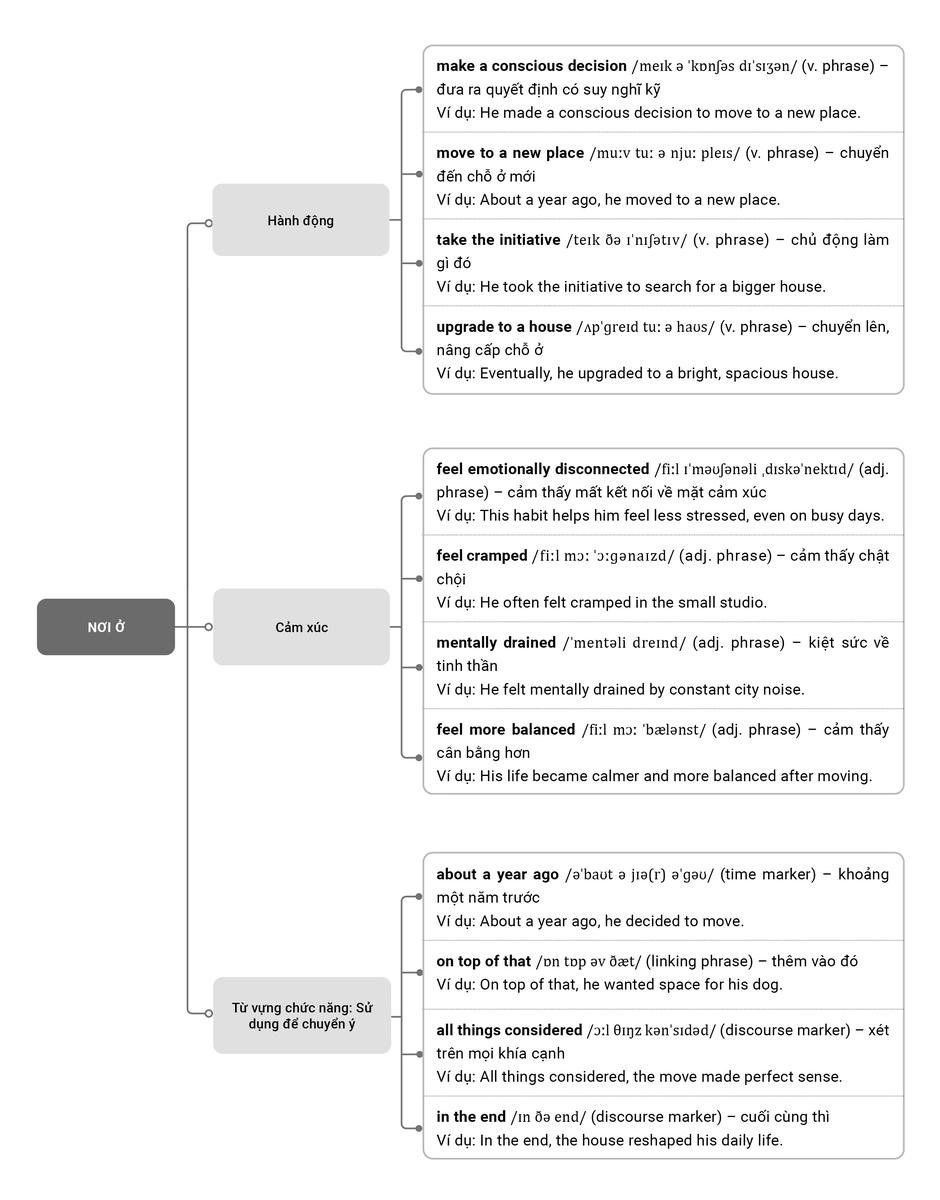
Nhóm từ vựng: Actions and Feelings related to Accommodation
Trong IELTS Speaking Part 2, thí sinh không chỉ được đánh giá qua khả năng trả lời đúng câu hỏi, mà còn qua cách tổ chức ý tưởng, diễn đạt cảm xúc và phản ánh trải nghiệm cá nhân một cách tự nhiên. Một trong những chủ đề có thể gặp là “Describe a person you know who has moved to a new accommodation”, đòi hỏi người học phải kết hợp kể chuyện, phân tích lý do và giải thích tác động của sự thay đổi đó đến cuộc sống.
Bài viết này được xây dựng nhằm hướng dẫn người học tiếp cận đề bài một cách hệ thống, từ phân tích yêu cầu, phát triển ý tưởng, lựa chọn từ vựng phù hợp cho đến xây dựng bài nói mạch lạc trong khoảng hai phút. Thông qua bài mẫu, bảng từ vựng và các lưu ý thường gặp, người học có thể nâng cao sự tự tin khi nói và từng bước cải thiện band điểm trong IELTS Speaking.
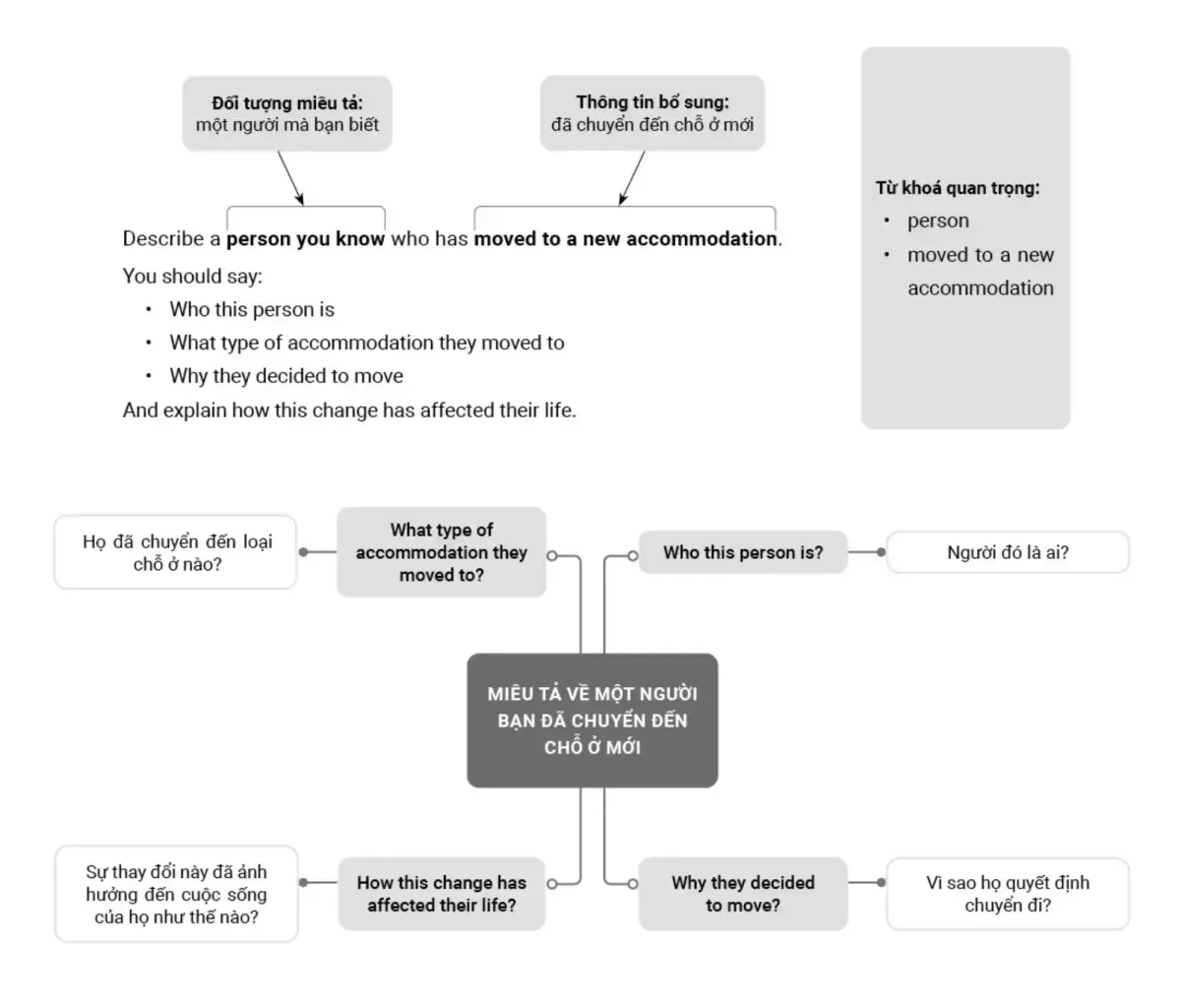
Đề bài
Describe a person you know who has moved to a new accommodation.
You should say:
Who this person is
What type of accommodation they moved to
Why they decided to move
And explain how this change has affected their life.
Phân tích đề bài
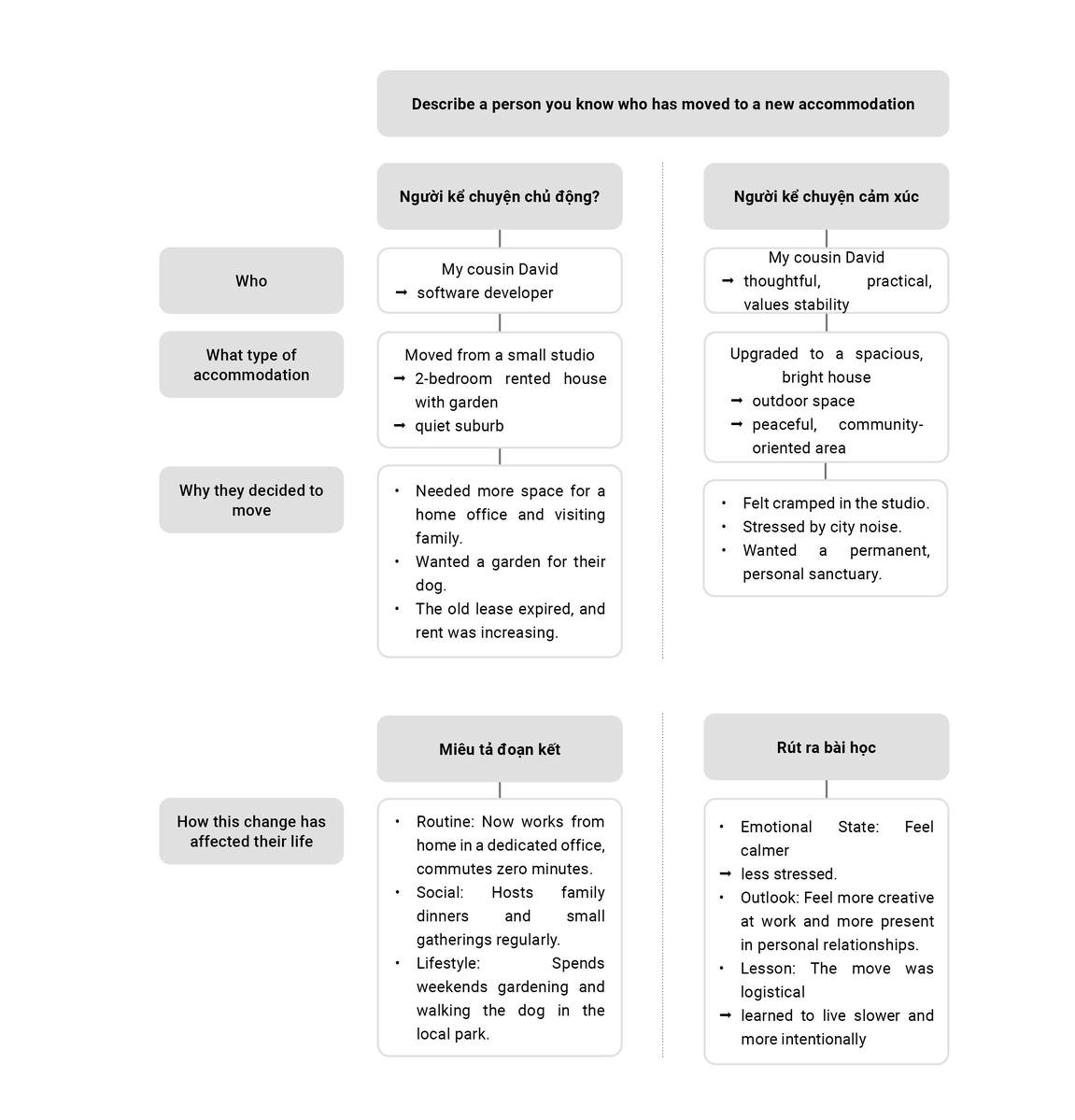
Lên ý tưởng & Ghi chú
Bài mẫu
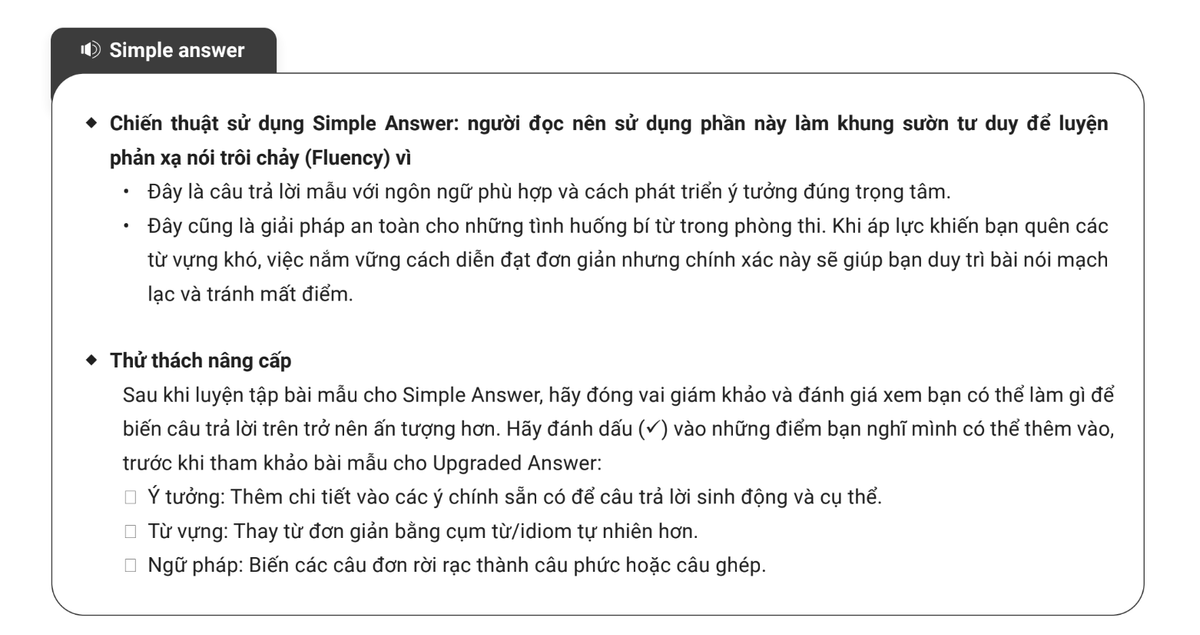
Simple answer
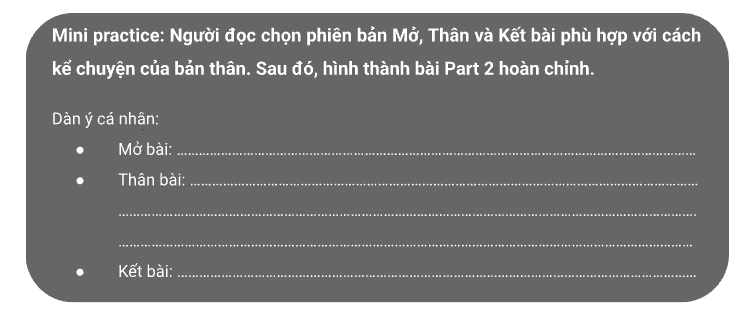
Người đọc có thể kết hợp các phiên bản tùy ý để tạo ra nhiều bài mẫu Part 2 khác nhau từ cùng một đề.
Mở bài
và
Thân bài
Ver. 1
Người kể chuyện chủ động
Ver. 2
Người kể chuyện cảm xúc
Well, I’d like to talk about my cousin David, who works as a software developer. About a year ago, he decided to move to a new place after thinking quite seriously about his lifestyle. At that time, he was living in a small studio apartment in the city, but he already had clear plans to improve his living and working conditions.
So, he moved from that small studio to a two-bedroom rented house with a garden in a quiet suburb. He actively looked for a bigger place because he wanted a separate room for a home office and more space for visiting family. Also, since he has a dog, having a garden was a big plus. On top of that, his old lease ended and the rent was going up, so the timing worked out perfectly.
I want to talk about my cousin David, someone I’m quite close to. He’s a thoughtful and practical person who really values stability. For a long time, he lived in a small studio in the city, but honestly, it never felt like a real home to him. After a while, he started to feel that something was missing in his daily life.
Eventually, he upgraded to a bright, spacious house with outdoor space in a quiet, community-oriented area. Compared to the busy city center, the new place feels calm and welcoming. Before moving, he often felt cramped and stressed because of the city noise. He told me he wanted a permanent, personal sanctuary, not just a place to sleep. This new house gave him that sense of comfort and peace.
Kết bài
Ver. 1
Miêu tả đoạn kết
Ver. 2
Rút ra bài học
Since moving, his daily routine has changed a lot. He now works from home in a proper office, hosts family dinners more often, and spends weekends gardening or walking his dog nearby. All in all, the move helped him settle down and enjoy a more balanced and comfortable life.
From his story, I realized that where we live can deeply affect how we feel. David’s move wasn’t just practical; it helped him reconnect with himself and the people around him. Sometimes, choosing peace over convenience is exactly what we need to live a happier, more intentional life.
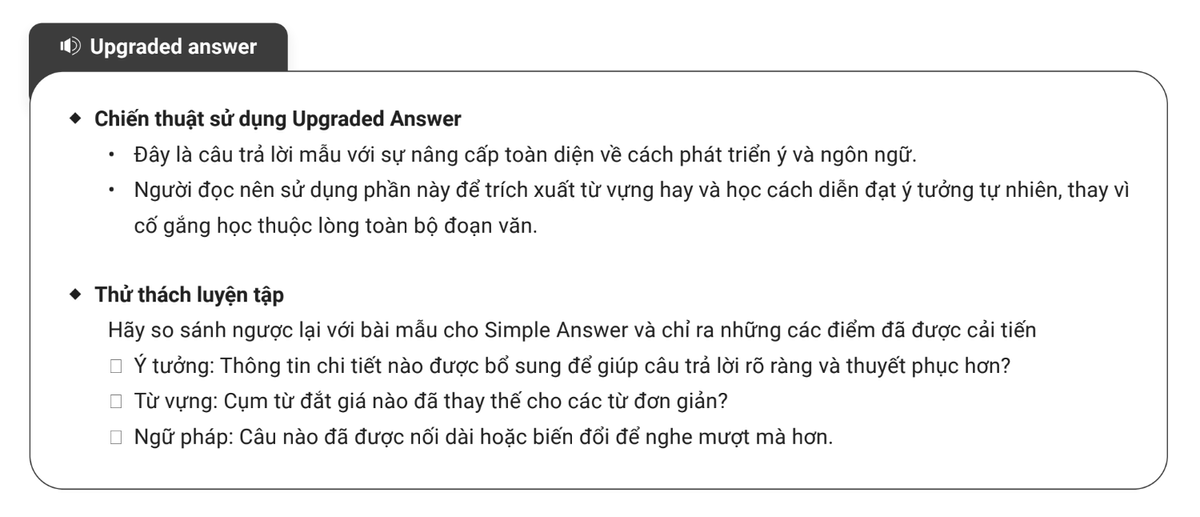
Upgraded answer
Người đọc có thể kết hợp các phiên bản tùy ý để tạo ra nhiều bài mẫu Part 2 khác nhau từ cùng một đề.
Mở bài
và
Thân bài
Ver. 1
Người kể chuyện chủ động
Ver. 2
Người kể chuyện cảm xúc
Well, I’d like to talk about my cousin David, who works as a software developer. About a year ago, he made a conscious decision to move to a new place after carefully rethinking his lifestyle. At that point, he was living in a small studio apartment in the city, but he already had a clear goal in mind: to improve both his living conditions and his work setup.
So, after carefully weighing his options, he moved from a small studio apartment into a two-bedroom rented house with a garden in a quiet suburban area. He took the initiative to search for a bigger place because he wanted a clear separation between work and personal life, especially a dedicated room for his home office. On top of that, he often has family visiting, so having extra space made everyday life much more convenient. Also, since he owns a dog, having a private garden was a major deciding factor, as it allows his pet to run around freely without relying on crowded public spaces. From a practical point of view, the move made perfect sense as well. All things considered, the timing worked out smoothly, and the move felt like a well-planned step forward rather than a rushed change.
I’d like to talk about my cousin David, someone I’m genuinely close to. He’s a thoughtful and practical person who really values stability. For quite a long time, he lived in a small city studio, but to be honest, it never truly felt like home. Gradually, he began to feel emotionally disconnected, as if something essential was missing from his everyday life.
Eventually, he upgraded to a bright, spacious house with outdoor space in a calm, community-oriented neighborhood, which felt like a world away from the busy city center. Compared to his old studio, the new place immediately gave off a sense of warmth and openness. Before the move, he often felt cramped and mentally drained, mainly because of the constant city noise and the lack of personal space. He indeed wanted a permanent personal sanctuary, not just somewhere to sleep after a long day. This new house offered exactly that. Over time, it gave him emotional comfort, a sense of stability, and the feeling that he finally belonged somewhere. In many ways, the environment helped him reconnect with himself and feel more at ease in daily life.
Kết bài
Ver. 1
Miêu tả đoạn kết
Ver. 2
Rút ra bài học
Since moving, his lifestyle has changed in very visible ways. He now works from home in a proper office, enjoys hosting relaxed family dinners, and spends his weekends gardening or walking his dog nearby. Little by little, his daily routine has become calmer and more balanced. In the end, the house didn’t just change where he lives—it reshaped how he spends his time and how settled he feels in everyday life.
Looking at his experience, I’ve realized that where we live can strongly influence how we think and feel. David’s move wasn’t simply a practical upgrade; it allowed him to reconnect with himself and the people around him. In a way, choosing peace over convenience turned out to be a powerful decision. It reminded me that sometimes, slowing down and creating the right environment is essential for long-term happiness.
Từ vựng/Ý tưởng (Chọn các từ vựng/ý tưởng mà bạn tâm đắc nhất)
Kỉ niệm cá nhân (Gán các từ vựng/ý tưởng đã chọn với kỉ niệm của bản thân)
Ví dụ: make a conscious decision (/meɪk ə ˈkɒnʃəs dɪˈsɪʒən/) – đưa ra quyết định có suy nghĩ kỹ.
Người đọc tự đặt các câu hỏi cho bản thân, ví dụ:
Have I ever made a conscious decision to move?
How did I feel before and after moving to a new place?
What part of moving was most important to me: space, location, or feeling?
→ I once felt cramped in my old apartment, so I made a conscious decision to move to a bigger place. It helped me feel more balanced.
Khoảng trống diễn đạt (Phần khiến bạn ngập ngừng khi nói về chủ đề trên)
Giải pháp (Giải pháp cho các khoảng trống diễn đạt)
Ví dụ:
Tình huống: Muốn nói: “Chuyển đến nhà mới giúp bạn tôi cân bằng hơn và cảm thấy yên bình” → nhưng không nhớ từ “yên bình” và cách diễn đạt tự nhiên về sự thay đổi tích cực
Ví dụ:
Tra từ điển / Al với câu lệnh: “Từ vựng tiếng Anh diễn tả cảm giác yên bình và cân bằng sau khi chuyển nhà?”
→ at peace: yên bình; a sense of tranquility: cảm giác thanh bình
→ Câu hoàn chỉnh: Moving to the new house helped him feel more balanced and at peace. The whole neighborhood gives him a sense of tranquility.
Người đọc có thể tìm từ vựng bằng từ điển ZIM Dictionary.
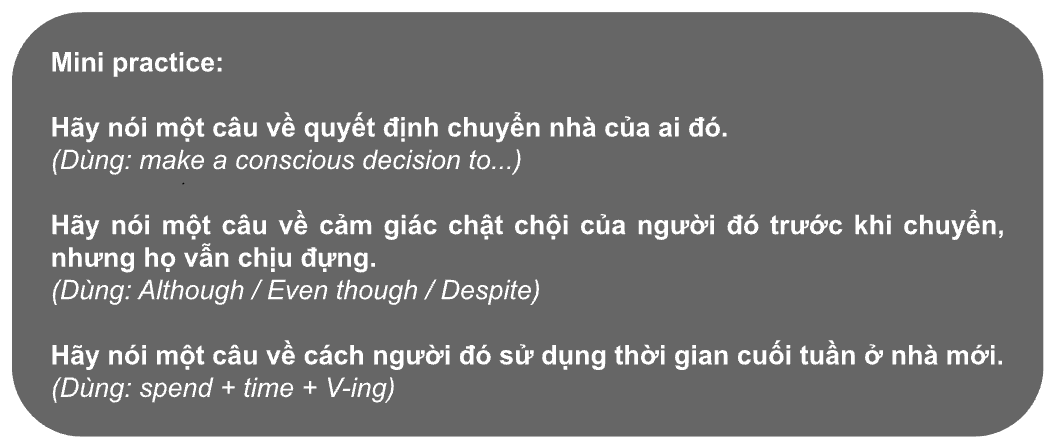
Các lỗi ngữ pháp thường gặp
Lỗi thường gặp: “He made a conscious decision of moving to a new place.”
Cách dùng đúng: He made a conscious decision to move to a new place.
Lý do sai:
Cấu trúc chính xác là make a decision to do something, sử dụng động từ nguyên thể có "to" (to move), không dùng giới từ of với danh động từ (moving).
Lỗi thường gặp: “Despite he felt cramped, he stayed in the studio for a long time”
Cách dùng đúng:
Cách 1: Although he felt cramped, he stayed in the studio for a long time.
Cách 2: Despite feeling cramped, he stayed in the studio for a long time.
Lý do sai:
Despite là một giới từ, theo sau nó phải là một danh từ, cụm danh từ hoặc danh động từ (V-ing), không được theo sau bởi một mệnh đề có chủ ngữ và động từ (he felt). Để nối hai mệnh đề, phải dùng liên từ như although hoặc even though.
Lỗi thường gặp: “He spent his weekends to garden or walk his dog.”
Cách dùng đúng: He spent his weekends gardening or walking his dog.
Lý do sai:
Sau động từ spend khi chỉ cách sử dụng thời gian, cấu trúc bắt buộc là spend + time + V-ing (danh động từ). Không dùng to + V trong trường hợp này.
Các chủ đề liên quan
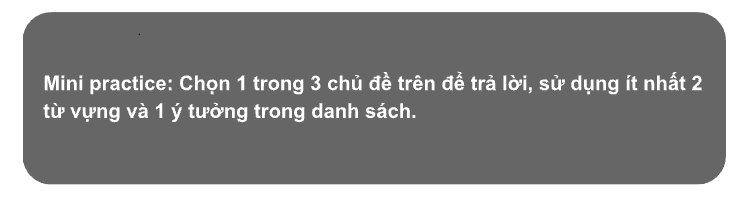
Chủ đề liên quan để sử dụng từ vựng và ý tưởng:
Describe a positive change in your friend's life. (Liên quan đến việc một quyết định, như chuyển nhà, đã tạo ra tác động tích cực đến cuộc sống của họ.)
Describe a peaceful place you know. (Liên quan đến việc mô tả loại hình và cảm giác của một chỗ ở mới.)
Người đọc có thể sử dụng:
Từ vựng: make a conscious decision, move to a new place, upgrade to a house, feel cramped, feel more balanced, peaceful neighborhood, home office, sense of tranquility, improve one's lifestyle, settled and comfortable.
Ý tưởng:
một người bạn hoặc người thân quyết định chuyển đến chỗ ở mới.
quyết định này xuất phát từ mong muốn cải thiện chất lượng cuộc sống (không gian, hòa bình, cân bằng).
theo dõi những thay đổi tích cực trong thói quen và cảm xúc của họ sau khi chuyển đi.
nhận ra tầm quan trọng của môi trường sống đối với hạnh phúc và năng suất.
Tóm lại, việc luyện tập IELTS Speaking Part 2 không chỉ dừng lại ở việc trả lời đủ các gạch đầu dòng trong đề bài, mà còn nằm ở khả năng kể lại một trải nghiệm có logic, cảm xúc và chiều sâu cá nhân. Thông qua chủ đề “Describe a person you know who has moved to a new accommodation”, người học có cơ hội rèn luyện cách tổ chức câu trả lời mạch lạc, sử dụng từ vựng theo ngữ cảnh và thể hiện nhận thức về tác động của môi trường sống đến chất lượng cuộc sống.
Nếu bạn muốn nâng cao kỹ năng IELTS Speaking theo lộ trình cá nhân hóa, Hệ thống giáo dục ZIM cung cấp các khóa luyện thi IELTS cam kết đầu ra, giúp bạn tối ưu hiệu quả học tập và tiết kiệm đến 80% thời gian tự học. Để được tư vấn chi tiết, vui lòng liên hệ hotline 1900-2833 (nhánh 1) hoặc truy cập Khóa học IELTS.



Bình luận - Hỏi đáp