


Áp dụng cấu trúc trả lời logic cho chủ đề Part 3: Habits và Globalisation.
Tổng hợp các cụm từ ăn điểm và từ nối giúp mạch lạc ý tưởng.
Sử dụng "Nhật ký từ vựng" để cá nhân hóa kiến thức và lấp đầy khoảng trống diễn đạt.
Lưu ý các lỗi ngữ pháp thường gặp để đảm bảo độ chính xác và trôi chảy khi nói.
Bài mẫu IELTS Speaking Part 3 Topic “Habits/Globalisation” kèm từ vựng
Trong bài viết này, tác giả sẽ gợi ý bài mẫu cho Topic “Habits / Globalisation” và phân tích các từ vựng ghi điểm cho phần thi IELTS Speaking Part 3.
Key takeaways
Phần thi IELTS Speaking Part 3 với chủ đề “Habits/Globalisation” đòi hỏi thí sinh không chỉ trả lời câu hỏi mà còn phải phân tích, so sánh và đưa ra quan điểm có lập luận chặt chẽ. Thí sinh có thể gặp khó khăn trong việc triển khai ý tưởng mạch lạc và sử dụng từ vựng học thuật phù hợp cho những chủ đề này. Bài viết cung cấp bài mẫu chi tiết cho cả hai topic kèm phân tích cấu trúc trả lời logic, từ vựng ghi điểm theo ngữ cảnh và các lỗi ngữ pháp thường gặp cần tránh, giúp thí sinh tự tin thảo luận sâu và đạt band điểm cao.
IELTS Speaking Part 3: Habits / Globalisation - Sample Answer
Simple answer
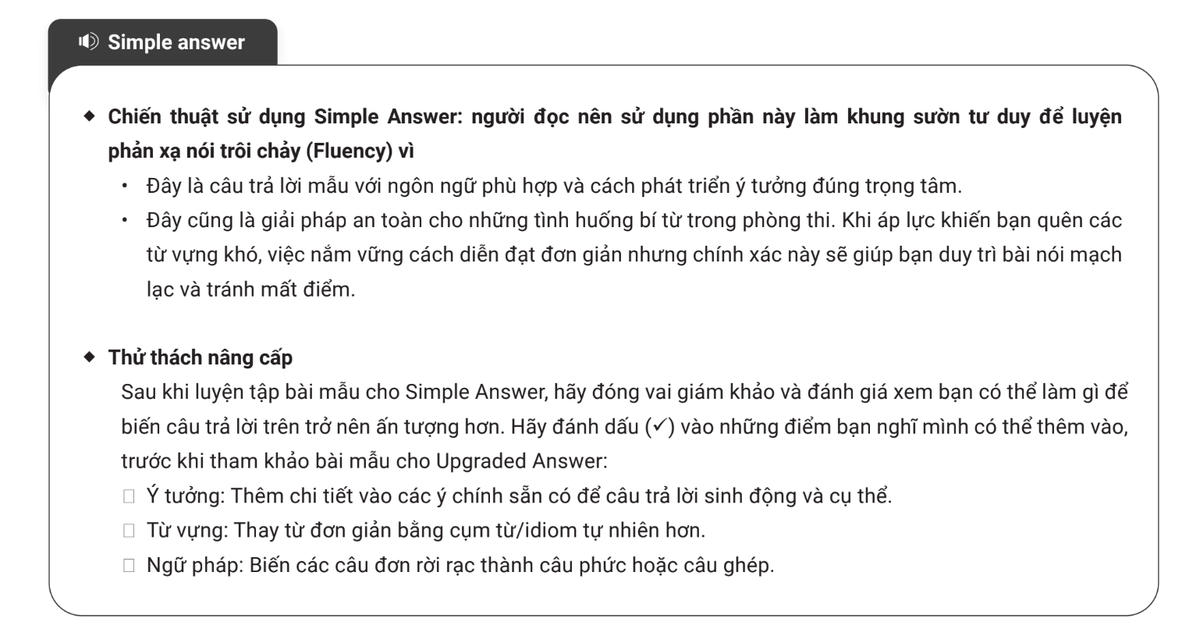
1. Why do you think people develop certain habits in their daily lives?
|
People develop habits because they want their daily life to be easier and more organised. When people repeat the same actions every day, those actions become automatic. This helps them save time and effort in daily life. As a result, they feel less stressed and more in control. For example, waking up at the same time every morning helps people manage their day better.
2. Do you think good habits are easier to develop when people are young?
|
Yes, I think good habits are easier to develop when people are young. Young people are more open to new routines and changes. They have not formed many bad habits yet. For example, children can easily get used to reading before bed if they do it every day. Because of this, it is easier for them to learn positive habits.
3. Do you think globalisation is making cultures around the world more similar?
|
Yes, I think globalisation is making cultures around the world more similar. People in different countries now use the same technology and social media. This means they are influenced by similar lifestyles and ideas. For example, young people in many countries follow the same fashion trends online. Over time, cultural differences become less clear.
4. What are the advantages of cultures becoming more alike?
|
One main advantage of cultures becoming more alike is that people can communicate more easily. When people share similar ways of thinking and behaving, they can understand each other better. This reduces confusion in daily communication. As a result, people can work together more smoothly. For example, people from different countries can work well in the same office because they have similar working habits.
5. What problems might occur if traditional ways of life gradually disappear?
|
If traditional ways of life disappear, people may lose their cultural identity. Traditions help people feel connected to their history and community. When these traditions are no longer practiced, that connection becomes weaker. This can affect how people see themselves. For example, younger generations may feel less connected to their culture if traditional festivals disappear.
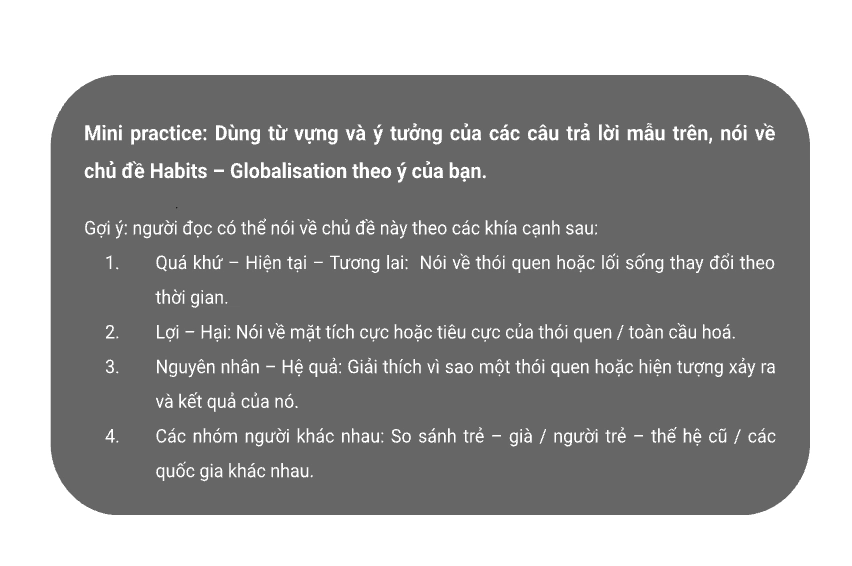
Tìm hiểu thêm: Dạng câu hỏi Causes - Effects - Solutions trong IELTS Speaking Part 3
Upgraded answer
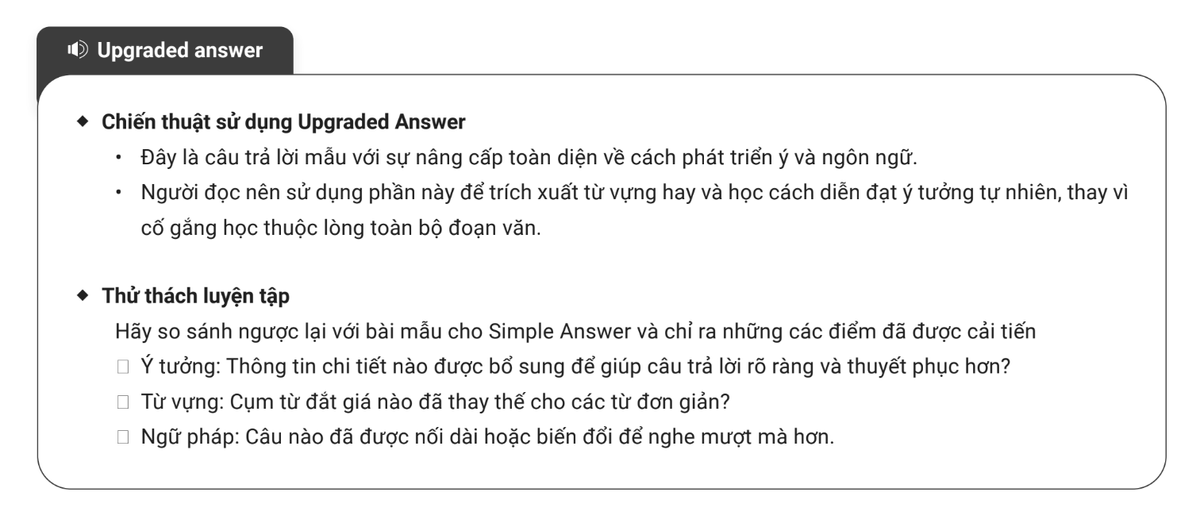
1. How is talking to children different from talking to adults?
|
Well, I think people develop habits mainly to keep their daily lives running smoothly. When the same actions are repeated again and again, they gradually become second nature, which means people don’t have to make decisions all the time. This takes a lot of mental effort away from daily tasks and makes life feel more manageable. In practice, that sense of control can really reduce stress. For example, many people wake up at the same time every morning and follow a fixed routine. By doing so, they can start the day calmly instead of rushing and reacting to things.
2. Do you think good habits are easier to develop when people are young?
|
Yes, I’d say good habits are easier to pick up when people are young. At that stage of life, routines are still flexible, so new behaviours don’t feel like a big change. In fact, young people are often more willing to try new things and stick with them. For instance, children can get used to reading before bed simply by repeating it every day. Once it becomes part of their routine, they usually carry that habit with them as they grow older.
3. Do you think globalisation is making cultures around the world more similar?
|
Personally, I do think globalisation is making cultures more alike. These days, people across different countries are exposed to the same apps, media, and online trends. As a result, lifestyles start to overlap in many ways, especially among younger generations. When you think about it, this shared influence naturally reduces cultural differences. For example, young people around the world often dress in similar styles and listen to the same music. Even though they live far apart, their daily interests can look surprisingly similar.
4. What are the advantages of cultures becoming more alike?
|
One clear advantage, I think, is that communication becomes much easier. When people share similar ways of thinking and behaving, they tend to understand each other faster, which helps conversations flow more smoothly. Not only that, but it also reduces small misunderstandings in everyday situations. This makes working or living with people from different backgrounds far less stressful. For example, in the same office, international colleagues can cooperate more easily because expectations and working habits are already quite similar.
5. What problems might occur if traditional ways of life gradually disappear?
|
If traditional ways of life gradually disappear, societies may begin to lose their sense of identity. Traditions play a key role in connecting people to their history, and without them, that connection slowly weakens. Over time, this can affect how people see themselves and their community. In other words, they may lose touch with their cultural roots. For example, if traditional festivals are no longer celebrated, younger generations may not understand their meaning. This can make them feel less connected to their culture and older generations.
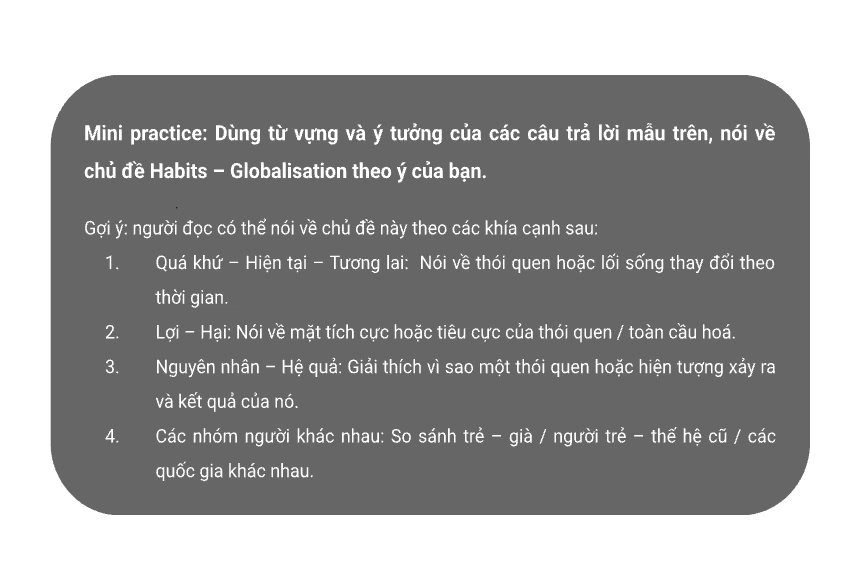
Đọc thêm: Hướng dẫn trả lời dạng câu hỏi Evaluate trong IELTS Speaking Part 3
Lọc và phân tích từ vựng


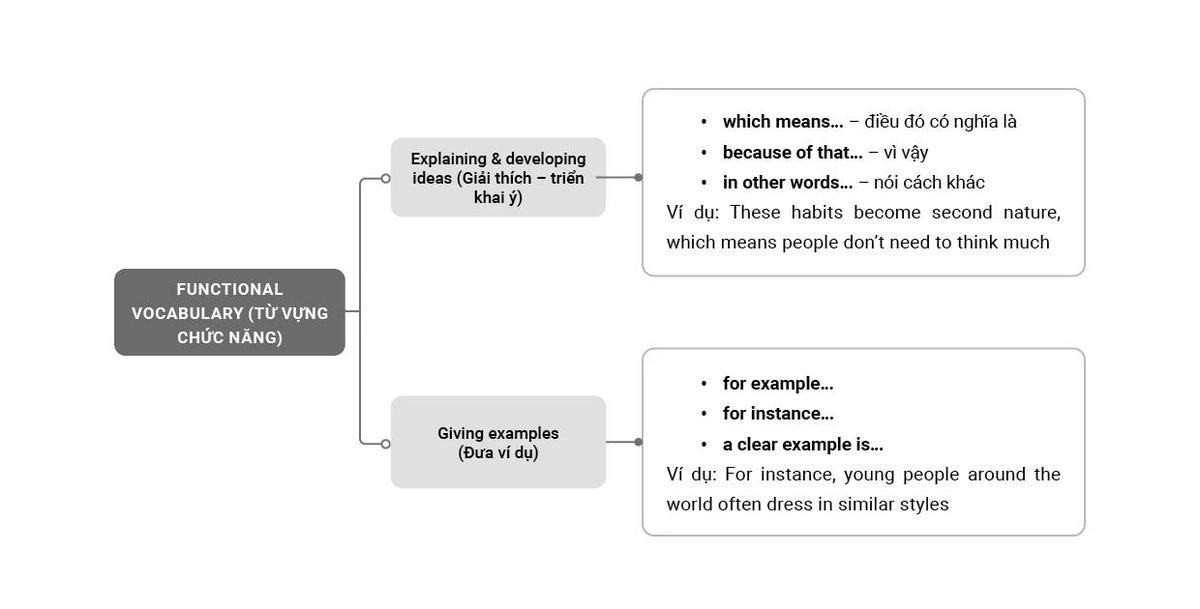
Nhật ký từ vựng & ý tưởng
Ghi chú sau khi luyện tập nói về chủ đề trên.
Từ vựng/Ý tưởng (Chọn các từ vựng/ý tưởng mà bạn tâm đắc nhất) | Kỉ niệm cá nhân |
|---|---|
Ví dụ: reduce stress /rɪˈdjuːs stres/ (v phr) – giảm căng thẳng | Người đọc tự đặt các câu hỏi cho bản thân, ví dụ:
→ Recently, I realised that checking my schedule every morning has become a habit for me. It helps me feel more organised and reduces stress during busy days. Also, celebrating traditional family gatherings makes me feel connected to my cultural identity. |
Khoảng trống diễn đạt (Phần khiến bạn ngập ngừng khi nói về chủ đề trên) | Giải pháp (Giải pháp cho các khoảng trống diễn đạt) |
Ví dụ: Tôi đã bị khựng lại khi muốn nói “thói quen này giúp tôi đỡ căng thẳng hơn”. | Ví dụ: Dùng từ điển, công cụ AI, … để tìm cụm từ mà bạn cần. → reduce stress – giảm căng thẳng |
Người đọc có thể tìm từ vựng bằng từ điển ZIM Dictionary.
Các lỗi ngữ pháp thường gặp
1. Lỗi thường gặp: different with
Cách dùng đúng: different from
Giải thích: Người học Việt thường dịch trực tiếp "khác với" sang tiếng Anh, dẫn đến việc dùng sai giới từ. Trong tiếng Anh, tính từ different luôn đi với from, không dùng with.
2. Lỗi thường gặp: get used to + V (động từ nguyên mẫu)
Cách dùng đúng: get used to + V-ing / noun
Giải thích: Trong tiếng Anh, to trong get used to là giới từ, không phải là to của động từ nguyên mẫu. Vì vậy, động từ theo sau phải ở dạng V-ing.
3. Lỗi thường gặp: chia động từ số ít sau chủ ngữ số nhiều.
Cách dùng đúng: chủ ngữ số nhiều + động từ nguyên mẫu (không thêm -s/-es)
Giải thích: Các danh từ như people, habits, traditions là chủ ngữ số nhiều, nên động từ theo sau không thêm -s/es. Người học Việt thường nhằm do không quen với khái niệm chia động từ theo chủ ngữ.
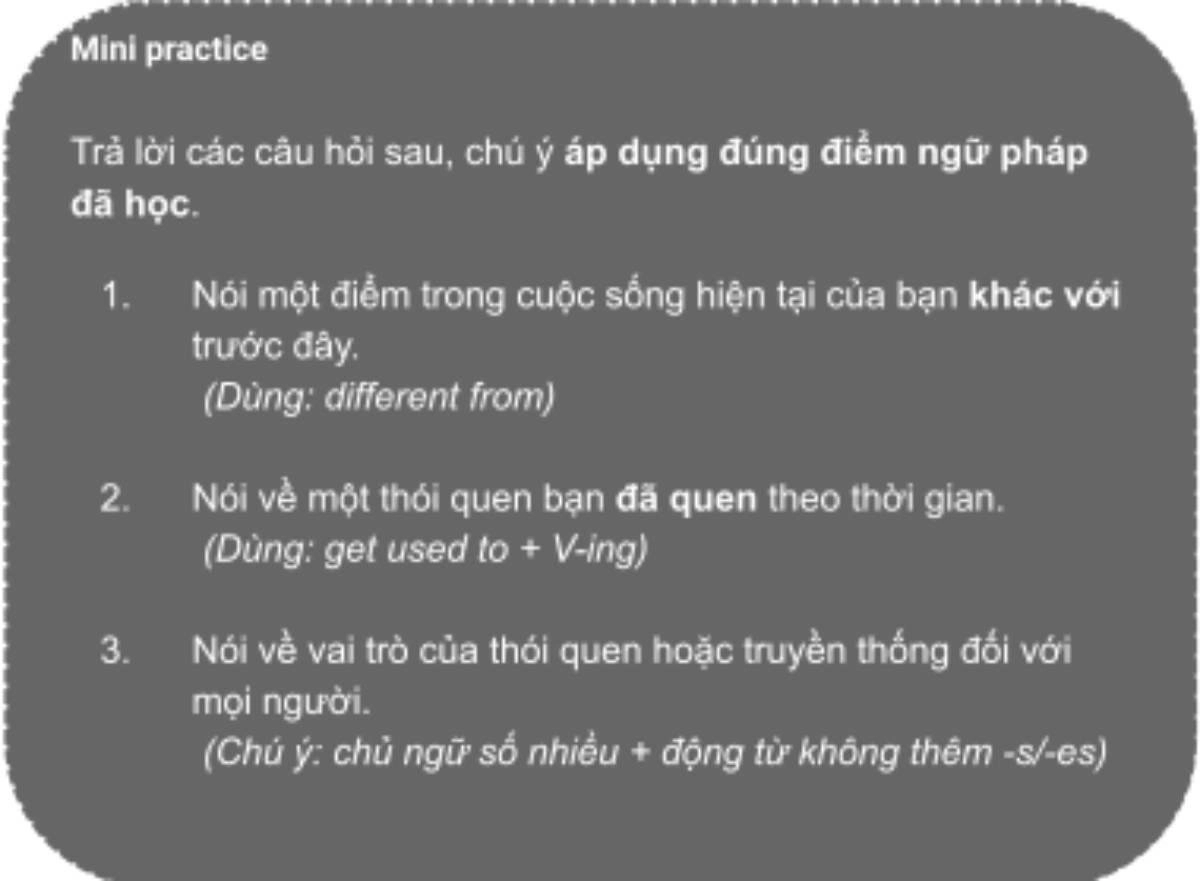
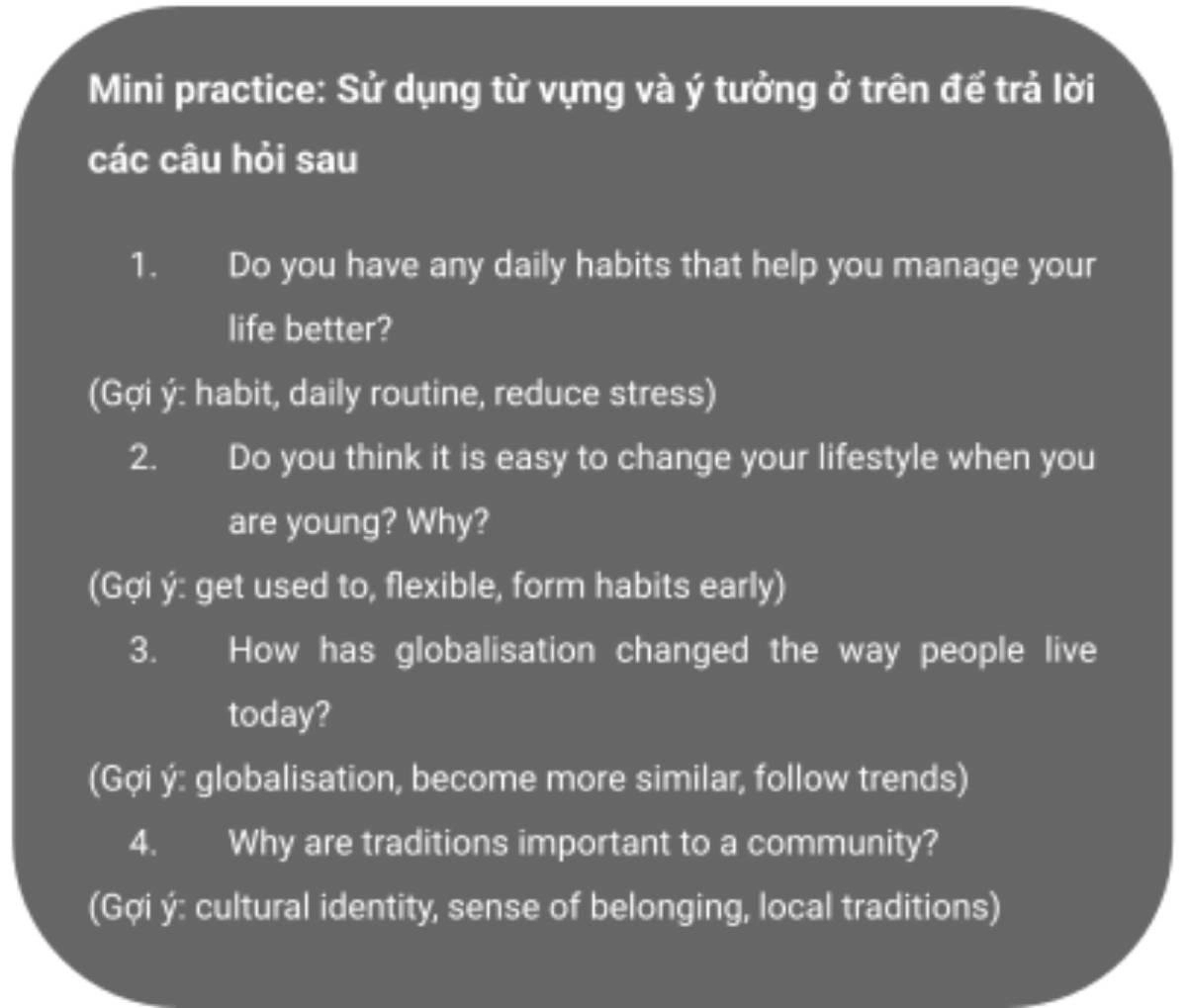
Các chủ đề liên quan
Chủ đề liên quan để sử dụng từ vựng & ý tưởng:
Daily routine (Thói quen hằng ngày)
Lifestyle changes (Thay đổi lối sống)
Culture and traditions (Văn hóa và truyền thống)
Người đọc có thể sử dụng:
Từ vựng:
habit, daily routine, get used to, reduce stress, cultural identity, local traditions, sense of belonging, globalisation, become more similar, follow trends,…
Ý tưởng:
Thói quen lặp lại hằng ngày giúp cuộc sống có tổ chức và dễ quản lý hơn
Người trẻ dễ hình thành thói quen mới vì linh hoạt và chưa bị “cố định” lối sinh hoạt
Toàn cầu hóa khiến con người ở nhiều quốc gia sống và suy nghĩ giống nhau hơn
Truyền thống giúp con người cảm thấy gắn bó với cộng đồng và lịch sử
Khi truyền thống dần biến mất, xã hội có thể trở nên đồng nhất nhưng kém ý nghĩa
Tham khảo thêm: Talk about your daily routine - Bài mẫu IELTS Speaking Part 1, 2 và 3
Tổng kết
Các bài mẫu về “Habits/Globalisation” cung cấp cấu trúc trả lời rõ ràng kèm từ vựng ghi điểm cho phần thi IELTS Speaking Part 3. Thí sinh nên ghi chép các cụm từ học thuật vào “Nhật ký từ vựng”, tạo câu ví dụ riêng và luyện tập đưa ra quan điểm có lập luận chặt chẽ. Với sự chuẩn bị bài bản qua phương pháp này, kết hợp việc tránh các lỗi ngữ pháp phổ biến đã được chỉ ra, người học có thể tự tin thảo luận sâu các vấn đề xã hội và đạt điểm cao trong Part 3.
Đối với thí sinh đang trong giai đoạn chuẩn bị cho kỳ thi IELTS, việc trải nghiệm một bài thi thử có cấu trúc và độ khó tương đương với đề thi thật là bước chuẩn bị quan trọng. Thi thử IELTS tại ZIM Academy mang đến đánh giá chính xác với đề thi có cấu trúc giống 100% bài thi thật. Chat trực tiếp trên website để được tư vấn nhanh chóng và đăng ký lịch thi phù hợp.
Nguồn tham khảo
1
“Bài mẫu IELTS Speaking Part 3 .” OpenAI, https://chatgpt.com/share/e/6961bf62-bf88-8002-9512-8fe28a8cdcf4. Accessed 8 January 2026.
Bình luận - Hỏi đáp