


Chủ đề IELTS Speaking: Part 3: Clothing.
Bài mẫu cho các nhóm câu hỏi:
Why pay attention to clothes? (First impressions, expressing identity).
Why spend much money? (Self-expression, quality, durability).
Young vs. Older people? (Exposed to trends, peer group influence).
Trends: Now vs. Past? (Diversity, casual/flexible dress codes).
Comfort vs. Fashion? (Productivity, physical ease vs. social image).
Nhóm từ vựng trọng tâm (Topic Vocabulary): Self-expression, Quality, Fashion Influence, và Style.
Bài mẫu IELTS Speaking Part 3 Topic “Clothing” kèm từ vựng
Trong bài viết này, tác giả sẽ gợi ý bài mẫu cho Topic “Clothing” và phân tích các từ vựng ghi điểm cho phần thi IELTS Speaking Part 3.
Key takeaways
Bài viết sau đây sẽ cung cấp các câu trả lời mẫu theo khung sườn tư duy (Simple Answer) cùng các thử thách nâng cấp (Upgraded Answer) về cả ý tưởng, từ vựng và ngữ pháp để người học lựa chọn được câu trả lời phù hợp với bản thân, sẵn sàng cho các tình huống trong phòng thi. Trong chủ đề IELTS Speaking Part 3 Topic Clothing, bài phân tích này sẽ dẫn dắt người học khám phá vai trò của trang phục trong việc định hình "first impressions" (ấn tượng đầu tiên) và thể hiện cá tính (express identity), cũng như sự chuyển dịch xu hướng từ phong cách trang trọng sang "casual outfits" trong xã hội hiện đại, giúp người học chinh phục giám khảo bằng sự mạch lạc và ngôn ngữ tự nhiên.
IELTS Speaking Part 3: Clothing - Sample Answer
Simple answer
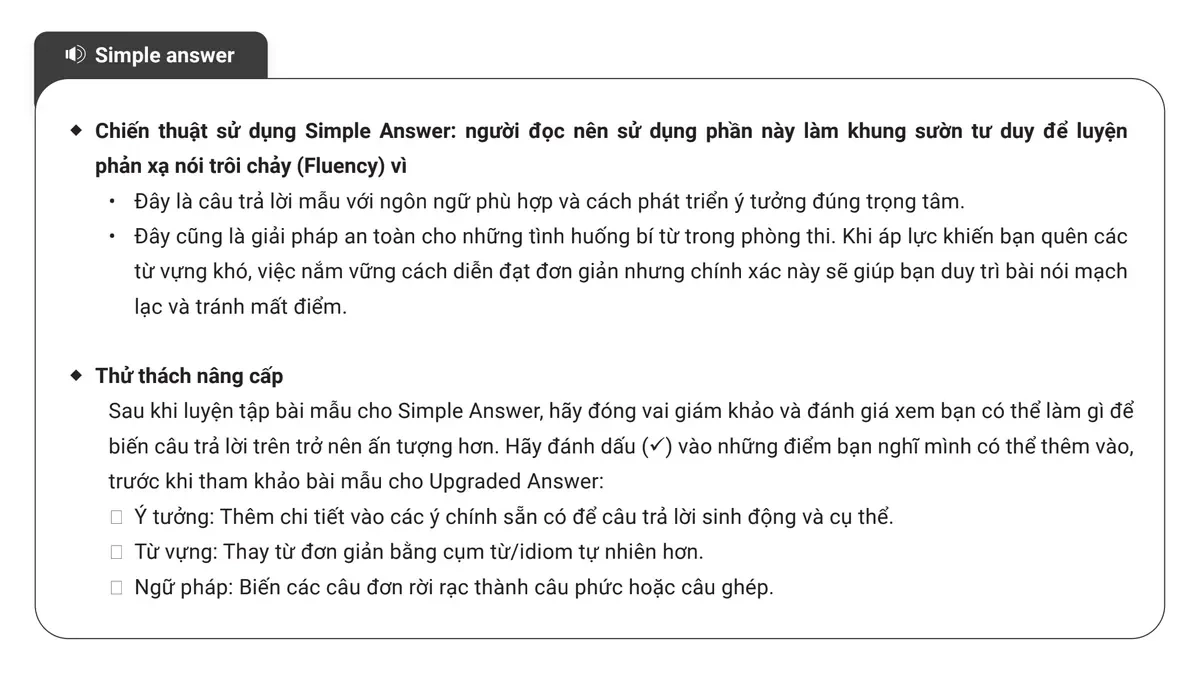
1. Why do people pay attention to the clothes they wear?
|
People pay attention to the clothes they wear because clothes can show their personality and also affect how other people see them. In many situations, wearing the right clothes helps people feel more confident and appropriate. For example, someone may wear formal clothes to a job interview to look serious and professional, but choose casual clothes when going out with friends. So overall, people care about clothing because it is connected to both self-expression and first impressions. |
2. Why do some people spend a lot of money on clothes?
|
Some people spend a lot of money on clothes because they care a lot about appearance and want to look stylish. Another reason is that they believe expensive or well-made clothes can improve their image and last longer. For example, some people are willing to buy a branded coat or a good-quality suit because they can wear it to important events and also use it for a long time. So, for some people, spending money on clothes is not only about fashion but also about quality and image. |
3. Do you think young people care more about fashion than older people?
|
Yes, I think young people usually care more about fashion than older people. The main reason is that they are more influenced by trends, social media, and the opinions of friends. For example, many teenagers want to wear the same sneakers, baggy jeans, or popular brands they see on TikTok or Instagram, while older people often choose simple clothes that are practical and easy to wear. So, compared with older people, young people usually pay more attention to fashion trends. |
4. How have people’s clothing choices changed compared with the past?
|
Compared with the past, people’s clothing choices have become more varied and much more casual. In the past, people often wore more traditional or formal clothes, but now they have more freedom to choose what they like. For example, in the past, office workers often had to wear formal shirts and trousers every day, but nowadays many workplaces allow jeans, polo shirts, or sneakers. So overall, clothing choices today are more flexible and more influenced by personal preference. |
5. Do you think comfortable clothes are more important than fashionable clothes? Why or why not?
|
Yes, I think comfortable clothes are more important than fashionable clothes. The reason is that people wear clothes for many hours, so comfort has a direct effect on daily activities. For example, if someone has to sit in class all day or work for hours, soft and loose clothes will usually be more suitable than tight or heavy clothes, even if they look more fashionable. So, although fashionable clothes can look nice, I think comfort is more important in everyday life. |
Tham khảo: Tổng hợp bài mẫu IELTS Speaking 2026
Upgraded answer
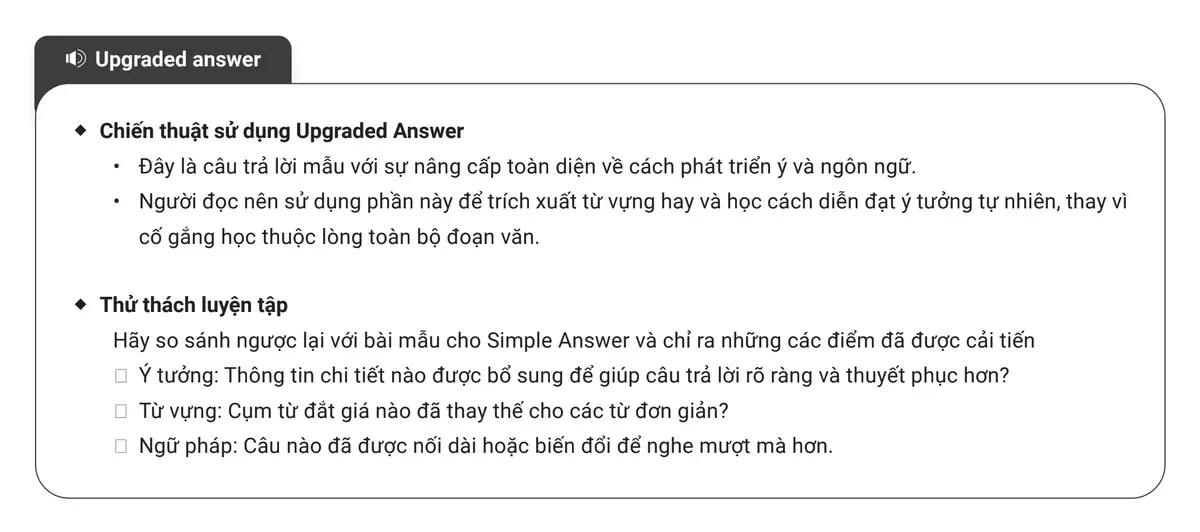
1. Why do people pay attention to the clothes they wear?
|
Well, I’d say people pay attention to the clothes they wear because clothing is one of the first things others notice, so it can strongly shape first impressions. What we wear can reflect our personality, mood, social role, and even the level of respect we want to show in a particular situation. For example, someone might choose a well-fitted shirt, dark trousers, and polished shoes for a job interview because they want to appear professional and reliable, whereas the same person may wear jeans and a hoodie when meeting close friends. So, when you think about it, clothing is not just about covering the body; it is also a way of expressing identity and fitting the occasion. |
2. Why do some people spend a lot of money on clothes?
|
I think there are quite a few reasons for that, to be honest. First of all, some people simply care a lot about their appearance and enjoy dressing well, so buying clothes becomes a form of self-expression. On top of that, others are willing to pay more for better quality, comfort, or durability, especially if they see clothing as a long-term investment rather than a short-term purchase. For instance, a person may spend a large amount on a tailored blazer or a leather jacket because it looks elegant, lasts for years, and can be worn to work, formal events, or important meetings. So, I’d say spending a lot on clothes is not always about showing off; in many cases, it is also about quality, confidence, and personal taste. |
3. Do you think young people care more about fashion than older people?
|
Yes, definitely. I do think young people tend to care more about fashion than older people, mainly because they are more exposed to trends and more influenced by social media, celebrities, and their peer group. At that age, appearance often matters a great deal because many young people want to fit in, stand out, or keep up with what is popular. For example, teenagers may want to buy the same trainers, oversized T-shirts, or trendy accessories they see on TikTok, Instagram, or on their favourite influencers, while older adults are often more concerned with comfort, practicality, and price. By contrast, many older people have already developed their own style and do not feel the need to follow every new trend. So overall, younger generations usually pay closer attention to fashion. |
4. How have people’s clothing choices changed compared with the past?
|
Well, compared with the past, people’s clothing choices have become much more diverse, casual, and individual. In earlier times, clothing was often influenced more strongly by tradition, social expectations, or strict dress codes, whereas nowadays people generally have far more freedom to wear what suits their lifestyle and personal taste. For instance, in the past, many office workers were expected to wear formal shirts, ties, skirts, or suits on a daily basis, but today a lot of workplaces allow smart-casual outfits such as polo shirts, trousers, dresses, or even clean trainers. Besides that, online shopping and global fashion trends have made it much easier for people to explore different styles from around the world. So, in a nutshell, clothing today is more flexible and far more connected to personal choice than before. |
5. Do you think comfortable clothes are more important than fashionable clothes? Why or why not?
|
Yes, absolutely. I personally think comfortable clothes are more important than fashionable ones, especially in everyday life. The main reason is that what we wear can directly affect our mood, movement, and productivity, so if clothes are too tight, heavy, or inconvenient, they can become a real distraction. For example, someone who spends the whole day at work, sits through long classes, or travels a lot will usually prefer soft fabric and comfortable shoes over an outfit that looks stylish but feels restrictive. That said, I would not go so far as to say fashion does not matter at all, because appearance can still be important in situations like job interviews, formal events, or social gatherings. Even so, if I had to choose, I would still put comfort first, since people are much more likely to feel confident when they are physically at ease. |
Lọc và phân tích từ vựng
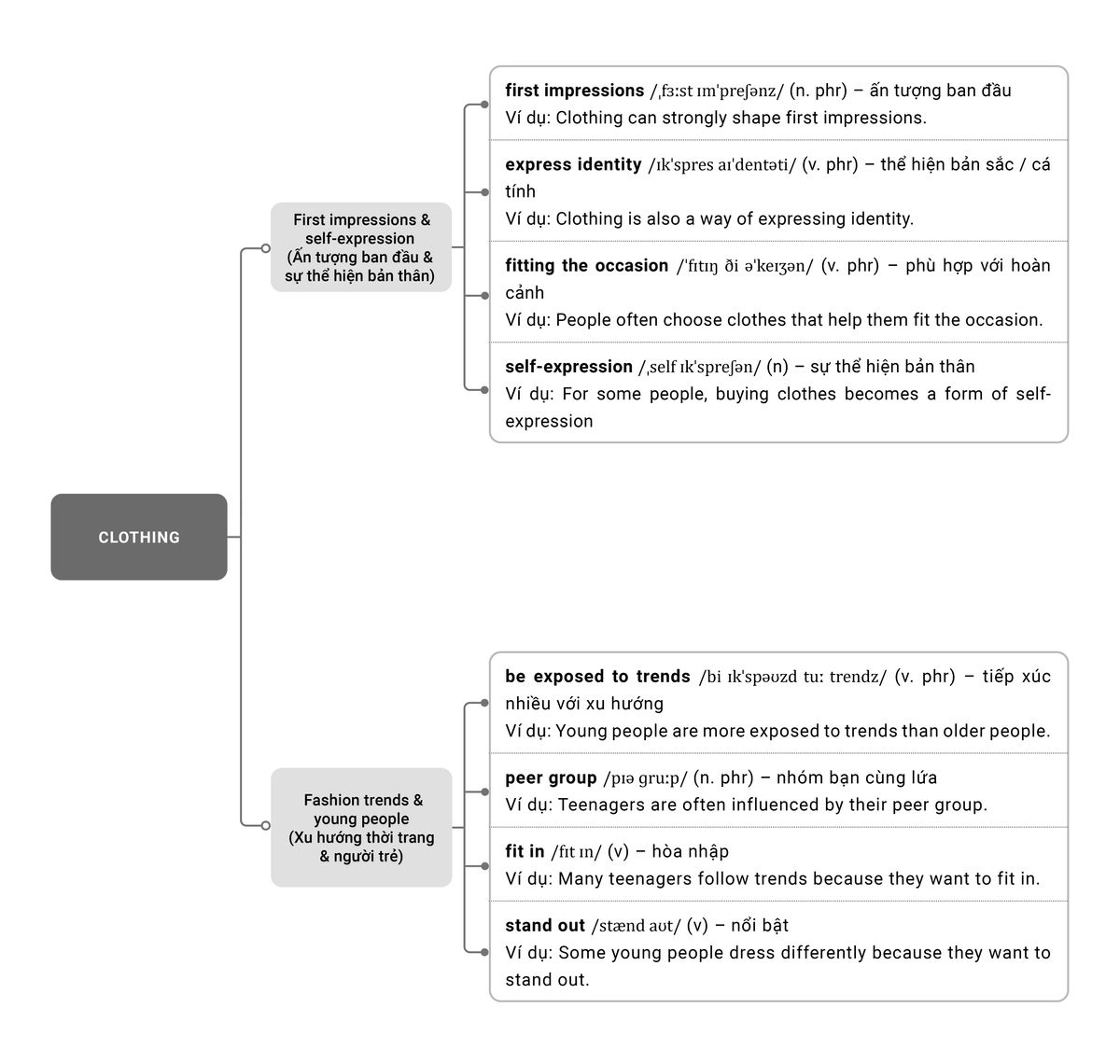
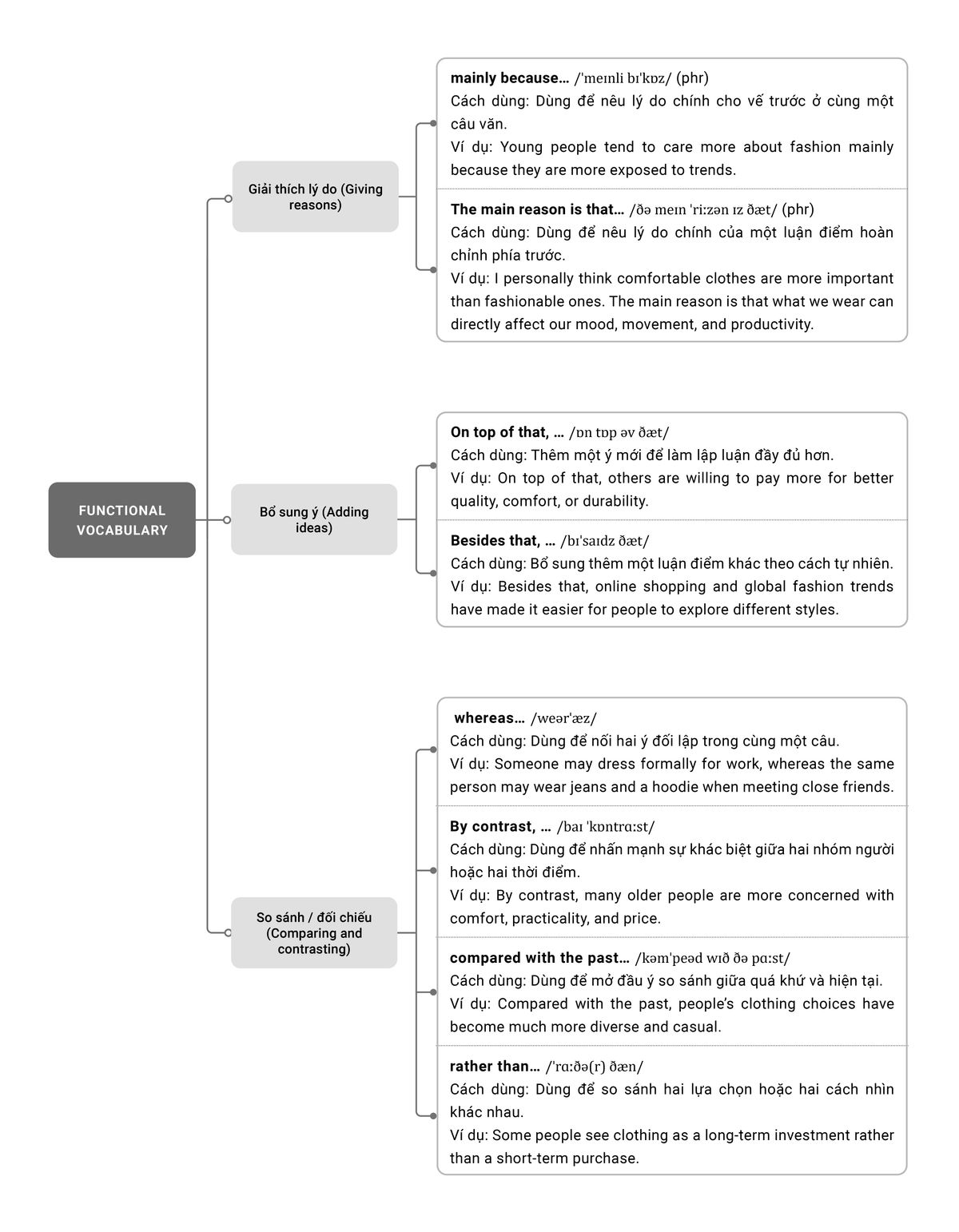
Đọc thêm: Từ vựng về quần áo trong tiếng Anh
Nhật ký từ vựng & ý tưởng
Ghi chú sau khi luyện tập nói về chủ đề trên
Từ vựng/Ý tưởng (Chọn các từ vựng/ý tưởng mà bạn tâm đắc nhất) | Kỉ niệm cá nhân |
|---|---|
Ví dụ: first impressions – ấn tượng ban đầu | Người đọc tự đặt các câu hỏi cho bản thân, ví dụ:
→ I remember that before an important presentation at school, I spent quite a lot of time choosing what to wear because I wanted to make a good first impression. I picked a neat shirt and simple trousers instead of casual clothes, since I wanted to look serious and well-prepared. At the same time, I also made sure the outfit was comfortable, because I knew I would have to stand and speak for quite a long time. That experience made me realize that clothing is not only about appearance, but also about confidence, comfort, and fitting the occasion. |
Khoảng trống diễn đạt (Phần khiến bạn ngập ngừng khi nói về chủ đề trên) | Giải pháp (Giải pháp cho các khoảng trống diễn đạt) |
Ví dụ:
| Ví dụ: Dùng từ điển của ZIM hoặc chép các cách diễn đạt từ bài mẫu ở các phần trên để có được cụm từ mà bạn cần. → Thay vì chỉ nói “clothes are important” → dùng clothing can shape first impressions / reflect personality / fit the occasion |
Người đọc có thể tìm từ vựng bằng từ điển ZIM Dictionary.
Các lỗi ngữ pháp/từ vựng thường gặp
1. Dùng sai giữa “cloth”, “clothes” và “clothing”
❌ Lỗi thường gặp:
Many young people spend a lot of money on cloth.
Clothes is important for first impressions.
✅ Cách dùng đúng:
cloth = vải
clothes = quần áo
clothing = quần áo / trang phục (khái quát hơn)
✔ Câu đúng:
Many young people spend a lot of money on clothes.
Clothing is important for first impressions.
📌 Lý do sai: Người học rất dễ nhầm ba từ này. “Cloth” là chất liệu vải, không dùng để chỉ quần áo nói chung. “Clothes” là danh từ số nhiều, còn “clothing” là danh từ không đếm được.
2. Dùng sai cấu trúc so sánh hơn
❌ Lỗi thường gặp:
Young people are interested in fashion than older people.
Comfortable clothes are importanter than fashionable clothes.
✅ Cách dùng đúng:
more interested than
more important than
✔ Câu đúng:
Young people are more interested in fashion than older people.
Comfortable clothes are more important than fashionable clothes.
📌 Lý do sai: Người học thường thiếu từ “more” hoặc tự thêm “-er” vào tính từ dài, tạo thành lỗi so sánh sai.
3. Dùng sai sau “spend money on”
❌ Lỗi thường gặp:
Some people spend a lot of money for clothes.
They spend money buying expensive brands.
✅ Cách dùng đúng:
spend money on + danh từ
spend money on + V-ing
✔ Câu đúng:
Some people spend a lot of money on clothes.
They spend money on buying expensive brands.
📌 Lý do sai: Sau “spend money”, giới từ đúng là “on”, không phải “for”. Đây là collocation rất hay gặp trong chủ đề này.
Tìm hiểu thêm: Công thức Spend và cách dùng cơ bản
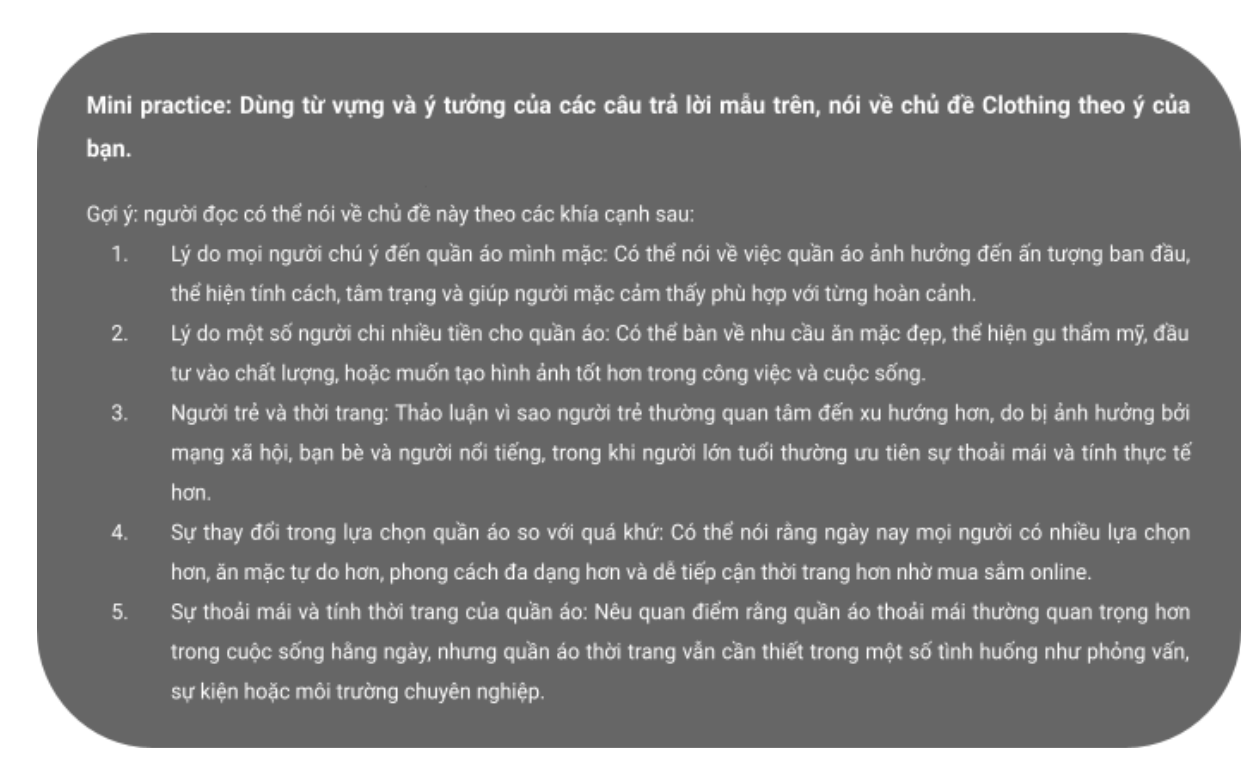
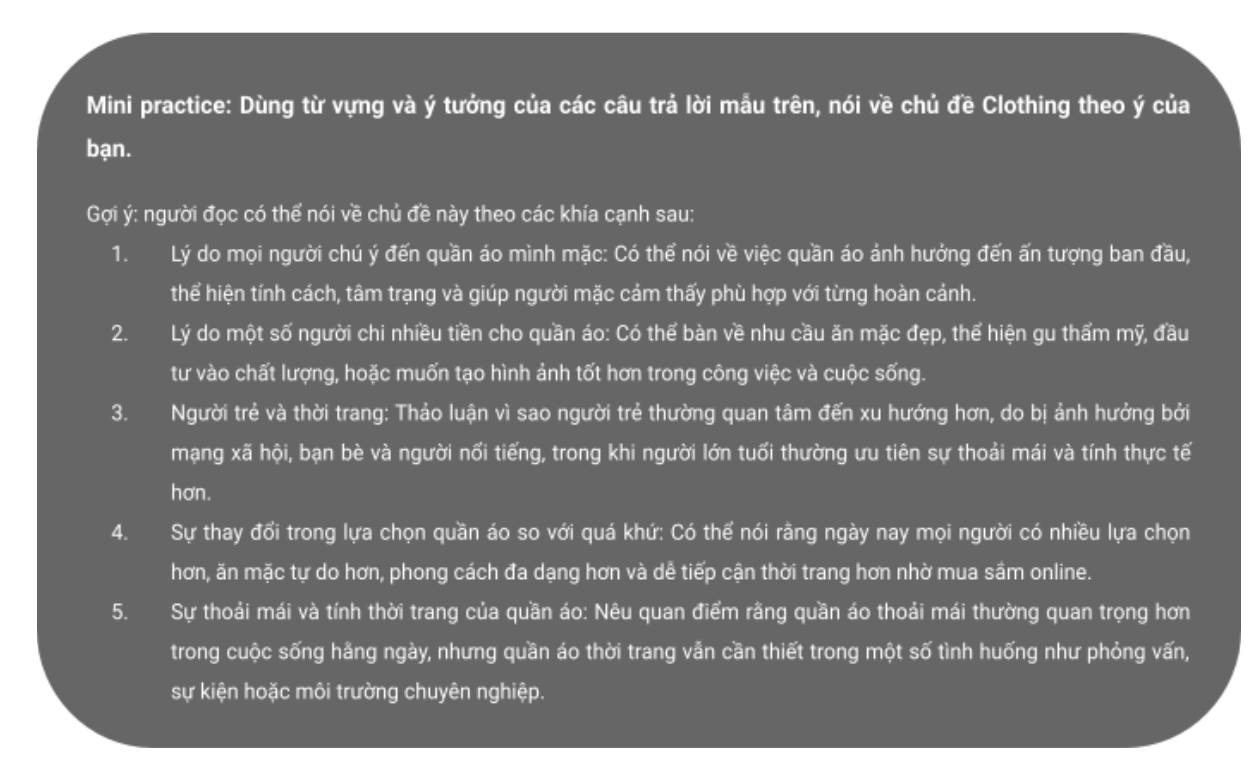
Mini practice |
|---|
Dùng đúng cấu trúc trong ngoặc
(Dùng: clothes / clothing)
(Dùng: more interested in … than / more important than)
(Dùng: spend money on + danh từ / spend money on + V-ing) |
Các chủ đề liên quan
Chủ đề liên quan để sử dụng từ vựng & ý tưởng:
Fashion and personal style (Thời trang & phong cách cá nhân)
Young people and social influence (Người trẻ & ảnh hưởng xã hội)
Daily life and comfort (Đời sống hằng ngày & sự thoải mái)
Người đọc có thể sử dụng:
Từ vựng:
first impressions, appearance, self-expression, personal taste, fashion trends, peer group, fit in, stand out, diverse, casual, strict dress codes, personal choice, comfortable clothes, formal events, put comfort first...
Ý tưởng:
Quần áo không chỉ để mặc mà còn ảnh hưởng đến ấn tượng ban đầu và thể hiện cá tính của người mặc.
Một số người chi nhiều tiền cho quần áo vì họ quan tâm đến ngoại hình, chất lượng và gu thẩm mỹ cá nhân.
Người trẻ thường quan tâm đến thời trang hơn vì họ bị ảnh hưởng nhiều bởi xu hướng, mạng xã hội và bạn bè cùng lứa.
So với trước đây, lựa chọn quần áo ngày nay đa dạng, thoải mái và mang tính cá nhân hơn nhiều.
Trong cuộc sống hằng ngày, quần áo thoải mái thường quan trọng hơn, nhưng quần áo thời trang vẫn cần thiết trong một số dịp trang trọng.
Mini practice |
|---|
Sử dụng từ vựng và ý tưởng ở trên để trả lời các câu hỏi sau
|
Tìm hiểu thêm: Bài mẫu IELTS Speaking Part 3 Topic “Science in Life” kèm từ vựng
Tổng kết
Hy vọng rằng qua việc phân tích hai cấp độ trả lời từ Simple Answer để đảm bảo sự trôi chảy đến Upgraded Answer để ghi điểm ấn tượng, người học đã nắm vững được lộ trình để chinh phục IELTS Speaking Part 3 Topic Clothing. Bằng cách cá nhân hóa các câu trả lời thông qua "Nhật ký Từ vựng & Ý tưởng", người học sẽ xây dựng được sự tự tin. Đừng quên thực hành các bài tập nhỏ (mini practice) để khắc phục những lỗi ngữ pháp thường gặp và làm chủ ngôn ngữ của mình nhé!
Nếu người học muốn nâng cao kỹ năng IELTS Speaking theo lộ trình cá nhân hóa, Hệ thống giáo dục ZIM cung cấp các khóa luyện thi IELTS cam kết đầu ra, giúp bạn tối ưu hiệu quả học tập và tiết kiệm đến 80% thời gian tự học. Để được tư vấn chi tiết, vui lòng liên hệ hotline 1900-2833 (nhánh 1) hoặc truy cập Khóa học IELTS.
Nguồn tham khảo
1
“Bài mẫu IELTS Speaking Part 3.” OpenAI, chatgpt.com/share/e/6961b6c8-4368-8002-995c-cd65b4729b18. Accessed 2 May 2026.
Bình luận - Hỏi đáp