


Chủ đề IELTS Speaking: Part 3: Science in Life.
Bài mẫu cho nhóm câu hỏi:
How science affects daily lives?
Relying more on science: Now vs. Past?
Examples of science in action?
Jobs requiring scientific knowledge?
Importance of science-related jobs?
Nhóm từ vựng trọng tâm (Topic Vocabulary): Daily life, Technology, Dependence, và Jobs.
Bài mẫu IELTS Speaking Part 3 Topic “Science in Life” kèm từ vựng
Trong bài viết này, tác giả sẽ gợi ý bài mẫu cho Topic “Science in Life” và phân tích các từ vựng ghi điểm cho phần thi IELTS Speaking Part 3.
Key takeaways
Bài viết sau đây sẽ cung cấp các câu trả lời mẫu cho IELTS Speaking Part 3 Topic “Science in Life” theo khung sườn tư duy (Simple Answer) cùng các phiên bản nâng cấp (Upgraded Answer) về ý tưởng, từ vựng và ngữ pháp, giúp người học lựa chọn câu trả lời phù hợp với bản thân và tự tin xử lý các tình huống trong phòng thi. Bài phân tích sẽ dẫn dắt người học khám phá chủ đề Science in Life từ những ứng dụng thực tiễn của scientific progress trong các household appliances đến vai trò then chốt của scientific knowledge trong các ngành nghề chuyên môn, qua đó giúp thí sinh ghi điểm với giám khảo bằng sự mạch lạc và ngôn ngữ tự nhiên.
IELTS Speaking Part 3: Science in Life - Sample Answer
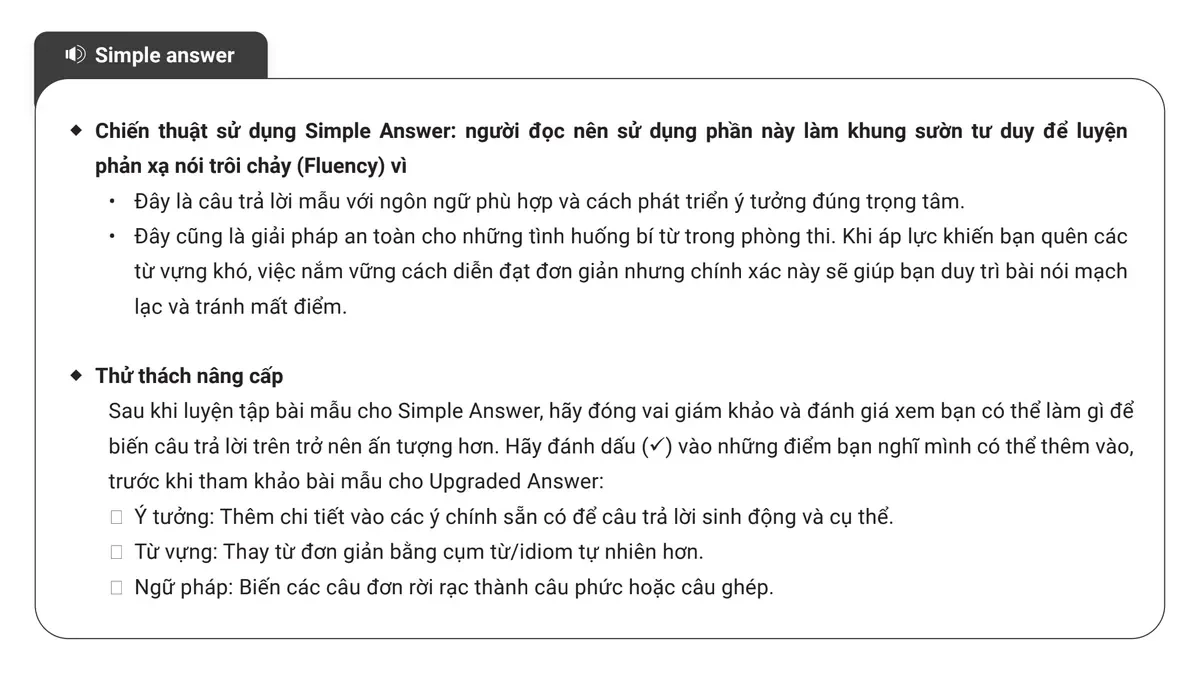
Simple answer
1. How does science affect people’s daily lives?
|
Science affects people’s daily lives in many ways, especially through technology, medicine, and transportation. It makes everyday tasks easier, faster, and safer. For example, people use smartphones, household appliances, and online services every day because of scientific development. So overall, science plays an important role in modern life. |
2. Do you think people today rely more on science than in the past? Why?
|
Yes, I think people today rely much more on science than in the past. This is because modern life depends heavily on scientific inventions such as the internet, medical equipment, and transport systems. For instance, people now use technology for work, study, communication, and even shopping. Therefore, science has become more necessary in daily life than ever before. |
3. What are some examples of science being used in everyday life?
|
There are many examples of science being used in everyday life. One common example is medicine, such as vaccines and health check-up machines. Another example is household technology like refrigerators, washing machines, and air conditioners. Science is also used in transportation, for example in cars, trains, and airplanes. Overall, science is present in almost every part of daily life. |
4. Which jobs require scientific knowledge?
|
Many jobs require scientific knowledge, especially jobs in healthcare, engineering, and research. Doctors, nurses, pharmacists, and lab scientists all need to understand science to do their work properly. In addition, engineers and IT workers also use scientific knowledge to solve practical problems. So, scientific knowledge is important in many different careers. |
5. Do you think science-related jobs are more important than other jobs? Why or why not?
|
I think science-related jobs are very important, but I do not think they are more important than all other jobs. Scientists, doctors, and engineers help improve health, technology, and living standards. However, other jobs like teaching, farming, and public service are also necessary for society. So, science-related jobs are essential, but every job has its own value. |
Tham khảo: Tổng hợp bài mẫu IELTS Speaking 2026
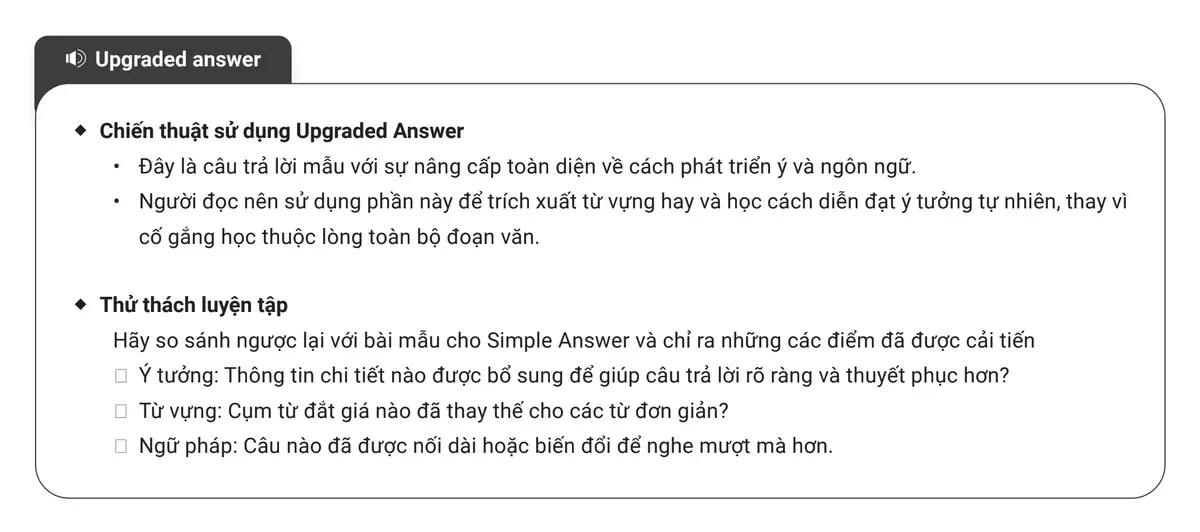
Upgraded answer
1. How does science affect people’s daily lives?
|
Well, I’d say science has a huge impact on people’s everyday lives, even though many of us do not always notice it. It shapes the way we travel, communicate, cook, work, and even take care of our health. For example, thanks to scientific progress, people can use GPS for navigation, microwave ovens to prepare meals in minutes, and smartwatches to monitor their heart rate or sleep quality. On top of that, medical science has made common treatments much safer and more effective than before. So, when you think about it, science is woven into almost every aspect of modern life. |
2. Do you think people today rely more on science than in the past? Why?
|
Yes, absolutely. I do think people today rely far more on science than people did in the past. The main reason is that modern society is built around scientific knowledge and technological systems, so science is no longer just something in laboratories; it is part and parcel of daily life. For instance, most people depend on smartphones, online banking, digital healthcare services, and public transport systems that all rely on scientific and technical advances. Even in education and work, people now use laptops, video calls, and AI-based tools on a regular basis. By contrast, in the past, people tended to live more simply and were less dependent on complex systems. So overall, science has become much more central to how we live today. |
3. What are some examples of science being used in everyday life?
|
There are countless examples, to be honest. One obvious area is healthcare, where science is used in things like vaccines, X-rays, blood tests, and even simple pain relief medicine. Another everyday example is household technology. Appliances such as washing machines, rice cookers, refrigerators, and water purifiers all work based on scientific principles. Science also plays a key role in transport, from fuel-efficient motorbikes to electric cars and airplane safety systems. Even food preservation, weather forecasting, and mobile internet are good examples of science in action. So, in one way or another, science is all around us. |
4. Which jobs require scientific knowledge?
|
Quite a lot of jobs require scientific knowledge, especially nowadays. The most obvious ones are jobs in healthcare, such as doctors, pharmacists, dentists, nurses, and lab technicians, because they need to understand the human body, medicine, and medical equipment. Besides that, engineers also rely heavily on science when designing buildings, machines, electronic devices, or transport systems. Scientific knowledge is also essential in jobs like environmental research, food technology, aviation, and even software development in some cases. For example, a civil engineer needs knowledge of physics and materials, while a pharmacist must understand chemistry in depth. So yes, science is at the heart of many professions. |
5. Do you think science-related jobs are more important than other jobs? Why or why not?
|
I’d say science-related jobs are extremely important, but I would not go so far as to say they are more important than every other job. The reason is that scientists, doctors, engineers, and medical researchers make a huge contribution to society by improving healthcare, infrastructure, safety, and quality of life. For instance, without medical researchers, we would struggle to develop vaccines or treatments for serious diseases, and without engineers, modern transport and communication systems would not function properly. That said, other professions are just as essential in their own way. Teachers educate future generations, farmers provide food, and sanitation workers help keep cities clean and safe. So, rather than ranking jobs, I think it is fairer to say that science-related careers are vital, but they are part of a much bigger system in society. |
Đọc thêm: Bài mẫu IELTS Speaking Part 3 Topic “Customer Service” kèm từ vựng
Lọc và phân tích từ vựng
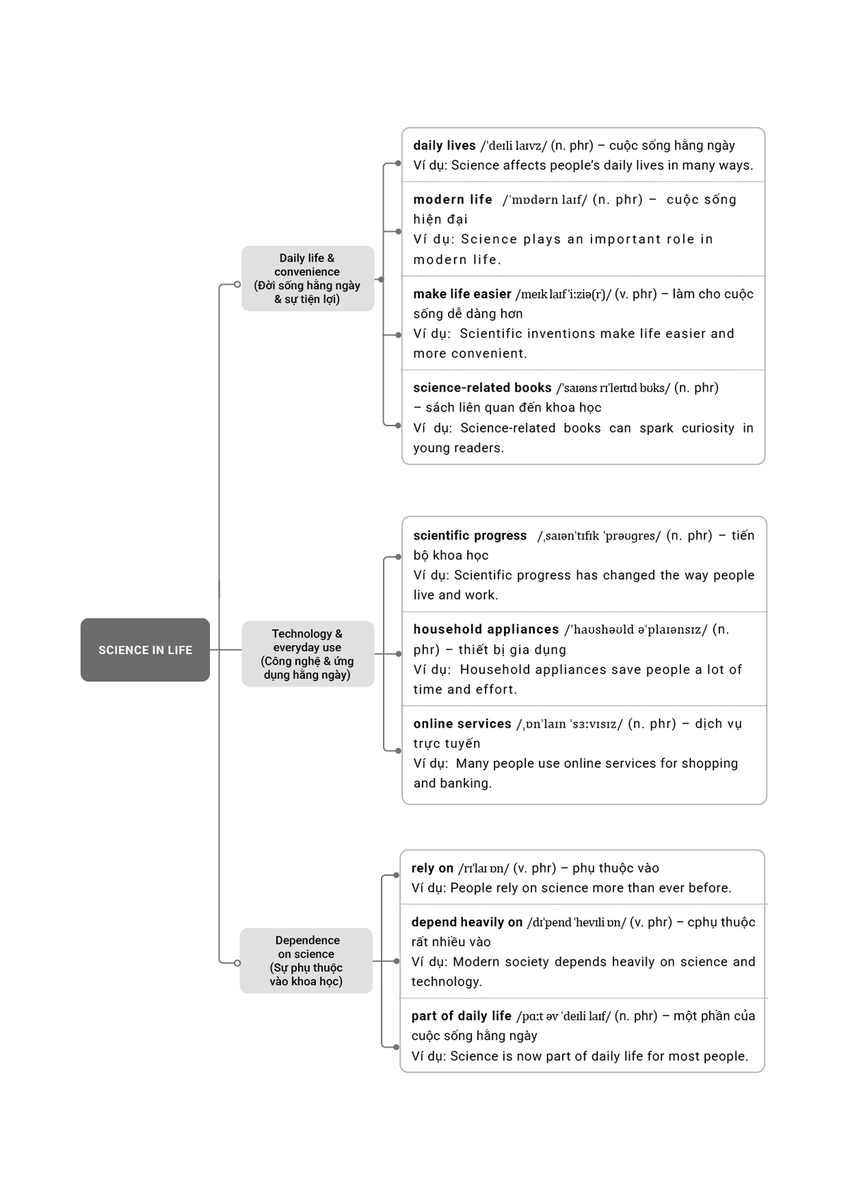
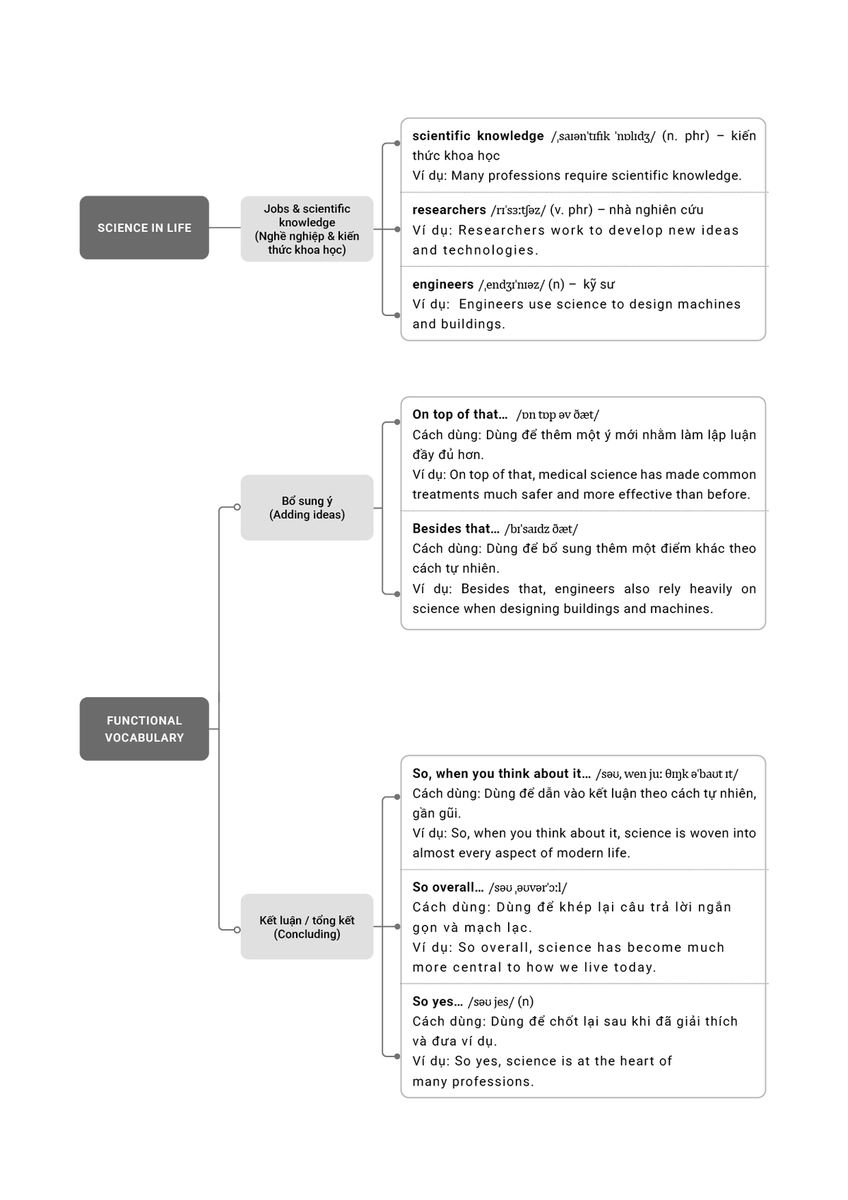
Nhật ký từ vựng & ý tưởng
Ghi chú sau khi luyện tập nói về chủ đề trên
Từ vựng/Ý tưởng (Chọn các từ vựng/ý tưởng mà bạn tâm đắc nhất) | Kỉ niệm cá nhân |
|---|---|
Ví dụ: part of daily life – một phần của cuộc sống hằng ngày | Người đọc tự đặt các câu hỏi cho bản thân, ví dụ:
→ For me, science is clearly part of daily life. I use my smartphone for directions, messages, and online banking almost every day. At home, I also rely on appliances like a rice cooker, a refrigerator, and a washing machine, which save me a lot of time. In terms of health, I think science is even more important because my family often goes for regular check-ups and uses modern medical services when needed. So, when I think about it, science has made my life much easier, safer, and more convenient. |
Khoảng trống diễn đạt (Phần khiến bạn ngập ngừng khi nói về chủ đề trên) | Giải pháp (Giải pháp cho các khoảng trống diễn đạt) |
Ví dụ:
| Ví dụ: Dùng từ điển của ZIM hoặc chép các cách diễn đạt từ bài mẫu ở các phần trên để có được cụm từ mà bạn cần. → Khi thiếu ví dụ, hãy dùng ví dụ cá nhân và quen thuộc trước: smartphone, GPS, online banking, washing machine, rice cooker, medical check-ups, vaccines |
Người đọc có thể tìm từ vựng bằng từ điển ZIM Dictionary.
Các lỗi ngữ pháp/từ vựng thường gặp
1. Dùng sai sau “rely on” và “depend on”
❌ Lỗi thường gặp:
People rely science in everyday life.
Modern society depends science and technology.
✅ Cách dùng đúng:
rely on + danh từ / cụm danh từ
depend on + danh từ / cụm danh từ
✔ Câu đúng:
People rely on science in everyday life.
Modern society depends on science and technology.
📌 Lý do sai: Người học thường quên giới từ “on” sau “rely” và “depend”. Đây là hai động từ luôn đi với “on” khi mang nghĩa “phụ thuộc vào”.
2. Dùng sai giữa “science” và “scientific”
❌ Lỗi thường gặp:
Many jobs require science knowledge.
Science progress has changed daily life.
✅ Cách dùng đúng:
science = danh từ
scientific = tính từ, đứng trước danh từ
✔ Câu đúng:
Many jobs require scientific knowledge.
Scientific progress has changed daily life.
📌 Lý do sai: Người học hay dùng “science” đứng trước danh từ khác như một tính từ. Tuy nhiên, trong các cụm như knowledge, research, development, progress, cần dùng tính từ “scientific”.
3. Dùng sai cấu trúc bị động với “influence” / “affect”
❌ Lỗi thường gặp:
People are easier influenced by technology.
Science is affected people’s daily lives a lot.
✅ Cách dùng đúng:
be influenced by + danh từ
affect + tân ngữ
✔ Câu đúng:
People are more likely to be influenced by technology.
Science affects people’s daily lives a lot.
📌 Lý do sai: Người học thường trộn lẫn cấu trúc chủ động và bị động. “Affect” đi trực tiếp với tân ngữ, còn “influenced” trong câu bị động phải đi với “be” và thường có “by”.
Mini practice |
|---|
Dùng đúng cấu trúc trong ngoặc
(Dùng: rely on / depend on)
(Dùng: scientific knowledge / scientific progress)
(Dùng: be influenced by / affect + tân ngữ) |
Các chủ đề liên quan
Chủ đề liên quan để sử dụng từ vựng & ý tưởng:
Technology and modern life (Công nghệ và cuộc sống hiện đại)
Healthcare and medicine (Chăm sóc sức khỏe và y học)
Jobs and careers (Công việc và nghề nghiệp)
Người đọc có thể sử dụng:
Từ vựng: daily lives, modern life, scientific progress, household appliances, online services, rely on, depend heavily on, scientific knowledge, science-related jobs, quality of life, essential...
Ý tưởng:
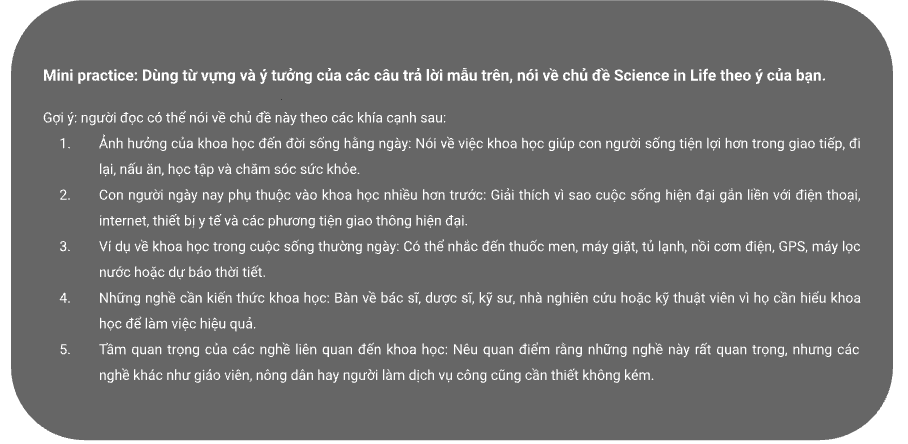
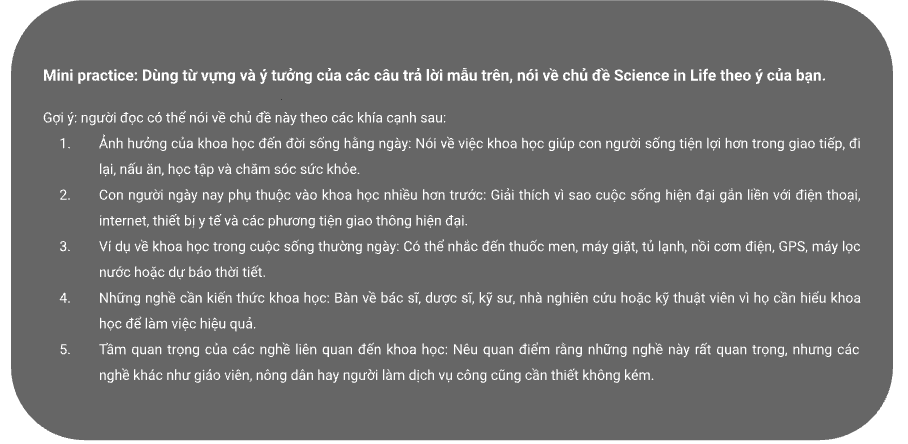
Khoa học ảnh hưởng mạnh đến đời sống hằng ngày thông qua công nghệ, y tế và giao thông.
Con người ngày nay phụ thuộc vào khoa học nhiều hơn trước vì cuộc sống hiện đại gắn liền với các thiết bị và hệ thống công nghệ.
Nhiều ví dụ quen thuộc của khoa học trong cuộc sống là điện thoại thông minh, GPS, thiết bị gia dụng, vắc-xin và thiết bị y tế.
Nhiều công việc như bác sĩ, kỹ sư, nhà nghiên cứu và dược sĩ cần kiến thức khoa học để làm việc hiệu quả.
Các nghề liên quan đến khoa học rất quan trọng, nhưng những nghề khác cũng cần thiết theo cách riêng của mình.
Mini practice |
|---|
Sử dụng từ vựng và ý tưởng ở trên để trả lời các câu hỏi sau How has science changed modern life? Why do people rely more on science nowadays? What jobs need scientific knowledge? |
Tham khảo: Bài mẫu IELTS Speaking Part 3 Topic “Persuasion” kèm từ vựng
Tổng kết
Hy vọng rằng qua việc phân tích hai cấp độ trả lời từ Simple Answer để đảm bảo sự trôi chảy đến Upgraded Answer để ghi điểm ấn tượng, bạn đã nắm vững được lộ trình để chinh phục chủ đề Science in Life (Part 3). Bằng cách cá nhân hóa các câu trả lời thông qua "Nhật ký Từ vựng & Ý tưởng", bạn sẽ xây dựng được sự tự tin. Đừng quên thực hành các bài tập nhỏ (mini practice) để khắc phục những lỗi ngữ pháp thường gặp và làm chủ ngôn ngữ của mình nhé!
Nếu bạn muốn nâng cao kỹ năng IELTS Speaking theo lộ trình cá nhân hóa, Hệ thống giáo dục ZIM cung cấp các khóa luyện thi IELTS cam kết đầu ra, giúp bạn tối ưu hiệu quả học tập và tiết kiệm đến 80% thời gian tự học. Để được tư vấn chi tiết, vui lòng liên hệ hotline 1900-2833 (nhánh 1) hoặc truy cập Khóa học IELTS.
Nguồn tham khảo
1
“Bài mẫu IELTS Speaking Part 3.” OpenAI, chatgpt.com/share/e/6961bf62-bf88-8002-9512-8fe28a8cdcf4. Accessed 19 April 2026.
Bình luận - Hỏi đáp