Bài mẫu IELTS Speaking Part 3 Topic “Local news” kèm từ vựng
Bài viết cung cấp các câu trả lời mẫu cho IELTS Speaking Part 3 (Local news) theo định hướng cá nhân hóa, được chia thành hai cấp độ: Simple Answer (tập trung phản xạ và độ trôi chảy) và Upgraded Answer (nâng cấp từ vựng, ngữ pháp). Đi kèm với mỗi câu trả lời là file audio hỗ trợ luyện phát âm chuẩn xác. Ngoài ra, phần phân tích chi tiết sẽ giúp người học hệ thống hóa từ vựng, khắc phục lỗi ngữ pháp và linh hoạt áp dụng vào các chủ đề tương tự.
Bài mẫu cho các nhóm câu hỏi: • Kinds of local news? • How to get news nowadays? • Local vs. international news? • How social media changed news? • Are young people interested?
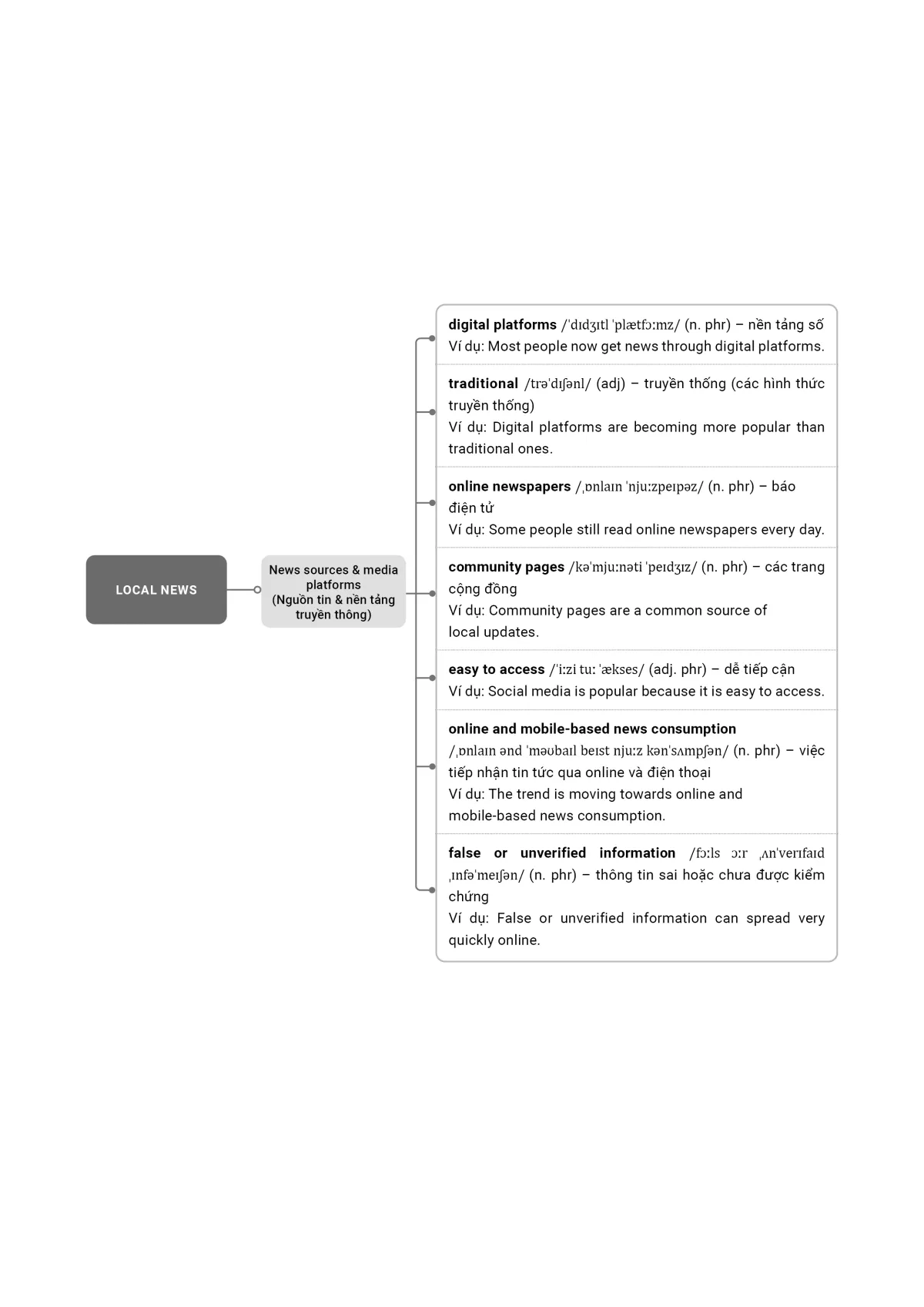
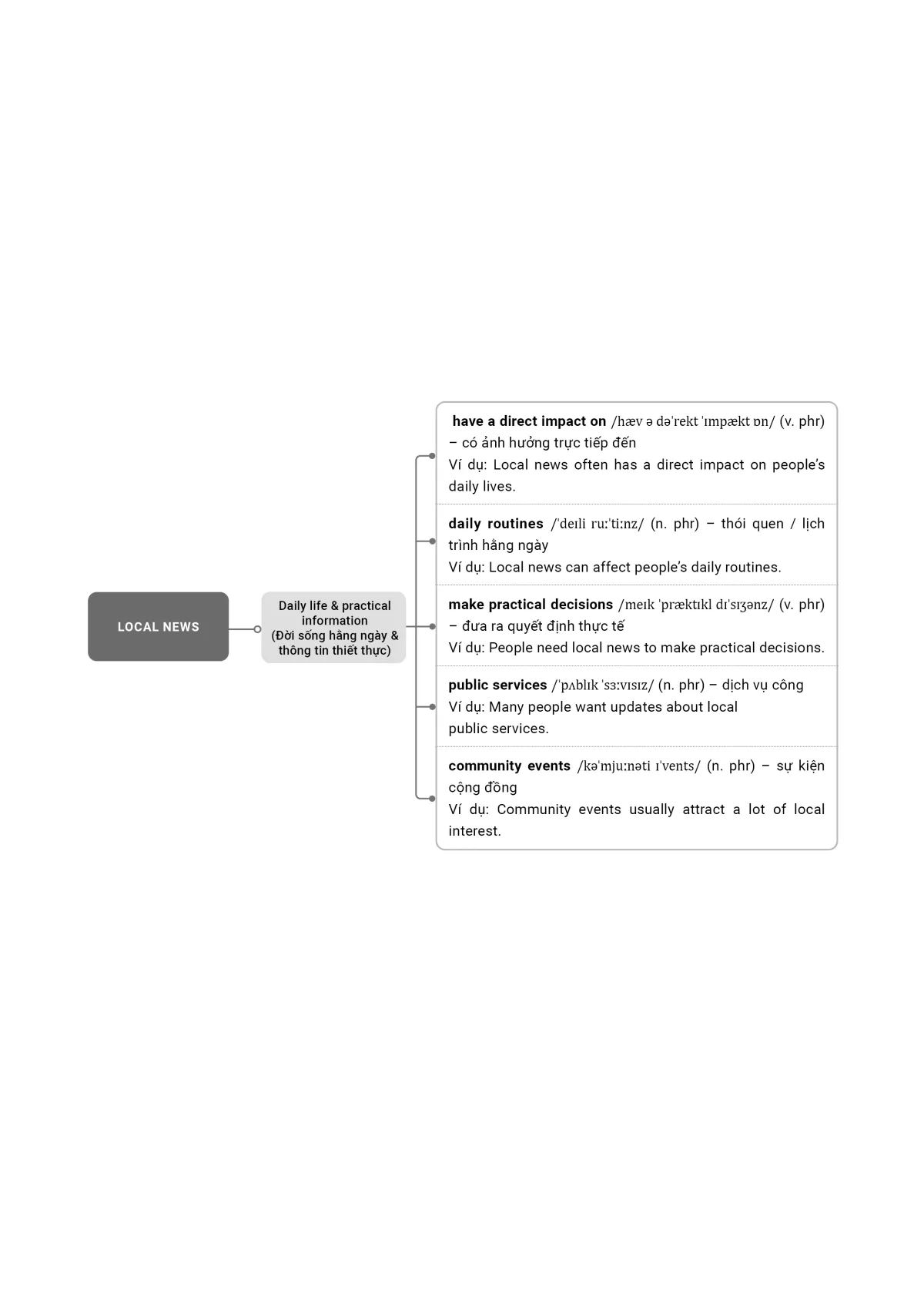
Nhóm từ vựng trọng tâm (Topic Vocabulary): Daily Life Impact, Media & Consumption, và Information Quality.
Bài viết sau đây sẽ cung cấp các câu trả lời mẫu theo khung sườn tư duy (Simple Answer) cùng các thử thách nâng cấp (Upgraded Answer) về cả ý tưởng, từ vựng và ngữ pháp để người học lựa chọn được câu trả lời phù hợp với bản thân, sẵn sàng cho các tình huống trong phòng thi. Bài phân tích này sẽ dẫn dắt người học đi qua chủ đề IELTS Speaking Part 3Local News, từ tầm ảnh hưởng trực tiếp của tin tức bản xứ đối với lịch trình sinh hoạt hằng ngày (daily routines) và việc đưa ra các quyết định thực tế (make practical decisions), cho đến sự chuyển dịch mạnh mẽ của dòng chảy thông tin sang các nền tảng số (digital platforms), giúp người học chinh phục giám khảo bằng sự mạch lạc và ngôn ngữ tự nhiên.
IELTS Speaking Part 3: Local news
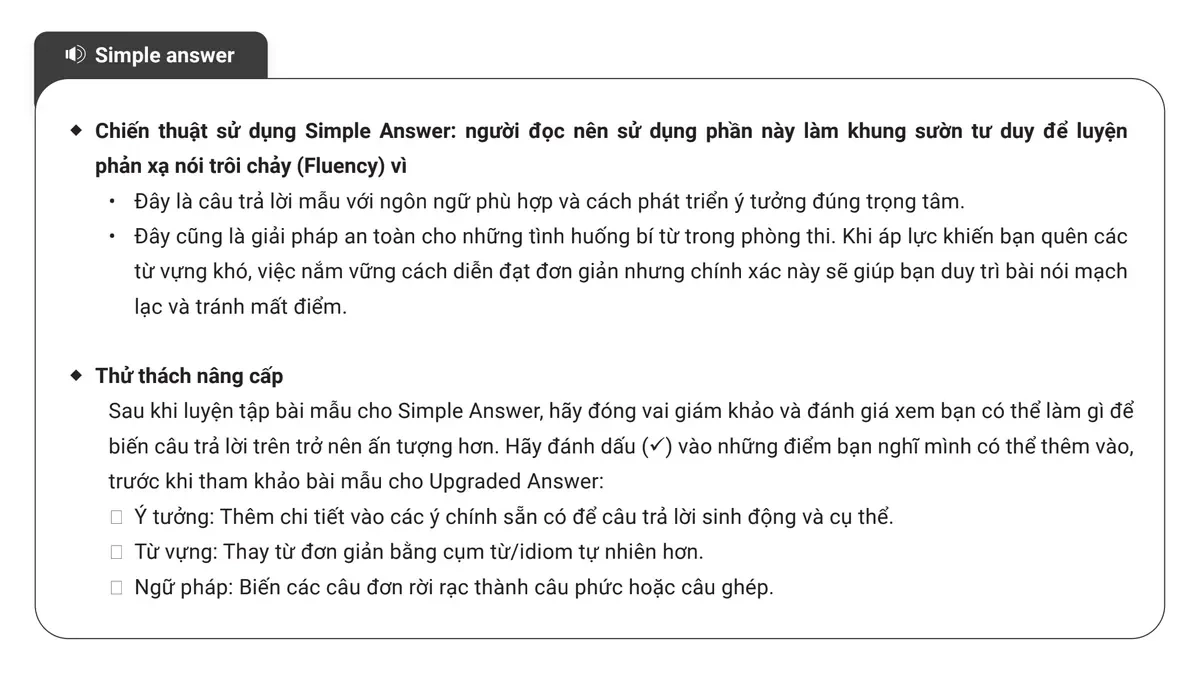
Simple answer
1. What kinds of local news are people most interested in?
Loại câu hỏi: Description / Listing
Cấu trúc gợi ý: Main types → Example → Explanation → Conclusion
Well, people are often most interested in local news that affects their daily lives. This usually includes traffic, weather, crime, education, health, and local events. For example, many people want to know about road accidents, school changes, or community festivals in their area. So overall, practical and relevant local news usually gets the most attention.
2. How do people usually get local news nowadays?
Loại câu hỏi: Description / Trend
Cấu trúc gợi ý: Main way → Other way → → Example → Conclusion
Nowadays, people usually get local news through social media, news websites, and mobile apps. Some people still watch local TV channels or read online newspapers, but digital platforms are more common now. For example, many people check Facebook pages, local news websites, or community groups for updates. So, local news today is often received quickly and online.
3. Do you think local news is more important than international news? Why or why not?
I think local news is more important in daily life because it has a more direct effect on people. It helps them know what is happening in their own area and make practical decisions. For example, local news can tell people about traffic problems, public safety, or changes in local services. So, although international news is also useful, local news is often more immediately relevant.
4. How has social media changed the way people receive news?
Loại câu hỏi: Change / Explanation
Cấu trúc gợi ý: Main change → Other effect → Example → Conclusion
Social media has made news faster and easier to access. People can now get updates immediately without waiting for TV programs or printed newspapers. It has also made it easier for users to share and discuss news with others. For example, someone may see breaking local news on Facebook or TikTok only a few minutes after it happens. So overall, social media has changed news into something more instant and interactive.
5. Do you think young people are interested in local news? Why or why not?
I think some young people are interested in local news, but probably not as much as older people. The reason is that many young people pay more attention to entertainment or social media content unless the news affects them directly. For example, they may care about local news if it is about school, transport, jobs, or safety in their area. So, young people can be interested in local news, but it often depends on the topic.
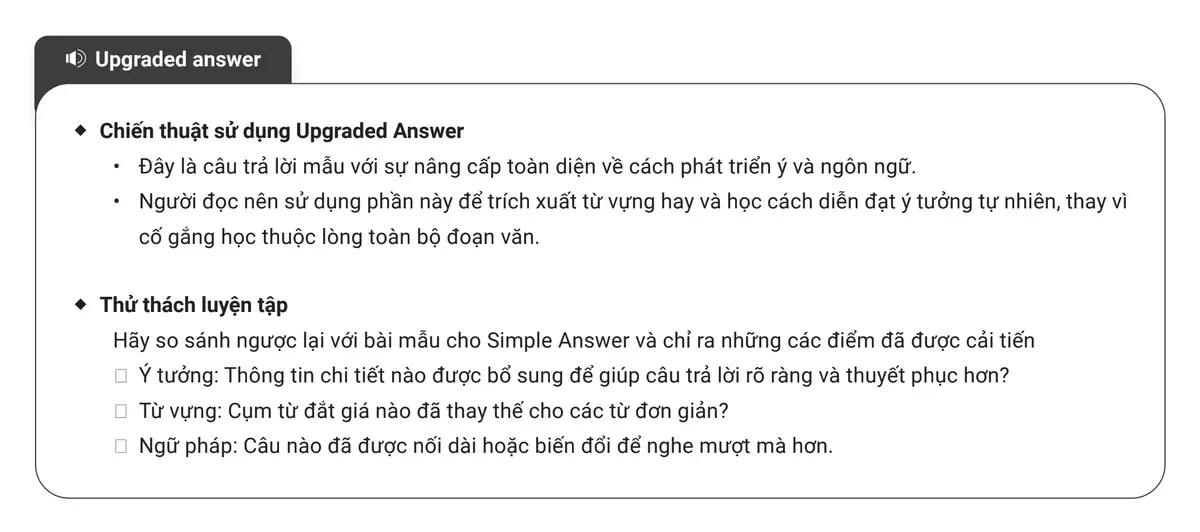
Upgraded answer
1. What kinds of local news are people most interested in?
Loại câu hỏi: Description / Listing
Cấu trúc gợi ý: Main types → Example → Explanation → Conclusion
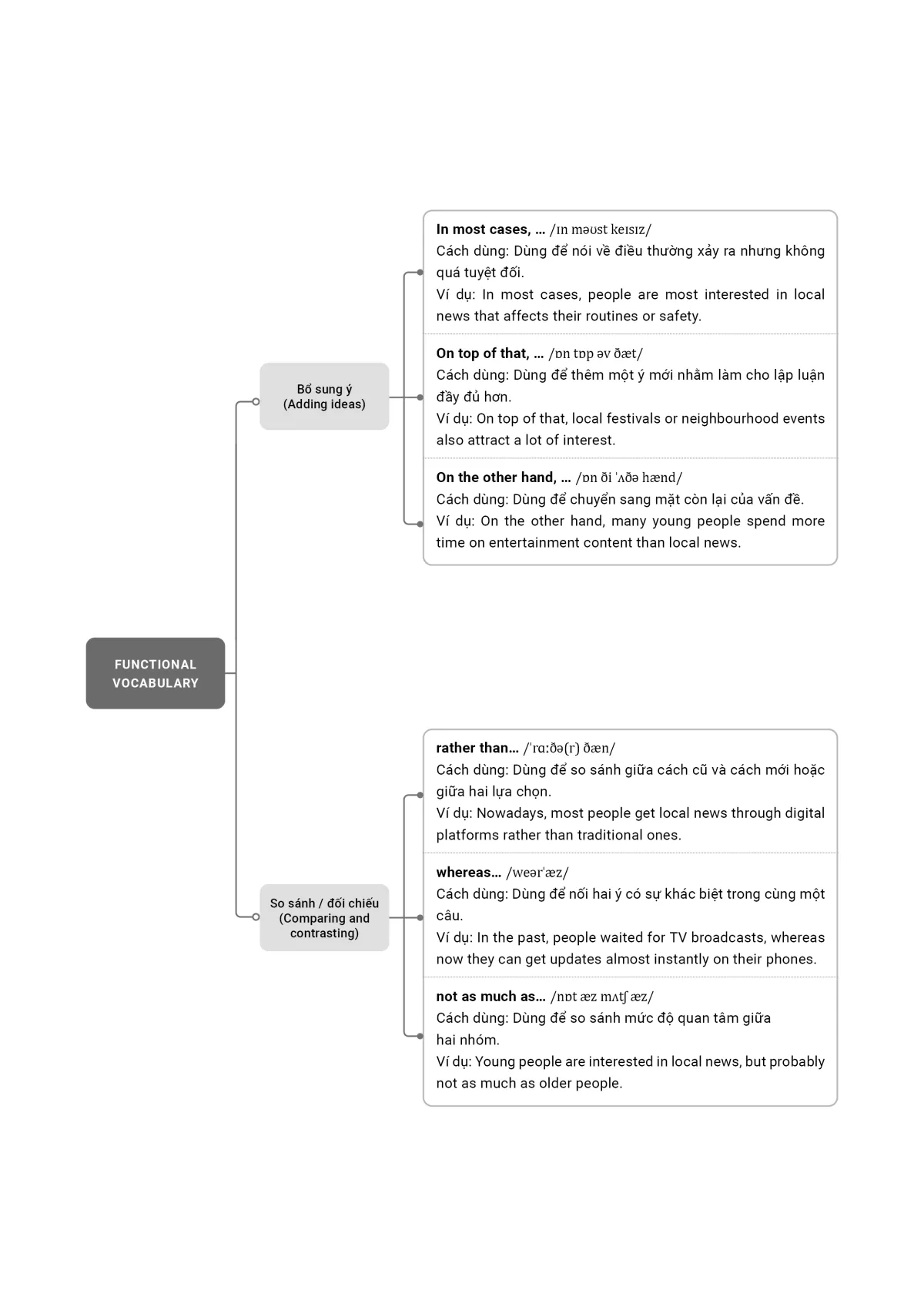
Well, I’d say people are usually most interested in local news that has a direct impact on their daily lives. In most cases, this includes topics such as traffic updates, crime, weather, public services, education, and community events, because these are the kinds of things people need to know in order to plan their day or make practical decisions. For example, if there is a serious traffic jam, a road closure, or a new policy affecting local schools, people tend to pay attention straight away because it affects them personally. On top of that, local festivals or neighbourhood events also attract a lot of interest, especially when they bring the community together. So overall, the most popular kinds of local news are usually the ones that feel immediate, relevant, and useful.
2. How do people usually get local news nowadays?
Loại câu hỏi: Description / Trend
Cấu trúc gợi ý: Main way → Other way → → Example → Conclusion
Nowadays, most people get local news through digital platforms rather than traditional ones. Social media, online newspapers, mobile apps, and community pages have become the main sources because they are fast, convenient, and easy to access at any time. For instance, many people now check Facebook groups, local news websites, or even messaging apps to find out what is happening in their area, whether it is about traffic, public safety, or upcoming events. That said, some people, particularly older generations, still rely on television or local newspapers for more formal updates. Even so, I would say the overall trend is clearly moving towards online and mobile-based news consumption.
3. Do you think local news is more important than international news? Why or why not?
Personally, I think local news is more important in everyday life because it affects people more directly and immediately. It gives residents useful information about what is happening in their own area, which can influence their daily routines, safety, and decisions. For example, if there is a flood warning, a transport strike, or a change in local school schedules, people need to know about it quickly because it has an immediate impact on them. That said, I would not say international news is unimportant, because global events can still influence the economy, politics, or public opinion in a country. Even so, if we are talking about practical daily relevance, I think local news usually matters more.
4. How has social media changed the way people receive news?
Loại câu hỏi: Change / Explanation
Cấu trúc gợi ý: Main change → Other effect → Example → Balanced conclusion
Social media has completely transformed the way people receive news by making it much faster, more interactive, and more accessible. In the past, people often had to wait for television broadcasts or printed newspapers, whereas now they can get updates almost instantly on their phones. For example, if something happens in the local area, such as an accident, a fire, or a public announcement, people may see photos, videos, and comments about it on Facebook, TikTok, or community pages within minutes. On top of that, social media allows users not only to read the news, but also to react to it, share it, and discuss it with others. That said, this also means false or unverified information can spread very quickly. So overall, social media has made news more immediate and engaging, but it has also made it more difficult to separate reliable information from rumours.
5. Do you think young people are interested in local news? Why or why not?
To some extent, yes, but probably not as much as older people. I think many young people are interested in local news only when it connects directly to their own lives, such as topics related to education, jobs, transport, safety, or events in their community. For example, a university student may pay close attention to local news about public transport changes, internship opportunities, or issues affecting their campus area, but may ignore other topics that feel less relevant. On the other hand, a lot of young people spend more time on entertainment content or national and global trends through social media, so local news is not always their priority. Even so, when the topic feels personal or useful, young people can still be quite engaged with local news.
Kỉ niệm cá nhân (Gán các từ vựng/ý tưởng đã chọn với kỉ niệm của bản thân)
Ví dụ: have a direct impact on – có ảnh hưởng trực tiếp đến
Người đọc tự đặt các câu hỏi cho bản thân, ví dụ:
Bạn có thường theo dõi tin tức địa phương không? Thường là loại tin gì?
Bạn hay xem tin qua Facebook, báo điện tử hay TV?
Bạn đã bao giờ thay đổi kế hoạch trong ngày vì một tin tức địa phương chưa?
Bạn có thấy người trẻ quanh mình quan tâm đến tin địa phương không?
Bạn có từng gặp trường hợp tin trên mạng xã hội lan rất nhanh nhưng chưa chắc đã đúng không?
→ I usually pay attention to local news when it has a direct impact on my daily life, especially traffic updates, weather, or changes in public services. There have been times when I changed my route or schedule because I saw news about road closures or heavy rain on social media. Most of the time, I get these updates through digital platforms because they are fast, convenient, and easy to access. However, I also realise that social media can spread false or unverified information very quickly, so I try not to trust everything straight away. Overall, I think local news is most useful when it helps people make practical decisions in their everyday lives.
Khoảng trống diễn đạt
(Phần khiến bạn ngập ngừng khi nói về chủ đề trên)
Giải pháp
(Giải pháp cho các khoảng trống diễn đạt)
Ví dụ:
Tôi chưa quen diễn đạt vì sao người trẻ chỉ quan tâm đến tin địa phương trong một số trường hợp nhất định.
Ví dụ: Dùng từ điển của ZIM hoặc chép các cách diễn đạt từ bài mẫu ở các phần trên để có được cụm từ mà bạn cần.
→ Thay vì chỉ nói “young people are not interested” → dùng not their priority / directly related to their lives / quite engaged with topics like transport, education, or jobs.
I saw a local news about a road accident this morning.
There was many local news on Facebook.
✅ Cách dùng đúng:
• news = tin tức, là danh từ không đếm được
✔ Câu đúng:
I saw some local news about a road accident this morning.
There was a lot of local news on Facebook.
📌 Lý do sai:
Người học thường tưởng “news” là danh từ đếm được vì nhìn giống số nhiều. Thực ra đây là danh từ không đếm được, nên không dùng “a news” hay “many news”.
Dùng sai mệnh đề quan hệ rút gọn / mệnh đề quan hệ với “news”
❌ Lỗi thường gặp:
People often pay attention to local news happen in their area.
The information share on social media is not always reliable.
✅ Cách dùng đúng:
• news that happens in their area
• information shared on social media
✔ Câu đúng:
People often pay attention to local news that happens in their area.
The information shared on social media is not always reliable.
📌 Lý do sai:
Người học thường bỏ sót đại từ quan hệ hoặc dùng sai dạng động từ khi muốn rút gọn mệnh đề quan hệ. Với nghĩa bị động như “information shared on social media”, cần dùng quá khứ phân từ. Với nghĩa chủ động như “news that happens in their area”, cần giữ mệnh đề đầy đủ.
Local problems are reported people on social media very quickly.
False information can be spread by users without checked carefully.
✅ Cách dùng đúng:
• be reported by + người / nguồn
• be spread without being checked carefully
✔ Câu đúng:
Local problems are reported by people on social media very quickly.
False information can be spread by users without being checked carefully.
📌 Lý do sai:
Người học hay nhầm trật tự từ trong câu bị động hoặc dùng sai dạng sau giới từ “without”. Sau “without”, nếu muốn giữ nghĩa bị động, nên dùng “being + past participle”. Đây là lỗi khá hay gặp ở các câu speaking muốn diễn đạt kiểu học thuật hơn.
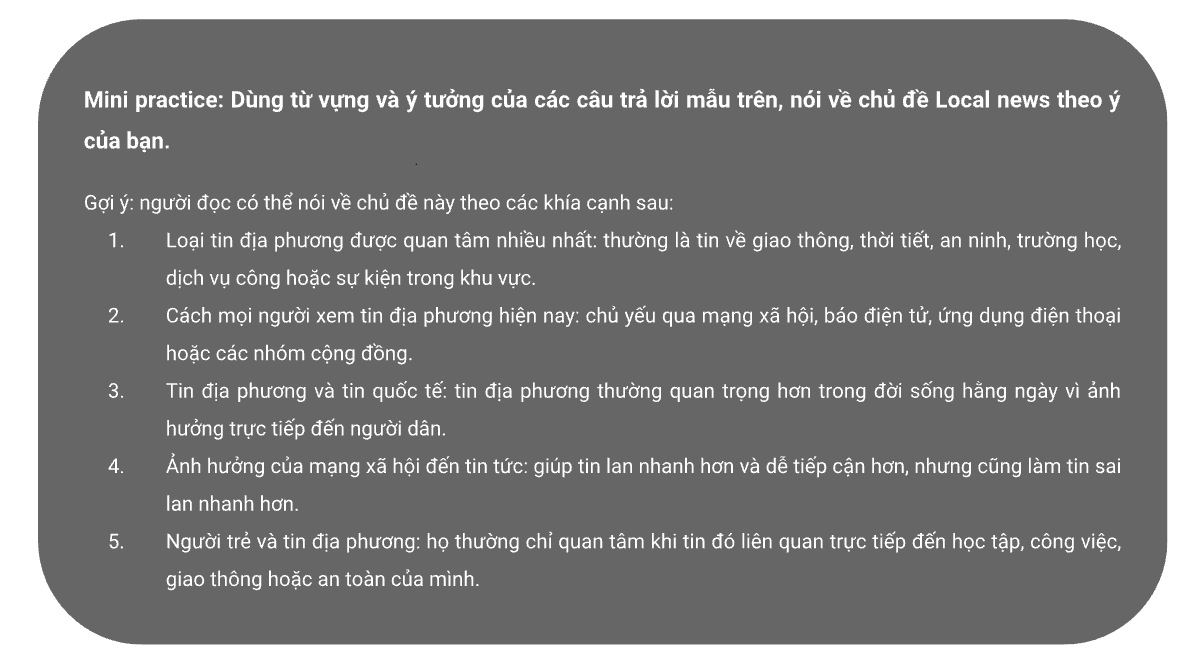
Mini practice
Dùngđúng cấu trúc trong ngoặc
Hãy nói rằng tin tức địa phương có ảnh hưởng trực tiếp đến cuộc sống hằng ngày của mọi người.
(Dùng: news / a lot of news)
Hãy nói rằng mọi người thường chú ý đến những tin tức địa phương xảy ra trong khu vực của họ, và thông tin được chia sẻ trên mạng xã hội không phải lúc nào cũng đáng tin.
(Dùng: news that happens… / information shared…)
Hãy nói rằng các vấn đề địa phương thường được người dân đưa lên mạng xã hội rất nhanh, và thông tin sai có thể bị lan truyền mà chưa được kiểm chứng cẩn thận.
(Dùng: be reported by… / without being checked…)
Các chủ đề liên quan
Chủ đề liên quan để sử dụng từ vựng & ý tưởng:
Social media and communication (Mạng xã hội & giao tiếp)
Technology and daily life (Công nghệ & đời sống hằng ngày)
Young people and public awareness (Người trẻ & nhận thức xã hội)
Người đọc có thể sử dụng:
Từ vựng: have a direct impact on, daily routines, make practical decisions, public services, community events, digital platforms, online newspapers, community pages, almost instantly, false or unverified information, directly related to their lives, quite engaged with...
Ý tưởng:
Tin tức địa phương quan trọng vì nó ảnh hưởng trực tiếp đến cuộc sống hằng ngày và giúp người dân đưa ra quyết định thực tế.
Ngày nay mọi người chủ yếu tiếp cận tin địa phương qua các nền tảng số vì chúng nhanh, tiện và dễ tiếp cận hơn.
Mạng xã hội đã làm thay đổi mạnh cách con người tiếp nhận tin tức vì tin có thể lan truyền gần như ngay lập tức và người dùng cũng có thể chia sẻ, bình luận, thảo luận dễ dàng hơn.
Tuy nhiên, mạng xã hội cũng khiến thông tin sai hoặc chưa được kiểm chứng lan rất nhanh.
Người trẻ thường chỉ thực sự quan tâm đến tin địa phương khi chủ đề đó liên quan trực tiếp đến học tập, công việc, giao thông, an toàn hoặc cộng đồng của họ.
Mini practice
Sử dụng từ vựng và ý tưởng ở trên để trả lời các câu hỏi sau
1. Why is local news useful in daily life?
(Gợi ý: have a direct impact on, daily routines, make practical decisions, public services)
2. How has technology changed the way people follow local news?
(Gợi ý: digital platforms, online newspapers, almost instantly, easy to access)
3. Why are young people only interested in some types of local news?
(Gợi ý: directly related to their lives, not their priority, education, jobs, safety)
Hy vọng rằng qua việc phân tích hai cấp độ trả lời từ Simple Answer để đảm bảo sự trôi chảy đến Upgraded Answer để ghi điểm ấn tượng, bạn đã nắm vững được lộ trình để chinh phục chủ đề Local news (Part 3). Bằng cách cá nhân hóa các câu trả lời thông qua "Nhật ký Từ vựng & Ý tưởng", bạn sẽ xây dựng được sự tự tin. Đừng quên thực hành các bài tập nhỏ (mini practice) để khắc phục những lỗi ngữ pháp thường gặp và làm chủ ngôn ngữ của mình nhé!
Nếu bạn muốn nâng cao kỹ năng IELTS Speaking theo lộ trình cá nhân hóa, Hệ thống giáo dục ZIM cung cấp các khóa luyện thi IELTS cam kết đầu ra, giúp bạn tối ưu hiệu quả học tập và tiết kiệm đến 80% thời gian tự học. Để được tư vấn chi tiết, vui lòng liên hệ hotline 1900-2833 (nhánh 1) hoặc truy cập Khóa học IELTS.
Nguồn tham khảo
1
OpenAI. “Bài mẫu IELTS Speaking Part 3.” OpenAI,https://chatgpt.com/share/e/6961b6c8-4368-8002-995c-cd65b4729b18. Accessed 13 June 2026.



Bình luận - Hỏi đáp