


Chủ đề IELTS Speaking: Part 3: Mobile Phones and Communication.
Bài mẫu cho các nhóm câu hỏi:
Places to avoid phone use? (Libraries, hospitals, formal events).
Ideal age for kids? (11-12 years old, secondary school).
Public regulations? (Silent mode, respect for shared spaces).
Communication changes? (Instant updates vs. less face-to-face).
Dependence? (Striking the right balance).
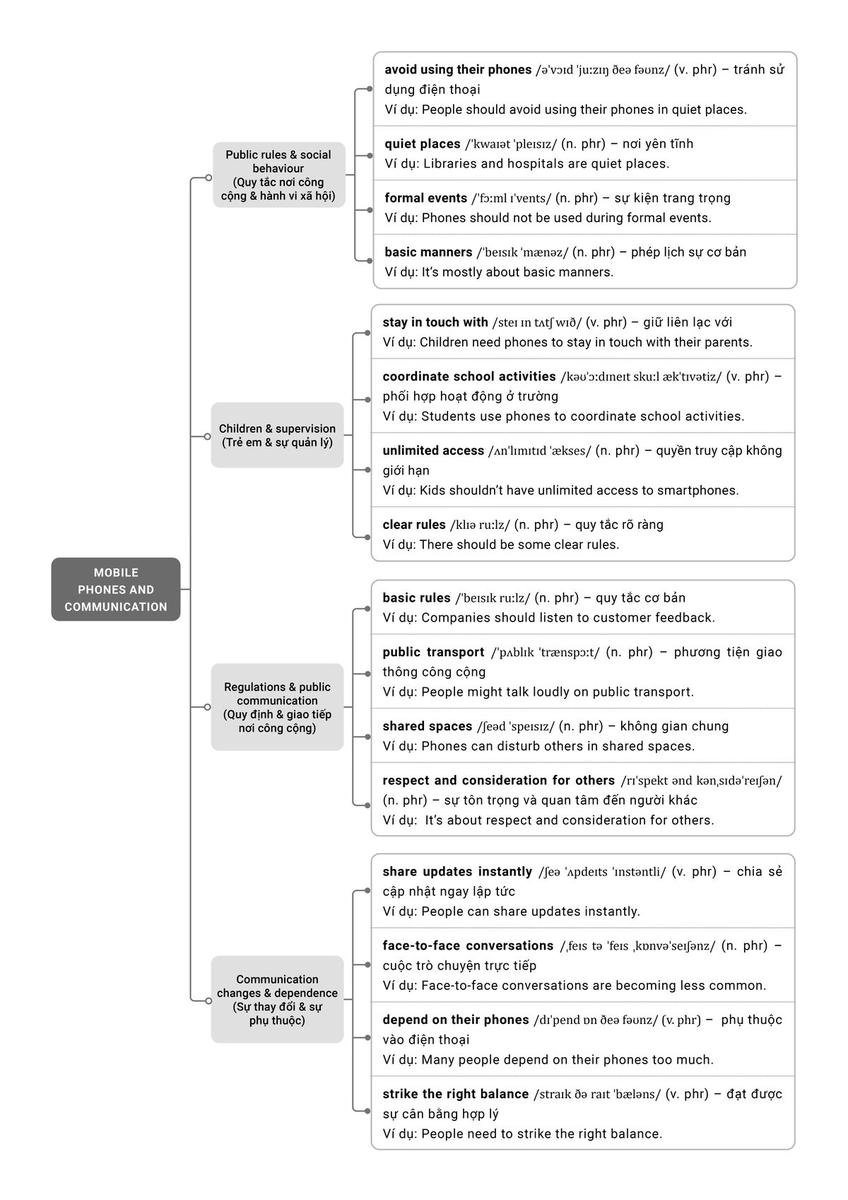
Nhóm từ vựng trọng tâm (Topic Vocabulary): Public Behaviour, Supervision, Social Impact, và Technology.
Bài mẫu IELTS Speaking Part 3 Topic “Mobile Phones and Communication” kèm từ vựng
Trong bài viết này, tác giả sẽ gợi ý bài mẫu cho Topic “Mobile Phones and Communication” và phân tích các từ vựng ghi điểm cho phần thi IELTS Speaking Part 3.
Key takeaways
Bài viết tham khảo cho chủ đề IELTS Speaking Part 3 Topic Mobile Phones and Communication sau đây sẽ cung cấp các câu trả lời mẫu theo khung sườn tư duy (Simple Answer) cùng các thử thách nâng cấp (Upgraded Answer) về cả ý tưởng, từ vựng và ngữ pháp để người học lựa chọn được câu trả lời phù hợp với bản thân, sẵn sàng cho các tình huống trong phòng thi. Bài phân tích này sẽ dẫn dắt người học đi qua chủ đề Mobile Phones and Communication, từ những quy tắc ứng xử cơ bản như 'basic manners', 'clear rules' đến những thảo luận sâu hơn về sự phụ thuộc công nghệ như 'strike the right balance' hay 'unlimited access', giúp người học chinh phục giám khảo bằng sự mạch lạc và ngôn ngữ tự nhiên.
IELTS Speaking Part 3: Mobile Phones and Communication - Sample Answer
Simple answer
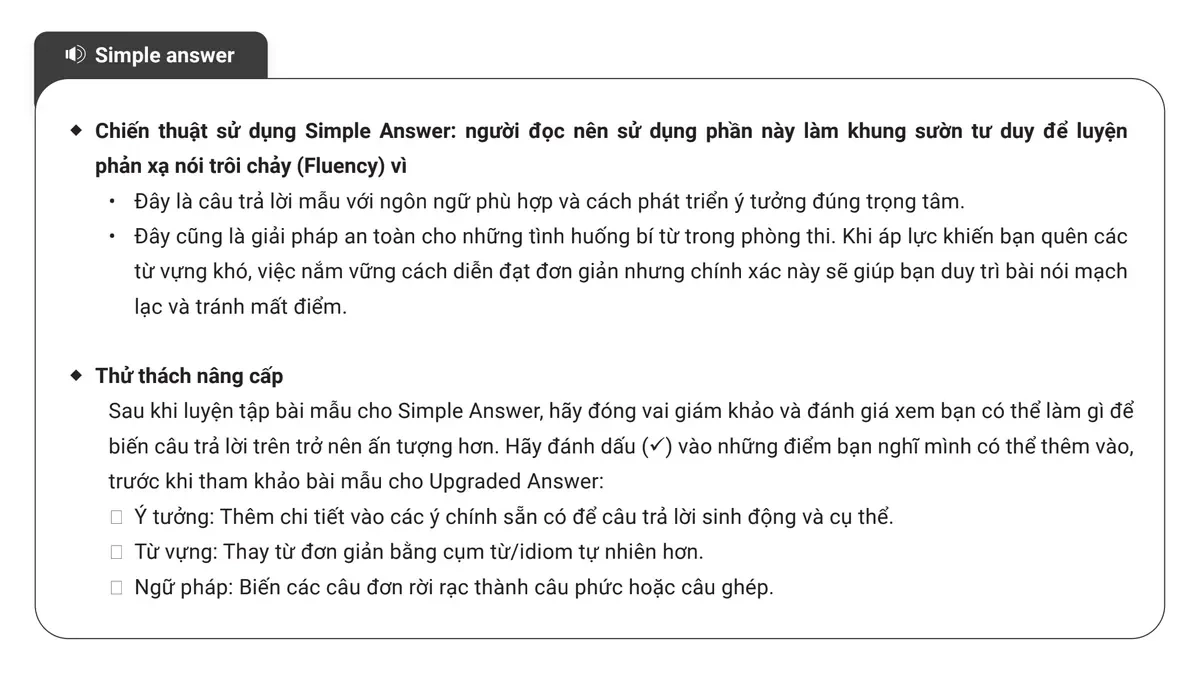
1. In which places do you think mobile phones should not be used?
|
I believe mobile phones should not be used in quiet or formal places. This is because they can disturb others and interrupt important activities. For example, using phones in libraries, classrooms, cinemas, or hospitals is often considered impolite. Therefore, people should follow communication rules and use their phones responsibly. |
2. At what age do you think children should be allowed to use mobile phones?
|
In my opinion, children should be allowed to use mobile phones at around 10 to 12 years old. At this age, they are mature enough to understand basic responsibilities. For example, they can use phones to contact their parents or support their schoolwork. Overall, early access is acceptable as long as it is supervised. |
3. Do you think there should be regulations about communication in public places? Why?
|
Yes, I think there should be regulations about communication in public places. Such rules help maintain order and show respect for others. For instance, people are required to silence their phones in cinemas and on public transport. Therefore, these regulations make public spaces more comfortable for everyone. |
4. How have mobile phones changed the way people communicate in daily life?
|
Mobile phones have significantly changed the way people communicate. They allow instant communication regardless of time and distance. For example, people can make video calls, send messages, and connect through social media. As a result, communication has become faster, easier, and more convenient. |
5. Do you think people rely too much on mobile phones nowadays? Why or why not?
|
Yes, I think people rely too much on mobile phones nowadays. Many individuals use them for work, entertainment, and social interaction throughout the day. However, mobile phones are also essential tools that improve productivity and convenience. Overall, although they are beneficial, they should be used in moderation. |
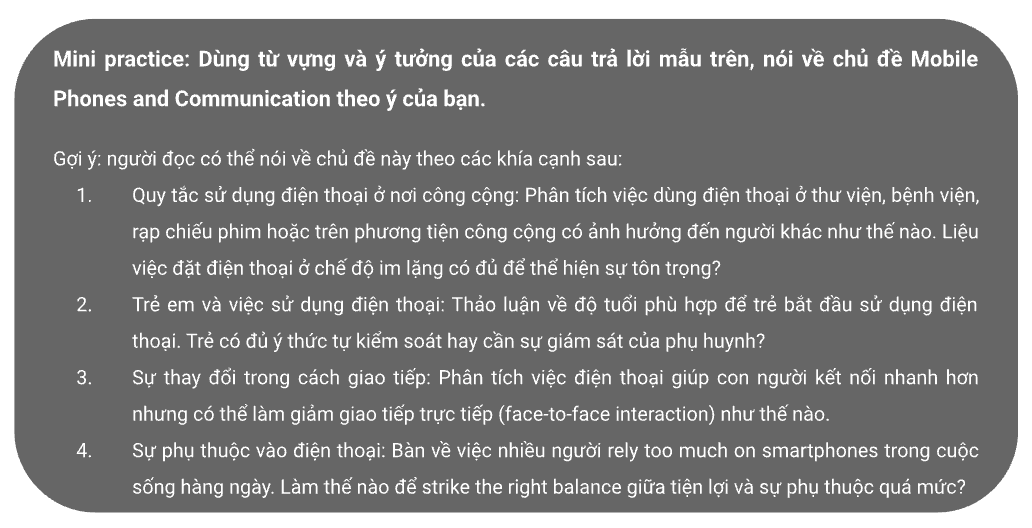
Tham khảo: Tổng hợp bài mẫu IELTS Speaking 2026
Upgraded answer
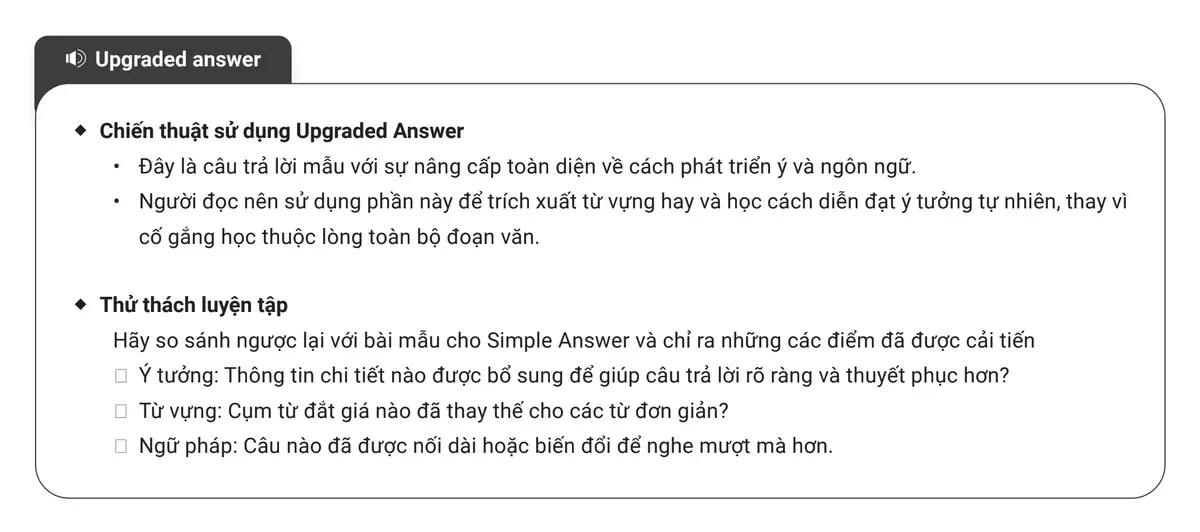
1. In which places do you think mobile phones should not be used?
|
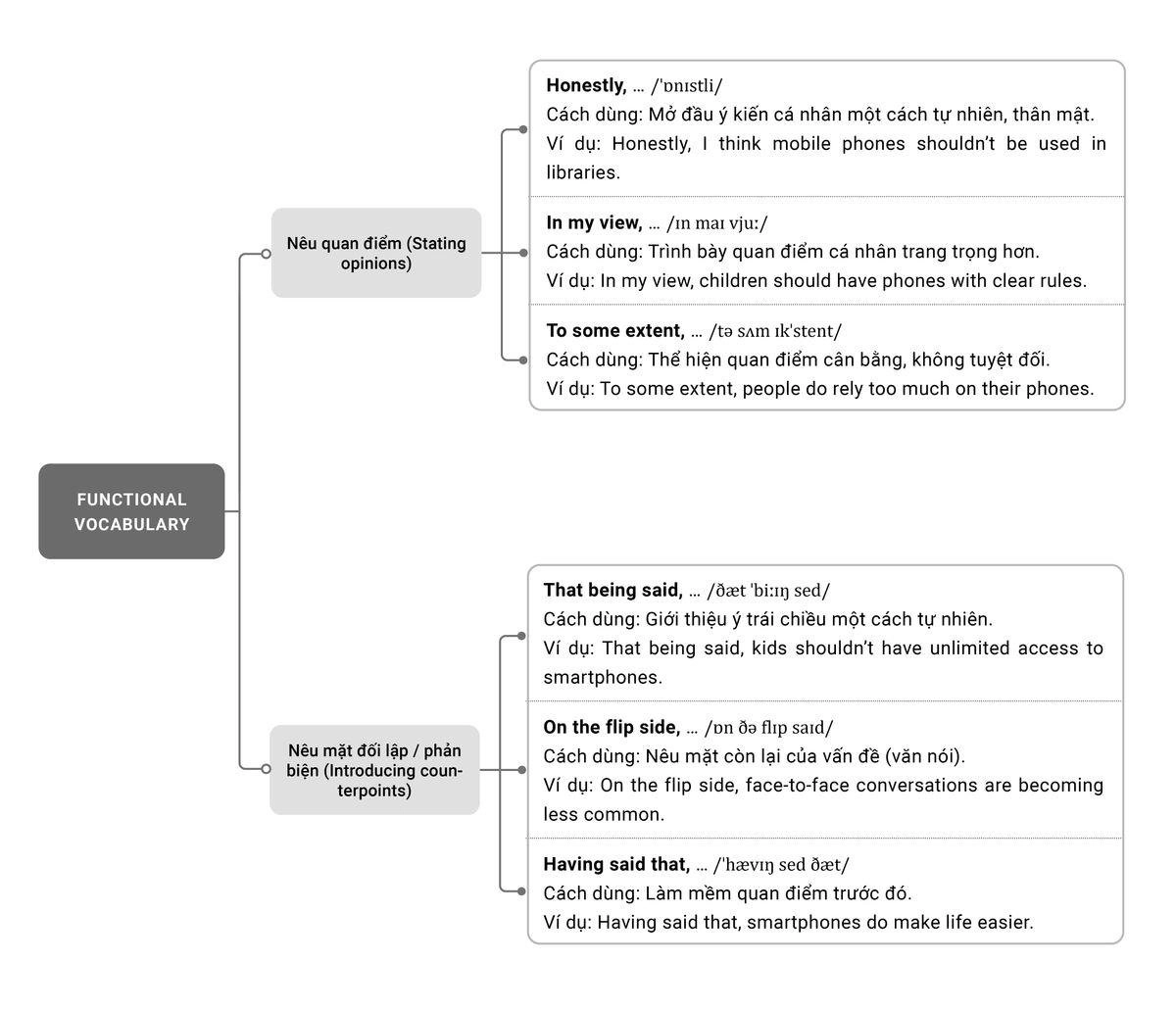
Honestly, I think there are definitely some places where people should avoid using their phones. I mean, in quiet places like libraries or hospitals, even a short ringtone can be really distracting. The same goes for cinemas or formal events; I mean, it just feels disrespectful if someone starts scrolling or answering a call. I’ve actually seen people get annoyed when that happens. So yeah, I’d say it’s mostly about basic manners and being aware of the people around you. |
2. At what age do you think children should be allowed to use mobile phones?
|
Well, I’d probably say around 11 or 12 years old, especially when children start secondary school. At that age, they usually need a phone to stay in touch with their parents or coordinate school activities. For example, many parents feel more at ease knowing their child can call them if something unexpected happens. That being said, I don’t think kids should have unlimited access. So, in my view, giving them a phone is fine, as long as there are some clear rules. |
3. Do you think there should be regulations about communication in public places? Why?
|
Yeah, to be honest, I do think some basic rules are necessary. Without regulations, people might talk loudly on their phones in public transport or shared spaces, which can really get on others’ nerves. For instance, we’ve all experienced someone shouting into their phone on a bus. Simple rules like putting phones on silent mode, therefore, can make a big difference. At the end of the day, it’s about respect and consideration for others. |
4. How have mobile phones changed the way people communicate in daily life?
|
Oh, they’ve changed things massively. These days, people can message, video call, or share updates instantly, which just wasn’t possible before. For example, instead of meeting in person, many people just send voice messages or chat through apps. It’s definitely made communication quicker and more convenient. On the flip side, though, some people feel that face-to-face conversations are becoming less common. Still, overall, mobile phones have completely transformed how we stay connected. |
5. Do you think people rely too much on mobile phones nowadays? Why or why not?
|
To some extent, yes! I do think people depend on their phones a bit too much. Many of us use them for everything, from checking the time to navigating, shopping, or even relaxing. Sometimes it feels like people can’t function without them. Having said that, it’s hard to deny that smartphones make life a lot easier and more efficient. So I wouldn’t say the problem is the phone itself; it’s more about how we use it. If people can strike the right balance, then it’s not really an issue. |
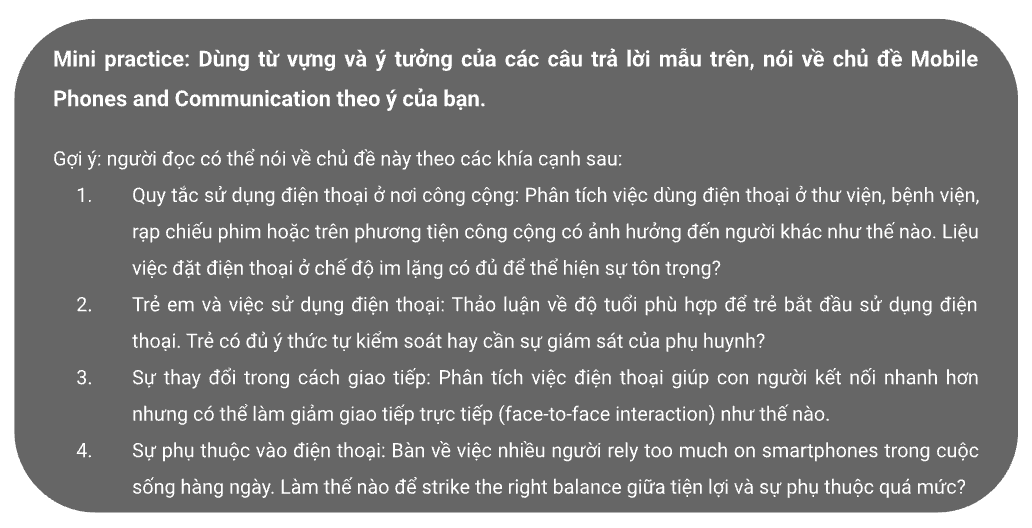
Tìm hiểu thêm: Luyện IELTS Speaking lưu loát với 6 cách đơn giản tại nhà
Lọc và phân tích từ vựng
Tham khảo: Từ vựng IELTS chủ đề Mobile Phone
Nhật ký từ vựng & ý tưởng
Ghi chú sau khi luyện tập nói về chủ đề trên
Từ vựng/Ý tưởng (Chọn các từ vựng/ý tưởng mà bạn tâm đắc nhất) | Kỉ niệm cá nhân |
|---|---|
Ví dụ: stay in touch with parents – giữ liên lạc với cha mẹ | Người đọc tự đặt các câu hỏi cho bản thân, ví dụ:
→ When I was in secondary school, my parents bought me my first mobile phone so I could stay in touch with them. They set clear rules to prevent unlimited access. Nowadays, I use my phone to share updates instantly and communicate with friends. However, I always switch it to silent mode in quiet places. I believe it’s important to strike the right balance between online communication and face-to-face conversations. |
Khoảng trống diễn đạt (Phần khiến bạn ngập ngừng khi nói về chủ đề trên) | Giải pháp (Giải pháp cho các khoảng trống diễn đạt) |
Ví dụ:
| Ví dụ: Dùng từ điển của ZIM hoặc chép các cách diễn đạt từ bài mẫu ở các phần trên để có được cụm từ mà bạn cần. → Thay vì nói use phones → dùng avoid using their phones, depend on their phones. |
Người đọc có thể tìm từ vựng bằng từ điển ZIM Dictionary.
Các lỗi ngữ pháp thường gặp
1. Nhầm “much” và “many”
❌ Lỗi thường gặp:
People spend too many time on their phones.
(người học muốn nói: quá nhiều thời gian)
✅ Cách dùng đúng:
much + danh từ không đếm được
many + danh từ đếm được số nhiều
✔ Câu đúng:
People spend too much time on their phones.
People receive too many messages every day.
📌 Lý do sai:
“Time” là danh từ không đếm được nên phải dùng “much”, không dùng “many”.
Tìm hiểu thêm: Cấu trúc How many | Cách dùng, Phân biệt với How Much & Bài tập
2. Dùng sai từ nối “Although” và “However”
❌ Lỗi thường gặp:
Although mobile phones are convenient. However, they can be distracting.
(người học muốn nói: mặc dù điện thoại tiện lợi, chúng vẫn có thể gây xao nhãng)
✅ Cách dùng đúng:
Although + mệnh đề, mệnh đề chính
However, + mệnh đề (dùng để nối hai câu độc lập)
✔ Câu đúng:
Although mobile phones are convenient, they can be distracting.
Mobile phones are convenient. However, they can be distracting.
📌 Lý do sai:
“Although” không thể đứng cùng “However” trong cùng một cấu trúc. Việc kết hợp cả hai sẽ gây thừa và sai ngữ pháp.
3. Nhầm “depend” và “dependent”
❌ Lỗi thường gặp:
Many people are depend on their phones.
(người học muốn nói: phụ thuộc vào điện thoại)
✅ Cách dùng đúng:
depend on (v)
be dependent on (adj)
✔ Câu đúng:
Many people depend on their phones.
Many people are dependent on their phones.
📌 Lý do sai:
“Depend” là động từ nên không đi với “are”. Nếu dùng “are”, phải dùng tính từ “dependent”.
Mini practice |
|---|
Dùng đúng cấu trúc trong ngoặc 1. Hãy nói về việc mọi người sử dụng điện thoại quá nhiều. (Dùng: much + danh từ không đếm được – không dùng many với “time”) 2. Hãy nói rằng điện thoại rất tiện lợi nhưng vẫn có thể gây xao nhãng. (Dùng: Although… , … / However, + mệnh đề – không dùng cả hai trong cùng một cấu trúc) 3. Hãy nói rằng nhiều người phụ thuộc vào điện thoại trong cuộc sống hằng ngày. (Dùng: depend on / be dependent on – không dùng are depend) |
Các chủ đề liên quan
Chủ đề liên quan để sử dụng từ vựng & ý tưởng:
Technology and modern life (Công nghệ & đời sống hiện đại)
Social behaviour and public etiquette (Hành vi xã hội & phép lịch sự nơi công cộng)
Education and children (Giáo dục & trẻ em)
Người đọc có thể sử dụng:
Từ vựng:
avoid using their phones, quiet places, formal events, basic manners, stay in touch with, coordinate school activities, unlimited access, clear rules, basic rules, public transport, shared spaces, respect and consideration for others, share updates instantly, face-to-face conversations, depend on their phones, strike the right balance...
Ý tưởng:
Điện thoại di động giúp mọi người kết nối nhanh chóng và thuận tiện hơn.
Việc sử dụng điện thoại ở nơi công cộng cần tuân theo các quy tắc lịch sự.
Trẻ em nên sử dụng điện thoại dưới sự giám sát của cha mẹ.
Công nghệ đã thay đổi cách con người giao tiếp trong công việc và đời sống hằng ngày.
Mặc dù tiện lợi, việc phụ thuộc quá nhiều vào điện thoại có thể làm giảm tương tác trực tiếp.
Mini practice |
|---|
Sử dụng từ vựng và ý tưởng ở trên để trả lời các câu hỏi sau
|
Đọc thêm: Bài mẫu IELTS Speaking Part 3 Topic “Clothing” kèm từ vựng
Tổng kết
Hy vọng rằng qua việc phân tích hai cấp độ trả lời từ Simple Answer để đảm bảo sự trôi chảy đến Upgraded Answer để ghi điểm ấn tượng, bạn đã nắm vững được lộ trình để chinh phục chủ đề IELTS Speaking Part 3 Topic Mobile Phones and Communication. Bằng cách cá nhân hóa các câu trả lời thông qua "Nhật ký Từ vựng & Ý tưởng", bạn sẽ từng bước xây dựng sự tự tin và khả năng diễn đạt tự nhiên hơn. Đừng quên duy trì việc thực hành các bài tập nhỏ (mini practice) để khắc phục những lỗi ngữ pháp thường gặp và làm chủ ngôn ngữ của mình nhé!
Nếu bạn muốn nâng cao kỹ năng IELTS Speaking theo lộ trình cá nhân hóa, Hệ thống giáo dục ZIM cung cấp các khóa luyện thi IELTS cam kết đầu ra, giúp bạn tối ưu hiệu quả học tập và tiết kiệm đến 80% thời gian tự học. Để được tư vấn chi tiết, vui lòng liên hệ hotline 1900-2833 (nhánh 1) hoặc truy cập Khóa học IELTS.
Nguồn tham khảo
1
“Bài mẫu IELTS Speaking Part 3.” OpenAI, https://chatgpt.com/share/e/6961b6c8-4368-8002-995c-cd65b4729b18. Accessed 18 April 2026.
Bình luận - Hỏi đáp