


Câu trả lời mẫu: Part 3 Travel – dạng Cause–Effect, Explanation, Listing, Comparison với khung lập luận logic cho từng câu trả lời.
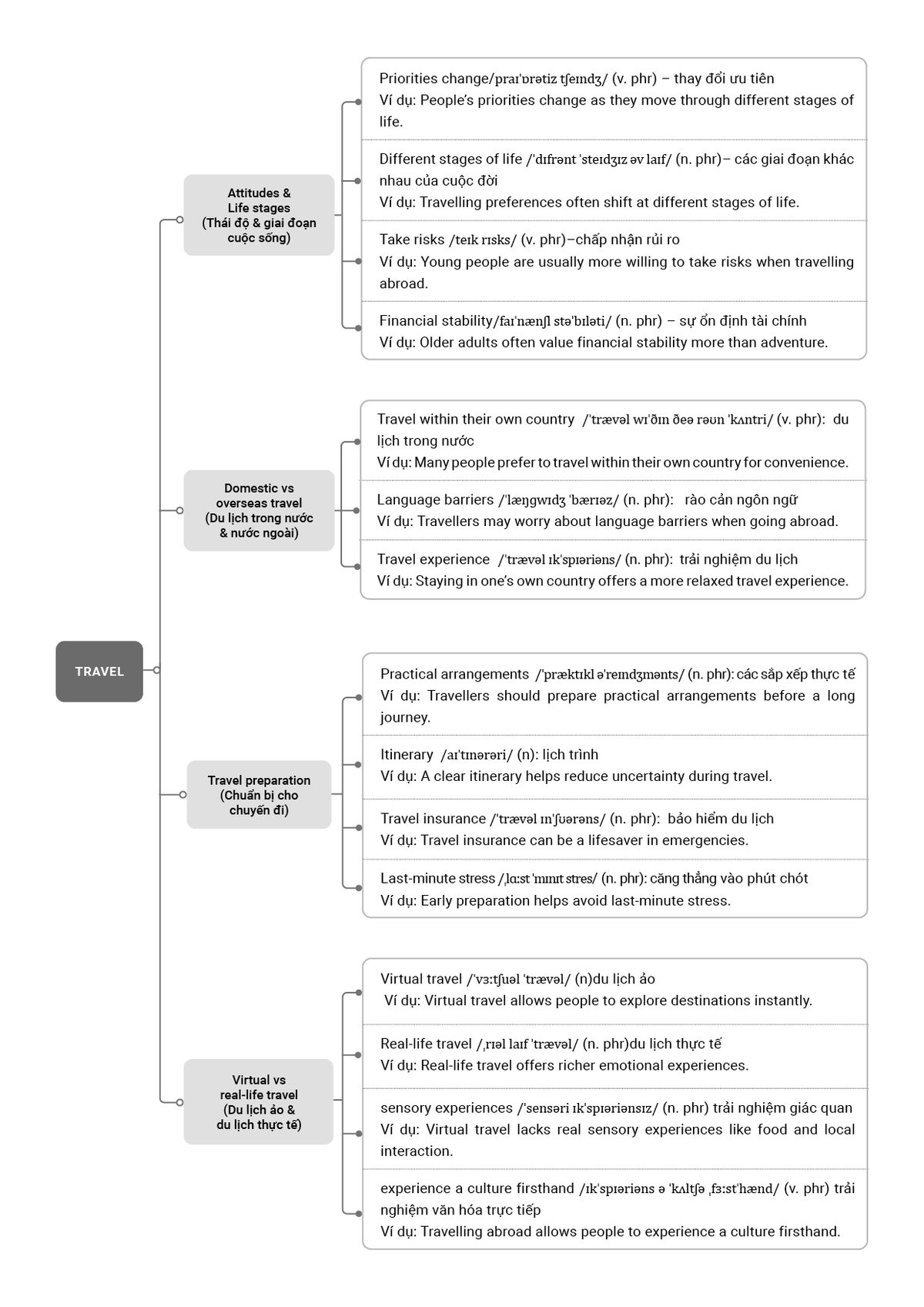
Từ vựng: priorities change, domestic travel, travel insurance, itinerary, last-minute stress, virtual travel, sensory experiences.
Ngữ pháp: travel (v) vs trip/journey (n); have/tend to change over time; prepare sth / prepare for sth.
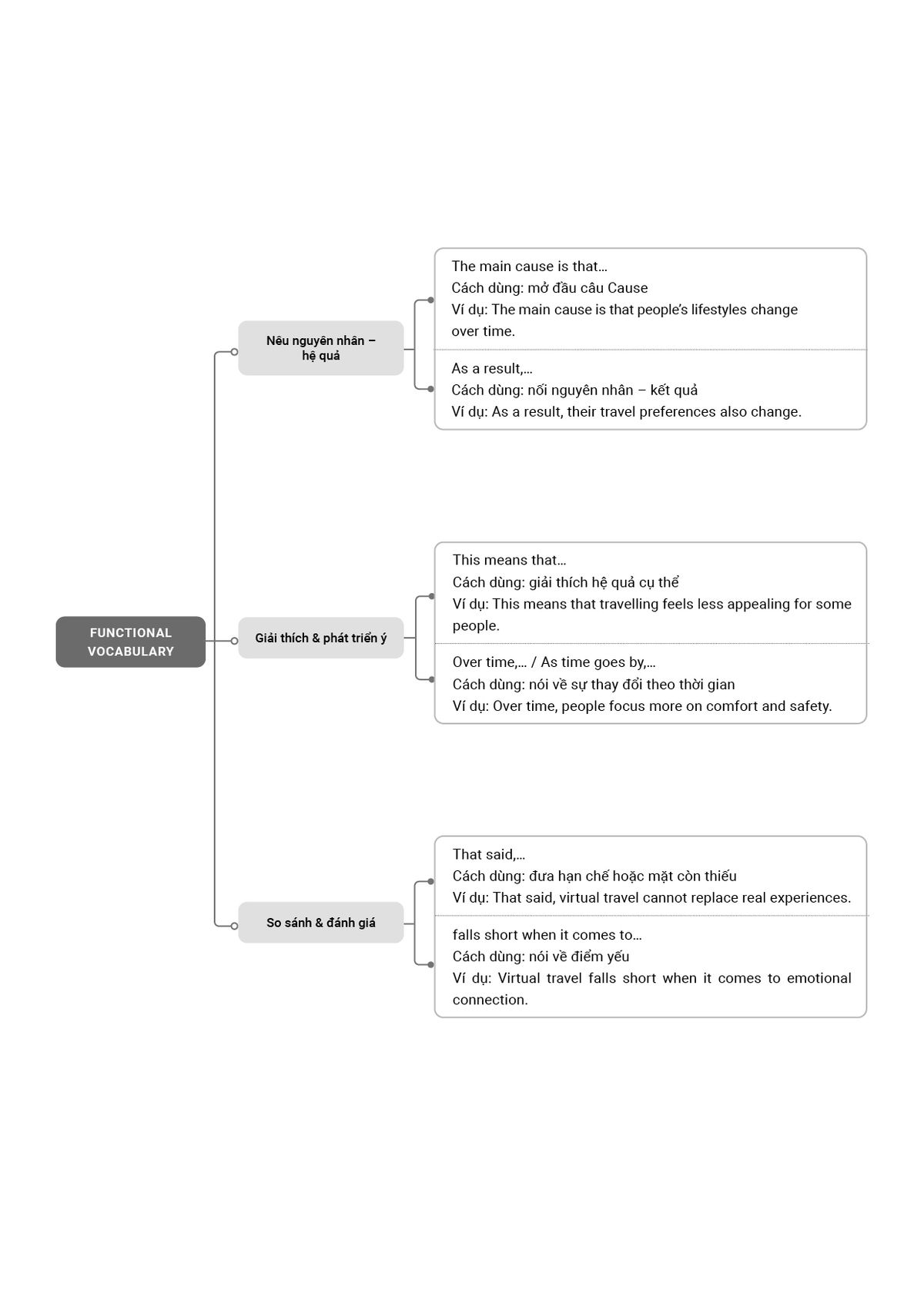
Chiến thuật: Dùng As time goes by, That said để nói học thuật, mạch lạc.
Bài mẫu IELTS Speaking Part 3 Topic “Travel” kèm từ vựng
Trong bài viết này, tác giả sẽ gợi ý bài mẫu cho Topic “Travel” và phân tích các từ vựng ghi điểm cho phần thi IELTS Speaking Part 3.
Key takeaways
Phần thi IELTS Speaking Part 3 với chủ đề IELTS Speaking Part 3 topic Travel yêu cầu thí sinh không chỉ trả lời câu hỏi mà còn phân tích và đưa ra quan điểm có lập luận rõ ràng. Nhiều thí sinh gặp khó khăn trong việc triển khai ý tưởng và sử dụng từ vựng học thuật phù hợp. Bài viết cung cấp bài mẫu tiêu biểu kèm cấu trúc trả lời hiệu quả và từ vựng ghi điểm, giúp người học tự tin đạt band điểm cao.
IELTS Speaking Part 3: Travel - Sample Answer
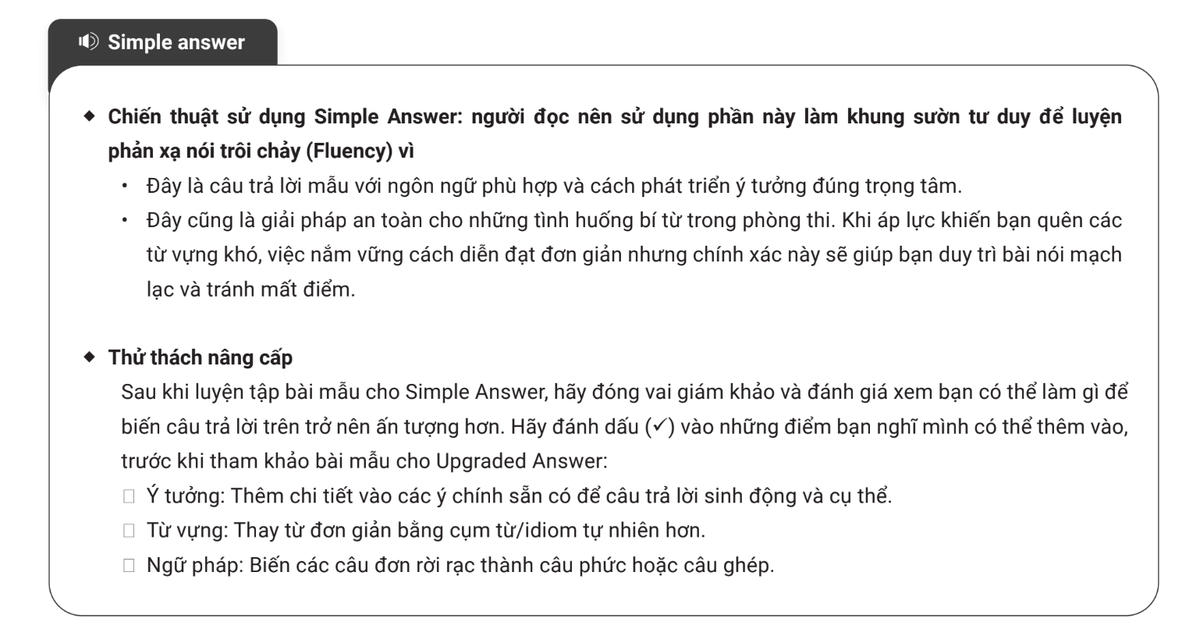
Simple answer
1. Why do people’s attitudes towards travelling abroad change over time?
|
People’s attitudes towards travelling abroad often change as their life situations change. When people are young, they usually want to explore new places and have exciting experiences. However, as they get older, they may care more about comfort, safety, and cost. For example, adults with families often prefer destinations that are convenient and familiar. Overall, changes in age, responsibilities, and priorities can affect how people feel about travelling abroad. |
2. Why do some people prefer to spend their holidays in their own country?
|
Some people prefer to spend their holidays in their own country because it is more convenient and affordable. Travelling domestically usually costs less and requires less planning. In addition, people are already familiar with the language and culture, which makes travel easier. For example, they do not need to worry about visas or communication problems. Therefore, staying in one’s own country can be a more relaxing option. |
3. What kinds of things should people prepare before going on a long journey?
|
Before going on a long journey, people should prepare several important things. First, they need to plan their schedule and book accommodation in advance. They should also prepare necessary documents such as passports, tickets, and travel insurance. For example, having insurance can help in case of emergencies. Overall, careful preparation helps travellers feel more confident and enjoy their trip. |
4. How do you think virtual travel compares with travelling in real life?
|
I think virtual travel is convenient, but it cannot fully replace real-life travel. Virtual travel allows people to see famous places without spending much money or time. For example, people can visit museums online from home. However, it does not offer real experiences like local food or face-to-face interaction. In conclusion, virtual travel is useful, but real travel is more meaningful. |

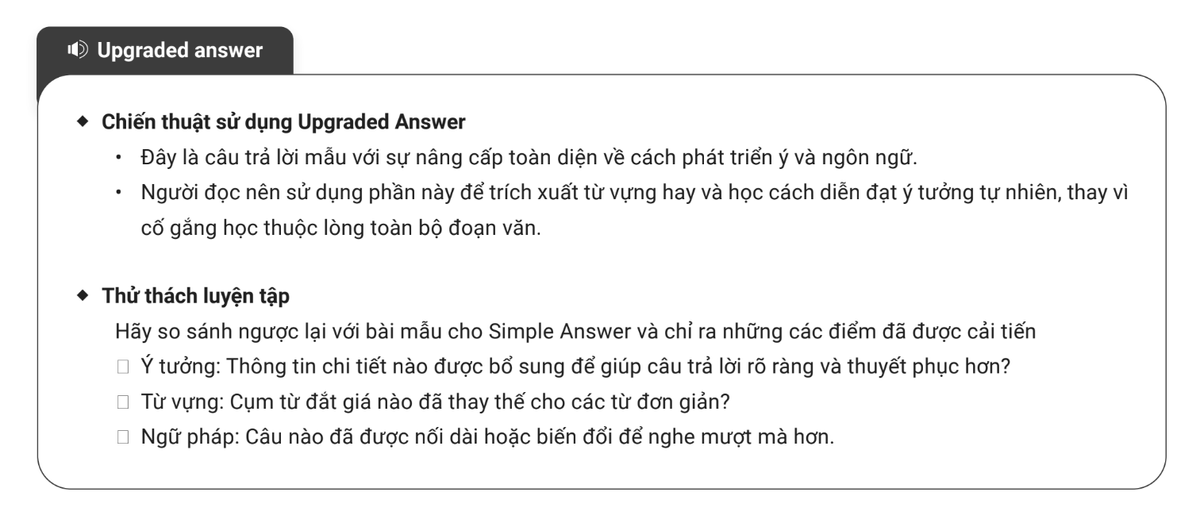
Upgraded answer
1. Why do people’s attitudes towards travelling abroad change over time?
|
Well, I think the main cause is that people’s lives and priorities change as they move through different stages of life. When people are younger, they usually have fewer responsibilities and are more willing to take risks. As a result, they often see travelling abroad as an exciting way to explore the world and gain new experiences. As time goes by, however, people tend to place greater importance on comfort, safety, and financial stability. For example, adults with full-time jobs or families may prefer destinations that are closer, less stressful, and easier to plan. So, in the long run, changes in lifestyle and responsibility naturally shape how people feel about travelling overseas. |
2. Why do some people prefer to spend their holidays in their own country?
|
Honestly, one key reason is that domestic travel is often far more convenient. People usually save both time and money when they travel within their own country. This means less complicated planning, fewer unexpected problems, and a more relaxed travel experience overall. For instance, travellers do not need to apply for visas or worry about language barriers, which can be a real headache when going abroad. In the end, for people who value comfort and simplicity, holidays at home are often the more attractive choice. |
3. What kinds of things should people prepare before going on a long journey?
|
Well, people need to prepare both the practical arrangements and their mindset before a long journey. On the practical side, this includes planning a clear itinerary, booking accommodation early, and checking important documents such as passports, visas, and travel insurance. These steps help reduce uncertainty and avoid last-minute stress. For instance, having travel insurance can be a real lifesaver if someone faces medical problems or flight cancellations. Overall, thorough preparation allows travellers to feel more confident and focus on enjoying the journey rather than worrying about potential issues. |
4. How do you think virtual travel compares with travelling in real life?
|
Well, I’d say virtual travel is a convenient alternative, especially for people who lack time, money, or mobility. It allows users to explore destinations instantly and gain basic knowledge about different places. For example, virtual tours of museums or historical sites are now widely available online. That said, virtual travel falls short when it comes to emotional and sensory experiences. It cannot recreate the feeling of tasting local food, interacting with locals, or experiencing a new culture firsthand. So overall, while virtual travel has its uses, it simply cannot replace the richness of real-life travel. |

Lọc và phân tích từ vựng
Đọc thêm: Từ vựng về chủ đề Travel và câu trả lời mẫu IELTS Speaking Part 1
Nhật ký từ vựng & ý tưởng
Ghi chú sau khi luyện tập nói về chủ đề trên
Từ vựng/Ý tưởng (Chọn các từ vựng/ý tưởng mà bạn tâm đắc nhất) | Kỉ niệm cá nhân |
|---|---|
Ví dụ: attitudes towards travelling abroad /ˈætɪtjuːdz təˈwɔːdz ˈtrævəlɪŋ əˈbrɔːd/ (n. phr) – thái độ đối với việc du lịch nước ngoài | Người đọc tự đặt các câu hỏi cho bản thân, ví dụ:
→ When I was younger, I saw travelling abroad as an exciting adventure and a way to explore new cultures. However, as my responsibilities increased, I started paying more attention to comfort, safety, and costs. I now realise that my attitudes towards travelling abroad have changed naturally as my lifestyle and priorities have shifted over time. |
Khoảng trống diễn đạt (Phần khiến bạn ngập ngừng khi nói về chủ đề trên) | Giải pháp (Giải pháp cho các khoảng trống diễn đạt) |
Ví dụ:
| Ví dụ: Dùng từ điển, công cụ AI, … để tìm cụm từ mà bạn cần. → attitudes change over time – thái độ thay đổi theo thời gian → life priorities shift – ưu tiên cuộc sống thay đổi → prefer convenience and comfort – ưu tiên sự tiện lợi và thoải mái → travel within one’s own country – du lịch trong nước → a more relaxed travel experience – trải nghiệm du lịch thoải mái hơn |
Người đọc có thể tìm từ vựng bằng từ điển ZIM Dictionary.
Các lỗi ngữ pháp thường gặp
1. Nhầm “travel” (động từ) và “trip / journey” (danh từ)
Lỗi thường gặp:
“I want to travel a long journey next year.”
(người học muốn nói: Tôi muốn đi một chuyến đi dài.)
Cách dùng đúng:
travel → động từ (đi du lịch nói chung)
trip / journey → danh từ (chuyến đi cụ thể)
Câu đúng:
I want to go on a long journey next year.
I enjoy travelling abroad when I have time.
Lý do sai: Người học hay dùng travel cho mọi trường hợp, nhưng trong tiếng Anh, travel không đi trực tiếp với danh từ chỉ chuyến đi.
2. Dùng sai thì khi nói về thói quen thay đổi theo thời gian
Lỗi thường gặp:
“People’s attitudes change because they are getting older.”
(dùng hiện tại đơn cho quá trình kéo dài trong quá khứ → hiện tại)
Cách dùng đúng:
have changed / tend to change → phù hợp hơn khi nói về sự thay đổi theo thời gian
Câu đúng:
People’s attitudes have changed over time as their priorities shift.
Attitudes towards travelling abroad tend to change with age.
Lý do sai: Hiện tại đơn diễn tả sự thật chung, nhưng không thể hiện rõ quá trình thay đổi – điều rất quan trọng trong câu hỏi Part 3.
3. Dùng sai giới từ với “prepare”
Lỗi thường gặp:
“People should prepare for their documents before travelling.”
Cách dùng đúng:
prepare something
prepare for a situation / event
Câu đúng:
People should prepare their documents before travelling.
People should prepare for a long journey carefully.
Lý do sai: Prepare for dùng cho sự kiện, không dùng trước tân ngữ cụ thể như documents, luggage, itinerary.
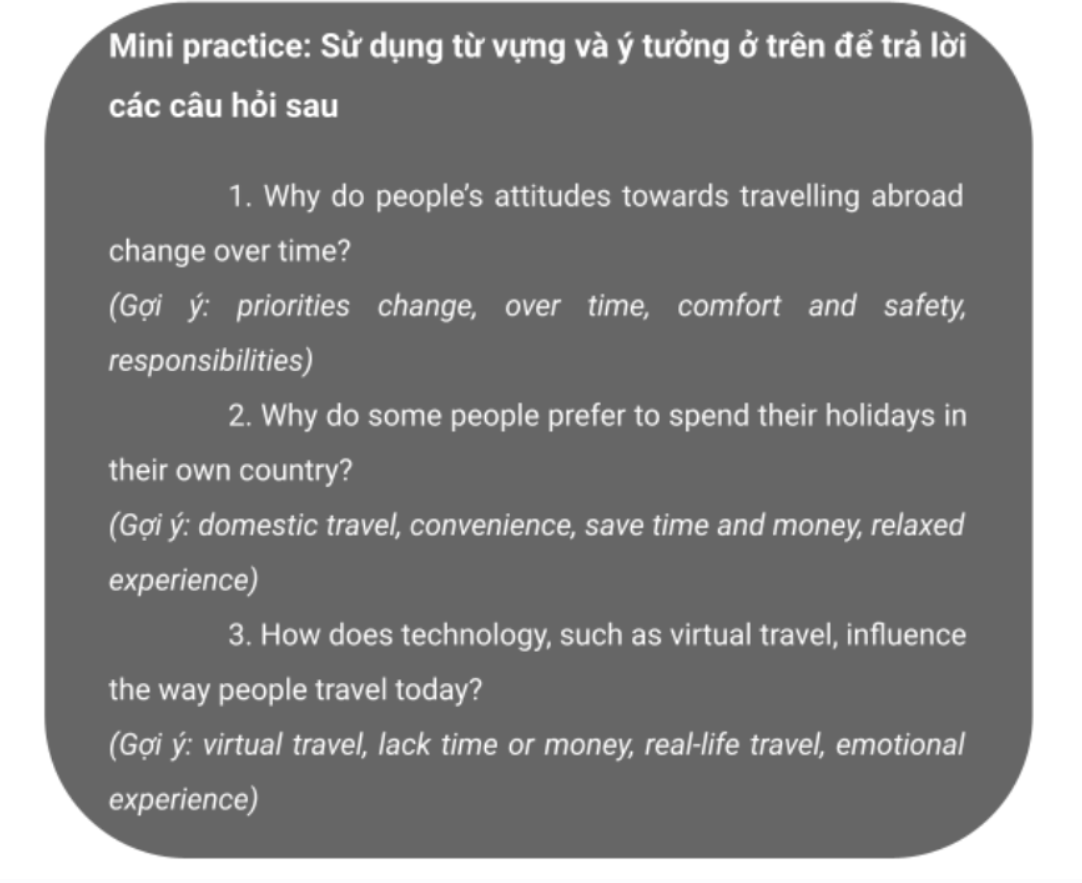
Mini practice
Dùng đúng cấu trúc trong ngoặc
1. Hãy nói về kế hoạch đi một chuyến du lịch dài của con người trong tương lai.
(Dùng: go on a trip / go on a journey / travelling – không dùng travel + danh từ chỉ chuyến đi)
2. Hãy nói về cách thái độ của con người đối với việc du lịch nước ngoài thay đổi theo thời gian.
(Dùng: have changed / tend to change / change over time – không dùng hiện tại đơn để mô tả quá trình thay đổi)
3. Hãy nói về điều mọi người cần chuẩn bị trước khi đi một chuyến đi dài.
(Dùng: prepare + something / prepare for + situation – không dùng prepare for + documents/luggage)
Các chủ đề liên quan
Chủ đề liên quan để sử dụng từ vựng & ý tưởng:
Attitudes towards travel (Thái độ đối với du lịch)
Domestic vs international travel (Du lịch trong nước và quốc tế)
Travel preparation & planning (Chuẩn bị và lên kế hoạch du lịch)
Người đọc có thể sử dụng:
Từ vựng:
attitudes towards travelling, travel abroad, domestic travel, priorities change over time, convenience, comfort and safety, long journey, travel insurance, itinerary, virtual travel, real-life travel, emotional experience, cultural exposure, firsthand experience, lack time or money, practical arrangements, …
Ý tưởng:
Thái độ du lịch thay đổi khi con người già đi và có nhiều trách nhiệm hơn
Du lịch trong nước tiện lợi, tiết kiệm và ít rủi ro hơn du lịch nước ngoài
Chuẩn bị kỹ giúp giảm căng thẳng và tránh sự cố trong chuyến đi dài
Du lịch ảo cung cấp thông tin nhanh nhưng thiếu trải nghiệm cảm xúc
Bài viết tương tự:
Tổng kết
Các bài mẫu về IELTS Speaking Part 3 topic Travel giúp thí sinh nắm rõ cấu trúc trả lời và từ vựng ghi điểm cho Speaking Part 3. Luyện tập sử dụng cụm từ học thuật và lập luận rõ ràng sẽ giúp người học tự tin thảo luận và đạt band điểm cao.
Để đạt kết quả cao trong kỳ thi IELTS, người học cần một phương pháp ôn luyện hiệu quả và lộ trình rõ ràng. Hệ thống giáo dục ZIM cung cấp các khóa học IELTS chuyên sâu, áp dụng phương pháp giảng dạy hiện đại giúp học viên phát triển toàn diện cả bốn kỹ năng. Với đội ngũ giảng viên giàu kinh nghiệm và tài liệu cập nhật, học viên có thể tối ưu hóa thời gian học tập và nâng cao điểm số. Để được tư vấn chi tiết, liên hệ hotline 1900-2833 (nhánh số 1) hoặc truy cập Khóa học IELTS.
Nguồn tham khảo
1
“Bài mẫu IELTS Speaking Part 3.” OpenAI, chatgpt.com/share/e/6961bf62-bf88-8002-9512-8fe28a8cdcf4. Accessed 25 January 2026.
Bình luận - Hỏi đáp