


Mẫu câu: Part 3 Older People / Society theo dạng Cause–Effect, Opinion, Explanation, Comparison với lập luận rõ.
Từ vựng: ageing population, life expectancy, public spending, pensions, labour shortage, quality of life.
Lỗi thường gặp: cause/create problems (không make); take care of sb; people who/that.
Chiến thuật: Ghi nhật ký từ vựng & ý tưởng, dùng However / That said để phản biện nhẹ.
Bài mẫu IELTS Speaking Part 3 Topic “Older People / Society” kèm từ vựng
Trong bài viết này, tác giả sẽ gợi ý bài mẫu cho Topic “Older People / Society” và phân tích các từ vựng ghi điểm cho phần thi IELTS Speaking Part 3.
Key takeaways
Phần thi IELTS Speaking Part 3 với chủ đề “Older People / Society” yêu cầu thí sinh phân tích các vấn đề xã hội liên quan đến người cao tuổi và trình bày quan điểm có lập luận rõ ràng. Bài viết cung cấp bài mẫu ngắn gọn kèm từ vựng học thuật và cấu trúc trả lời hiệu quả, giúp thí sinh tự tin đạt band điểm cao.
IELTS Speaking Part 3: Older People / Society - Sample Answer
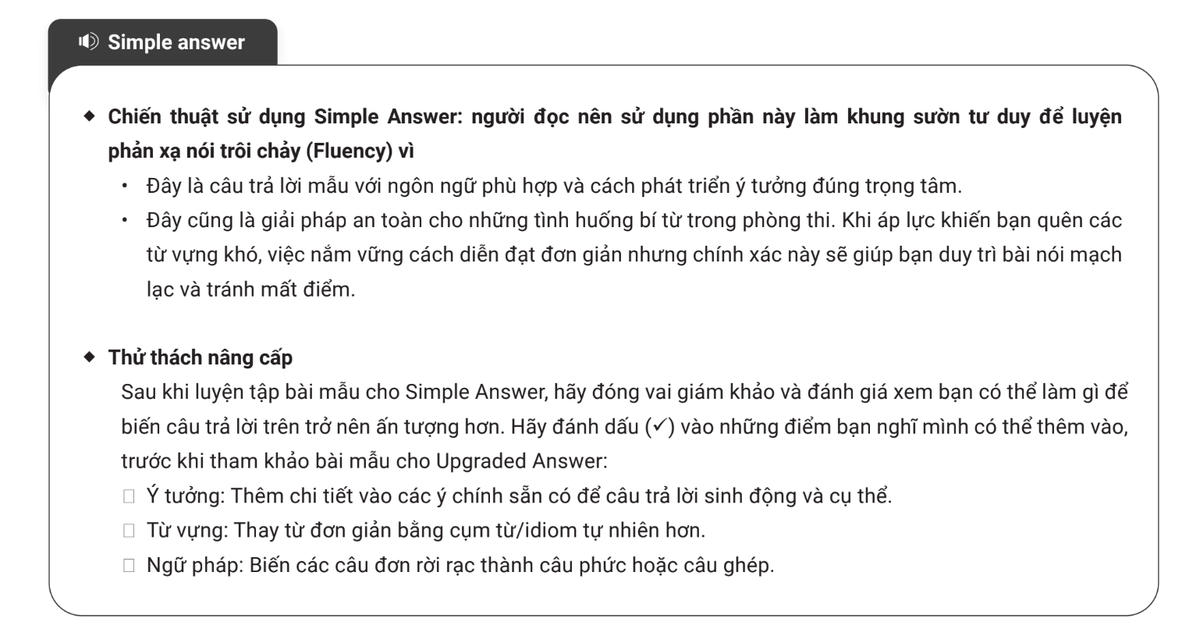
Simple answer
1. Why do you think the number of elderly people is increasing around the world?
|
People are living longer because healthcare and living conditions have improved. Modern medicine helps people prevent and treat many serious diseases. As a result, life expectancy has increased in many countries. For example, older people today can manage health problems better than in the past. Overall, these changes have led to a growing elderly population worldwide. |
2. Do you think an ageing population can have negative effects on a country? Why or why not?
|
Yes, I think an ageing population can create some negative effects for a country. One main reason is that there are fewer young people working and paying taxes. This can slow down economic growth. For example, companies may face a shortage of workers. In the long run, this can put pressure on the country’s economy. |
3. What kinds of burdens might an ageing population place on governments?
|
An ageing population can place financial burdens on governments. Governments need to spend more money on healthcare and pensions for older people. This means higher public spending. For example, hospitals may need more doctors and long-term care services. As a result, governments may have less money for education or other public services. |
4. Do you think it is better for children to live with their grandparents or with their parents?
|
I think it is generally better for children to live with their parents. Parents are usually more aware of their children’s daily needs and education. This helps children feel more secure and supported. For example, parents can spend more time guiding their children’s studies. Overall, living with parents is often more suitable for children’s development. |
5. In your opinion, should older people live alone or live with their children? Why?
|
In my opinion, older people should live with their children if possible. Living together allows them to receive emotional support and daily care. It also helps them feel less lonely. For example, elderly people can talk and spend time with family members every day. Therefore, living with children can improve their quality of life. |
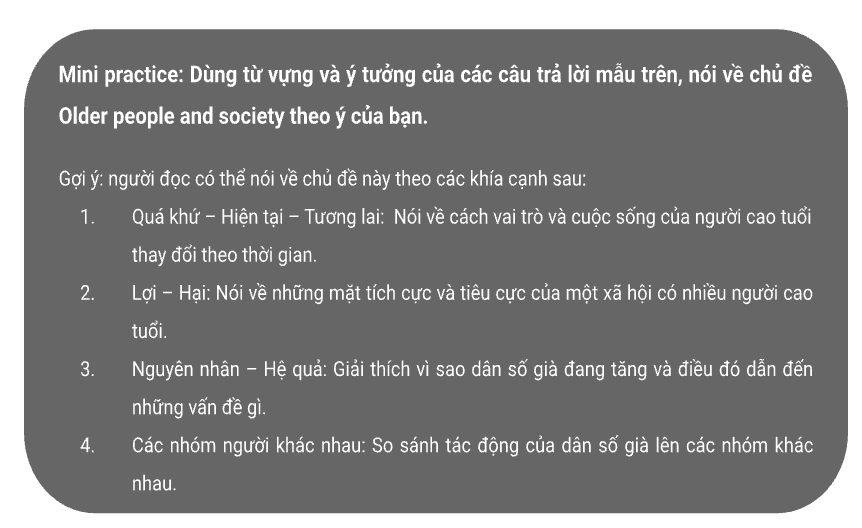
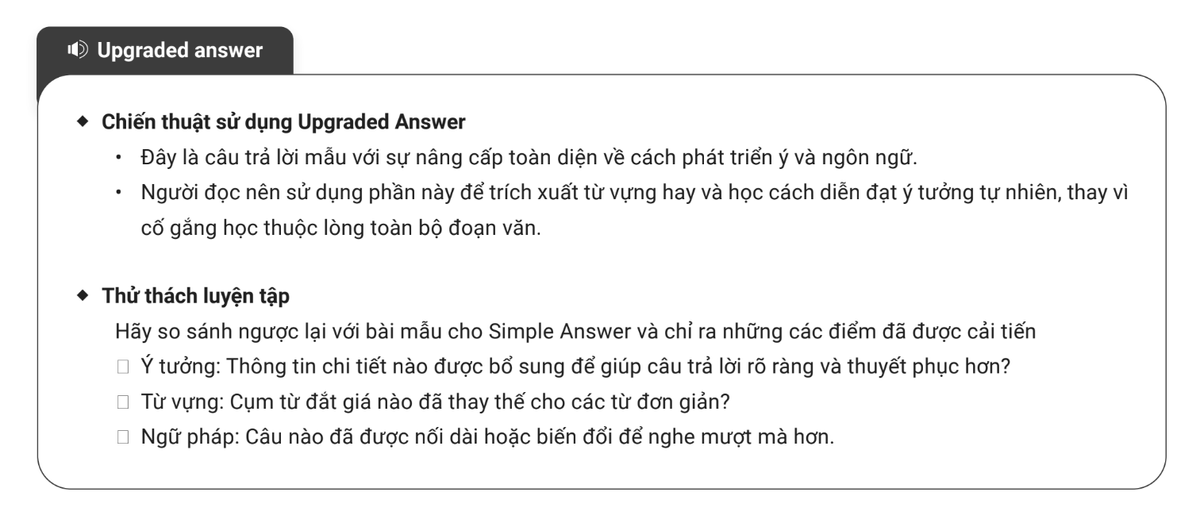
Upgraded answer
1. Why do you think the number of elderly people is increasing around the world?
|
I’d say the rise in the elderly population is mainly caused by improvements in healthcare and overall living conditions. Modern medicine allows people to control chronic diseases instead of dying from them at an early age. As a result, people tend to live longer and stay healthier for a greater part of their lives. For example, it is now quite common to see people in their seventies still working part-time, exercising regularly, or travelling abroad. Overall, longer life expectancy combined with lower birth rates has naturally led to ageing populations in many countries. |
2. Do you think an ageing population can have negative effects on a country? Why or why not?
|
Yes, an ageing population can cause certain problems, especially from an economic point of view. When the number of retired people increases, there are fewer working-age adults contributing through taxes and labour. However, I don’t think the impact is completely negative. In many cases, older people continue to contribute by sharing experience, doing voluntary work, or helping with childcare in families. That said, without effective policies, an ageing population can still put pressure on the workforce. Overall, whether it becomes a problem depends on how well governments respond to demographic changes. |
3. What kinds of burdens might an ageing population place on governments?
|
The most significant burden is financial pressure on public services. Governments need to spend more money on healthcare, pensions, and long-term care for the elderly. This usually results in higher public spending and difficult decisions about national budgets. For example, some countries have already increased retirement ages or raised taxes to cover these costs. If such challenges are not handled carefully, governments may struggle to maintain economic growth while supporting social welfare. |
4. Do you think it is better for children to live with their grandparents or with their parents?
|
In general, I believe children are better off living with their parents. This is mainly because parents are usually more involved in their children’s education, discipline, and daily routines, which creates a stable environment. However, living with grandparents can also bring benefits, particularly emotional support and exposure to family traditions. For instance, grandparents often share stories, values, and cultural practices with children. Still, on balance, parents are usually better prepared to meet children’s long-term developmental needs. |
5. In your opinion, should older people live alone or live with their children? Why?
|
I think the best living arrangement depends largely on an older person’s health and personal situation. Living alone can give elderly people a sense of independence and self-respect, especially if they are still physically active. On the other hand, living with children often provides emotional comfort and practical support in daily life. For example, older people with health problems may feel safer when family members are close by. Ultimately, a flexible solution that balances independence with family support is likely to work best. |
Lọc và phân tích từ vựng
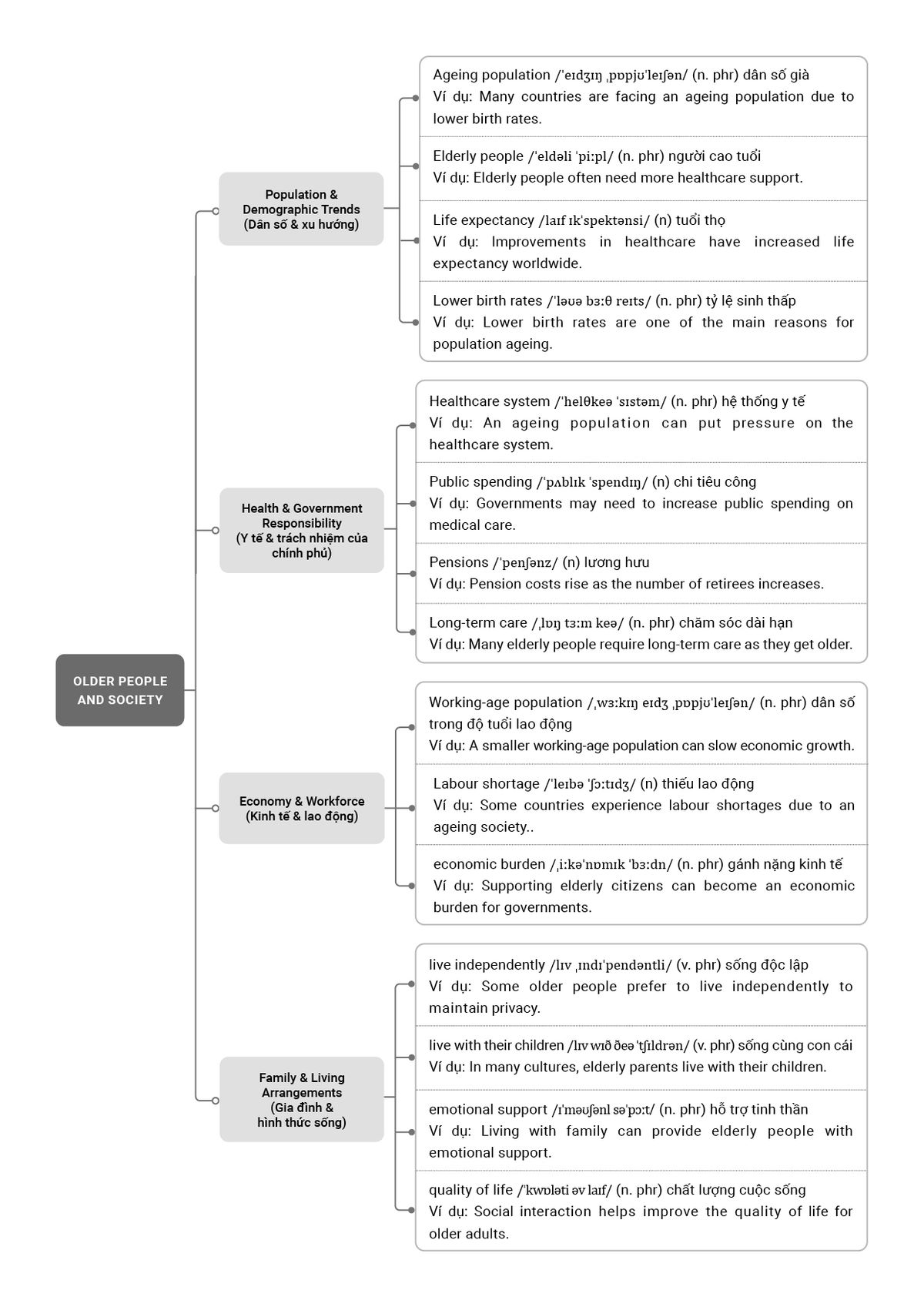
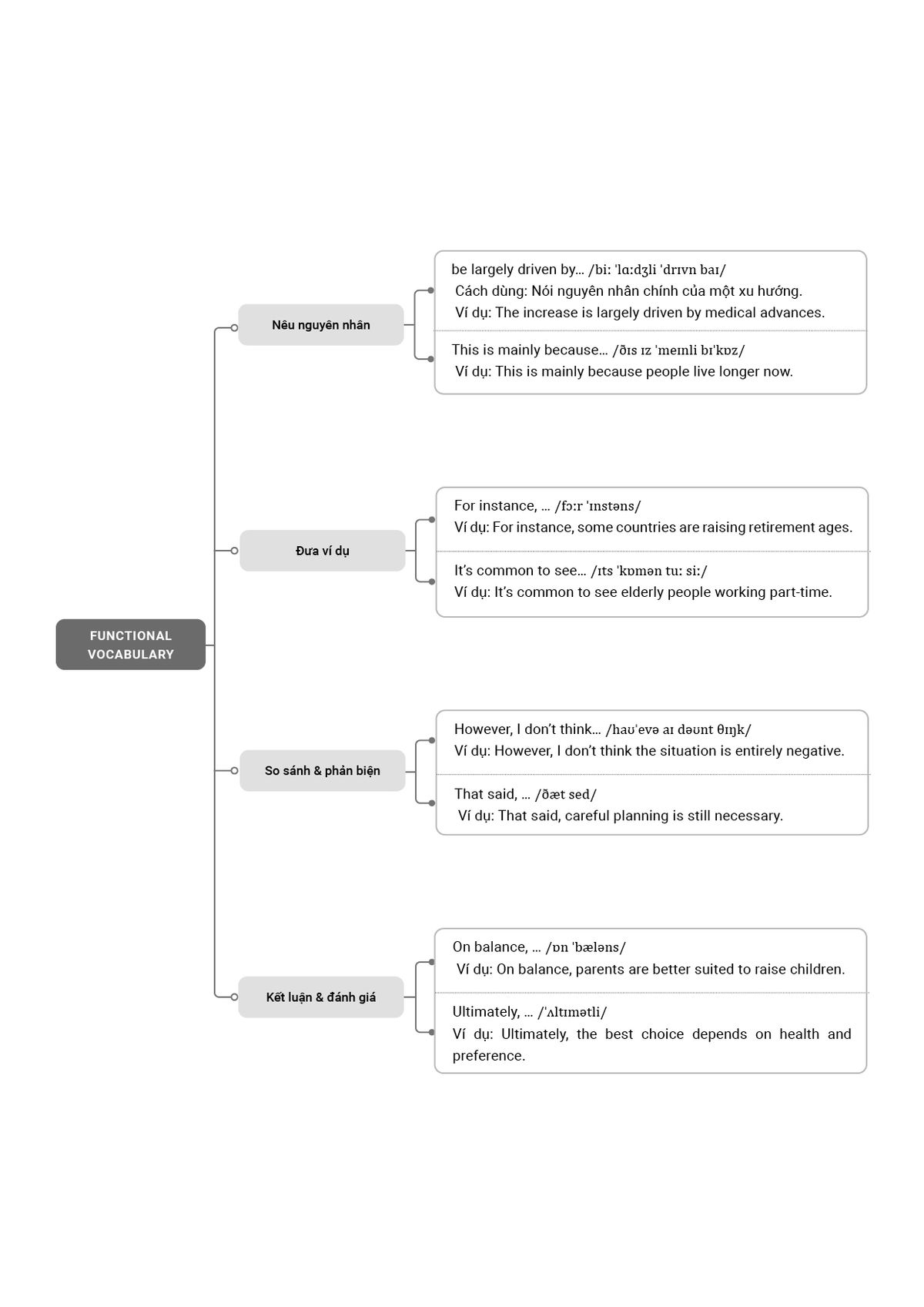
Đọc bài viết: 9 Collocations chủ đề Aging population (Già hóa dân số)
Nhật ký từ vựng & ý tưởng
Ghi chú sau khi luyện tập nói về chủ đề trên
Từ vựng/Ý tưởng (Chọn các từ vựng/ý tưởng mà bạn tâm đắc nhất) | Kỉ niệm cá nhân |
|---|---|
Ví dụ: ageing population /ˈeɪdʒɪŋ ˌpɒpjʊˈleɪʃn/ (n phr) – dân số già | Người đọc tự đặt các câu hỏi cho bản thân, ví dụ:
→ Recently, I’ve noticed that there are more elderly people in my neighbourhood than before. Many of them rely on public healthcare services and family support in daily life. This made me realise that an ageing population is not just a statistic, but something that directly affects communities and families. |
Khoảng trống diễn đạt (Phần khiến bạn ngập ngừng khi nói về chủ đề trên) | Giải pháp (Giải pháp cho các khoảng trống diễn đạt) |
Ví dụ:
| Ví dụ: Dùng từ điển, công cụ AI, … để tìm cụm từ mà bạn cần. → financial pressure – áp lực tài chính → public healthcare system – hệ thống y tế công → place a burden on governments – tạo gánh nặng cho chính phủ |
Người đọc có thể tìm từ vựng bằng từ điển ZIM Dictionary.
Các lỗi ngữ pháp thường gặp
1. Dùng sai “make + adj” và “make + noun”
Lỗi thường gặp: “An ageing population makes many problems for society.”
Cách dùng đúng:
make + noun: tạo ra cái gì
cause / create problems: tự nhiên hơn trong IELTS
make + adj: làm cho trở nên như thế nào
Câu đúng:
An ageing population causes many problems for society.
Hoặc: An ageing population makes society face many challenges.
Lý do sai: Người học thường lạm dụng make, nhưng trong ngữ cảnh học thuật, cause / create / lead to được đánh giá chính xác và tự nhiên hơn.
Đọc thêm: Tổng hợp 6 cấu trúc Make trong tiếng Anh - Bài tập áp dụng
2. Nhầm “take care” và “take care of”
Lỗi thường gặp: “Families should take care elderly people.”
Cách dùng đúng: take care of + someone / something
Câu đúng: Families should take care of elderly people.
Lý do sai: Cụm take care luôn cần of khi theo sau là tân ngữ. Bỏ of là lỗi rất phổ biến ở người học Việt.
Tham khảo thêm: Cấu trúc it take và spend trong tiếng Anh: Ý nghĩa và cách sử dụng
3. Dùng sai mệnh đề quan hệ với “people who / people which”
Lỗi thường gặp: “Elderly people which live alone may feel lonely.”
Cách dùng đúng:
who / that → dùng cho người
which → dùng cho vật
Câu đúng: Elderly people who live alone may feel lonely.
Lý do sai: Người học hay dùng which cho mọi danh từ. Tuy nhiên, khi nói về con người, phải dùng who hoặc that.
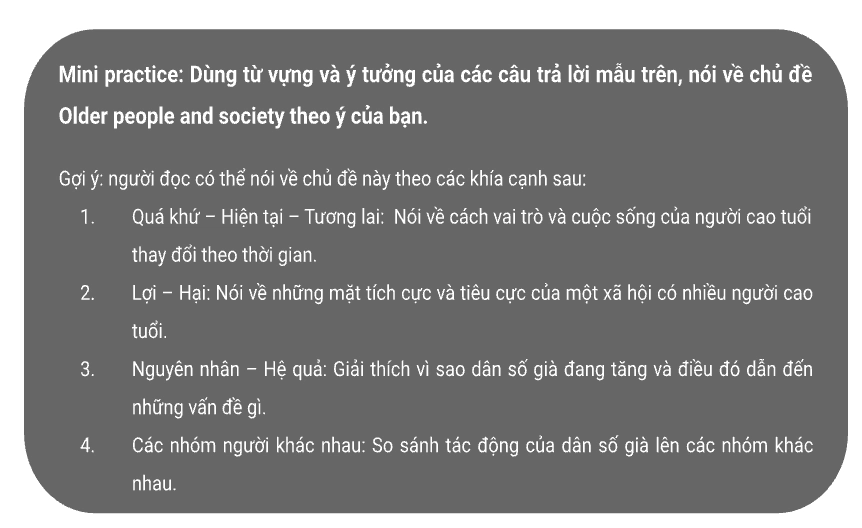
Mini practice
Dùng đúng cấu trúc trong ngoặc
1. Hãy nói về một ảnh hưởng tiêu cực mà dân số già có thể gây ra cho xã hội.
(Dùng: cause / create / lead to + problems / challenges — không dùng make + problems)
2. Hãy nói về vai trò của gia đình trong việc chăm sóc người cao tuổi.
(Dùng: take care of + elderly people — không bỏ of)
3. Hãy nói về những người cao tuổi sống một mình và các vấn đề họ có thể gặp phải.
(Dùng: people who / people that — không dùng which cho người)
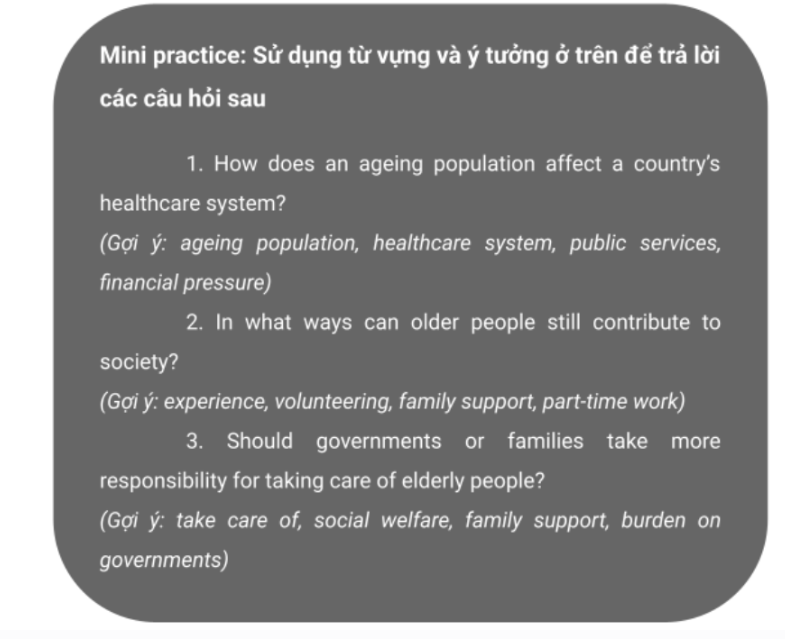
Các chủ đề liên quan
Chủ đề liên quan để sử dụng từ vựng & ý tưởng:
Ageing population (Dân số già hoá)
Healthcare and social services (Y tế và dịch vụ xã hội)
Family structure (Cấu trúc gia đình)
Người đọc có thể sử dụng:
Từ vựng: elderly people, ageing population, life expectancy, healthcare system, pensions, social welfare, take care of, financial pressure, public services, burden on governments, labour force, retirement age, …
Ý tưởng:
Tuổi thọ tăng nhờ y tế phát triển và điều kiện sống tốt hơn
Dân số già gây áp lực lên hệ thống y tế, lương hưu và ngân sách nhà nước
Người cao tuổi vẫn có thể đóng góp cho xã hội qua kinh nghiệm và công việc bán thời gian
Gia đình đóng vai trò quan trọng trong việc chăm sóc và hỗ trợ tinh thần cho người già
Việc người cao tuổi sống một mình hay sống với con cái phụ thuộc vào sức khỏe và mong muốn cá nhân
Tham khảo thêm:
Tổng kết
Các bài mẫu về IELTS Speaking Part 3 Topic Older People / Society giúp thí sinh nắm rõ cấu trúc trả lời và từ vựng học thuật cần thiết cho phần thảo luận. Việc ghi chép cụm từ quan trọng, tự đặt câu ví dụ và luyện lập luận rõ ràng sẽ giúp người học tự tin bàn luận các vấn đề xã hội liên quan đến người cao tuổi và đạt điểm tốt ở Part 3.
Đối với thí sinh đang trong giai đoạn chuẩn bị cho kỳ thi IELTS, việc trải nghiệm một bài thi thử có cấu trúc và độ khó tương đương với đề thi thật là bước chuẩn bị quan trọng. Thi thử IELTS tại ZIM Academy mang đến đánh giá chính xác với đề thi có cấu trúc giống 100% bài thi thật. Chat trực tiếp trên website để được tư vấn nhanh chóng và đăng ký lịch thi phù hợp.
Nguồn tham khảo
1
“Bài mẫu IELTS Speaking Part 3.” OpenAI, chatgpt.com/share/e/6961b6c8-4368-8002-995c-cd65b4729b18. Accessed 19 January 2026.
Bình luận - Hỏi đáp