

Two-part Question Essay đòi hỏi xử lý đồng thời 2 khía cạnh, dễ mất cân đối nếu không phân tích kỹ.
Bài mẫu band 7.0+ minh họa cách phát triển luận điểm cân bằng, dùng từ học thuật chuẩn xác.
Phân bổ thời gian, bố cục 4 đoạn và câu chủ đề rõ ràng là yếu tố then chốt.
Kỹ thuật paraphrase và triển khai PEE giúp thí sinh đạt mục tiêu 6.5–7.5.
Bài mẫu IELTS Writing Task 2 dạng Two-part Question Band 7+
Tổng hợp 5 bài mẫu dạng Two-part Question (Essay sample) với mức band điểm từ 7.0 trở lên kèm theo phân tích chi tiết hỗ trợ người học cải thiện kỹ năng viết trong phần thi IELTS Writing Task 2.
Key takeaways
Trong IELTS Writing Task 2, dạng bài Two-part Question Essay (còn gọi là “direct question essay”) giữ vai trò quan trọng vì yêu cầu thí sinh trả lời đồng thời hai khía cạnh khác nhau của đề bài. Thí sinh cần biết cách phân tích câu hỏi, tổ chức luận điểm và phân bổ thời gian hợp lý để tránh tình trạng trả lời mất cân đối. Bài viết này nhằm cung cấp 5 bài mẫu Two-part Question với mức band điểm từ 7.0 trở lên, kèm theo phân tích cấu trúc và kỹ thuật, từ đó hỗ trợ người học cải thiện kỹ năng viết và tiến gần hơn tới mục tiêu đạt 6.5–7.5 trong kỳ thi IELTS Writing.
Two-part Question Essay Sample – #01
Đề bài
In many countries, young people leave their homes in rural areas to move to cities for work or study. What are the reasons for this? Do the advantages of moving to cities outweigh the disadvantages?

Bài mẫu
In many countries, a large number of young people are leaving rural areas to move to cities for education or employment. This essay will discuss the main reasons for this trend and then evaluate whether the advantages of urban migration outweigh its disadvantages.
The main reason young people choose to relocate to cities for study or work is that urban areas provide superior opportunities for education and career advancement. For instance, most leading universities, advanced training centres, and multinational companies are concentrated in metropolitan areas, where students can pursue high-quality education and graduates can secure well-paid jobs with career progression. Another important factor is the attraction of urban lifestyles, as cities offer greater access to cultural events, entertainment, and modern services, which makes them more appealing to young people seeking independence and social engagement.
Moving to cities brings both benefits and drawbacks for young people and for society as a whole. On the one hand, urban life provides access to better education, diverse employment opportunities, and cultural experiences, all of which help young people broaden their horizons and become more competitive in the global market.
On the other hand, it creates challenges such as rising living costs, overcrowding, and intense job competition, while rural communities are left depopulated and increasingly dependent on an ageing workforce. Overall, although these disadvantages are considerable, the advantages for individuals in terms of knowledge, income, and personal growth are more substantial. With appropriate government policies to develop rural areas, the negative effects can be reduced, making the benefits outweigh the drawbacks.
In conclusion, young people leave rural areas mainly because cities provide better educational and career opportunities. Despite the social and economic challenges caused by this migration, its advantages are greater, especially if governments adopt strategies to promote more balanced national development.
Ước tính band điểm
Task Response: 7.0.
Đáp ứng đầy đủ cả hai câu hỏi (reasons + advantages vs disadvantages).
Lập luận cân bằng, có đánh giá cuối cùng.
Ví dụ mang tính xã hội (infrastructure, depopulation) giúp tăng chiều sâu.
Coherence & Cohesion: 7.0.
Bố cục 4 đoạn chuẩn, có topic sentence rõ ràng.
Sử dụng liên kết mạch lạc: For instance, On the one hand, On the other hand, Overall.
Các đoạn phát triển logic theo mô hình P.I.E (Point – Illustration – Explanation).
Lexical Resource: 7.0.
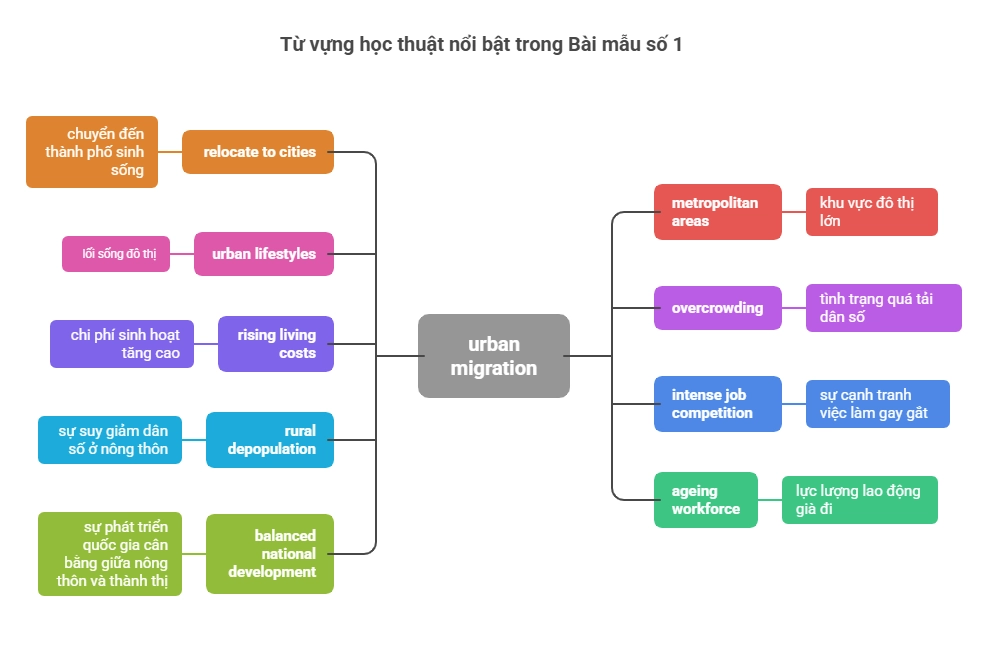
Vốn từ học thuật phù hợp: metropolitan areas, career progression, ageing workforce, balanced national development.
Collocations tự nhiên: secure well-paid jobs, broaden their horizons, rising living costs.
Paraphrase linh hoạt, tránh lặp lại ngôn ngữ đề.
Grammatical Range & Accuracy: 7.0.
Câu phức được dùng thường xuyên: mệnh đề quan hệ (where students can pursue…), cấu trúc nhượng bộ (Although these disadvantages are considerable…), đối lập (On the one hand… On the other hand…).
Ngữ pháp nhìn chung chính xác, có sự đa dạng về cấu trúc.
Phân tích bài mẫu
Cách paraphrase đề bài
“leave their homes in rural areas to move to cities” → “young people are leaving rural areas to move to cities”.
“for work or study” → “for education or employment”.
“What are the reasons?” → “This essay will discuss the main reasons for this trend”.
“Do the advantages…?” → “evaluate whether the advantages… outweigh the disadvantages”.
→ Cách paraphrase này vừa tránh lặp lại từ gốc trong đề, vừa giữ nghĩa chính xác.
Kỹ thuật phát triển ý tưởng
Body 1 (Reasons)
Ý chính: Thanh niên rời nông thôn chủ yếu vì thành phố đem lại điều kiện phát triển vượt trội về giáo dục, nghề nghiệp, và lối sống.
Luận điểm 1: Đô thị có nhiều cơ hội học tập và nghề nghiệp.
Minh họa: Các trường đại học hàng đầu, trung tâm đào tạo hiện đại, công ty đa quốc gia tập trung ở thành phố.
Giải thích: Sinh viên có thể theo học các chương trình chất lượng cao; sau khi tốt nghiệp, họ dễ tìm việc làm tốt với mức lương cao và cơ hội thăng tiến (career progression).
👉Ý tưởng này chỉ ra động lực chính: phát triển học thuật và nghề nghiệp.
Luận điểm 2: Thành phố còn hấp dẫn vì lối sống hiện đại.
Minh họa: Tiếp cận các sự kiện văn hóa, hoạt động giải trí, dịch vụ đa dạng.
Giải thích: Đô thị đáp ứng nhu cầu độc lập, giao lưu xã hội, và trải nghiệm mới → khiến giới trẻ cảm thấy năng động hơn.
👉Ý tưởng này mở rộng lý do: không chỉ vì kinh tế/giáo dục mà còn vì chất lượng đời sống tinh thần.
Body 2 (Advantages)
Ý chính: Di cư ra đô thị mang lại nhiều lợi ích cho cá nhân trẻ và xã hội.
Luận điểm: Thành phố cung cấp nền tảng phát triển toàn diện.
Minh họa: Tiếp cận giáo dục tốt hơn, cơ hội việc làm đa dạng, trải nghiệm văn hóa phong phú.
Giải thích: Những yếu tố này giúp giới trẻ mở rộng tầm nhìn (broaden their horizons), trau dồi kỹ năng, và trở nên cạnh tranh hơn trong thị trường lao động toàn cầu.
👉Ý tưởng này nhấn mạnh sự tiến bộ cá nhân và năng lực cạnh tranh quốc tế.
Body 3 (Disadvantages + Evaluation)
Ý chính: Tuy nhiên, di cư đô thị cũng dẫn đến nhiều hệ lụy, cả cho cá nhân lẫn cộng đồng.
Luận điểm: Cuộc sống đô thị đặt ra nhiều thách thức.
Minh họa: Chi phí sinh hoạt cao, tình trạng quá tải (housing, transport), cạnh tranh việc làm khốc liệt.
Giải thích: Điều này gây áp lực tâm lý và tài chính cho người trẻ, đồng thời làm suy giảm chất lượng sống đô thị.
Luận điểm phụ: Nông thôn chịu tác động tiêu cực.
Minh họa: Dân số giảm, phụ thuộc vào lao động già.
Giải thích: Điều này cản trở phát triển bền vững của nông thôn.
Đánh giá: Dù nhược điểm đáng kể, lợi ích về tri thức, thu nhập, và phát triển cá nhân vẫn vượt trội. Nếu chính phủ phát triển hạ tầng và chính sách ở nông thôn, có thể giảm thiểu tác động xấu.
Ý tưởng này làm rõ quan điểm: lợi ích lớn hơn hạn chế nếu có biện pháp hỗ trợ.
Từ vựng học thuật nổi bật
Giáo dục – nghề nghiệp: secure well-paid jobs, pursue high-quality education, career progression.
Xã hội – phát triển: overcrowding, rural depopulation, ageing workforce, balanced national development.
Collocations: personal and professional development, broaden their horizons, rising living costs.
Ngữ pháp nâng cao
Nhượng bộ: Although these disadvantages are considerable, the advantages are more substantial.
Đối lập: On the one hand… On the other hand…
Mệnh đề quan hệ: where students can pursue high-quality education…
Đọc thêm: Ideas for IELTS Writing Task 2 Topic City Life
Two-part Question Essay Sample – #02
Đề bài
Many museums and historical sites are mainly visited by tourists rather than local people. Why is this the case? What can be done to attract more local people?

Bài mẫu
Although museums and historical sites preserve a nation’s cultural identity, they are often frequented by tourists rather than local residents. This essay will analyse the reasons for this tendency and propose solutions to make these places more appealing to local audiences.
One key reason is that local people often perceive museums and heritage sites as unchanging and irrelevant to their daily lives. For instance, many residents may have already visited these attractions during school trips and find little incentive to return when the displays remain static for years. Moreover, daily routines and work commitments make them less willing to spend time revisiting familiar places. In contrast, tourists view such sites as opportunities to learn about a new culture, which explains their greater enthusiasm. Limited efforts in marketing towards locals also reinforce the impression that these venues are seen as tourist attractions rather than community spaces.
To encourage more local participation, museums and historical sites need to offer dynamic and community-oriented experiences. They could introduce rotating exhibitions, interactive workshops, or family-oriented activities that regularly change themes, ensuring that every visit feels new. Partnerships with schools, universities, and local artists could further make these institutions vibrant cultural hubs rather than static tourist destinations. Affordable pricing schemes, such as free admission days for residents, would also reduce financial barriers. By tailoring programmes to the needs and interests of the community, heritage institutions can shift their image from tourist attractions to inclusive cultural spaces, thereby attracting more repeat visits from locals.
In conclusion, local people are less likely to visit museums and historical sites because of a lack of novelty, limited time, and the perception that these venues cater mainly to tourists. However, through creative programming, collaboration with communities, and accessible pricing, such institutions can successfully re-engage local audiences while continuing to appeal to international visitors.
Ước tính band điểm
Task Response: 7.0
Bài viết trả lời trọn vẹn cả hai câu hỏi: nguyên nhân và giải pháp.
Luận điểm rõ ràng, cân bằng, có ví dụ xã hội thực tế như school trips, rotating exhibitions, free admission days.
Kết luận chốt lại quan điểm hợp lý, thống nhất với phần thân bài.
Coherence & Cohesion: 7.0.
Bố cục 4 đoạn tiêu chuẩn, mỗi đoạn có một trọng tâm duy nhất.
Câu chủ đề được triển khai mạch lạc theo mô hình P.I.E (Point – Illustration – Explanation).
Liên kết tự nhiên, dùng hợp lý: For instance, In contrast, Moreover, By tailoring programmes…
Lexical Resource: 7. 0
Từ vựng học thuật và collocations phù hợp: cultural identity, static displays, vibrant cultural hubs, repeat visits, financial barriers.
Paraphrase tốt, tránh lặp lại từ trong đề: visited → frequented, attract → appeal to, local people → residents.
Cách dùng từ phù hợp ngữ cảnh.
Grammatical Range & Accuracy: 7.0.
Câu phức được sử dụng thường xuyên: mệnh đề quan hệ, câu nhượng bộ, cấu trúc nguyên nhân – kết quả.
Ít lỗi ngữ pháp, diễn đạt rõ ràng.
Phân tích bài mẫu
Cách paraphrase đề bài
“mainly visited by tourists rather than local people” → “frequented by tourists rather than local residents”.
“Why is this the case?” → “This essay will analyse the reasons for this tendency”.
“What can be done…?” → “propose solutions to make these places more appealing to local audiences”.
Kỹ thuật phát triển ý tưởng
Body 1 (Nguyên nhân):
Point: người dân địa phương cho rằng bảo tàng và di tích thiếu tính mới mẻ, không liên quan đến cuộc sống thường ngày.
Illustration: nhiều người đã đi từ khi còn đi học và ít có động lực quay lại; lịch trưng bày không thay đổi trong nhiều năm.
Explanation: khách du lịch lại coi đây là cơ hội tìm hiểu văn hoá mới, trong khi marketing thường hướng đến khách nước ngoài, càng làm dân địa phương xa cách.
Body 2 (Giải pháp):
Point: bảo tàng và di tích cần tạo trải nghiệm năng động, gắn với cộng đồng.
Illustration: triển lãm luân phiên, workshop tương tác, hợp tác với trường học và nghệ sĩ địa phương; áp dụng ngày miễn phí hoặc vé giảm giá cho dân cư.
Explanation: khi chương trình được “may đo” cho cộng đồng, các địa điểm này sẽ từ “điểm du lịch tĩnh” trở thành “không gian văn hoá sống động”, từ đó thu hút nhiều lượt ghé thăm của người dân..
Từ vựng học thuật & collocations nổi bật
cultural identity, static displays, vibrant cultural hubs, inclusive cultural spaces, financial barriers.
Collocations tự nhiên: repeat visits, work commitments, tailor programmes to the needs of the community.
Cấu trúc ngữ pháp nâng cao
Nhượng bộ: Although museums and historical sites preserve a nation’s cultural identity…
Đối lập: In contrast, tourists view such sites as opportunities…
Mệnh đề quan hệ: which explains their greater enthusiasm.
Nguyên nhân – kết quả: By tailoring programmes to the needs of the community, heritage institutions can shift their image…
Two-part Question Essay Sample – #03
Đề bài
In some schools and universities, girls tend to choose arts subjects (e.g., literature), and boys tend to choose science subjects (e.g., physics). Why do you think this is so? Should this tendency be changed?

Bài mẫu
In many educational institutions, there is a noticeable gender difference in subject preference, with girls often choosing arts-related fields while boys are more likely to pursue science. This essay will examine the reasons behind this phenomenon and discuss whether this trend should be altered.
One explanation for this pattern is the influence of social stereotypes and cultural expectations about gender roles. For example, in many societies, girls are traditionally associated with creativity, sensitivity, and expression, which are qualities linked to literature or fine arts. Boys, on the other hand, are encouraged to be logical and analytical, traits that align with mathematics and science. Such gendered expectations, reinforced by parents, teachers, and even the media, strongly shape students’ subject choices from an early age, regardless of their individual talents or interests. Another important factor is the difference in natural aptitudes and learning preferences. It is often observed that girls often outperform boys in language acquisition and reading comprehension, which naturally leads them to feel more confident in literature or humanities. By contrast, boys are generally more represented in problem-solving or spatial reasoning tasks, abilities that are highly relevant to subjects such as physics or mathematics. These biological or cognitive tendencies may not fully determine career paths, but they partly explain why, even without social pressure, boys and girls often gravitate towards different fields of study
While these preferences reflect natural diversity, the rigid division between arts and science based on gender should not be maintained. If girls avoid science due to stereotypes, they may miss out on promising careers in technology or engineering; likewise, boys who are discouraged from studying literature or the humanities may lack opportunities to develop empathy and communication skills. Encouraging all students to explore a wider range of subjects can create a more balanced workforce and society. Therefore, schools and universities should adopt measures such as gender-neutral career counselling, exposure to role models in non-traditional fields, and equal encouragement for both boys and girls to pursue their genuine interests rather than conforming to stereotypes.
In conclusion, the tendency for girls to choose arts and boys to choose science can be explained by both social stereotypes and differences in learning preferences. While it is important to respect personal interests, this trend should be challenged so that students make subject choices freely, guided by their true talents and aspirations rather than gender norms.
Ước tính band điểm
Task Response (TR): 7.0
Bài viết trả lời đầy đủ cả hai câu hỏi: (1) lý do tại sao nam và nữ chọn môn khác nhau; (2) có nên thay đổi xu hướng này hay không.
Quan điểm xuyên suốt và nhất quán
Coherence & Cohesion (CC): 7.0.
Bố cục 4 đoạn tiêu chuẩn, mỗi đoạn có topic sentence rõ ràng.
Ý phát triển theo mô hình P.I.E (Point – Illustration – Explanation).
Sử dụng liên kết tự nhiên: for example, on the other hand, likewise, therefore, in conclusion.
Lexical Resource (LR): 7.0
Từ vựng học thuật phù hợp: gender roles, cultural expectations, reinforced by, natural aptitudes, spatial reasoning, balanced workforce.
Collocations tự nhiên: pursue science, miss out on opportunities, genuine interests, conforming to stereotypes.
Grammatical Range & Accuracy (GRA): 7.0.
Sử dụng đa dạng cấu trúc câu: mệnh đề quan hệ, câu nhượng bộ, điều kiện....
Ngữ pháp nhìn chung chính xác, diễn đạt rõ ràng.
Phân tích bài mẫu
Cách paraphrase đề bài
“girls tend to choose arts subjects” → “girls often choosing arts-related fields”.
“boys tend to choose science subjects” → “boys are more likely to pursue science”.
“Why do you think this is so?” → “examine the reasons behind this phenomenon”.
“Should this tendency be changed?” → “discuss whether this trend should be altered”.
Kỹ thuật phát triển ý tưởng
Body 1 (Reasons):
Nguyên nhân 1: Định kiến xã hội và kỳ vọng văn hóa khiến học sinh bị định hướng từ nhỏ. → Ví dụ: con gái gắn với sáng tạo, con trai gắn với logic. → Giải thích: cha mẹ, giáo viên, truyền thông củng cố cách nhìn này.
Nguyên nhân 2: Sự khác biệt trong sở thích và năng lực tự nhiên. → Ví dụ: con gái tự tin hơn với đọc/viết, con trai mạnh hơn về giải quyết vấn đề và tư duy không gian. → Giải thích: dẫn đến sự lựa chọn tự nhiên dù không chịu áp lực xã hội.
Body 2 (Should it be changed?):
Luận điểm: xu hướng này cần thay đổi vì hạn chế cơ hội của cả hai giới.
Ví dụ: nữ bỏ lỡ ngành STEM, nam thiếu kỹ năng giao tiếp/đồng cảm.
Giải pháp: tư vấn nghề nghiệp trung lập, hình mẫu thành công ở ngành phi truyền thống, khuyến khích chọn môn theo đam mê chứ không theo khuôn mẫu.
Từ vựng và collocations có thể áp dụng
Về xã hội và giới: gender roles, cultural expectations, reinforced by the media, conforming to stereotypes.
Về học thuật và năng lực: language acquisition, reading comprehension, spatial reasoning, natural aptitudes.
Về hướng giải pháp: gender-neutral career counselling, exposure to role models, balanced workforce, genuine interests.
Cấu trúc ngữ pháp nâng cao
Nhượng bộ: While these preferences reflect natural diversity, the rigid division… should not be maintained.
Điều kiện: If girls avoid science due to stereotypes, they may miss out on promising careers…
Mệnh đề quan hệ: traits that align with mathematics and science.
Câu nguyên nhân – kết quả: Such gendered expectations… strongly shape students’ subject choices.
Đọc thêm: Ideas for IELTS Writing Topic College Education
Two-part Question Essay Sample – #04
Đề bài
In many countries, crime rates among young people have been increasing. Why has this happened? What can be done to deal with this problem?

Bài mẫu
In many countries, crime rates among young people have been rising in recent years. This essay will discuss the main reasons for this concerning trend and propose practical measures to reduce it.
One of the key reasons is the lack of proper family guidance and supervision. For example, children who grow up in broken families or with absent parents may not receive adequate emotional support, which makes them more vulnerable to negative peer influence. Without strong parental involvement, young people are more likely to engage in delinquent behaviour as a way to seek attention or belonging. Another contributing factor is the influence of unemployment and poverty. In many urban areas, young people who struggle to find stable jobs may turn to theft, drug trafficking, or gang activities as alternative ways to survive or earn money. Economic hardship combined with limited educational opportunities pushes many young people towards illegal activities instead of legitimate careers.
Tackling this issue requires coordinated efforts starting from the family and extending to schools, communities, and governments. Parents play the most vital role by providing guidance, emotional support, and consistent discipline, which can prevent young people from seeking validation through delinquent groups. Schools and communities can reinforce this by offering counselling services, extracurricular activities, and mentorship programmes that give adolescents a sense of purpose. At a broader level, governments should create youth employment schemes and vocational training opportunities so that teenagers see realistic alternatives to crime. When families nurture their children, schools and communities provide constructive outlets, and governments ensure socio-economic stability, the combined effect can significantly reduce crime rates among young people.
In conclusion, the increase in youth crime can be attributed to weak family structures and socio-economic difficulties. However, by strengthening family bonds, supporting young people through education and community programmes, and implementing government policies that create real opportunities, this issue can be effectively mitigated.
Ước tính band điểm
Task Response: 7.0
Bài viết trả lời đầy đủ cả hai câu hỏi: nêu nguyên nhân và đề xuất giải pháp.
Quan điểm nhất quán, kết luận chốt lại hợp lý.
Coherence & Cohesion: 7.0.
Bố cục 4 đoạn tiêu chuẩn, mỗi đoạn đảm nhận một chức năng rõ ràng.
Ý triển khai theo P.I.E: Point – Illustration – Explanation.
Dùng từ nối tự nhiên: for example, another contributing factor, at a broader level, however, in conclusion.
Lexical Resource: 7.0.
Từ vựng học thuật phù hợp với chủ đề: delinquent behaviour, peer pressure, socio-economic inequalities, vocational training, constructive outlets.
Collocations tự nhiên: broken families, harmful influences, long-term stability, youth employment schemes.
Grammatical Range & Accuracy: 7.0.
Sử dụng nhiều loại câu: điều kiện, mệnh đề quan hệ, câu song hành.
Ngữ pháp nhìn chung chính xác, cấu trúc linh hoạt.
Phân tích bài mẫu
Cách paraphrase đề bài
“crime rates among young people have been increasing” → “crime rates among young people have been rising in recent years”.
“Why has this happened?” → “discuss the main reasons for this concerning trend”.
“What can be done to deal with this problem?” → “propose practical measures to reduce it”.
Kỹ thuật phát triển ý tưởng
Body 1 (Reasons):
Nguyên nhân 1: thiếu chăm sóc từ gia đình → dẫn đến dễ bị bạn bè xấu lôi kéo.
Nguyên nhân 2: nghèo đói, thất nghiệp → buộc phải tìm tới phạm tội để mưu sinh.
Có ví dụ cụ thể (broken families, urban areas), được giải thích rõ ràng.
Body 2 (Solutions):
Giải pháp xuất phát từ family: cha mẹ hướng dẫn, hỗ trợ tinh thần, kỷ luật.
Schools & communities: tư vấn, hoạt động ngoại khoá, mentorship.
Government: chính sách việc làm, đào tạo nghề, giảm bất bình đẳng.
Trình bày theo cấp độ từ cá nhân → xã hội, logic và cân xứng với nguyên nhân.
Từ vựng học thuật nổi bật
Về nguyên nhân: delinquent behaviour, peer pressure, broken families, economic hardship.
Về giải pháp: youth employment schemes, vocational training, counselling services, constructive outlets, long-term stability.
Collocations: provide guidance and discipline, vulnerable to negative influence, create real opportunities, mitigate this issue.
Cấu trúc ngữ pháp nâng cao
Câu điều kiện: Without a stable family environment, young people often resort to delinquent behaviour…
Mệnh đề quan hệ: children who grow up in broken families…
Song hành: When families nurture their children, schools and communities provide constructive outlets, and governments ensure socio-economic stability…
Câu nguyên nhân – kết quả: Economic hardship combined with limited prospects pushes many young people towards illegal activities.
Two-part Question Essay Sample – #05
Đề bài
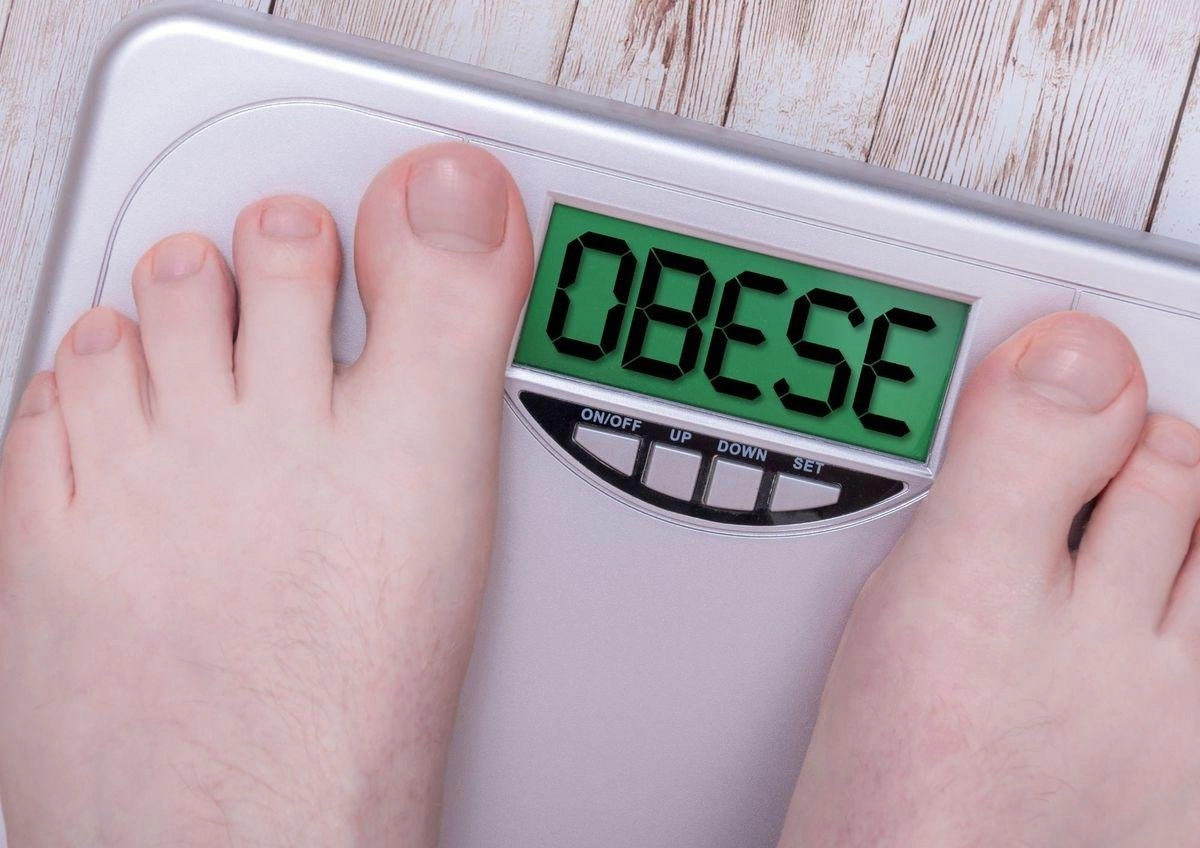
In many countries, obesity is becoming a major health problem. Why is this the case? What can be done to tackle this issue?
Bài mẫu
Obesity has emerged as one of the most pressing public health challenges in many countries. This essay will analyse the main causes of this issue and propose practical solutions that could help reduce its prevalence.
One major reason is the increasing consumption of fast food and processed meals. For example, many people rely on convenient but unhealthy options such as fried chicken, burgers, or sugary drinks because they are cheap and widely available. Over time, a diet high in fat, sugar, and calories leads to weight gain and related health problems such as diabetes or heart disease. Another contributing factor is the sedentary lifestyle common in modern societies. Many people spend long hours sitting at desks, using computers, or watching television, while children are more likely to play video games than engage in outdoor activities. This lack of regular physical exercise reduces calorie burning and increases the likelihood of obesity, especially when combined with unhealthy eating habits.
Tackling obesity effectively requires a comprehensive approach involving individuals, governments, and the food industry. At the individual level, people need to cultivate healthier habits such as cooking at home, reducing portion sizes, and incorporating regular physical activities like walking or cycling into their daily routines. Governments, in turn, can create supportive environments by investing in public health campaigns that raise awareness about the dangers of obesity, building accessible sports and recreational facilities in urban and rural areas, and introducing taxes on sugary drinks or junk food to discourage overconsumption. The food industry also has a crucial role: companies should be regulated to reduce the amount of sugar, salt, and trans fats in processed products, while mandatory nutritional labelling would help consumers make more informed choices. When individuals take responsibility for their lifestyle, governments provide both education and infrastructure to support healthy living, and the food industry aligns its practices with public health goals, the combined effect addresses not only the symptoms but also the root causes of obesity. Such coordinated measures can gradually change social norms and reduce the prevalence of this health problem across generations
In summary, obesity is mainly the result of unhealthy eating patterns and sedentary lifestyles. However, by combining lifestyle changes at the individual level with strong government policies and responsible actions from the food industry, societies can combat this growing health crisis more effectively.
Ước tính band điểm
Task Response (TR): 7.0
Bài trả lời đầy đủ cả hai câu hỏi: nguyên nhân và giải pháp.
Quan điểm xuyên suốt, kết luận hợp lý.
Coherence & Cohesion (CC): 7.0.
Bố cục 4 đoạn tiêu chuẩn, rõ ràng.
Ý triển khai theo P.I.E (Point – Illustration – Explanation).
Liên kết các đoạn văn, các ý tự nhiên: for example, another contributing factor, in turn, also has a crucial role, when… the combined effect, in summary.
Lexical Resource (LR): 7.0
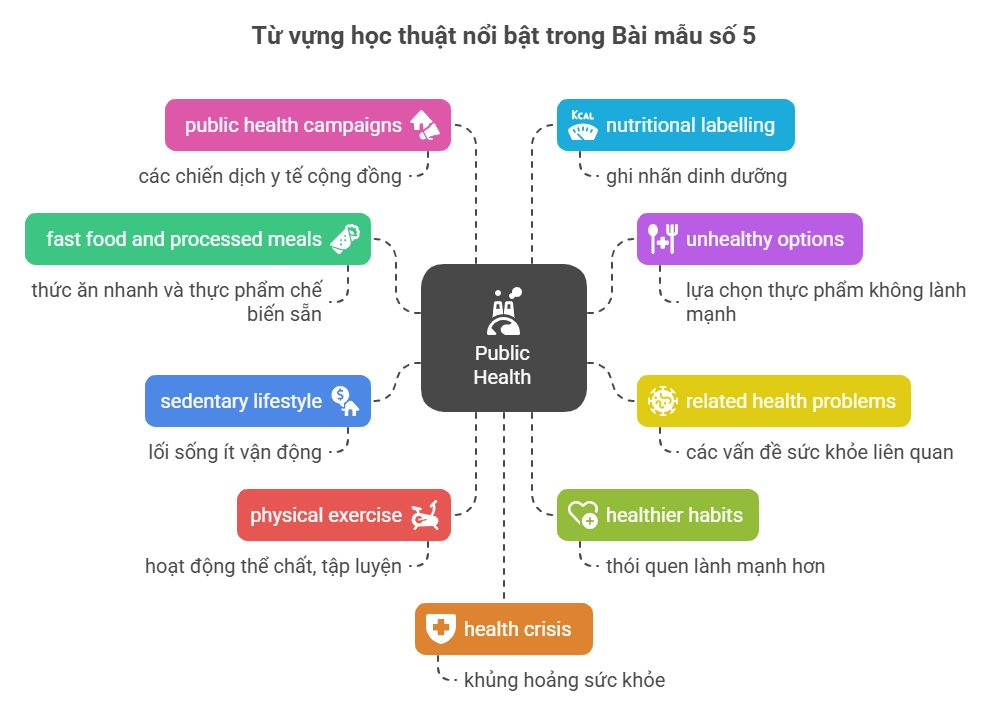
Từ vựng học thuật phù hợp với chủ đề: pressing public health challenges, processed meals, calorie burning, supportive environments, mandatory nutritional labelling, public health goals.
Collocations hợp lý: unhealthy options, sedentary lifestyle, related health problems, cultivate healthier habits, responsible actions.
Grammatical Range & Accuracy (GRA): 7.0.
Sử dụng đa dạng cấu trúc câu: mệnh đề quan hệ (Governments, in turn, can create supportive environments by investing in public health campaigns that raise awareness about the dangers of obesity…), câu điều kiện (When individuals take responsibility…), câu song hành (reduce the amount of sugar, salt, and trans fats).
Câu ghép và phức được triển khai chính xác.
Phân tích
Cách paraphrase đề bài
“obesity is becoming a major health problem” → “obesity has emerged as one of the most pressing public health challenges”.
“Why is this the case?” → “analyse the main causes of this issue”.
“What can be done to tackle this issue?” → “propose practical solutions that could help reduce its prevalence”.
Kỹ thuật phát triển ý tưởng
Body 1 (Reasons):
Nguyên nhân 1: fast food và processed meals → ví dụ: fried chicken, burgers, sugary drinks → giải thích: gây thừa cân và bệnh mãn tính.
Nguyên nhân 2: lối sống ít vận động → ví dụ: làm việc máy tính, xem TV, chơi game → giải thích: ít đốt calo, kết hợp ăn uống xấu → tăng nguy cơ béo phì.
Lập luận logic, ví dụ cụ thể, giải thích rõ hậu quả.
Body 2 (Solutions):
Cá nhân: tự nấu ăn, giảm khẩu phần, vận động thường xuyên.
Chính phủ: chiến dịch sức khỏe, cơ sở hạ tầng thể thao, thuế đồ ngọt.
Ngành công nghiệp thực phẩm: giảm đường, muối, chất béo; dán nhãn dinh dưỡng bắt buộc.
Giải thích: khi 3 nhân tố phối hợp → giải quyết cả nguyên nhân lẫn hậu quả, thay đổi chuẩn mực xã hội về lâu dài.
Từ vựng và collocations học thuật nên ghi nhớ
Nguyên nhân: increasing consumption of fast food, sedentary lifestyle, related health problems, calorie burning.
Giải pháp: cultivate healthier habits, supportive environments, mandatory nutritional labelling, responsible actions from the food industry.
Cách diễn đạt nâng cao: addresses not only the symptoms but also the root causes of obesity; reduce the prevalence of this health problem across generations.
Cấu trúc ngữ pháp nâng cao trong bài
Câu điều kiện + kết quả: When individuals take responsibility for their lifestyle, governments provide both education and infrastructure… the combined effect addresses not only the symptoms but also the root causes of obesity.
Phép song hành: reduce the amount of sugar, salt, and trans fats.
Mệnh đề quan hệ: people who rely on convenient but unhealthy options…
Câu nhấn mạnh nguyên nhân – kết quả: This lack of regular physical exercise reduces calorie burning and increases the likelihood of obesity.
Tham khảo thêm:
Tổng kết
Dạng bài Two-part Question Essay trong IELTS Writing Task 2 đòi hỏi thí sinh không chỉ trả lời đủ cả hai câu hỏi mà còn phải duy trì sự cân bằng, tính logic và sự chặt chẽ trong lập luận. Năm bài mẫu được trình bày ở trên minh họa cách sử dụng kỹ thuật paraphrasing, phát triển ý tưởng và triển khai từ vựng học thuật hiệu quả. Người học cần luyện tập thường xuyên bằng cách phân tích đề, viết nháp trong giới hạn thời gian, và so sánh với các bài mẫu Two-part Question Essay Sample chất lượng để rút ra kinh nghiệm. Việc duy trì thói quen viết luyện tập liên tục sẽ giúp thí sinh nâng cao khả năng viết và tiến gần hơn tới mục tiêu đạt band 6.5–7.5 trong kỳ thi IELTS Writing.
Tìm hiểu thêm về chương trình luyện thi IELTS tại ZIM Academy nếu người học đang có nhu cầu cải thiện kỹ năng viết học thuật để đạt kết quả tốt hơn trong bài thi IELTS Writing. Nhắn cho ZIM ở khung chat nếu người học quan tâm đến chương trình học!
Tham vấn chuyên môn
Tôi đã có gần 3 năm kinh nghiệm giảng dạy IELTS tại ZIM, với phương châm giảng dạy dựa trên việc phát triển toàn diện năng lực ngôn ngữ và chiến lược làm bài thi thông qua các phương pháp giảng dạy theo khoa học. Điều này không chỉ có thể giúp học viên đạt kết quả vượt trội trong kỳ thi, mà còn tạo nền tảng vững chắc cho việc sử dụng ngôn ngữ hiệu quả trong đời sống, công việc và học tập trong tương lai. Ngoài ra, tôi còn tích cực tham gia vào các dự án học thuật quan trọng tại ZIM, đặc biệt là công tác kiểm duyệt và đảm bảo chất lượng nội dung các bài viết trên nền tảng website.
Bình luận - Hỏi đáp