


Chủ đề IELTS Speaking Part 3: Meals and Eating Habits.
Bài mẫu cho nhóm câu hỏi:
How often families have dinner together?
Advantages of eating at a restaurant?
Why sharing food from the centre is common?
How eating habits have changed recently?
Effect of busy lifestyles on eating?
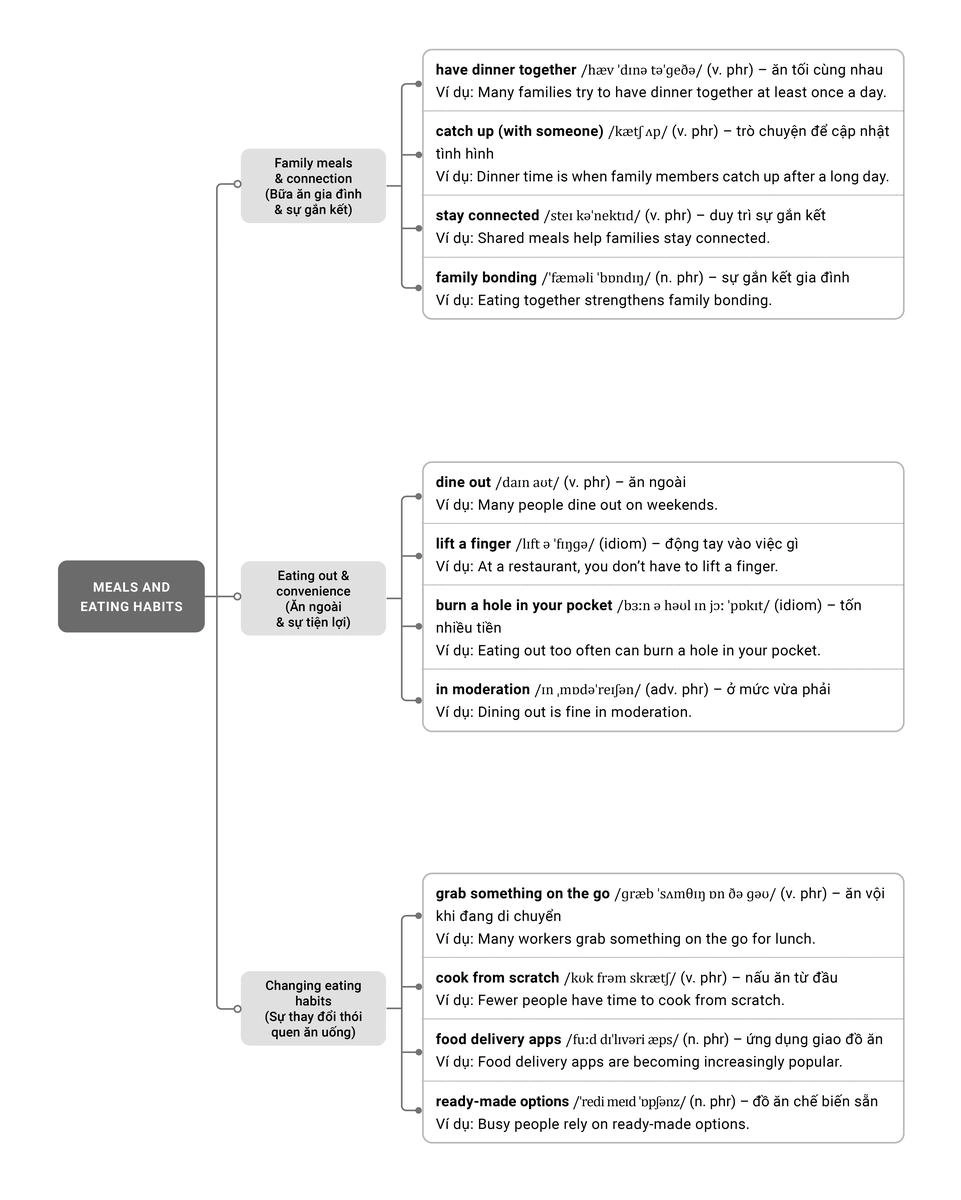
Nhóm từ vựng: Topic Vocabulary: Family meals & connection, Eating out & convenience, Changing eating habits.
Bài mẫu IELTS Speaking Part 3 Topic “Meals and Eating Habits” kèm từ vựng
Trong bài viết này, tác giả sẽ gợi ý bài mẫu cho Topic “Meals and Eating Habits” và phân tích các từ vựng ghi điểm cho phần thi IELTS Speaking Part 3.
Key takeaways
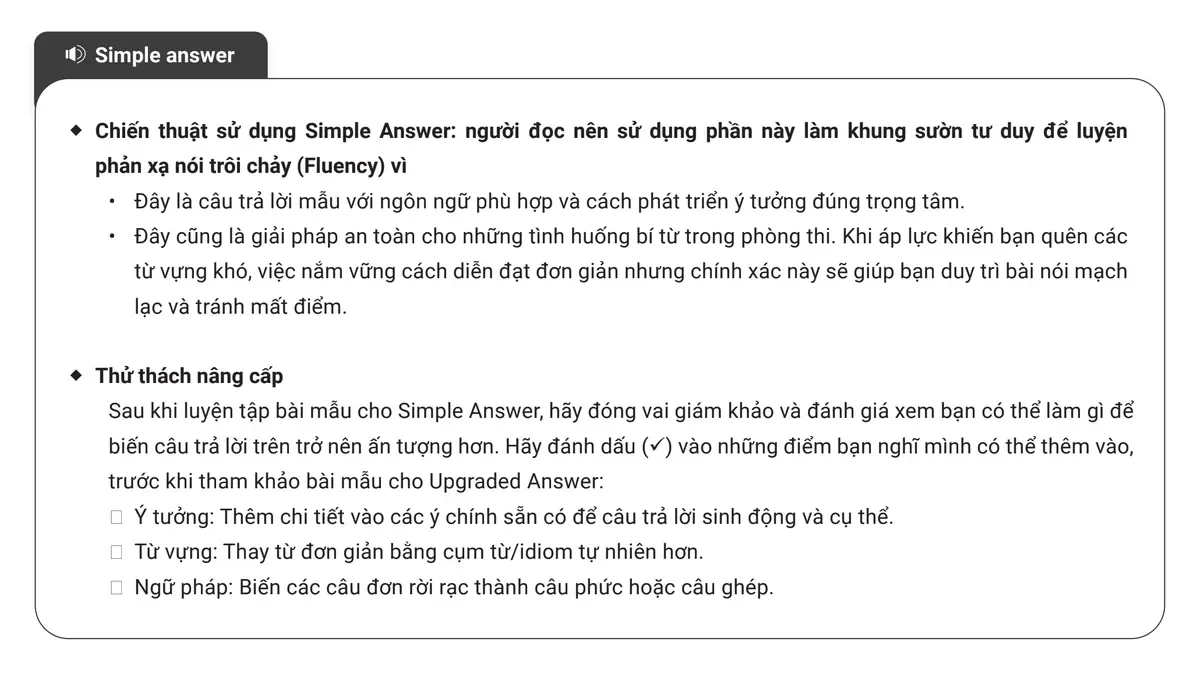
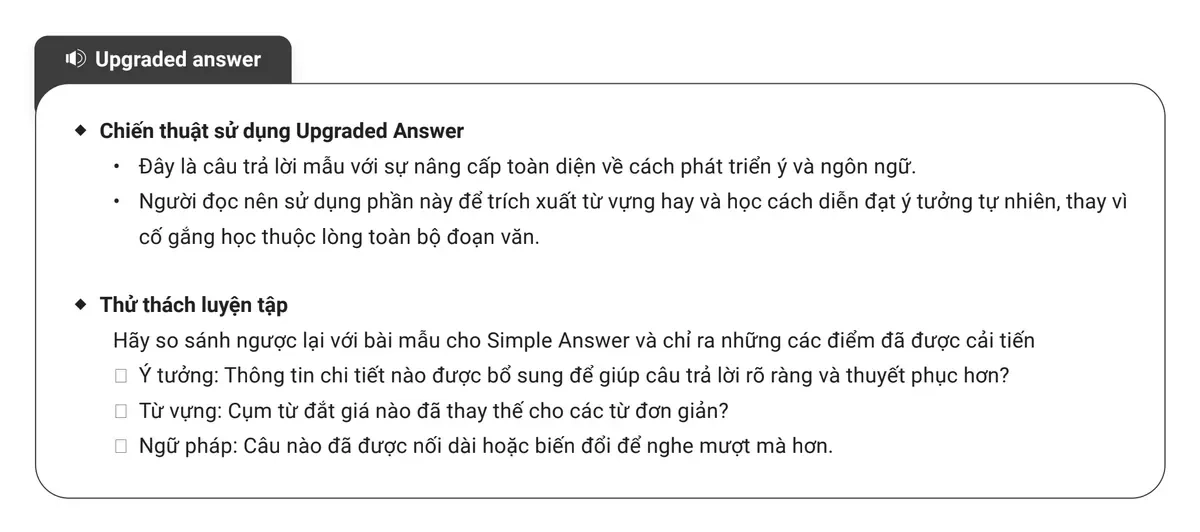
Bài viết sau đây sẽ cung cấp các câu trả lời mẫu theo khung sườn tư duy (Simple Answer) cùng các thử thách nâng cấp (Upgraded Answer) về cả ý tưởng, từ vựng và ngữ pháp để người học lựa chọn được câu trả lời phù hợp với bản thân, sẵn sàng cho các tình huống trong phòng thi. Bài phân tích này sẽ dẫn dắt người học đi qua các câu trả lời mẫu IELTS Speaking Part 3 cho chủ đề Meals and Eating Habits, từ những cụm từ miêu tả sự gắn kết như “family bonding”, “stay connected” đến những thảo luận về thói quen hiện đại như “grab something on the go” hay “burn a hole in your pocket”, giúp người học chinh phục giám khảo bằng sự mạch lạc và ngôn ngữ tự nhiên.
IELTS Speaking Part 3: Meals and Eating Habits - Sample Answer
Simple answer
1. How often do families in your country have dinner together?
Loại câu hỏi: Description
Cấu trúc gợi ý: General trend → Reason → Example → Conclusion
In my country, many families try to have dinner together at least once a day. This is usually because dinner is the only time when everyone is free after work or school. For example, parents and children often sit down together in the evening to talk about their day. Overall, dinner is an important time for family bonding.
2. What are the advantages of eating at a restaurant?
Loại câu hỏi: Explanation
Cấu trúc gợi ý: Main advantage → Explanation → Example → Conclusion
One main advantage of eating at a restaurant is convenience. People do not have to cook or wash dishes, which saves time and effort. For example, many busy workers prefer going to a restaurant after a long day. In general, restaurants make life easier and more enjoyable.
3. In some cultures, food is placed in the centre of the table for everyone to share. Why do you think this is common?
Loại câu hỏi: Cause – Explanation
Cấu trúc gợi ý: Reason → Explanation → Example → Conclusion
I think this is common because sharing food encourages closeness among family members. When everyone takes food from the same dishes, it creates a warm and friendly atmosphere. For instance, many traditional meals are designed for sharing. So, this habit helps strengthen family relationships.
4. Do you think people’s eating habits have changed in recent years? How?
Loại câu hỏi: Trend
Cấu trúc gợi ý: Change → Reason → Example → Conclusion
Yes, I think eating habits have changed a lot in recent years. One reason is that people are busier than before. For example, many people now eat fast food or order takeaway instead of cooking at home. Overall, modern lifestyles have made eating habits quicker and less traditional.
5. How do busy lifestyles affect the way people eat today?
Loại câu hỏi: Cause – Effect
Cấu trúc gợi ý: Cause → Effect → Example → Conclusion
Busy lifestyles make people spend less time preparing meals. As a result, they often choose quick and convenient food. For instance, many office workers eat ready-made meals or skip breakfast. In the end, a busy schedule can lead to unhealthy eating habits.
Mini practice |
|---|
Dùng từ vựng và ý tưởng của các câu trả lời mẫu trên, nói về chủ đề Meals and Eating Habits theo ý của bạn. Gợi ý: người đọc có thể nói về chủ đề này theo các khía cạnh sau:
|
Upgraded answer
1. How often do families in your country have dinner together?
Loại câu hỏi: Trend (analytical)
Cấu trúc gợi ý: Change → Cause → Example → Evaluation
Well, I’d say many families in my country still try to have dinner together on a fairly regular basis, especially during the week. Dinner is often the only time when everyone is finally back home after a long day, so it naturally becomes a moment to catch up. That said, in big cities where people are constantly on the go, this habit is slowly fading away. Some parents work late or children have extra classes, so shared meals are no longer a daily routine. Still, by and large, family dinners are seen as an important way to stay connected.
2. What are the advantages of eating at a restaurant?
Loại câu hỏi: Explanation
Cấu trúc gợi ý: Main advantage → Explanation → Counterpoint → Conclusion
Well, one obvious advantage is convenience. People don’t have to lift a finger in the kitchen, which is a huge relief after a long working day. On top of that, restaurants give people the chance to try something new or enjoy dishes they can’t easily cook at home. For instance, many families dine out to celebrate birthdays or special occasions, which makes the experience feel a bit more special. Of course, eating out all the time can burn a hole in your pocket and may not always be the healthiest option. So I suppose restaurants are great in moderation.
3. In some cultures, food is placed in the centre of the table for everyone to share. Why do you think this is common?
Loại câu hỏi: Cause – Explanation
Cấu trúc gợi ý: Reason → Explanation → Example → Conclusion
I think this practice is closely linked to cultural values that emphasise togetherness. When dishes are placed in the centre, everyone helps themselves, which naturally encourages conversation and interaction. In many Asian households, for example, meals are designed to be shared rather than eaten individually. It’s not just about the food itself—it’s about creating a warm and lively atmosphere around the table. In a way, it brings people closer and strengthens family bonds.
4. Do you think people’s eating habits have changed in recent years? How?
Loại câu hỏi: Trend
Cấu trúc gợi ý: Change → Reason → Example → Conclusion
Oh, absolutely. Eating habits have changed quite dramatically over the past decade. With the rise of food delivery apps and hectic schedules, people are more likely to grab something on the go rather than cook from scratch. For example, it’s now incredibly common to order takeaway with just a few taps on a smartphone. While this saves time, it also means families may spend less quality time around the dinner table. So, in many ways, convenience has reshaped the way people approach meals.
5. How do busy lifestyles affect the way people eat today?
Loại câu hỏi: Cause – Effect
Cấu trúc gợi ý: Cause → Effect → Counterpoint → Conclusion
Well, busy lifestyles definitely take a toll on people’s eating habits. When people are juggling work, study, and personal responsibilities, cooking a proper meal often falls to the bottom of the list. As a result, they may skip meals, eat fast food, or rely heavily on ready-made options. That being said, some people make a conscious effort to eat healthily, even if it means meal-prepping at the weekend. So while a hectic schedule can lead to unhealthy choices, it ultimately comes down to personal priorities.
Mini practice |
|---|
Dùng từ vựng và ý tưởng của các câu trả lời mẫu trên, nói về chủ đề Meals and Eating Habits theo ý của bạn. Gợi ý: người đọc có thể nói về chủ đề này theo các khía cạnh sau:
|
Xem thêm bài mẫu: IELTS Speaking Part 3 Topic Sports and Leisure Activities
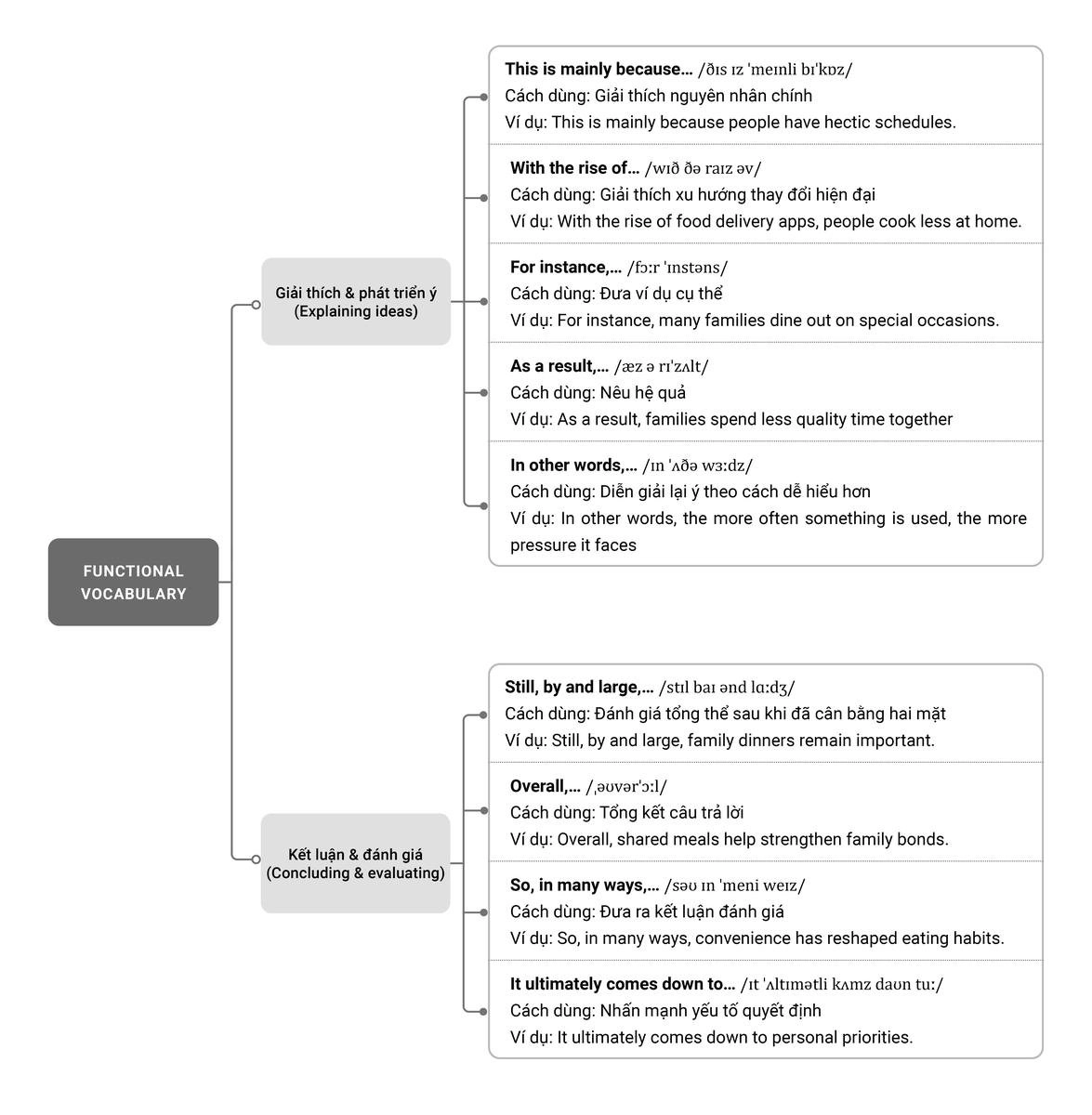
Lọc và phân tích từ vựng
Nhật ký từ vựng & ý tưởng
Ghi chú sau khi luyện tập nói về chủ đề trên.
Từ vựng/Ý tưởng (Chọn các từ vựng/ý tưởng mà bạn tâm đắc nhất) | Kỉ niệm cá nhân |
|---|---|
Ví dụ: strengthen family bonds – củng cố mối quan hệ gia đình | Người đọc tự đặt các câu hỏi cho bản thân, ví dụ:
→ When I was younger, my family had dinner together almost every evening. It was our quality time to talk about school and work. However, now that everyone has a hectic schedule, we sometimes grab something on the go instead of cooking from scratch. Still, on special occasions, we try to dine out together to strengthen family bonds. |
Khoảng trống diễn đạt (Phần khiến bạn ngập ngừng khi nói về chủ đề trên) | Giải pháp (Giải pháp cho các khoảng trống diễn đạt) |
Ví dụ:
| Ví dụ: Dùng từ điển của ZIM hoặc chép các cách diễn đạt từ bài mẫu ở các phần trên để có được cụm từ mà bạn cần. → Thay vì nói “busy life” → dùng hectic schedule / busy lifestyle → Thay vì “eat fast” → dùng skip meals / grab something on the go |
Người đọc có thể tìm từ vựng bằng từ điển ZIM Dictionary.
Các lỗi ngữ pháp thường gặp
1. Nhầm “eat” và “have” khi nói về bữa ăn
Lỗi thường gặp: People usually eat dinner together every day.
(người học muốn nói: có bữa tối cùng nhau)Cách dùng đúng:
have + meal → nói về việc dùng bữa
eat + food → nói về việc ăn món cụ thể
Câu đúng:
People usually have dinner together every day.
We eat rice and vegetables for dinner.
Lý do sai: Trong tiếng Anh tự nhiên, người bản xứ thường dùng have breakfast/lunch/dinner, không nên dùng eat + meal.
2. Dùng sai thì khi nói về sự thay đổi gần đây
Lỗi thường gặp: Eating habits change a lot in recent years.
Cách dùng đúng: have changed (hiện tại hoàn thành) khi nói về sự thay đổi từ quá khứ đến hiện tại
Câu đúng: Eating habits have changed a lot in recent years.
Lý do sai: “In recent years” yêu cầu thì hiện tại hoàn thành. Dùng hiện tại đơn sẽ sai ngữ pháp cơ bản và dễ mất điểm Grammar.
3. Dùng sai giới từ với “spend time”
Lỗi thường gặp: Families spend more time to eat together.
Cách dùng đúng:
spend time + V-ing
spend time + on + noun
Câu đúng:
Families spend more time eating together.
Families spend more time on shared meals.
Lý do sai: “Spend time” không đi với “to V”.
Mini practice |
|---|
Dùng đúng cấu trúc trong ngoặc.
|
Các chủ đề liên quan
Chủ đề liên quan để sử dụng từ vựng & ý tưởng:
Family life (Đời sống gia đình)
Work–life balance (Cân bằng công việc và cuộc sống)
Health and lifestyle (Sức khoẻ và lối sống)
Người đọc có thể sử dụng:
Từ vựng:
family dinner, shared meals, quality time, strengthen family bonds, hectic schedule, busy lifestyle, grab something on the go, food delivery apps, dine out, cook from scratch, healthy eating habits, balanced diet, fast food, skip meals, cultural values, traditional meals, social interaction.
Ý tưởng:
Bữa ăn gia đình giúp tăng sự gắn kết và cải thiện giao tiếp.
Lối sống bận rộn khiến nhiều người ăn nhanh hoặc bỏ bữa.
Ứng dụng giao đồ ăn làm thay đổi cách mọi người tiếp cận bữa ăn.
Ăn ngoài tiện lợi nhưng có thể tốn kém và không lành mạnh nếu lạm dụng.
Ở nhiều nền văn hoá, việc chia sẻ món ăn thể hiện sự gắn kết và tôn trọng.
Mini practice |
|---|
Sử dụng từ vựng và ý tưởng ở trên để trả lời các câu hỏi sau:
|
Xem thêm bài mẫu: IELTS Speaking Part 3 Topic Fixing Things and Production
Tổng kết
Hy vọng rằng qua việc phân tích hai cấp độ trả lời từ Simple Answer để đảm bảo sự trôi chảy đến Upgraded Answer để ghi điểm ấn tượng, thí sinh đã nắm vững được lộ trình để chinh phục chủ đề Meals and Eating Habits trong IELTS Speaking Part 3. Bằng cách cá nhân hóa các câu trả lời thông qua “Nhật ký từ vựng & ý tưởng”, thí sinh sẽ xây dựng được sự tự tin. Đừng quên thực hành các bài tập nhỏ (mini practice) để khắc phục những lỗi ngữ pháp thường gặp và làm chủ ngôn ngữ của mình nhé!
Để nâng cao kỹ năng trả lời IELTS Speaking một cách bài bản và đạt điểm số mong muốn, thí sinh có thể tham gia khóa học IELTS 4 kỹ năng tại ZIM Academy. Chương trình được thiết kế cá nhân hóa theo trình độ và mục tiêu của từng học viên, kèm phương pháp luyện tập tập trung và phản hồi chi tiết, giúp thí sinh tự tin chinh phục bài thi IELTS một cách hiệu quả.
- IELTS Speaking Samples
- Describe a person who encouraged and helped you achieve a goal
- Describe an interesting old person you met | Bài mẫu kèm từ vựng
- Describe an outdoor activity you did in a new place recently
- Describe an occasion when you used a map - Bài mẫu kèm từ vựng
- Describe an unusual holiday you had - Bài mẫu kèm từ vựng
- Describe a time when you offered to help someone - Bài mẫu và từ vựng
- Describe a job you would not like to do - Bài mẫu kèm từ vựng
- Describe something you do regularly to help you work or study effectively
- Describe a public facility that has been renovated and improved in your area
- Describe an interesting conversation you had with a very old person
Nguồn tham khảo
1
“Bài mẫu IELTS Speaking Part 3.” OpenAI, https://chatgpt.com/share/e/6961b6c8-4368-8002-995c-cd65b4729b18. Accessed 24 February 2026.
Bình luận - Hỏi đáp