


Chủ đề IELTS Speaking Part 3: Fixing Things and Production.
Bài mẫu cho nhóm câu hỏi:
Importance of learning to fix things?
Common things that break at home?
Factory-made vs. Handmade quality?
Things that cannot be mass-produced?
Value of handmade vs. factory products?
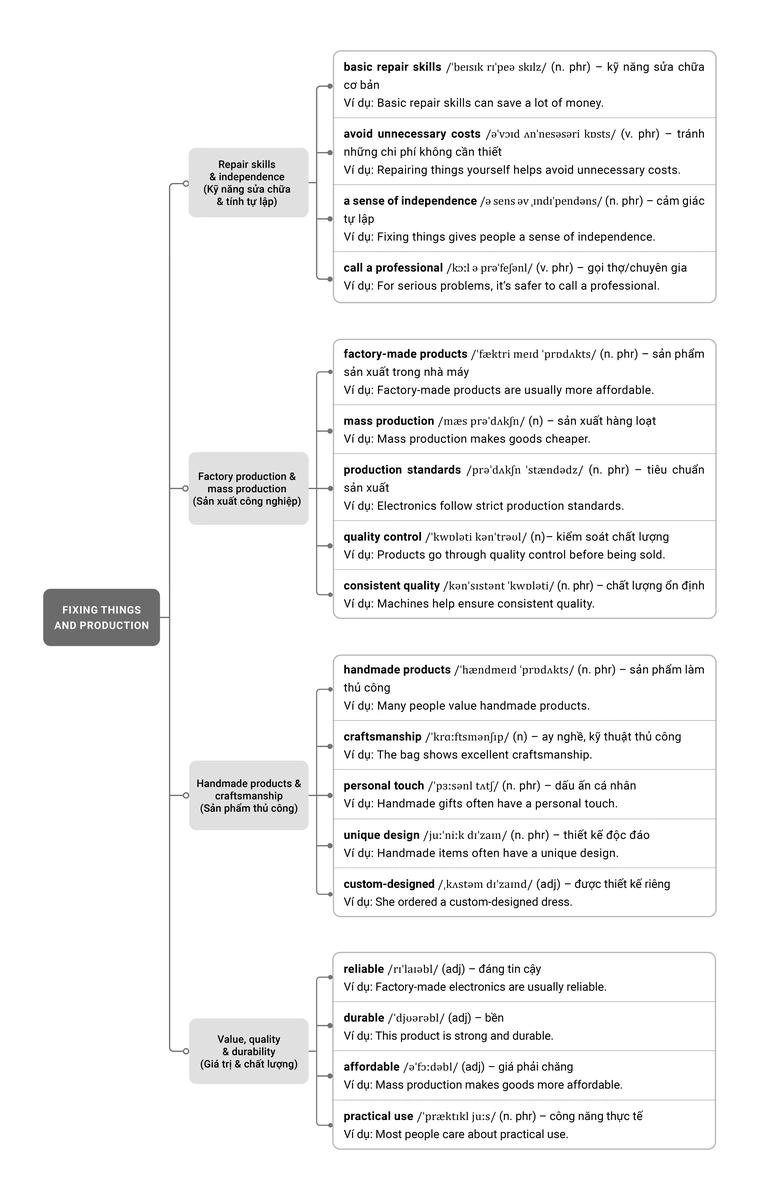
Nhóm từ vựng: Topic Vocabulary (Fixing Things and Production): Repair skills & independence, Factory production & mass production, Handmade products & craftsmanship và Value, quality & durability.
Bài mẫu IELTS Speaking Part 3 Topic “Fixing Things and Production” kèm từ vựng
Trong bài viết này, tác giả sẽ gợi ý bài mẫu cho Topic “Fixing Things and Production” và phân tích các từ vựng ghi điểm cho phần thi IELTS Speaking Part 3.
Key takeaways
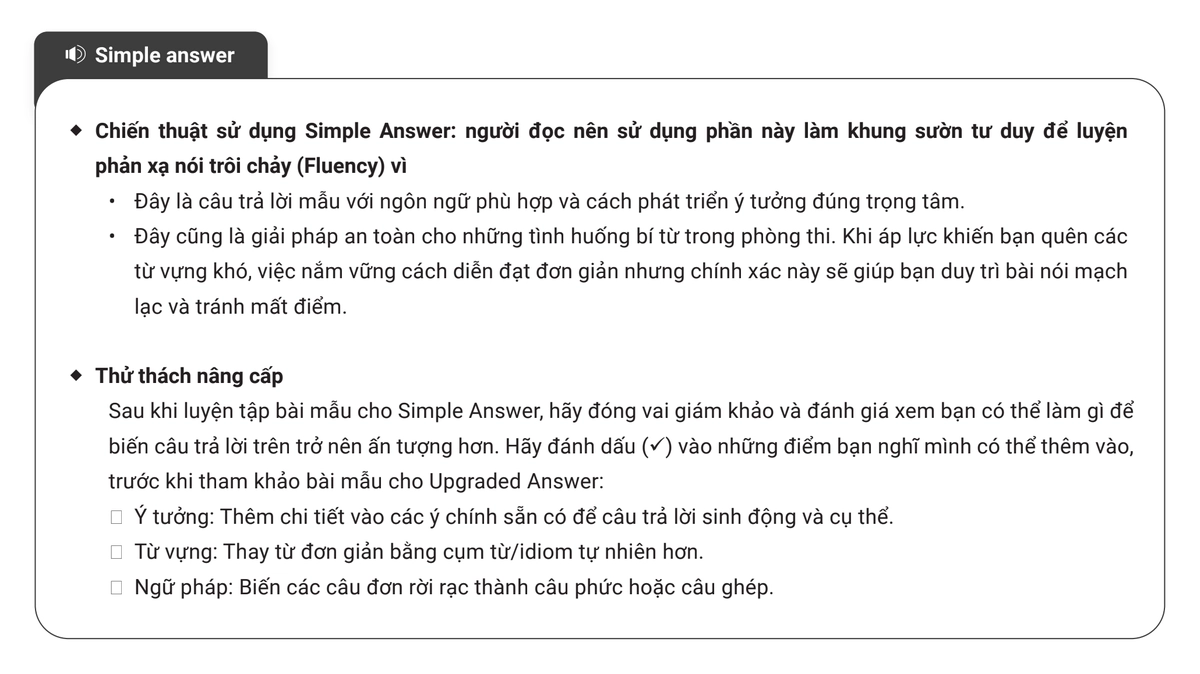
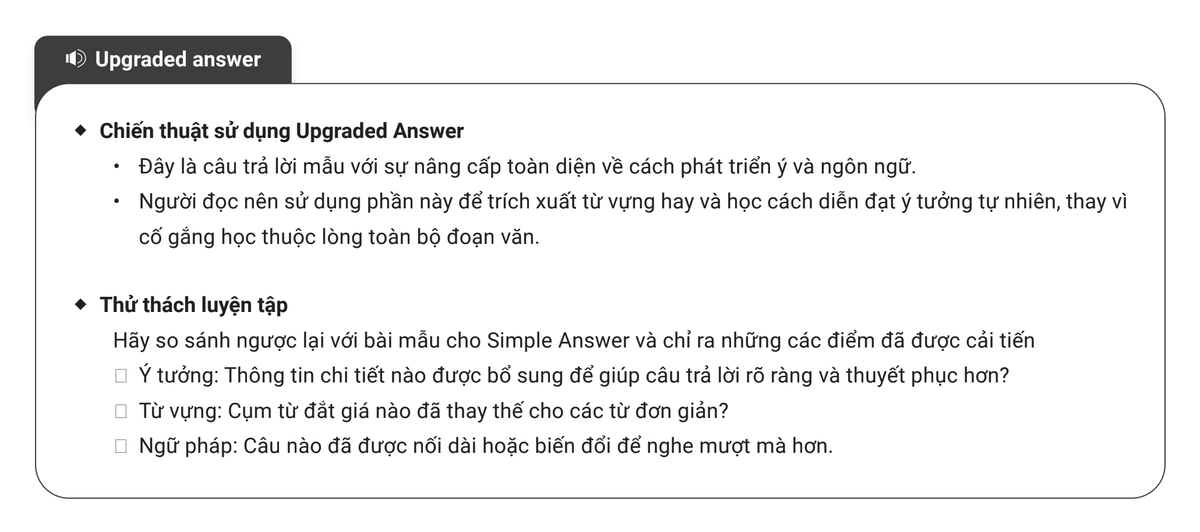
Bài viết sau đây sẽ cung cấp các câu trả lời mẫu theo khung sườn tư duy (Simple Answer) cùng các thử thách nâng cấp (Upgraded Answer) về cả ý tưởng, từ vựng và ngữ pháp để người học lựa chọn được câu trả lời phù hợp với bản thân, sẵn sàng cho các tình huống trong phòng thi. Bài phân tích này sẽ dẫn dắt người học đi qua các câu trả lời mẫu IELTS Speaking Part 3 cho chủ đề Fixing Things and Production, từ những khái niệm về kỹ năng sửa chữa như “basic repair skills”, “avoid unnecessary costs” đến những thảo luận sâu hơn về sản xuất như “mass production” hay “craftsmanship”, giúp người học chinh phục giám khảo bằng sự mạch lạc và ngôn ngữ tự nhiên.
IELTS Speaking Part 3: Fixing Things and Production - Sample Answer
Simple answer
1. Do you think it is important for people to learn how to fix things?
Loại câu hỏi: Explanation
Cấu trúc gợi ý: Opinion → Reason → Example → Conclusion
Yes, I think it is important to learn how to fix simple things. It helps people solve small problems by themselves. For example, fixing a broken chair or changing a light bulb can save money. In general, basic repair skills make daily life easier.
2. What kinds of things are most likely to be broken at home?
Loại câu hỏi: Description / Listing
Cấu trúc gợi ý: General idea → Examples → Reason → Conclusion
Small household items are most likely to be broken. Things like light bulbs, kitchen tools, or door handles often stop working. This is because people use them every day. So, common items at home usually break more easily.
3. Do you think factory-made products are generally of better quality than handmade ones?
Loại câu hỏi: Opinion
Cấu trúc gợi ý: Opinion → Reason → Example → Conclusion
I think factory-made products are often more reliable. They are made by machines, so the quality is more stable. For example, most electronic devices are produced in factories and work well. Overall, factory products are usually more practical.
4. What kinds of things cannot be made in a factory?
Loại câu hỏi: Explanation
Cấu trúc gợi ý: Main idea → Explanation → Example → Conclusion
Some special or personal items cannot be made in factories. These things need human skills and creativity. For example, handmade paintings or custom clothes are usually made by individuals. So, not everything can be produced by machines.
5. Do you think handmade products are always more valuable than factory-made products?
Loại câu hỏi: Opinion
Cấu trúc gợi ý: Preference → Reason → Example → Conclusion
No, I don’t think handmade products are always more valuable. Some factory-made products are cheaper and more useful. For example, factory-made clothes are affordable and easy to find. In the end, value depends on quality and usefulness, not just how the product is made.
Mini practice |
|---|
Dùng từ vựng và ý tưởng của các câu trả lời mẫu trên, nói về chủ đề Fixing Things and Production theo ý của bạn. Gợi ý: người đọc có thể nói về chủ đề này theo các khía cạnh sau:
|
Upgraded answer
1. Do you think it is important for people to learn how to fix things?
Loại câu hỏi: Explanation
Cấu trúc gợi ý: Opinion → Reason → Example → Counterpoint → Conclusion
Yes, I do think it’s important, at least to a certain extent. Being able to fix simple problems gives people a sense of independence and helps them avoid unnecessary costs. For instance, repairing a loose door handle or replacing a broken plug is often quicker than waiting for a technician. That said, not everyone needs advanced repair skills. For complicated electrical or mechanical issues, it’s usually safer to call a professional. Still, having basic repair knowledge can make everyday life much more practical and efficient.
2. What kinds of things are most likely to be broken at home?
Loại câu hỏi: Description / Listing
Cấu trúc gợi ý: General idea → Examples → Reason → Conclusion
In most households, small appliances and frequently used items are the most likely to break. Things like kettles, washing machines, door locks, and remote controls tend to wear out over time. This is mainly because they are used on a daily basis. In other words, the more often something is used, the more pressure it faces. So it’s no surprise that everyday household items usually need repair or replacement sooner or later.
3. Do you think factory-made products are generally of better quality than handmade ones?
Loại câu hỏi: Opinion (balanced)
Cấu trúc gợi ý:Opinion → Reason → Counterpoint → Example → Conclusion
Generally speaking, factory-made products tend to be more consistent in quality. They are produced using machines and follow strict production standards, which reduces mistakes. For example, electronic devices go through multiple quality checks before being sold. However, handmade products can sometimes offer better craftsmanship and attention to detail. A handmade leather bag, for instance, may last longer and look more unique than a mass-produced one. Overall, factory-made goods are usually more reliable, but handmade items may stand out in terms of individuality and care.
4. What kinds of things cannot be made in a factory?
Loại câu hỏi: Explanation
Cấu trúc gợi ý: Main idea → Explanation → Example → Conclusion
In my opinion, products that rely heavily on creativity and personal expression are difficult to mass-produce. Items such as original artworks, custom-designed furniture, or tailored clothing often require individual skill and artistic judgment. While factories can copy designs, they cannot fully reproduce the personal touch of a craftsman. Therefore, certain creative products remain closely connected to human talent rather than machines.
5. Do you think handmade products are always more valuable than factory-made products?
Loại câu hỏi: Opinion
Cấu trúc gợi ý: Preference → Reason → Counterpoint → Example → Conclusion
No, I wouldn’t say handmade products are always more valuable. Although they are often unique and carefully made, their quality can vary depending on the maker’s skill. On the other hand, factory-made products are usually more affordable and widely available, which makes them more practical for everyday use. For example, most people rely on factory-produced electronics because they are tested for safety and durability. So, in my view, value depends more on quality, purpose, and reliability rather than simply whether something is handmade or factory-made.
Mini practice |
|---|
Dùng từ vựng và ý tưởng của các câu trả lời mẫu trên, nói về chủ đề Fixing Things and Production theo ý của bạn. Gợi ý: người đọc có thể nói về chủ đề này theo các khía cạnh sau:
|
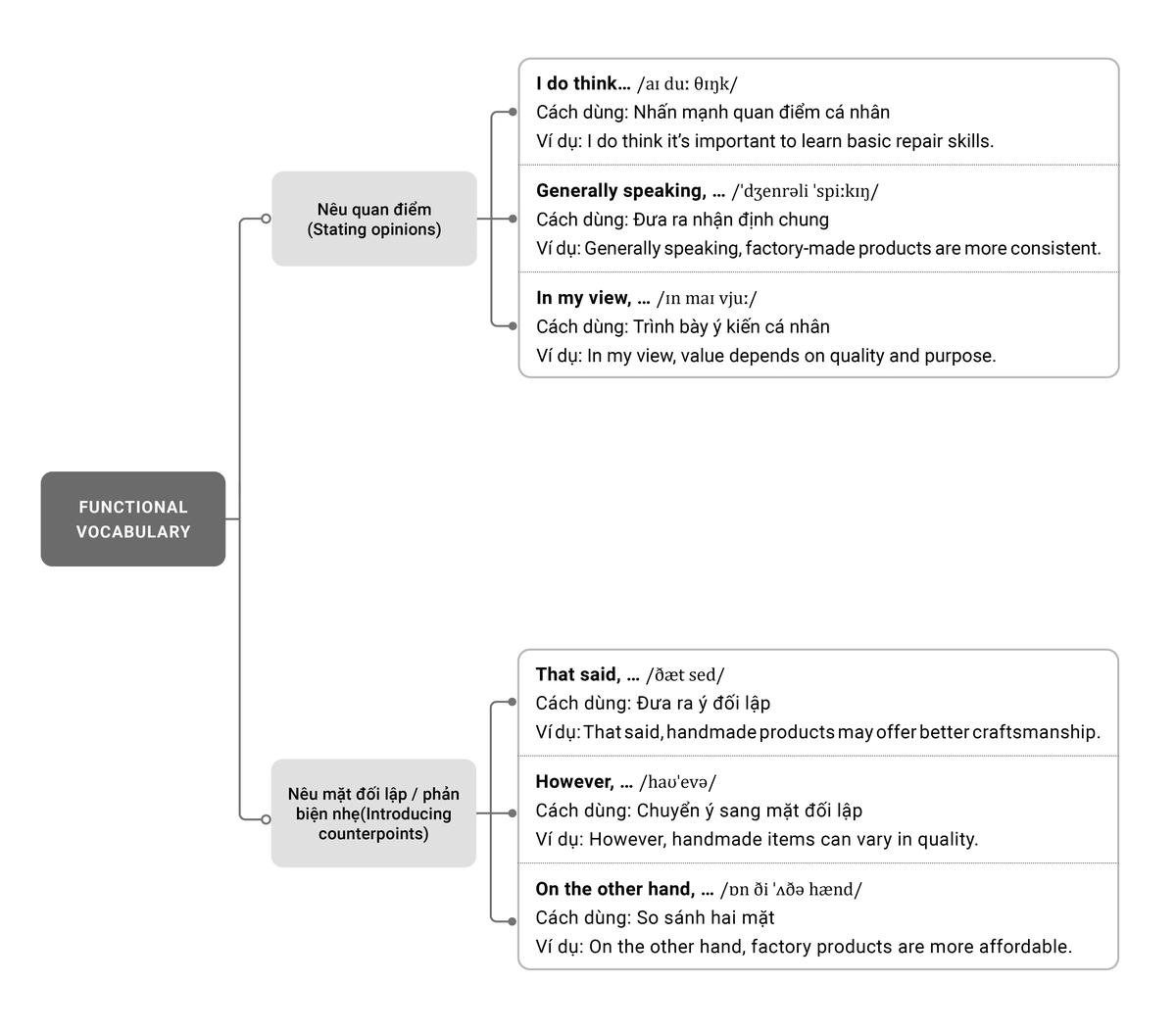
Lọc và phân tích từ vựng
Nhật ký từ vựng & ý tưởng
Ghi chú sau khi luyện tập nói về chủ đề trên.
Từ vựng/Ý tưởng (Chọn các từ vựng/ý tưởng mà bạn tâm đắc nhất) | Kỉ niệm cá nhân |
|---|---|
Ví dụ: personal touch – dấu ấn cá nhân | Người đọc tự đặt các câu hỏi cho bản thân, ví dụ:
→ Last year, I fixed a broken chair at home instead of throwing it away. At first, I thought it would be difficult, but after watching a short tutorial, I managed to repair it. That experience gave me a sense of independence and helped me avoid unnecessary costs. Since then, I’ve felt more confident about handling small problems at home. |
Khoảng trống diễn đạt (Phần khiến bạn ngập ngừng khi nói về chủ đề trên) | Giải pháp (Giải pháp cho các khoảng trống diễn đạt) |
Ví dụ:
| Ví dụ: Dùng từ điển của ZIM hoặc chép các cách diễn đạt từ bài mẫu ở các phần trên để có được cụm từ mà bạn cần. → offer consistent quality thay cho good quality → have a personal touch → be more practical for everyday use |
Người đọc có thể tìm từ vựng bằng từ điển ZIM Dictionary.
Các lỗi ngữ pháp thường gặp
1. Nhầm “repair” và “fix”
Lỗi thường gặp: People should learn how to repair simple problems at home.
(người học muốn nói: sửa các vấn đề nhỏ)Cách dùng đúng:
fix → dùng cho vấn đề chung, đơn giản (fix a chair, fix a tap)
repair → thường dùng cho máy móc, thiết bị kỹ thuật (repair a washing machine)
Câu đúng:
People should learn how to fix simple problems at home.
A technician repaired the washing machine.
Lý do sai: Người học thường dùng repair cho mọi trường hợp vì nghĩ “học thuật hơn”. Tuy nhiên, với vấn đề nhỏ hằng ngày, fix tự nhiên hơn trong Speaking.
2. Dùng sai cấu trúc với “depend”
Lỗi thường gặp: The value of a product depends how it is made.
Cách dùng đúng:
depend on + noun / clause
Câu đúng: The value of a product depends on how it is made.
Lý do sai: Người học hay quên giới từ on sau “depend”, khiến câu sai ngữ pháp cơ bản.
3. Nhầm “made by” và “made of”
Lỗi thường gặp: This product is made of a skilled craftsman.
(người học muốn nói: được làm bởi)Cách dùng đúng:
made by + người
made of + chất liệu
Câu đúng:
This product is made by a skilled craftsman.
This table is made of wood.
Lý do sai: Người học thường nhầm lẫn giữa người tạo ra sản phẩm và vật liệu tạo thành sản phẩm.
Mini practice |
|---|
Dùng đúng cấu trúc trong ngoặc 1. Hãy nói về một lợi ích của việc tự sửa những vấn đề nhỏ trong nhà. (Dùng: fix + something – không dùng repair cho vấn đề nhỏ hằng ngày) 2. Hãy nói về yếu tố quyết định giá trị của một sản phẩm. (Dùng: depend on + noun / clause – không bỏ “on”) 3. Hãy nói về sự khác biệt giữa sản phẩm thủ công và sản phẩm làm từ vật liệu tự nhiên. (Dùng: made by + person / made of + material – không nhầm lẫn hai cấu trúc) |
Các chủ đề liên quan
Chủ đề liên quan để sử dụng từ vựng & ý tưởng:
Consumer habits (Thói quen tiêu dùng)
Technology and household appliances (Công nghệ & thiết bị gia đình)
Traditional crafts and local businesses (Nghề thủ công & kinh doanh địa phương)
Người đọc có thể sử dụng:
Từ vựng: fix, repair, maintain, household appliances, skilled workers, factory-made products, handmade items, mass production, craftsmanship, high-quality materials, durable products, depend on, made by, made of...
Ý tưởng:
Việc học cách sửa đồ giúp tiết kiệm tiền và giảm lãng phí.
Nhiều thiết bị gia đình như máy giặt, tủ lạnh hoặc điện thoại dễ hỏng sau một thời gian sử dụng.
Sản phẩm sản xuất hàng loạt thường rẻ hơn nhưng đôi khi kém bền hơn.
Sản phẩm thủ công có thể có giá trị cao hơn vì kỹ năng và thời gian của người làm ra nó.
Giá trị của một sản phẩm phụ thuộc vào chất lượng, độ bền và cách nó được sản xuất.
Mini practice |
|---|
Sử dụng từ vựng và ý tưởng ở trên để trả lời các câu hỏi sau:
|
Đọc thêm: IELTS Speaking Part 3 Topic Sports and Leisure Activities
Tổng kết
Hy vọng rằng qua việc phân tích hai cấp độ trả lời từ Simple Answer để đảm bảo sự trôi chảy đến Upgraded Answer để ghi điểm ấn tượng, thí sinh đã nắm vững được lộ trình để chinh phục chủ đề Fixing Things and Production trong IELTS Speaking Part 3. Bằng cách cá nhân hóa các câu trả lời thông qua “Nhật ký Từ vựng & Ý tưởng”, thí sinh sẽ xây dựng được sự tự tin. Đừng quên thực hành các bài tập nhỏ (mini practice) để khắc phục những lỗi ngữ pháp thường gặp và làm chủ ngôn ngữ của mình nhé!
Để nâng cao kỹ năng trả lời IELTS Speaking một cách bài bản và đạt điểm số mong muốn, thí sinh có thể tham gia khóa học luyện thi IELTS tại ZIM Academy. Chương trình được thiết kế cá nhân hóa theo trình độ và mục tiêu của từng học viên, kèm phương pháp luyện tập tập trung và phản hồi chi tiết, giúp thí sinh tự tin chinh phục bài thi IELTS một cách hiệu quả.
- IELTS Speaking Samples
- Describe a person who encouraged and helped you achieve a goal
- Describe an interesting old person you met | Bài mẫu kèm từ vựng
- Describe an outdoor activity you did in a new place recently
- Describe an occasion when you used a map - Bài mẫu kèm từ vựng
- Describe an unusual holiday you had - Bài mẫu kèm từ vựng
- Describe a time when you offered to help someone - Bài mẫu và từ vựng
- Describe a job you would not like to do - Bài mẫu kèm từ vựng
- Describe something you do regularly to help you work or study effectively
- Describe a public facility that has been renovated and improved in your area
- Describe an interesting conversation you had with a very old person
Nguồn tham khảo
1
“Bài mẫu IELTS Speaking Part 3.” OpenAI, https://chatgpt.com/share/e/6961b6c8-4368-8002-995c-cd65b4729b18. Accessed 23 February 2026.
Bình luận - Hỏi đáp