


Chủ đề IELTS Speaking Part 3: Sports and Leisure Activities.
Bài mẫu cho nhóm câu hỏi:
Why people enjoy sports/leisure?
Popular activities in your country?
Is there enough time for sports today?
Health benefits of physical activity?
Exercising alone vs. in a group?
Nhóm từ vựng: Topic Vocabulary (Sports and Leisure Activities): Stress relief, health & lifestyle, Popular activities & daily routines, Time, motivation & personal preference, và Physical & mental health benefits.
Bài mẫu IELTS Speaking Part 3 Topic “Sports and Leisure Activities” kèm từ vựng
Trong bài viết này, tác giả sẽ gợi ý bài mẫu cho Topic “Sports and Leisure Activities” và phân tích các từ vựng ghi điểm cho phần thi IELTS Speaking Part 3.
Key takeaways
Bài viết này sẽ cung cấp các câu trả lời mẫu cho IELTS Speaking Part 3 Topic “Sports and Leisure Activities” theo hai cấp độ: Simple Answer (trả lời cơ bản, rõ ràng) và Upgraded Answer (nâng cấp ý tưởng, từ vựng và ngữ pháp). Thông qua các ví dụ cụ thể, người học sẽ khám phá cách phát triển câu trả lời tự nhiên với những cụm từ quen thuộc như “release stress”, “maintain a healthy lifestyle”, “busy schedules”, cũng như các cách diễn đạt linh hoạt như “make time for exercise” hay “fit easily into daily routines”. Nhờ đó, người học có thể mở rộng ý tưởng, sử dụng ngôn ngữ linh hoạt hơn và tự tin hơn khi trả lời các câu hỏi trong IELTS Speaking Part 3.
IELTS Speaking Part 3: Sports and Leisure Activities - Sample Answer
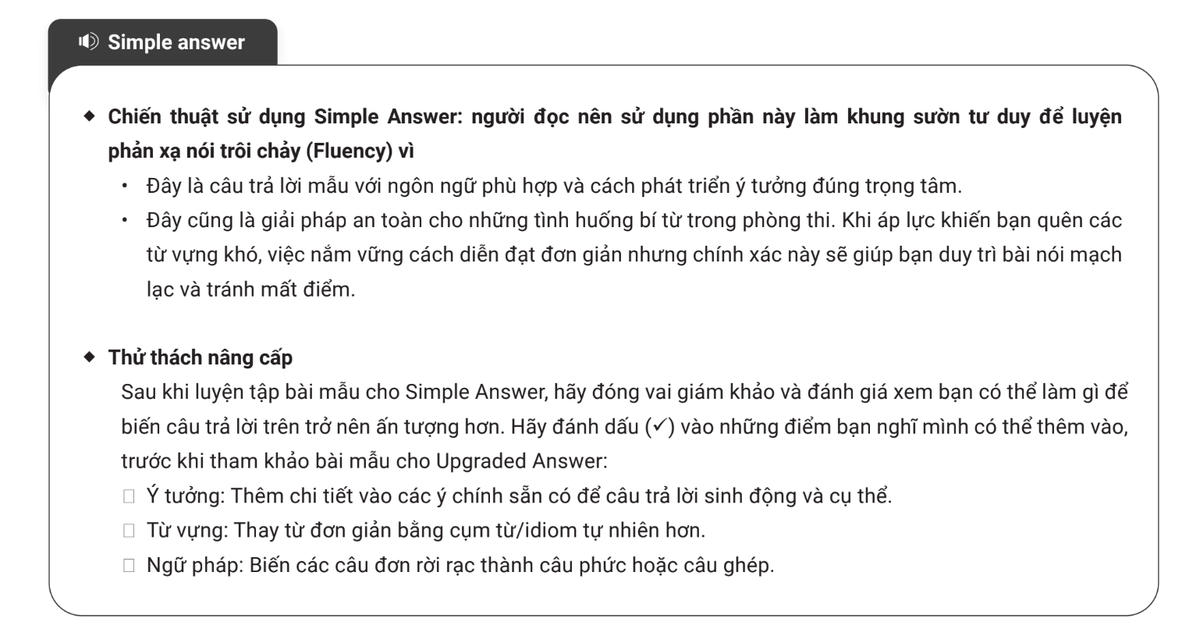
Simple answer
1. Why do people enjoy doing sports or leisure activities in their free time?
|
I think people enjoy sports and leisure activities mainly because they help them relax after work or study. These activities allow people to release stress and clear their minds. As a result, they often feel happier and more refreshed. Overall, sports and leisure activities help people maintain a better balance between work and personal life. |
2. What kinds of sports or leisure activities are popular in your country?
|
In my country, team sports like football and badminton are very popular, especially among young people. Many people also enjoy individual activities such as jogging or going to the gym. These activities are easy to access and do not require expensive equipment. So, they suit people with different lifestyles and schedules. |
3. Do you think people today have enough time for sports and leisure activities?
|
In my opinion, many people today do not have enough time for sports because of busy work schedules. Long working hours often leave them feeling tired. However, some people still make time by exercising early in the morning or at weekends. So, it really depends on how much people value their free time. |
4. How does regular physical activity benefit people’s health?
|
Regular physical activity improves both physical and mental health. It helps strengthen the heart, muscles, and immune system. For example, people who exercise regularly often have more energy and fewer health problems. As a result, they can enjoy a healthier and more active lifestyle. |
5. Why do some people prefer doing sports alone rather than in a group?
|
Some people prefer doing sports alone because it gives them more freedom and flexibility. They can choose their own pace and schedule without depending on others. For instance, jogging or cycling alone allows people to focus on themselves. Overall, solo sports can be more relaxing for people who value independence. |
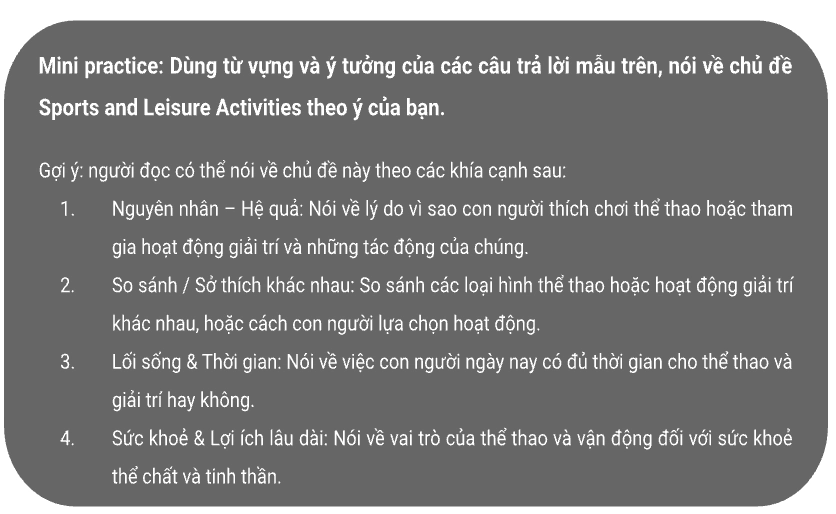
Simple answer mở rộng IELTS Speaking Part 3 Sports
1. What types of sports are most popular in your country?
|
In my country, football is probably the most popular sport. Besides that, badminton, volleyball, and basketball are also quite common, especially among young people and students. For example, many people play football in parks or watch major matches on TV with friends and family. So overall, team sports and easy-to-play sports are the most popular. |
2. Do you think it is more rewarding to take part in sports competitions or to watch them on TV? Why?
|
I think it is more rewarding to take part in sports competitions. The main reason is that people can improve their skills, build confidence, and experience the excitement directly. For example, when someone joins a school football match or a running competition, they can feel proud of their own effort and progress. So, although watching sports is enjoyable, taking part is usually more meaningful. |
3. Why is it considered important for children to take part in competitive sports?
|
It is considered important because competitive sports help children stay active and learn useful life skills. They can learn teamwork, discipline, and how to handle winning and losing. For example, when children play in a basketball or football team, they need to cooperate with others and follow rules. So overall, competitive sports are good for both health and personal development. |
4. How does participating in sports competitions help children become more independent?
|
Participating in sports competitions can help children become more independent because they learn to take responsibility for their own performance. They need to prepare, practise, manage pressure, and sometimes solve problems by themselves during a game. For example, a child in a swimming or tennis competition has to stay focused and do their best without depending too much on others. So, sports competitions can help children become more confident and self-reliant. |
5. Do you think schools should place more emphasis on sports? Why or why not?
|
Yes, I think schools should place more emphasis on sports. The reason is that sports are important for students’ physical health, mental well-being, and social skills. For example, regular PE lessons, school tournaments, or sports clubs can help students become healthier and less stressed after long hours of study. So, I believe sports should be an important part of school life. |
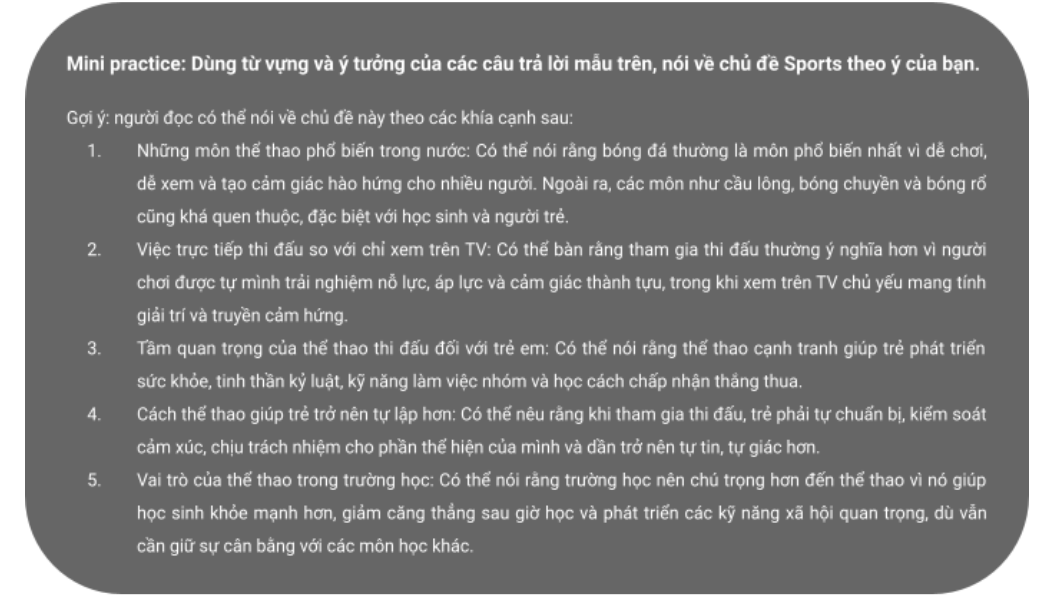
Tham khảo: Tổng hợp bài mẫu IELTS Speaking 2026
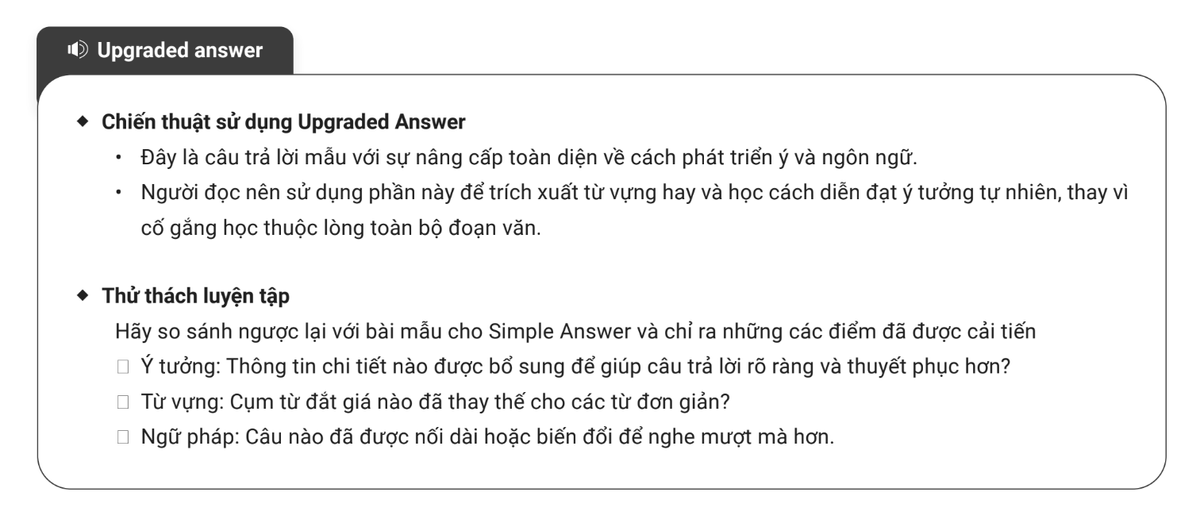
Upgraded answer
1. Why do people enjoy doing sports or leisure activities in their free time?
|
I think one main reason is that sports and leisure activities help people release stress after a long and tiring day. Many people spend hours sitting at a desk or dealing with deadlines, which can be mentally exhausting. As a result, physical activity gives them a chance to relax both their body and mind. For example, office workers often go jogging in the evening or play football after work to forget about job pressure. Overall, these activities help people maintain a healthier and more balanced lifestyle. |
2. What kinds of sports or leisure activities are popular in your country?
|
In my country, simple and low-cost activities are especially popular. Football and badminton are common among young people, while jogging, walking, and gym workouts are popular with adults. One reason is that these activities do not require expensive equipment and can be done almost anywhere. For instance, it is very common to see people jogging or doing aerobics in public parks early in the morning. Overall, people tend to choose activities that are convenient and fit easily into their daily routines. |
3. Do you think people today have enough time for sports and leisure activities?
|
In general, I don’t think most people today have enough time for sports because of busy schedules. Many adults work long hours, while students often face heavy academic pressure. However, this is not always the case. Some people deliberately make time for physical activity by adjusting their daily routines. They may treat exercise as a non-negotiable part of their day rather than something optional. For example, instead of scrolling on their phones in the evening, some people go to the gym for 30 minutes or choose to walk to work whenever possible. So, although modern life is busy, people who value their health can still find time for sports if they plan carefully. |
4. How does regular physical activity benefit people’s health?
|
It is obvious that regular physical activity benefits both physical and mental health. Physically, it strengthens the heart, muscles, and immune system. Mentally, it helps reduce stress and improve mood. For example, people who exercise three or four times a week often report sleeping better and feeling less anxious. As a result, they are more productive at work and less likely to suffer from health problems such as obesity or heart disease. Overall, regular exercise plays a key role in maintaining long-term well-being. |
5. Why do some people prefer doing sports alone rather than in a group?
|
Some people prefer doing sports alone because it gives them more control over their pace and schedule. They can exercise whenever they want without depending on others. For instance, people who enjoy running often like to jog alone early in the morning, as it helps them clear their minds and focus on themselves. That said, exercising in a group also has clear advantages. Group activities can increase motivation, especially for those who struggle to stay disciplined on their own. Having teammates or workout partners can push people to train harder and stay consistent. Still, for individuals who value independence and quiet time, doing sports alone remains the more comfortable option. |

Upgraded answer mở rộng IELTS Speaking Part 3 Sports
1. What types of sports are most popular in your country?
|
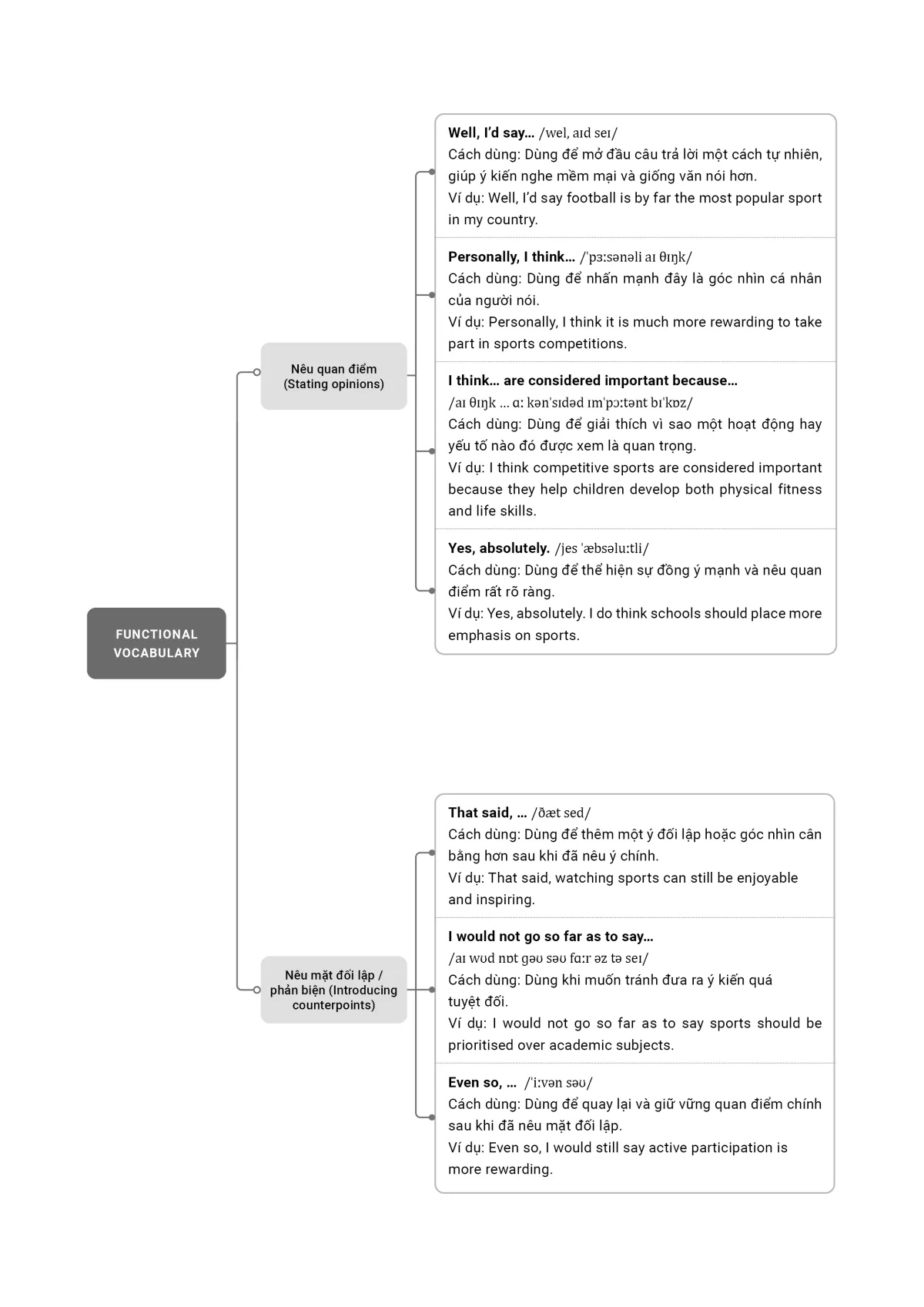
Well, I’d say football is by far the most popular sport in my country. It attracts people of all ages, partly because it is easy to play and partly because major matches create a strong sense of excitement and national pride. Besides that, sports like badminton, volleyball, and basketball are also widely enjoyed, especially among students and young adults. For example, it is very common to see people playing football in local parks or watching big international tournaments together in cafés or at home. So overall, team sports and accessible sports tend to be the most popular. |
2. Do you think it is more rewarding to take part in sports competitions or to watch them on TV? Why?
|
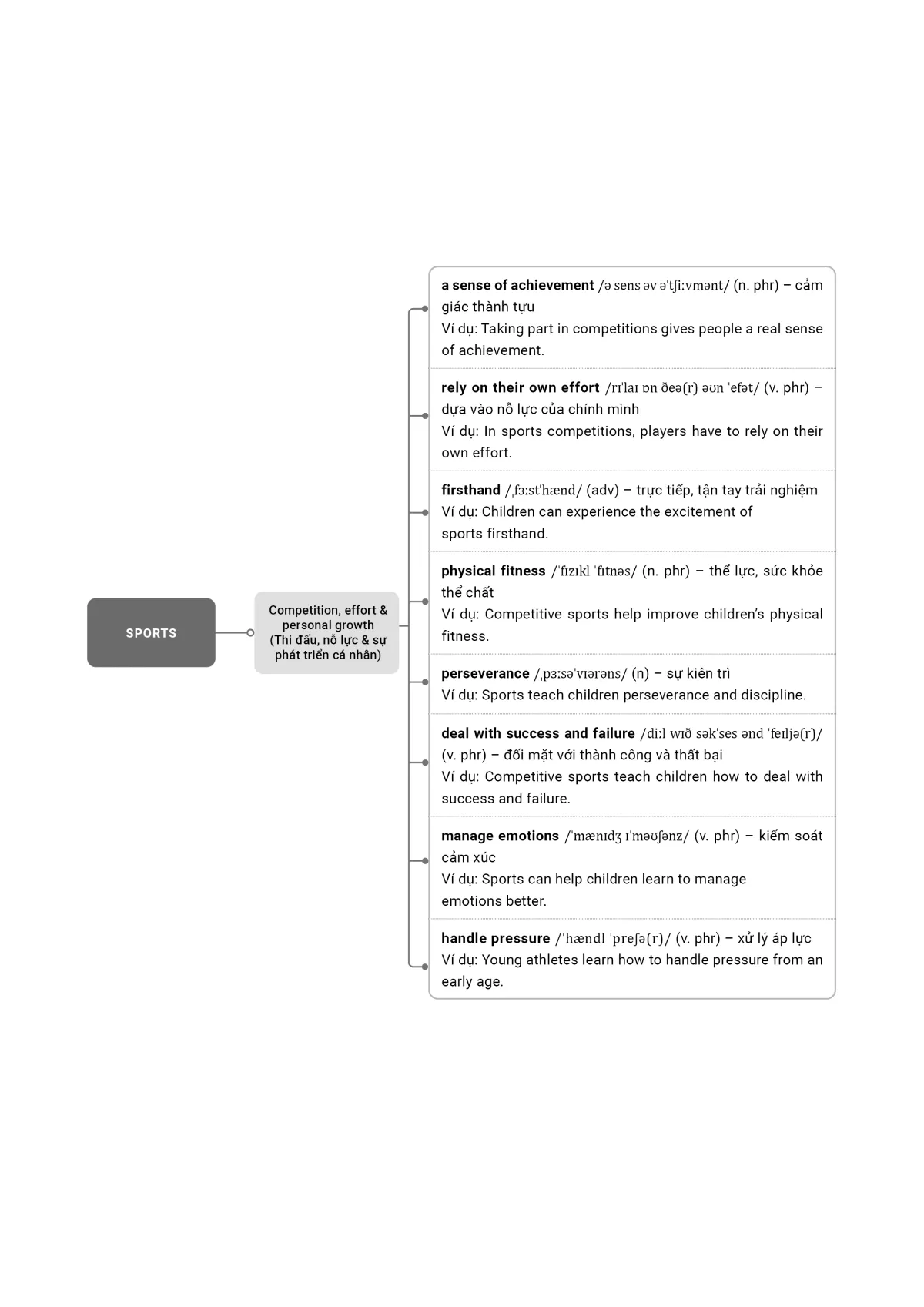
Personally, I think it is much more rewarding to take part in sports competitions than simply watch them on TV. The main reason is that direct participation gives people a real sense of achievement, since they have to rely on their own effort, discipline, and performance. For example, if someone joins a school football tournament or a local running race, they can experience the excitement, pressure, and satisfaction firsthand, which is far more meaningful than being just a spectator. That said, watching sports can still be enjoyable and inspiring, especially when people support their favourite teams or athletes. Even so, I would still say active participation is more rewarding because it helps people grow both physically and mentally. |
3. Why is it considered important for children to take part in competitive sports?
|
I think competitive sports are considered important for children because they help them develop both physical fitness and important life skills. Through competition, children learn discipline, teamwork, perseverance, and how to deal with both success and failure in a healthy way. For instance, when children play in a football or basketball team, they have to follow rules, cooperate with teammates, and stay committed to regular practice. On top of that, competitive sports can also teach them how to manage emotions and handle pressure from an early age. So overall, they play an important role in children’s personal development, not just their physical health. |
4. How does participating in sports competitions help children become more independent?
|
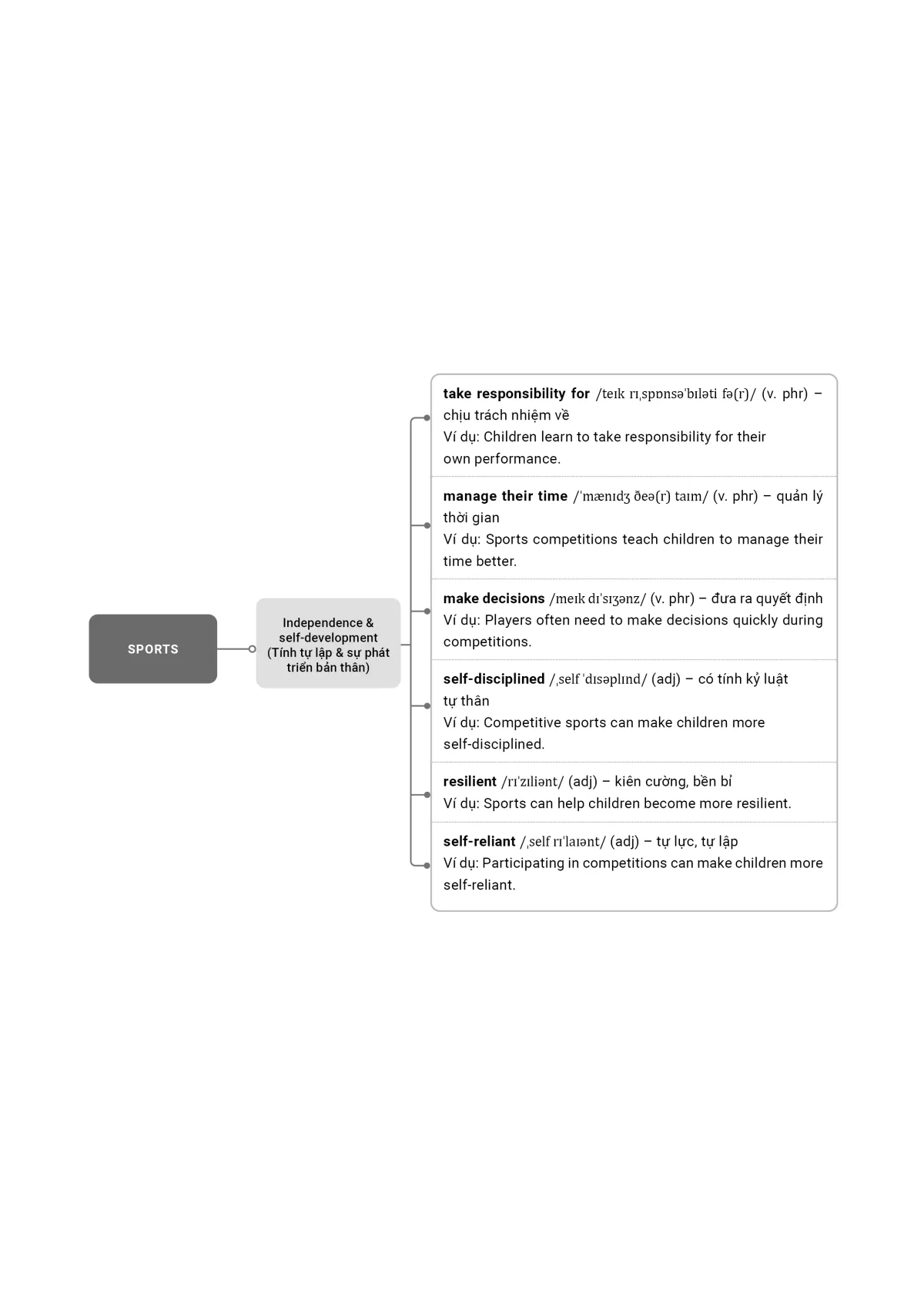
Well, participating in sports competitions can help children become more independent because it teaches them to take responsibility for their own actions and performance. In many situations, they need to prepare seriously, manage their time, stay focused, and make decisions without depending too much on adults. For example, a child taking part in a swimming or tennis competition has to control their nerves, follow the rules, and try to perform well through their own effort. Over time, experiences like that can make children more confident, self-disciplined, and resilient. So, in a way, sports competitions help children grow into more self-reliant individuals. |
5. Do you think schools should place more emphasis on sports? Why or why not?
|
Yes, absolutely. I do think schools should place more emphasis on sports because education should focus not only on academic performance but also on students’ physical and mental well-being. Regular sports activities can help students stay healthy, reduce stress, and build important social skills such as teamwork and leadership. For example, PE lessons, school tournaments, and sports clubs can give students a chance to relax after long hours of study while also encouraging a more active lifestyle. That said, I would not go so far as to say sports should be prioritised over academic subjects, since schools still need to maintain a balance. Even so, I believe sports deserve much more attention than they often receive now, because they are an essential part of a well-rounded education. |
Lọc và phân tích từ vựng


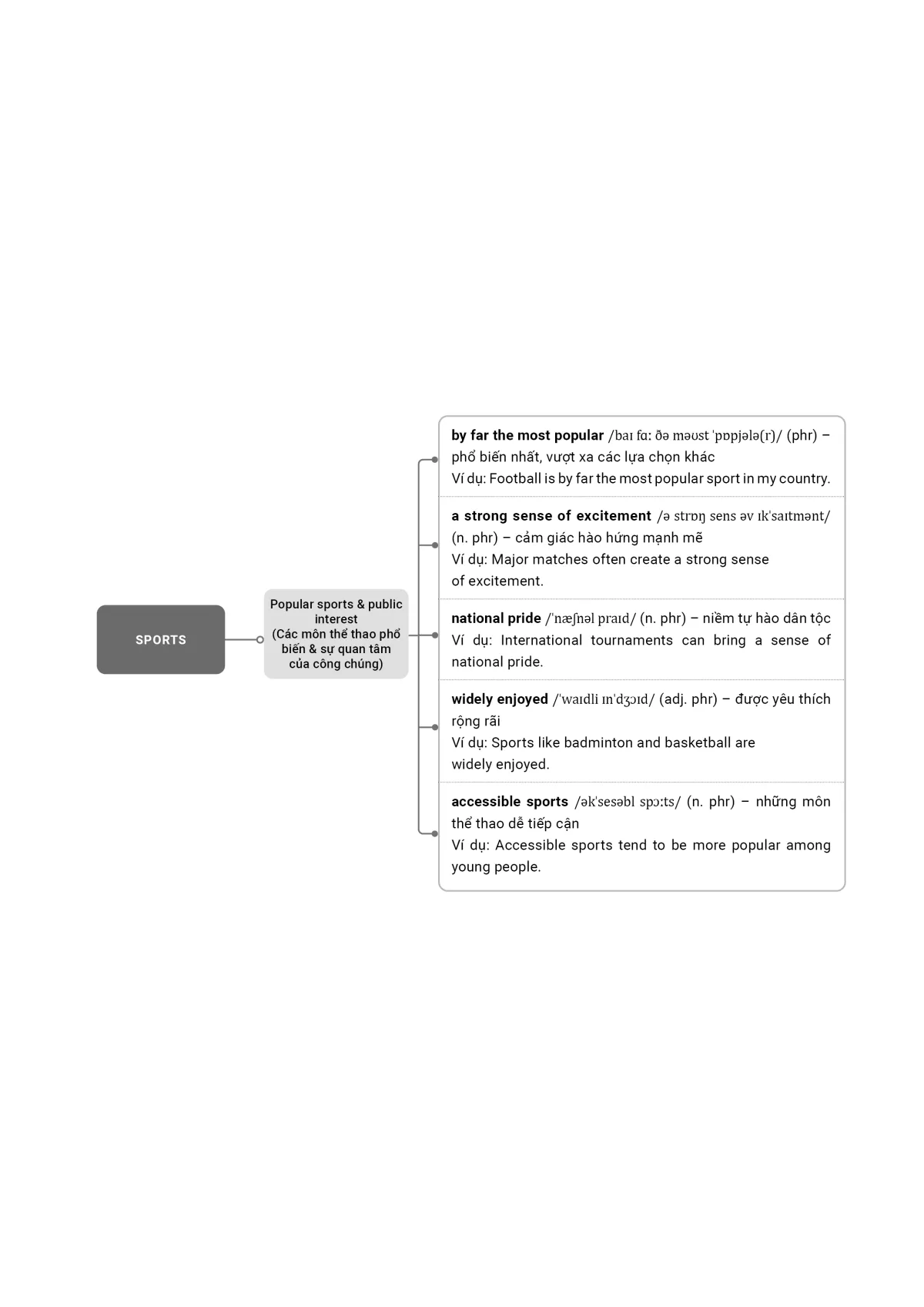
Đọc thêm: Học từ vựng tiếng Anh theo chủ đề – Mini series 6 – IELTS Speaking: Sport & Leisure activities
Nhật ký từ vựng & ý tưởng
Ghi chú sau khi luyện tập nói về chủ đề trên
Từ vựng/Ý tưởng (Chọn các từ vựng/ý tưởng mà bạn tâm đắc nhất) | Kỉ niệm cá nhân |
|---|---|
Ví dụ: non-negotiable habit (n. phr) – thói quen không thể bỏ | Người đọc tự đặt các câu hỏi cho bản thân, ví dụ:
→ Personally, when I was studying for exams, my schedule was extremely busy and I felt mentally exhausted most of the time. To release stress, I started jogging in the evening three times a week. Even though it was tiring at first, it gradually became a non-negotiable habit. This helped me maintain a healthier lifestyle and improved my mood significantly. Looking back, I realise that regular exercise plays an important role in my long-term well-being. |
Ví dụ: a sense of achievement – cảm giác thành tựu | Người đọc tự đặt các câu hỏi cho bản thân, ví dụ:
→ When I was at school, I took part in a few sports activities, and I remember that competitions always gave me a real sense of achievement. Even if I did not win, I still felt proud because I had to rely on my own effort and stay focused under pressure. I also noticed that sports helped me become more disciplined, especially in terms of managing my time and preparing properly before an event. Looking back, I think participating in sports was not only good for my physical fitness, but also useful for my confidence and independence. That is why I believe schools should take sports more seriously as part of a well-rounded education. |
Khoảng trống diễn đạt (Phần khiến bạn ngập ngừng khi nói về chủ đề trên) | Giải pháp (Giải pháp cho các khoảng trống diễn đạt) |
Ví dụ: Tôi bị lúng túng khi muốn nói “dù bận nhưng vẫn sắp xếp được thời gian tập luyện”. | Ví dụ: Dùng từ điển của ZIM hoặc chép các cách diễn đạt từ bài mẫu ở các phần trên để có được cụm từ mà bạn cần. → despite having a busy schedule – dù lịch trình bận rộn → make exercise a priority – coi việc tập luyện là ưu tiên |
Ví dụ: Tôi thường chỉ lặp lại các từ như “good for health”, “important”, “fun”, “active” khi nói về thể thao. | Ví dụ: Dùng từ điển của ZIM hoặc chép các cách diễn đạt từ bài mẫu ở các phần trên để có được cụm từ mà bạn cần. → Thay vì chỉ nói “sports are good” → dùng physical fitness / physical and mental well-being / a more active lifestyle |
Người đọc có thể tìm từ vựng bằng từ điển ZIM Dictionary.
Các lỗi ngữ pháp thường gặp
1. Dùng sai “do / play / go” với các môn thể thao
Lỗi thường gặp: “Many people do football in their free time.” (người học muốn nói: chơi bóng đá)
Cách dùng đúng:
play + môn có tính đối kháng / có bóng:
football, basketball, badmintongo + V-ing:
go jogging, go swimming, go cyclingdo + hoạt động chung / bài tập:
do exercise, do yoga, do aerobics
Câu đúng:
Many people play football after work.
Some adults go jogging in the evening.
Office workers often do exercise to stay fit.
Lý do sai: Người học hay dùng do cho mọi hoạt động thể thao. Tuy nhiên, trong tiếng Anh, mỗi nhóm môn có động từ đi kèm cố định, dùng sai sẽ làm câu nghe không tự nhiên và dễ mất điểm Từ vựng
2. Nhầm “alone” và “lonely” khi nói về tập thể thao một mình
Lỗi thường gặp: Some people like doing sports alone because they don’t feel lonely.
Cách dùng đúng:
alone → một mình (trung tính)
lonely → cảm thấy cô đơn (cảm xúc tiêu cực)
Câu đúng:
Some people prefer doing sports alone because they enjoy quiet time.
Group activities can help people feel less lonely.
Lý do sai: Người học thường dùng lonely để nói “một mình”, nhưng trong tiếng Anh, từ này chỉ cảm xúc tiêu cực, không phải trạng thái.
3. Dùng sai “because” và “because of”
Lỗi thường gặp: People do less exercise because busy schedules.
Cách dùng đúng:
because + S + V
because of + noun / noun phrase
Câu đúng:
People do less exercise because they have busy schedules.
People do less exercise because of busy schedules.
Lý do sai: Người học hay quên rằng because bắt buộc phải có mệnh đề, không đi trực tiếp với danh từ.
4. Dùng sai giữa “sport”, “sports” và “a sport”
❌ Lỗi thường gặp:
Football is a very popular sports in my country.
Many students enjoy doing sport competitions.
✅ Cách dùng đúng:
• sport = thể thao nói chung
• sports = các môn thể thao / hoạt động thể thao
• a sport = một môn thể thao cụ thể
✔ Câu đúng:
Football is a very popular sport in my country.
Many students enjoy taking part in sports competitions.
📌 Lý do sai:
Người học thường nhầm giữa “sport” như danh từ chung và “a sport” khi nói về một môn cụ thể. Ngoài ra, “sports competitions” là collocation tự nhiên hơn “sport competitions”.
5. Dùng sai cấu trúc so sánh hơn
❌ Lỗi thường gặp:
Taking part in sports is more better than watching on TV.
Competitive sports are more healthier for children.
✅ Cách dùng đúng:
• better than
• healthier than
✔ Câu đúng:
Taking part in sports is better than just watching on TV.
Competitive sports are healthier for children in many ways.
📌 Lý do sai:
Người học thường mắc lỗi double comparison, tức là vừa dùng “more” vừa dùng tính từ đã có dạng so sánh hơn.
6. Dùng sai giữa “compete”, “competition” và “competitive”
❌ Lỗi thường gặp:
Children can learn many things through compete sports.
A lot of students join school competitive every year.
✅ Cách dùng đúng:
• compete = thi đấu (động từ)
• competition = cuộc thi (danh từ)
• competitive = mang tính cạnh tranh / thi đấu (tính từ)
✔ Câu đúng:
Children can learn many things through competitive sports.
A lot of students join school competitions every year.
📌 Lý do sai:
Ba từ này cùng gốc nên rất dễ nhầm. Cần chọn đúng loại từ theo vị trí trong câu.
Mini practice |
|---|
Dùng đúng cấu trúc trong ngoặc:
(Dùng: play / go + V-ing / do – không dùng do cho mọi môn thể thao)
(Dùng: alone / lonely – không dùng lonely để nói “một mình”)
(Dùng: because + S + V / because of + noun phrase – không dùng because + noun)
(Dùng: a sport / sports competitions)
(Dùng: better than / healthier than)
(Dùng: competitive sports / competitions) |
Các chủ đề liên quan
Chủ đề liên quan để sử dụng từ vựng & ý tưởng:
Health and lifestyle (Sức khỏe & lối sống)
Work–life balance (Cân bằng công việc – cuộc sống)
Free time and daily routines (Thời gian rảnh & thói quen hằng ngày)
Education and child development (Giáo dục & sự phát triển của trẻ em)
Competition and teamwork (Cạnh tranh & làm việc nhóm)
Người đọc có thể sử dụng:
Từ vựng: release stress, mentally exhausting, maintain a healthy lifestyle, a more balanced life, low-cost activities, require little equipment, fit easily into daily routines, public parks, busy schedules, make time for exercise, non-negotiable habit, value independence, strengthen the immune system, improve mood, by far the most popular, a strong sense of excitement, a sense of achievement, physical fitness, perseverance, deal with success and failure, handle pressure, take responsibility for, self-disciplined, self-reliant,...
Ý tưởng:
Vận động thể chất giúp giảm căng thẳng và cải thiện sức khỏe tinh thần
Cuộc sống bận rộn khiến nhiều người khó sắp xếp thời gian cho thể thao
Hoạt động thể thao giúp xây dựng thói quen sống lành mạnh
Chơi thể thao theo nhóm giúp tăng kết nối xã hội và động lực
Tập luyện một mình phù hợp với người thích sự linh hoạt và không gian riêng
Thể thao là một phần quan trọng của cuộc sống vì nó không chỉ giúp con người khỏe mạnh hơn mà còn mang lại cảm giác hào hứng và gắn kết cộng đồng.
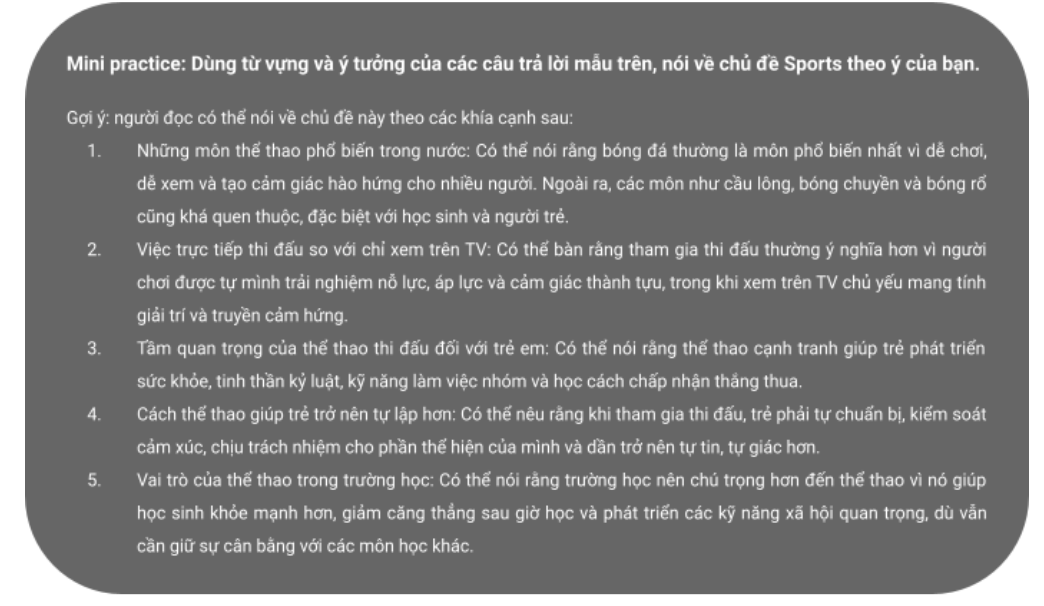
Trực tiếp tham gia thi đấu thường ý nghĩa hơn chỉ xem trên TV vì người chơi được tự mình trải nghiệm nỗ lực, áp lực và cảm giác thành tựu.
Thể thao cạnh tranh rất có ích cho trẻ em vì nó giúp các em phát triển kỷ luật, tinh thần đồng đội, sự kiên trì và khả năng chấp nhận thắng thua.
Khi tham gia thi đấu, trẻ học cách chịu trách nhiệm cho phần thể hiện của mình, quản lý thời gian và dần trở nên tự lập hơn.
Mini practice |
|---|
Sử dụng từ vựng và ý tưởng ở trên để trả lời các câu hỏi sau:
(Gợi ý: physical fitness, perseverance, deal with success and failure, self-reliant)
(Gợi ý: physical and mental well-being, teamwork and leadership, a more active lifestyle, a well-rounded education)
(Gợi ý: a sense of achievement, handle pressure, healthy competition, maintain a balance) |
Đọc thêm: Bài mẫu IELTS Speaking Part 3 Topic “Stories and Children” kèm từ vựng
Tổng kết
Hy vọng rằng qua các bài mẫu IELTS Speaking Part 3 - Sports and Leisure Activities, cùng việc phân tích hai cấp độ trả lời từ Simple Answer (đảm bảo sự trôi chảy) đến Upgraded Answer (giúp câu trả lời ấn tượng và giàu ý tưởng hơn), người học đã phần nào nắm được lộ trình phát triển câu trả lời hiệu quả. Bằng cách cá nhân hóa nội dung thông qua “Nhật ký Từ vựng & Ý tưởng”, người học có thể dần xây dựng sự tự tin khi nói và cải thiện khả năng diễn đạt một cách tự nhiên hơn. Đừng quên luyện tập các mini practice để khắc phục những lỗi ngữ pháp thường gặp và từng bước làm chủ ngôn ngữ của mình nhé!
Nếu bạn muốn nâng cao kỹ năng IELTS Speaking theo lộ trình cá nhân hóa, Hệ thống giáo dục ZIM cung cấp các khóa luyện thi IELTS cam kết đầu ra, giúp bạn tối ưu hiệu quả học tập và tiết kiệm đến 80% thời gian tự học. Để được tư vấn chi tiết, vui lòng liên hệ hotline 1900-2833 (nhánh 1) hoặc truy cập Khóa học IELTS.
Nguồn tham khảo
1
“Bài mẫu IELTS Speaking Part 3.” OpenAI, https://chatgpt.com/share/e/6961b6c8-4368-8002-995c-cd65b4729b18. Accessed 17 February 2026.
Bình luận - Hỏi đáp