


Chủ đề IELTS Speaking: Part 3: Food and Celebrations.
Bài mẫu cho các nhóm câu hỏi:
Why special festival food?
Challenges of large festivals?
Festival food vs. daily meals?
Is traditional food important?
How have habits changed?
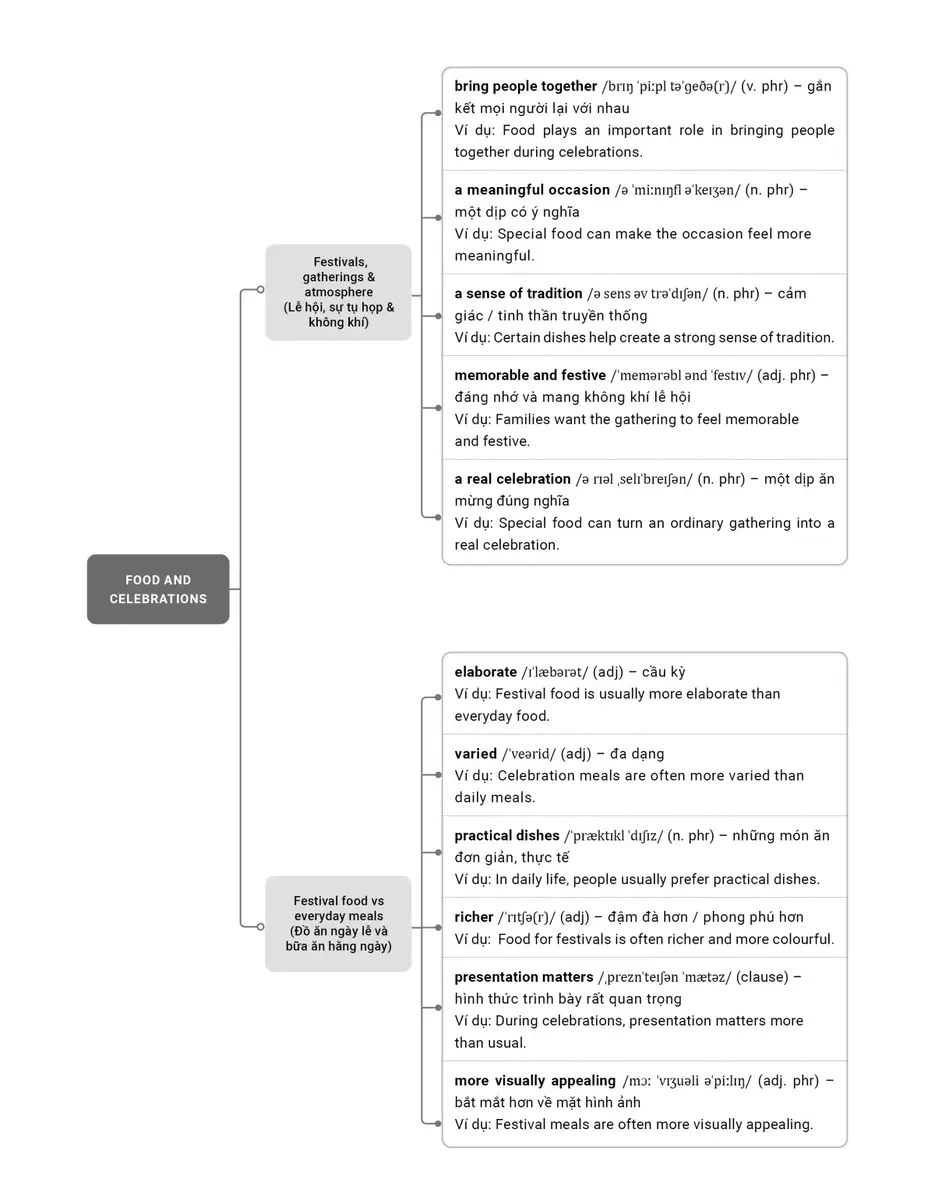
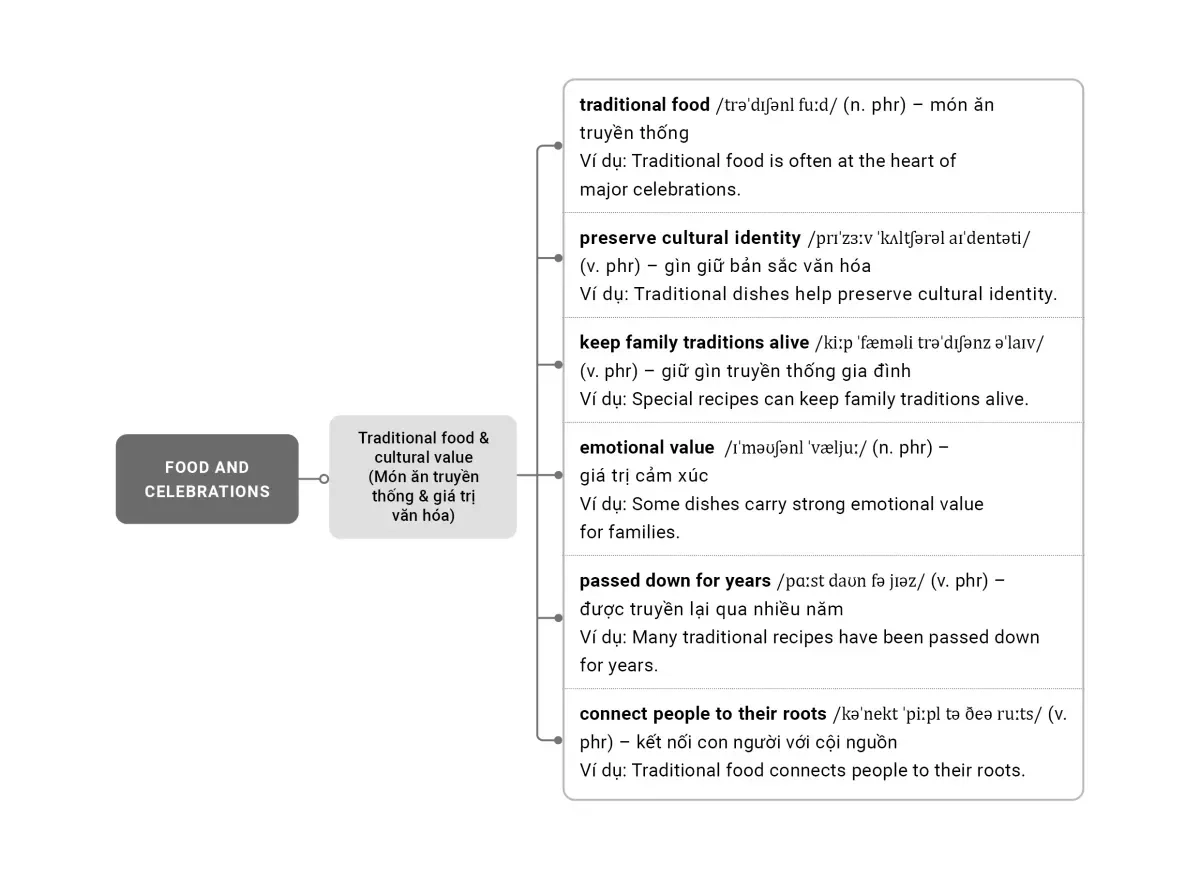
Nhóm từ vựng trọng tâm (Topic Vocabulary): Festivals & Atmosphere, Food Characteristics, và Cultural Value.
Bài mẫu IELTS Speaking Part 3 Topic “Food and Celebrations” kèm từ vựng
Bài viết cung cấp các câu trả lời mẫu cho IELTS Speaking Part 3 (Food and Celebrations) theo định hướng cá nhân hóa, được chia thành hai cấp độ: Simple Answer (tập trung phản xạ và độ trôi chảy) và Upgraded Answer (nâng cấp từ vựng, ngữ pháp). Đi kèm với mỗi câu trả lời là file audio hỗ trợ luyện phát âm chuẩn xác. Ngoài ra, phần phân tích chi tiết sẽ giúp người học hệ thống hóa từ vựng, khắc phục lỗi ngữ pháp và linh hoạt áp dụng vào các chủ đề tương tự.
Key takeaways
Bài viết sau đây sẽ cung cấp các câu trả lời mẫu theo khung sườn tư duy (Simple Answer) cùng các thử thách nâng cấp (Upgraded Answer) về cả ý tưởng, từ vựng và ngữ pháp để người học lựa chọn được câu trả lời phù hợp với bản thân, sẵn sàng cho các tình huống trong phòng thi. Bài phân tích này sẽ dẫn dắt người học đi qua chủ đề Food and Celebrations, từ vai trò tối thượng của ẩm thực trong việc gắn kết mọi người (bring people together) và gìn giữ bản sắc văn hóa (preserve cultural identity) đến những thách thức thực tế về an toàn thực phẩm (food safety) khi chuẩn bị các mâm cỗ lễ hội cầu kỳ (elaborate food), giúp người học chinh phục giám khảo bằng sự mạch lạc và ngôn ngữ tự nhiên.
IELTS Speaking Part 3: Food and Celebrations - Sample Answer
Simple answer
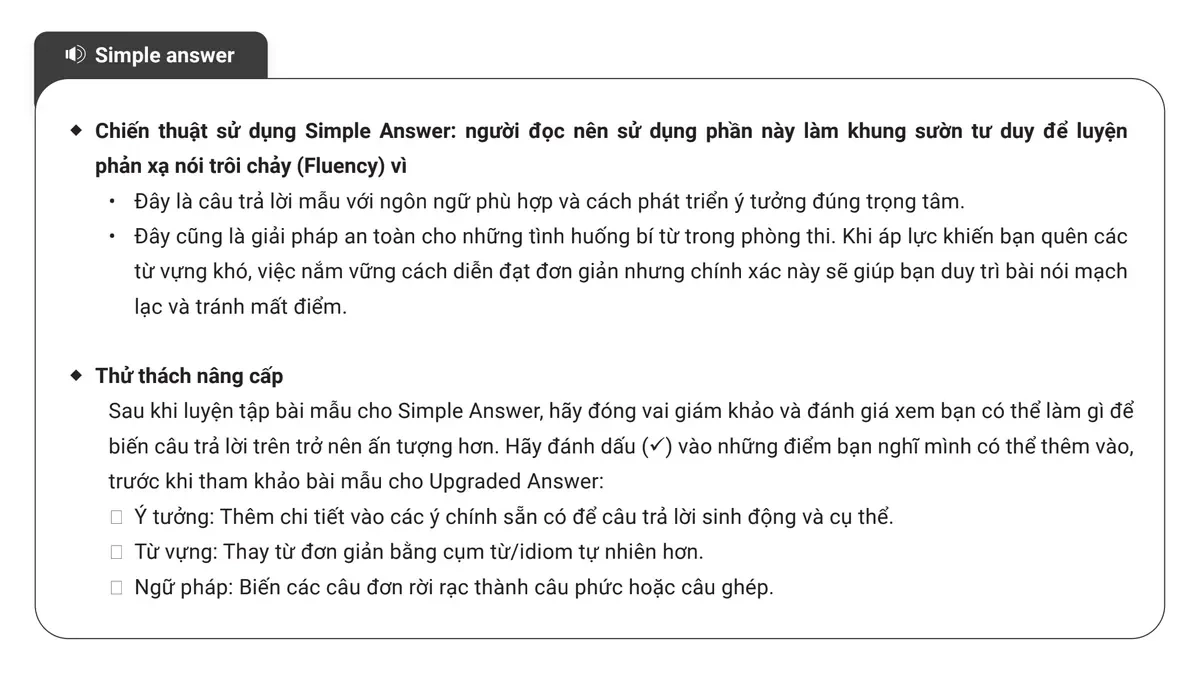
1. Why do people often prepare special food for festivals or celebrations?
|
People often prepare special food for festivals or celebrations because food helps create a happy and meaningful atmosphere. It is also a way to bring family and friends together and make the occasion feel more special. For example, during Lunar New Year, weddings, or birthdays, families often cook dishes that they do not usually make on normal days. So overall, special food is an important part of many celebrations. |
2. What challenges are involved in preparing food for large festivals?
|
There are several challenges involved in preparing food for large festivals. One main problem is that people need to cook for many guests, so it takes a lot of time, effort, and planning. Another challenge is making sure the food is fresh, safe, and enough for everyone. For example, if a festival has hundreds of visitors, it can be difficult to prepare everything on time and avoid waste. So, cooking for large festivals can be quite stressful and demanding. |
3. How is food in festivals different from everyday meals?
|
Festival food is usually more special and varied than everyday meals. It is often prepared more carefully and may include traditional dishes, richer flavours, or more expensive ingredients. For example, on a normal day, people may eat something simple like rice, vegetables, and soup, but during a festival they may have many dishes, desserts, and drinks on the table. So, festival food is often more colourful and more exciting than daily food. |
4. Do you think traditional food is important in celebrations? Why or why not?
|
Yes, I think traditional food is very important in celebrations. The main reason is that it helps people keep their culture and family customs alive. For example, many families prepare traditional dishes during important festivals because those foods remind them of their childhood, their hometown, or older generations. So, traditional food is not just about eating; it is also about memory and culture. |
5. How have eating habits during celebrations changed in recent years?
|
In recent years, eating habits during celebrations have become more modern and more convenient. In the past, families often cooked everything at home, but now many people buy ready-made food, order from restaurants, or eat out. For example, during birthdays or holiday gatherings, some families choose buffet meals or food delivery instead of spending the whole day cooking. So overall, celebration meals today are often easier to prepare, but sometimes less traditional than before. |
Mở rộng thêm Simple answer
1. What role does food play in celebrations in your country?
|
I think food plays a very important role in celebrations in my country. It brings family and friends together and creates a warm atmosphere. For example, during Lunar New Year, people prepare traditional dishes and enjoy meals together. So, food is an important part of every celebration. |
2. How is food important in events like weddings or festivals?
|
I believe food is one of the highlights of weddings and festivals. Sharing a meal is a way to celebrate special occasions and show hospitality to guests. For example, wedding banquets usually include many traditional dishes for everyone to enjoy. That's why food is an essential part of these events. |
3. Do you think traditional food is still important in modern celebrations? Why or why not?
|
Yes, I do. Traditional food helps people remember their culture and family traditions. For example, many families still make dishes like sticky rice cakes during Lunar New Year, even though they can buy them at supermarkets. I think these foods make celebrations more meaningful. |
4. Have cooking methods or recipes changed compared to the past? How?
|
Yes, they have changed quite a lot. Nowadays, people use modern kitchen appliances, so cooking is much faster and easier than before. For example, many families use air fryers or rice cookers instead of cooking everything by hand. As a result, preparing meals takes less time. |
5. Do you think people today spend less time cooking than before? Why?
|
Yes, I think so. Many people have busy work schedules, so they don't have much time to cook every day. For example, office workers often order takeaway food or buy ready-made meals after work. Because of that, people generally spend less time cooking than in the past. |
Tham khảo: Tổng hợp bài mẫu IELTS Speaking 2026
Upgraded answer
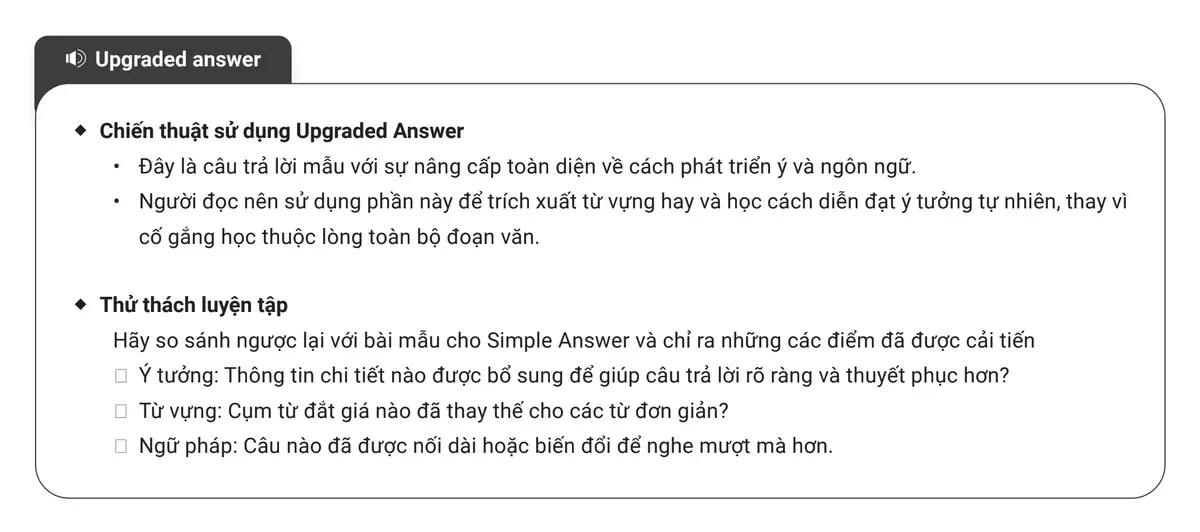
1. Why do people often prepare special food for festivals or celebrations?
|
Well, I’d say people often prepare special food for festivals or celebrations because food plays a central role in bringing people together and making the occasion feel more meaningful. In many cultures, certain dishes are closely linked to important events, so preparing them is not just about eating, but also about showing care, hospitality, and a sense of tradition. For example, during major holidays such as Lunar New Year or family weddings, people often make dishes that take much more time and effort than everyday meals because they want the gathering to feel memorable and festive. So, when you think about it, special food is often one of the things that turns an ordinary gathering into a real celebration. |
2. What challenges are involved in preparing food for large festivals?
|
I think there are quite a few challenges involved, to be honest. First of all, preparing food for a large festival usually requires a huge amount of planning, because people need to think about ingredients, cooking time, serving order, and the number of guests. On top of that, there is also the issue of hygiene and food safety, especially when meals are prepared in large quantities or served outdoors. For instance, if a local festival attracts hundreds of people, organisers have to make sure the food is ready on time, stored properly, and sufficient for everyone without creating too much waste. That said, when the work is well organised and shared among many people, the process can become much more manageable. Even so, cooking for a big celebration is still a demanding task that requires both time and coordination. |
3. How is food in festivals different from everyday meals?
|
Well, festival food is usually much more elaborate and varied than everyday meals. In daily life, people often choose simple, practical dishes that are quick to prepare, whereas food for festivals is often richer, more colourful, and made with more care because it is meant to mark a special occasion. For example, on a normal day, a family might just have rice, vegetables, and one main dish, but during a celebration they may prepare several traditional dishes, desserts, drinks, and food for guests as well. In many cases, festival meals are also more visually appealing because presentation matters more during celebrations. So overall, festival food tends to be more special in both taste and meaning. |
4. Do you think traditional food is important in celebrations? Why or why not?
|
Yes, absolutely. I do think traditional food is very important in celebrations because it helps preserve cultural identity and keeps family traditions alive. Certain dishes often carry emotional value, since they remind people of childhood memories, older generations, and the way festivals used to be celebrated in the past. For example, during important national or family celebrations, many people still prepare traditional recipes that have been passed down for years, even when those dishes are quite time-consuming to make. That said, I would not go so far as to say modern food has no place in celebrations, because younger people sometimes enjoy having a mix of traditional and international dishes. Even so, I still believe traditional food should remain at the heart of important celebrations, because it connects people to their roots. |
5. How have eating habits during celebrations changed in recent years?
|
Well, compared with the past, eating habits during celebrations have become much more convenient and flexible. In earlier times, families often cooked almost everything at home and spent a great deal of time preparing large meals together, whereas nowadays many people prefer faster options such as ordering food, booking restaurant tables, or buying ready-made dishes. For instance, instead of cooking for an entire birthday party at home, some families now choose buffet restaurants or food delivery services because it saves time and reduces stress. On top of that, people’s tastes have also become more diverse, so celebration meals today often include both traditional dishes and more modern or international food. So, in a nutshell, celebration eating habits have changed in the direction of convenience, variety, and practicality. |
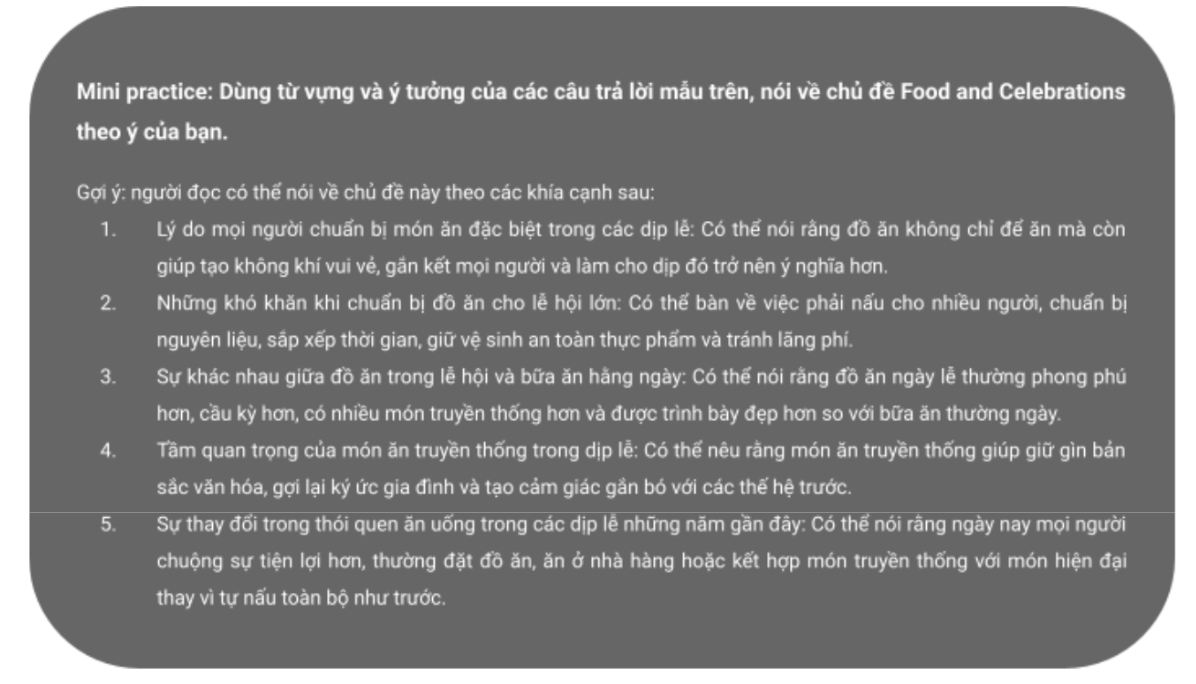
Mở rộng thêm Upgraded answer
1. What role does food play in celebrations in your country?
|
Well, I'd say food is at the heart of almost every celebration in my country. Sharing a meal is more than just eating together—it brings people closer and creates a sense of togetherness. For example, during Lunar New Year, families gather to enjoy traditional dishes like bánh chưng and spend quality time together. So, I think food plays a key role in strengthening family bonds and making celebrations more memorable. |
2. How is food important in events like weddings or festivals?
|
Food is definitely one of the highlights of events like weddings and festivals. A well-prepared meal shows hospitality and allows guests to celebrate together in a joyful atmosphere. For instance, Vietnamese wedding banquets usually include several courses, giving family members and friends the chance to sit together and share the occasion. Because of that, food becomes an important part of the overall experience rather than just something to eat. |
3. Do you think traditional food is still important in modern celebrations? Why or why not?
|
Yes, absolutely. Traditional dishes help preserve cultural identity and remind people of family traditions that have been passed down for generations. For example, many Vietnamese families still prepare bánh chưng or bánh tét during Lunar New Year, even though these foods are widely available in supermarkets. That being said, younger people are becoming more interested in international cuisine. Even so, I believe traditional food remains an essential part of important celebrations. |
4. Have cooking methods or recipes changed compared to the past? How?
|
Yes, they've changed quite a lot over the years. Thanks to modern technology, cooking has become much quicker and more convenient than it used to be. For example, many families now use air fryers, pressure cookers, or food processors, which save both time and effort. At the same time, people often adjust traditional recipes to make them healthier by using less oil, sugar, or salt. Overall, cooking today is much more efficient while still keeping the original flavours. |
5. Do you think people today spend less time cooking than before? Why?
|
Yes, I think they do. Nowadays, many people have demanding work schedules, so they simply don't have enough time to prepare meals from scratch every day. For instance, it's common for office workers to order takeaway food or buy ready-made meals after work because it's much more convenient. Of course, some people still enjoy cooking as a hobby, especially on weekends. However, overall, I think people spend much less time cooking than previous generations. |
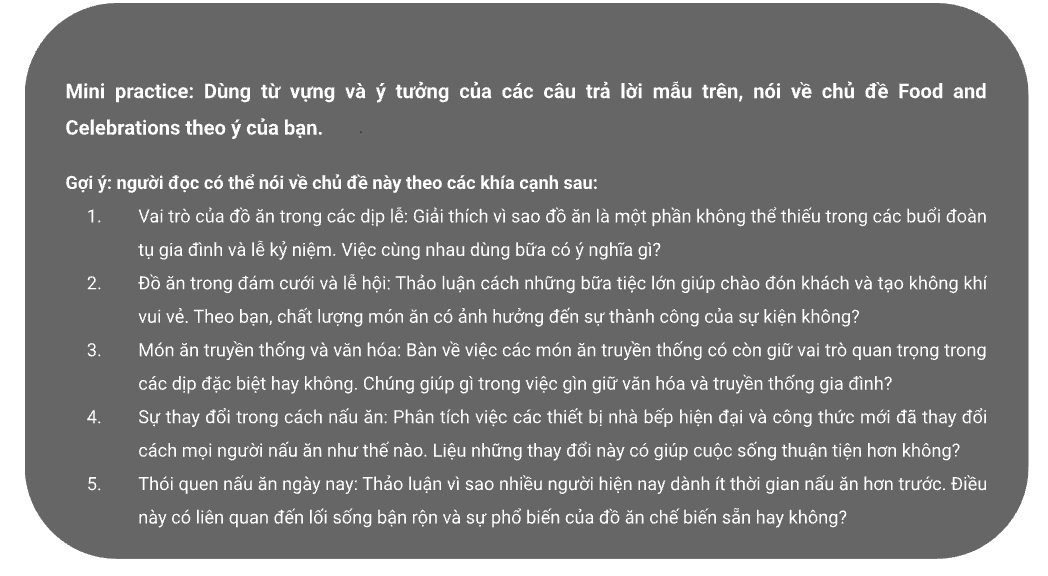
Đọc thêm: 3 cách thức tư duy câu trả lời IELTS Speaking Part 3
Lọc và phân tích từ vựng
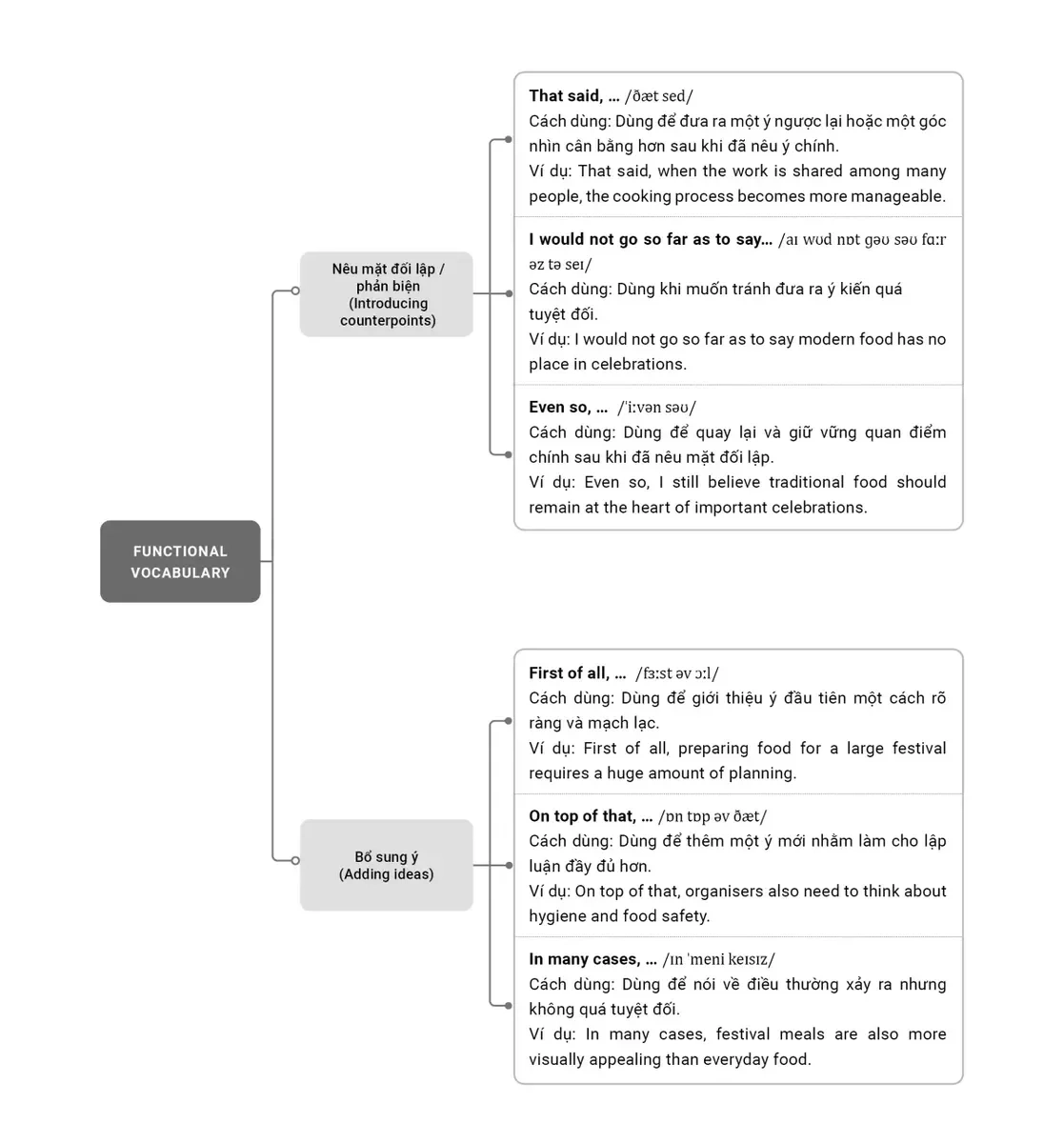
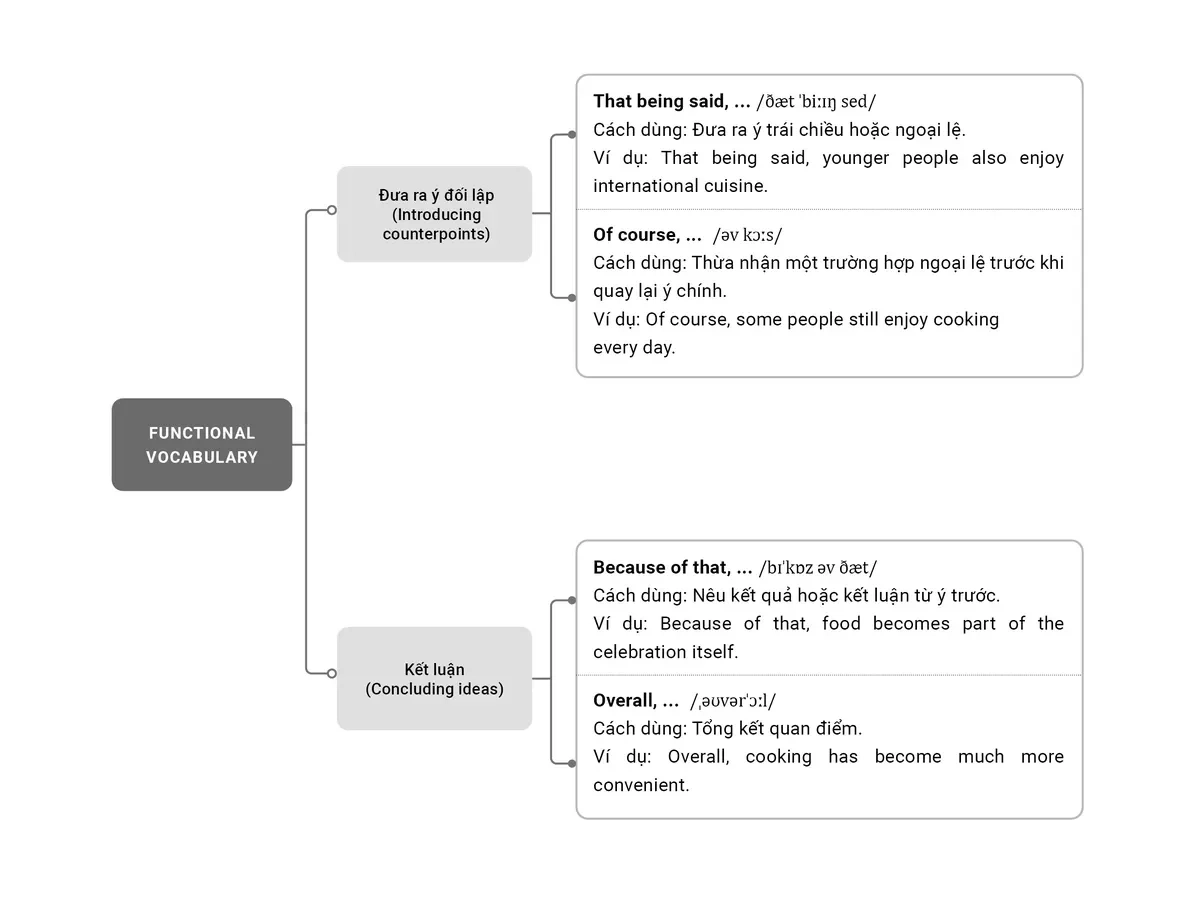
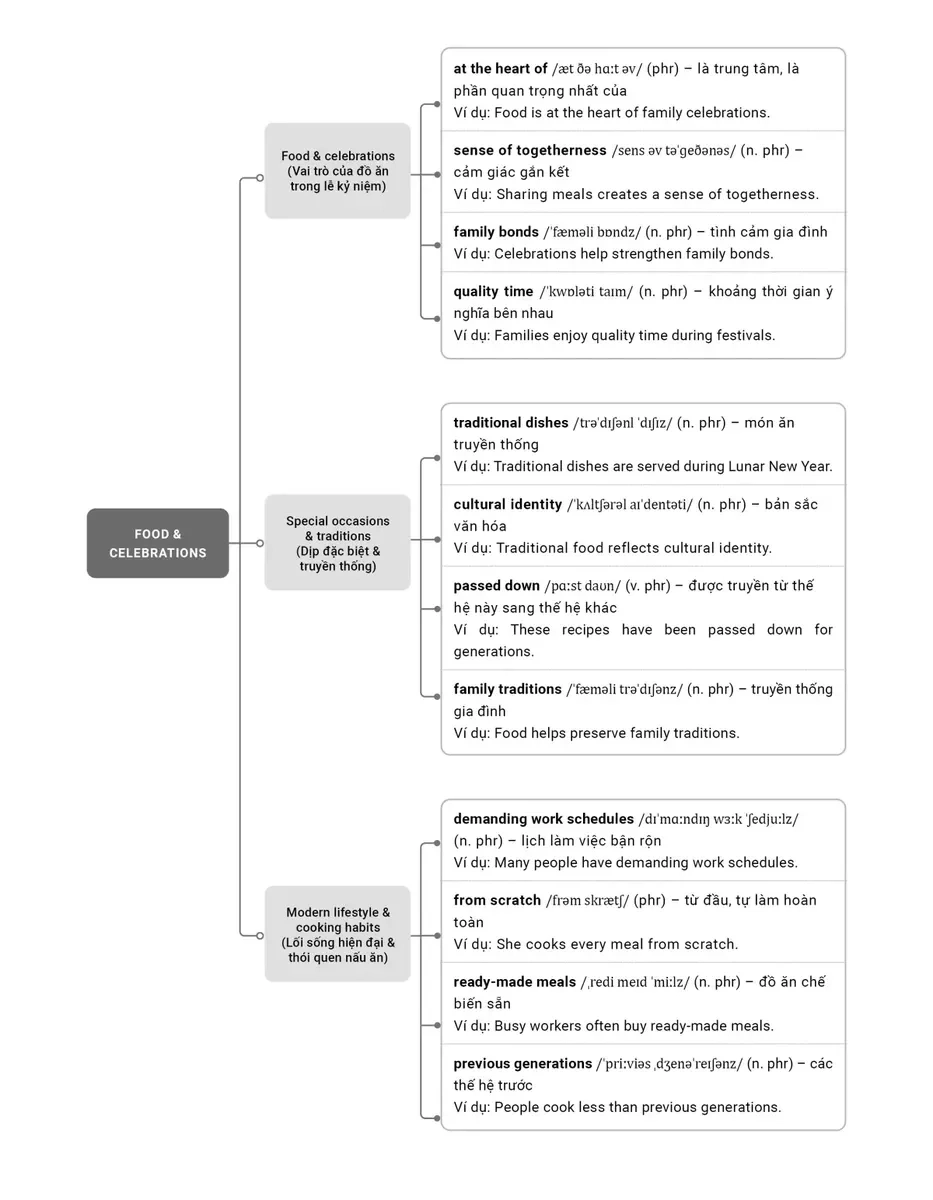
Đọc thêm: Tổng hợp từ vựng IELTS chủ đề Food và ứng dụng trong IELTS
Nhật ký từ vựng & ý tưởng
Ghi chú sau khi luyện tập nói về chủ đề trên
Từ vựng/Ý tưởng (Chọn các từ vựng/ý tưởng mà bạn tâm đắc nhất) | Kỉ niệm cá nhân |
|---|---|
Ví dụ: bring people together – gắn kết mọi người lại với nhau | Người đọc tự đặt các câu hỏi cho bản thân, ví dụ:
→ In my family, food has always been a big part of celebrations, especially during important occasions like Lunar New Year or birthdays. I still remember how everyone used to gather in the kitchen to prepare special dishes together, and that made the atmosphere feel much warmer and more festive. Even though the cooking process could be tiring and time-consuming, it also brought people closer and made the meal feel more meaningful. In recent years, things have changed a bit because my family sometimes orders food or eats out instead of cooking everything at home. Even so, I still feel that traditional food has a special emotional value, because it reminds me of family memories and helps keep our traditions alive. |
Ví dụ: cultural identity – bản sắc văn hóa | Người đọc tự đặt các câu hỏi cho bản thân, ví dụ:
→ Every Lunar New Year, my family prepares traditional dishes together, and it's one of my favourite family traditions. We spend quality time cooking, chatting, and enjoying meals together, which creates a real sense of togetherness. Although we sometimes buy ready-made food on busy days, we still make some dishes from scratch because they help preserve our cultural identity. |
Khoảng trống diễn đạt (Phần khiến bạn ngập ngừng khi nói về chủ đề trên) | Giải pháp (Giải pháp cho các khoảng trống diễn đạt) |
Ví dụ:
| Ví dụ: Dùng từ điển của ZIM hoặc chép các cách diễn đạt từ bài mẫu ở các phần trên để có được cụm từ mà bạn cần. → Thay vì chỉ nói “festival food is different” → dùng more elaborate and varied / richer and more colourful / more visually appealing |
Ví dụ:
| Ví dụ: Dùng từ điển của ZIM hoặc chép các cách diễn đạt từ bài mẫu ở các phần trên để có được cụm từ mà bạn cần. → Thay vì chỉ nói traditional food, hãy dùng cultural identity, family traditions hoặc passed down for generations. → Khi nói về vai trò của đồ ăn, hãy dùng sense of togetherness, family bonds hoặc quality time. |
Người đọc có thể tìm từ vựng bằng từ điển ZIM Dictionary.
Các lỗi ngữ pháp/từ vựng thường gặp
1. Dùng sai giữa “food”, “a food” và “foods”
❌ Lỗi thường gặp:
People prepare many delicious food for festivals.
Traditional food are important in celebrations.
✅ Cách dùng đúng:
food = đồ ăn nói chung (danh từ không đếm được)
a food / foods = chỉ loại thực phẩm cụ thể, ít dùng hơn trong speaking cơ bản
✔ Câu đúng:
People prepare a lot of delicious food for festivals.
Traditional food is important in celebrations.
📌 Lý do sai: Người học thường quên rằng “food” thường là danh từ không đếm được, nên không dùng “many food” và thường đi với động từ số ít.
2. Dùng sai cấu trúc sau “prepare”
❌ Lỗi thường gặp:
Families prepare for special dishes for festivals.
People spend hours to prepare cooking food.
✅ Cách dùng đúng:
prepare food / prepare dishes / prepare meals
spend time preparing food
✔ Câu đúng:
Families prepare special dishes for festivals.
People spend hours preparing food for large celebrations.
📌 Lý do sai: Người học thường thêm từ thừa sau “prepare” hoặc dùng hai động từ liền nhau không đúng cấu trúc.
3. Dùng sai giữa “safe”, “safely” và “safety”
❌ Lỗi thường gặp:
Food safety is important because food must be stored safety.
The food should be kept safe and hygiene.
✅ Cách dùng đúng:
safe = an toàn (tính từ)
safely = một cách an toàn (trạng từ)
safety = sự an toàn (danh từ)
✔ Câu đúng:
Food safety is important because food must be stored safely.
The food should be kept safe and hygienic.
📌 Lý do sai: Người học dễ nhầm loại từ và hay ghép sai với “hygiene”. Khi mô tả đồ ăn, nên dùng “safe” hoặc “hygienic”.
4. Dùng sai cấu trúc "not only... but also..."
❌ Lỗi thường gặp:
Food not only brings families together, but it also create a warm atmosphere.
✅ Cách dùng đúng:
Not only + V1, but also + V2
Động từ phải hòa hợp với chủ ngữ.
✔ Câu đúng:
Food not only brings families together but also creates a warm atmosphere.
📌 Lý do sai:
Người học thường chia sai động từ ở vế thứ hai hoặc đặt dấu phẩy không cần thiết khi sử dụng cấu trúc not only... but also....
5. Dùng sai "used to" và "be used to"
❌ Lỗi thường gặp:
People are used to spend hours cooking for festivals.
(Người học muốn nói: trước đây mọi người từng dành nhiều thời gian nấu ăn.)
✅ Cách dùng đúng:
used to + V → từng làm gì trong quá khứ
be used to + V-ing/N → quen với việc gì
✔ Câu đúng:
People used to spend hours cooking for festivals.
People are used to spending a lot of time in the kitchen.
📌 Lý do sai:
Người học thường nhầm lẫn giữa used to (thói quen trong quá khứ) và be used to (quen với điều gì). Đây là lỗi rất phổ biến khi so sánh cách nấu ăn hoặc thói quen ăn uống giữa quá khứ và hiện tại trong IELTS Speaking.
6. Dùng sai câu bị động khi nói về truyền thống
❌ Lỗi thường gặp:
Many traditional recipes have passed down from generation to generation.
✅ Cách dùng đúng:
have been + V3
✔ Câu đúng:
Many traditional recipes have been passed down from generation to generation.
📌 Lý do sai:
"Recipes" không tự thực hiện hành động "pass down", mà được truyền lại, nên cần dùng câu bị động. Đây là lỗi khá phổ biến khi nói về văn hóa, truyền thống và lịch sử trong IELTS Speaking.
Mini practice |
|---|
Dùng đúng cấu trúc trong ngoặc
(Dùng: a lot of food / traditional food)
(Dùng: prepare dishes / spend time preparing food)
(Dùng: food safety / stored safely / safe)
(Dùng: not only... but also... – chia đúng động từ ở cả hai vế)
(Dùng: used to + V – không dùng be used to + V)
(Dùng: have been + V3 – câu bị động ở thì Hiện tại hoàn thành) |
Các chủ đề liên quan
Chủ đề liên quan để sử dụng từ vựng & ý tưởng:
Family gatherings and traditions (Họp mặt gia đình & truyền thống)
Modern lifestyle and convenience (Lối sống hiện đại & sự tiện lợi)
Culture and identity (Văn hóa & bản sắc)
Healthy eating and cooking (Ăn uống lành mạnh & nấu ăn)
Người đọc có thể sử dụng:
Từ vựng: bring people together, a meaningful occasion, a sense of tradition, memorable and festive, hygiene and food safety, elaborate, varied, traditional food, preserve cultural identity, keep family traditions alive, emotional value, ready-made dishes, food delivery services, convenience, variety, and practicality, at the heart of, sense of togetherness, family bonds, quality time, traditional dishes, cultural identity, passed down, family traditions, modern technology, save time and effort, original flavours, demanding work schedules, from scratch, ready-made meals, previous generations...
Ý tưởng:
Đồ ăn đóng vai trò quan trọng trong các dịp lễ vì nó giúp gắn kết mọi người và làm cho buổi tụ họp trở nên ý nghĩa hơn.
Việc chuẩn bị đồ ăn cho lễ hội lớn có thể khó vì cần rất nhiều kế hoạch, thời gian, sự phối hợp và phải đảm bảo vệ sinh an toàn thực phẩm.
Đồ ăn ngày lễ thường cầu kỳ, phong phú và được trình bày đẹp hơn bữa ăn hằng ngày.
Món ăn truyền thống rất quan trọng vì nó giúp giữ gìn bản sắc văn hóa, gợi lại ký ức gia đình và kết nối con người với cội nguồn.
Công nghệ hiện đại giúp việc nấu ăn nhanh chóng và thuận tiện hơn nhưng vẫn có thể giữ được hương vị truyền thống.
Lối sống bận rộn khiến nhiều người lựa chọn đồ ăn chế biến sẵn thay vì tự nấu ăn mỗi ngày.
Việc cùng nhau chuẩn bị và thưởng thức bữa ăn tạo nên những kỷ niệm đáng nhớ trong gia đình.
Mini practice |
|---|
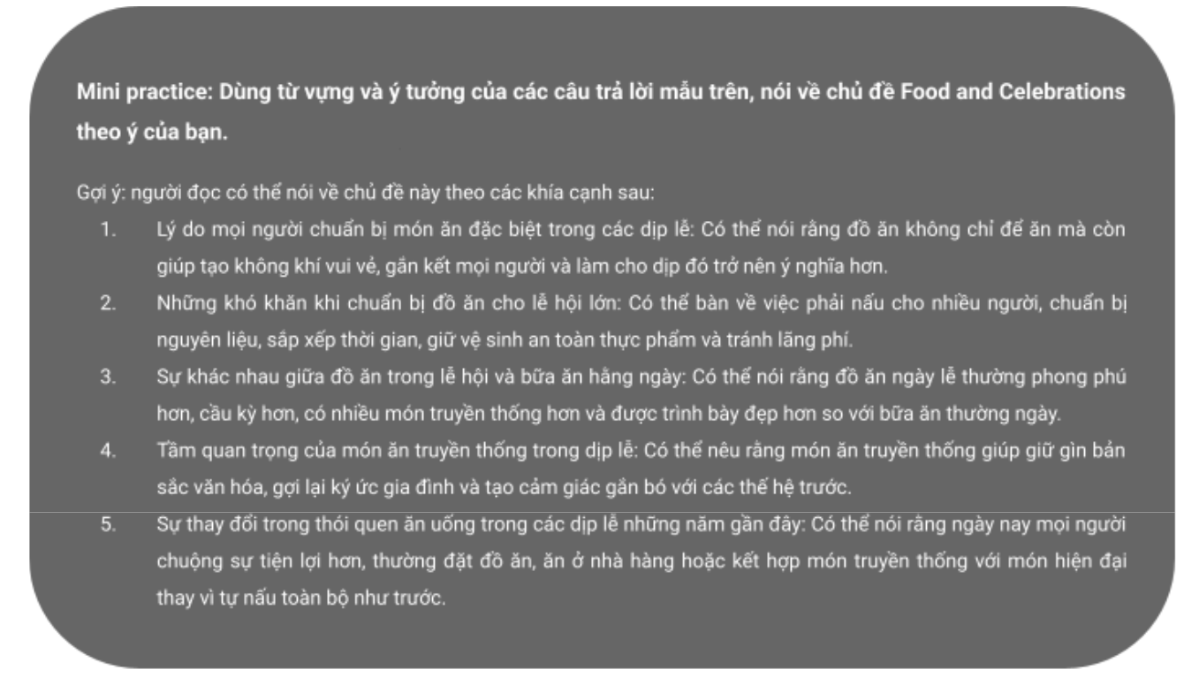
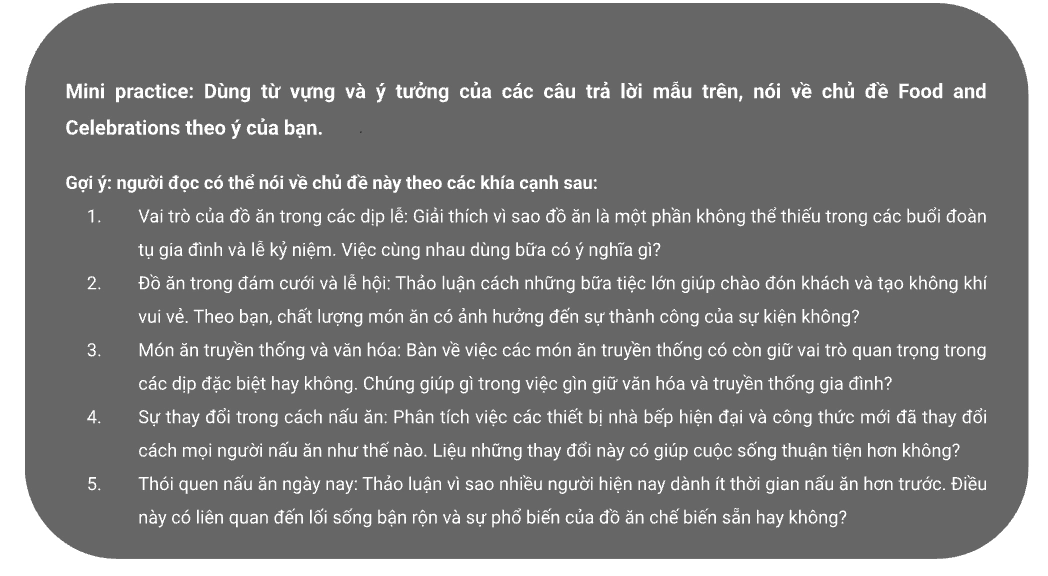
Sử dụng từ vựng và ý tưởng ở trên để trả lời các câu hỏi sau
|
Tham khảo: Bài mẫu IELTS Speaking Part 3 Topic Ambition
Tổng kết
Hy vọng rằng qua việc phân tích hai cấp độ trả lời từ Simple Answer để đảm bảo sự trôi chảy đến Upgraded Answer để ghi điểm ấn tượng, bạn đã nắm vững được lộ trình để chinh phục chủ đề Ambition (Part 3). Bằng cách cá nhân hóa các câu trả lời thông qua "Nhật ký Từ vựng & Ý tưởng", bạn sẽ xây dựng được sự tự tin. Đừng quên thực hành các bài tập nhỏ (mini practice) để khắc phục những lỗi ngữ pháp thường gặp và làm chủ ngôn ngữ của mình nhé!
Nếu bạn muốn nâng cao kỹ năng IELTS Speaking theo lộ trình cá nhân hóa, Hệ thống giáo dục ZIM cung cấp các khóa luyện thi IELTS cam kết đầu ra, giúp bạn tối ưu hiệu quả học tập và tiết kiệm đến 80% thời gian tự học. Để được tư vấn chi tiết, vui lòng liên hệ hotline 1900-2833 (nhánh 1) hoặc truy cập Khóa học IELTS.
Nguồn tham khảo
1
“Bài mẫu IELTS Speaking Part 3.” OpenAI, https://chatgpt.com/share/e/6961b6c8-4368-8002-995c-cd65b4729b18. Accessed 30 May 2026.
Bình luận - Hỏi đáp