


Chủ đề IELTS Speaking: Part 3: Language Learning.
Bài mẫu cho các nhóm câu hỏi:
Most difficult part of learning a language?
Why do people learn foreign languages?
Best way to learn if time & money allow?
How has language learning changed?
Do we still need languages with translation tech?
Nhóm từ vựng trọng tâm (Topic Vocabulary):
Learning Process, Education & Tech, và Benefits & Career.
Bài mẫu IELTS Speaking Part 3 Language learning kèm từ vựng
Bài viết cung cấp các câu trả lời mẫu cho IELTS Speaking Part 3 (Language learning) theo định hướng cá nhân hóa, được chia thành hai cấp độ: Simple Answer (tập trung phản xạ và độ trôi chảy) và Upgraded Answer (nâng cấp từ vựng, ngữ pháp). Đi kèm với mỗi câu trả lời là file audio hỗ trợ luyện phát âm chuẩn xác. Ngoài ra, phần phân tích chi tiết sẽ giúp người học hệ thống hóa từ vựng, khắc phục lỗi ngữ pháp và linh hoạt áp dụng vào các chủ đề tương tự.
Key takeaways
Bài viết sau đây sẽ cung cấp các câu trả lời mẫu theo khung sườn tư duy (Simple Answer) cùng các thử thách nâng cấp (Upgraded Answer) về cả ý tưởng, từ vựng và ngữ pháp để người học lựa chọn được câu trả lời phù hợp với bản thân, sẵn sàng cho các tình huống trong phòng thi. Bài phân tích này sẽ dẫn dắt người học đi qua chủ đề Language Learning, từ thử thách biến kiến thức thụ động thành kỹ năng giao tiếp thực tế (practical communication skills), lợi ích của môi trường đắm mình vào ngôn ngữ (language immersion) khi đi du học, cho đến vai trò không thể thay thế của việc giao tiếp trực tiếp trong thời đại bùng nổ các công cụ dịch thuật (translation tools), giúp người học chinh phục giám khảo bằng sự mạch lạc và ngôn ngữ tự nhiên.
IELTS Speaking Part 3: Language learning
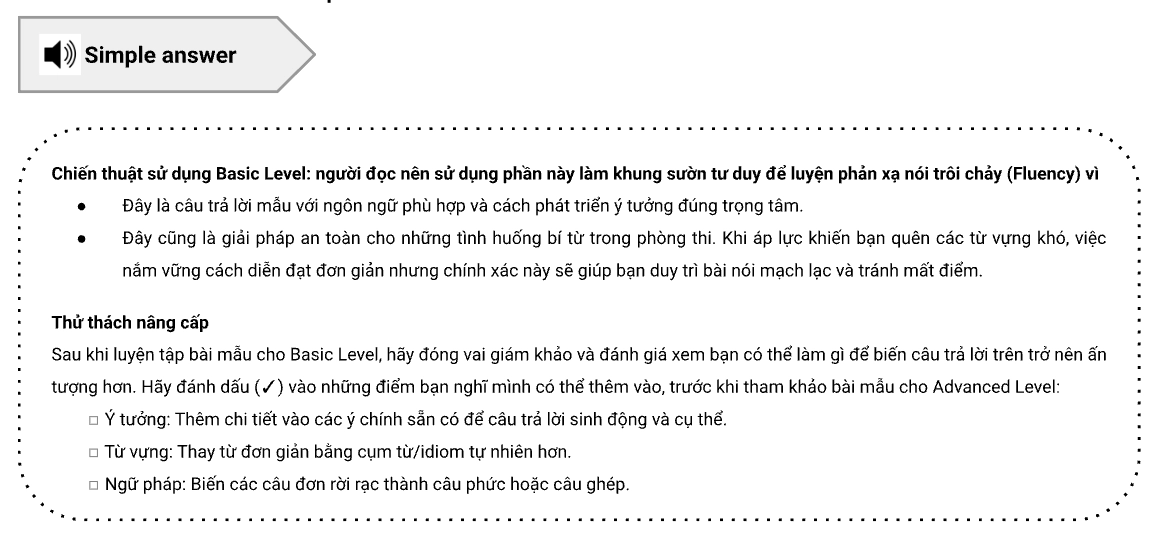
Simple answer
1. What do you think is the most difficult part of learning a new language?
|
I think the most difficult part is speaking naturally and confidently. Learners may know grammar and vocabulary, but they can still feel nervous when talking to other people. For example, someone may understand an English question but need a long time to answer because they are afraid of making mistakes. So overall, using the language in real conversations is often the hardest part. |
2. Why do many people choose to learn foreign languages?
|
Many people learn foreign languages because they want better opportunities in study and work. Languages also help them travel, communicate with foreigners, and understand other cultures. For example, someone may learn English to apply for an international company or study at a university abroad. So, learning another language can be useful in both personal and professional life. |
3. If people have enough time and money, what is the best way for them to learn a foreign language?
|
I think the best way is to spend time in a country where the language is spoken. This gives learners many chances to use the language in real situations every day. For example, they can attend a language course, live with a local family, and practise when shopping or travelling. So, studying abroad can help people improve more quickly and naturally. |
4. Do you think learning languages today is different from the past? How?
|
Yes, language learning today is very different from the past. In the past, learners mainly used textbooks, dictionaries, and classroom lessons, but now they can use apps, videos, websites, and online classes. For example, people can practise pronunciation with an app or speak to foreign teachers through video calls. So overall, learning a language today is easier, more flexible, and more interactive. |
5. With modern technology that can translate languages instantly, do you think people still need to learn foreign languages? Why or why not?
|
Yes, I think people still need to learn foreign languages. Translation technology is useful, but it cannot always understand emotions, humour, or cultural meaning correctly. For example, during a job interview or a personal conversation, speaking directly creates better communication and stronger relationships. Although translation apps can help in simple situations, learning the language is still more useful in the long term. |
Tham khảo: Tổng hợp bài mẫu IELTS Speaking 2026
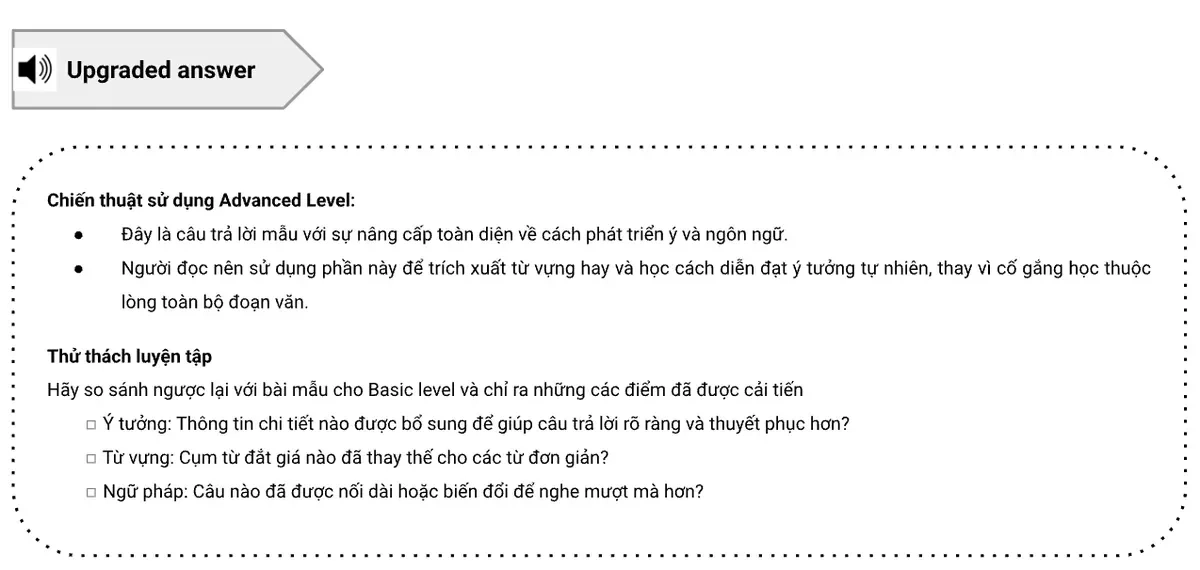
Upgraded answer
1. What do you think is the most difficult part of learning a new language?
|
Well, I’d say the most difficult part is speaking naturally and confidently in real conversations. Many learners may have a fairly good knowledge of grammar and vocabulary, but when they need to respond immediately, they often hesitate or worry about making mistakes. For example, a student may understand a question perfectly but struggle to organise their ideas and give a clear answer on the spot. On top of that, pronunciation and listening can also be challenging because native speakers often speak quickly and use informal expressions. So overall, the hardest part is usually turning passive knowledge into practical communication skills. |
2. Why do many people choose to learn foreign languages?
|
There are several reasons why people choose to learn foreign languages. First of all, speaking another language can open up better educational and career opportunities, especially in an increasingly globalised world. For instance, someone with strong English skills may be able to study abroad, work for an international company, or communicate with foreign clients. Besides that, languages make travelling much easier and allow people to connect with individuals from different cultural backgrounds. They can also help learners understand foreign films, books, and traditions more deeply. So, learning a language is not only a practical skill but also a valuable way to broaden one’s horizons. |
3. If people have enough time and money, what is the best way for them to learn a foreign language?
|
Personally, I think the most effective way is to spend an extended period of time in a country where the language is widely spoken. This kind of immersion gives learners constant exposure to the language and encourages them to use it in everyday situations rather than only in the classroom. For example, they could take an intensive course, stay with a local family, join social activities, and practise while shopping, travelling, or meeting new people. Of course, simply living abroad does not guarantee progress, because learners still need to make an effort and practise regularly. Even so, a combination of formal lessons and real-life communication is probably the fastest and most natural way to improve. |
4. Do you think learning languages today is different from the past? How?
|
Yes, definitely. Language learning today is much more flexible, interactive, and accessible than it was in the past. Previously, learners mainly depended on textbooks, printed dictionaries, classroom lessons, and audio recordings, which often provided limited opportunities for real communication. Nowadays, however, people can use mobile apps, online courses, podcasts, video platforms, and virtual language exchanges whenever and wherever they want. For example, a learner can practise pronunciation with an app, watch videos with subtitles, and speak to a native teacher through a video call on the same day. That said, modern learners may also become overwhelmed by the large number of resources available. So overall, technology has made language learning easier and more personalised, but learners still need discipline and a clear study plan. |
5. With modern technology that can translate languages instantly, do you think people still need to learn foreign languages? Why or why not?
|
Yes, I strongly believe people still need to learn foreign languages, even though translation technology has become extremely advanced. Translation tools are convenient for simple tasks, such as reading signs, ordering food, or understanding short messages, but they cannot always recognise tone, humour, cultural references, or hidden meanings accurately. For example, in a business meeting or a personal conversation, relying entirely on a device may make the interaction feel less natural and can sometimes cause misunderstandings. Admittedly, instant translation is very useful for emergencies or short trips. Nevertheless, speaking another language allows people to communicate more directly, build trust, and form deeper relationships. So in the long run, technology should support language learning rather than replace it. |
Đọc thêm: Ứng dụng Phản đề (Counterargument) vào IELTS Speaking Part 3
Lọc và phân tích từ vựng
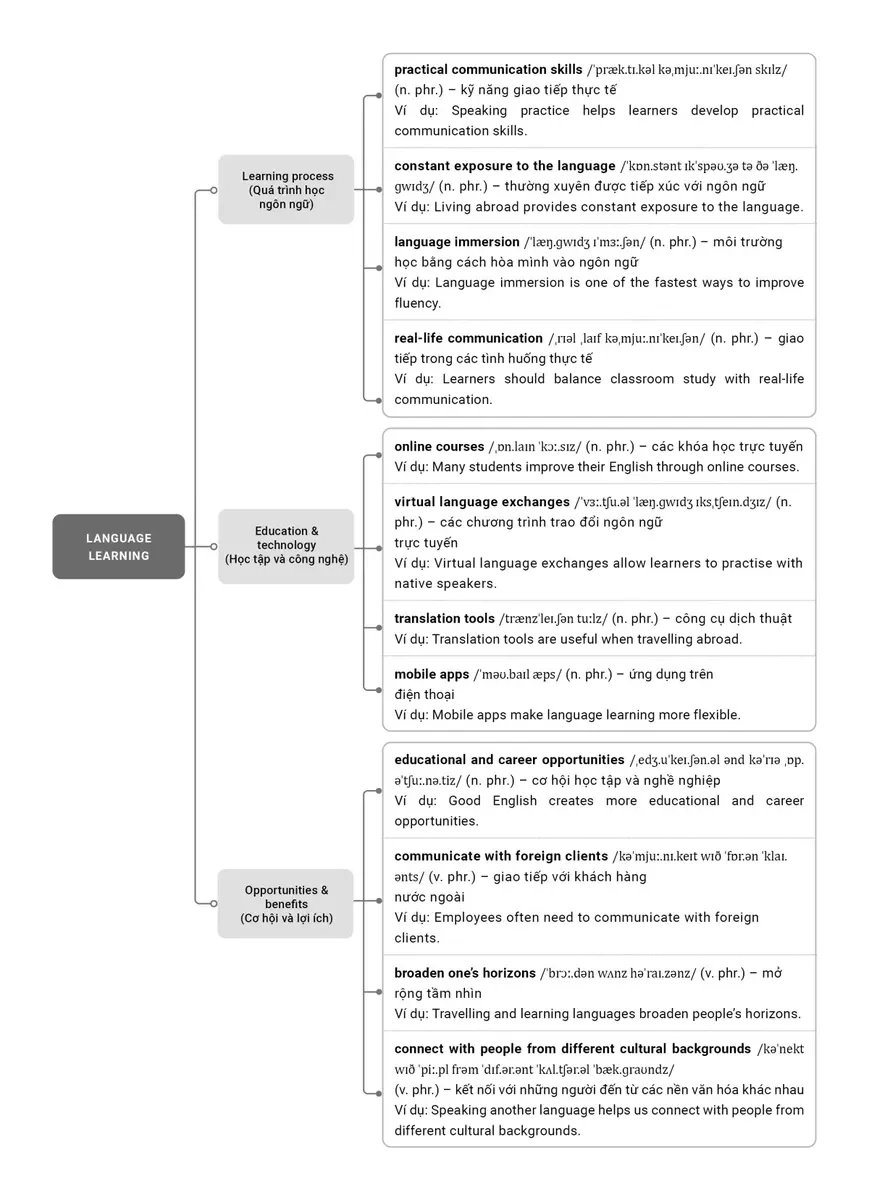
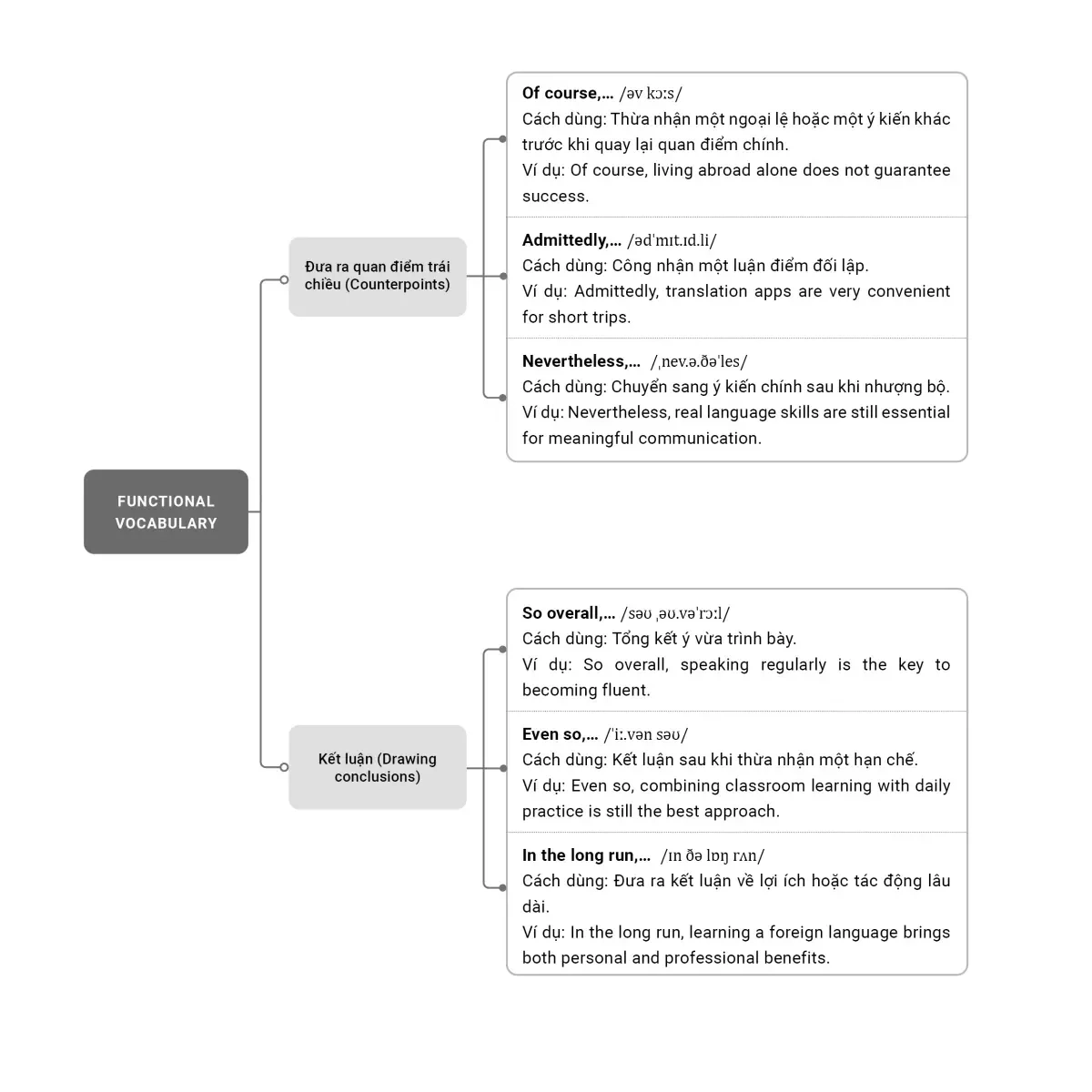
Nhật ký Từ vựng & Ý tưởng
Ghi chú sau khi luyện tập nói về chủ đề trên
Từ vựng/Ý tưởng (Chọn các từ vựng/ý tưởng mà bạn tâm đắc nhất) | Kỉ niệm cá nhân |
|---|---|
Ví dụ: practical communication skills – kỹ năng giao tiếp thực tế | Người đọc tự đặt các câu hỏi cho bản thân, ví dụ: • Tôi bắt đầu học ngoại ngữ từ khi nào? Điều gì khiến tôi muốn học? • Tôi thấy kỹ năng nào khó nhất: nghe, nói, đọc hay viết? Vì sao? • Tôi đã từng có cơ hội sử dụng tiếng Anh hoặc một ngoại ngữ khác trong đời thực chưa? Khi đó tôi cảm thấy thế nào? • Nếu có đủ thời gian và tiền bạc, tôi muốn học ngoại ngữ bằng cách nào: du học, học online hay tự học? Vì sao? • Tôi có thường sử dụng ứng dụng học ngoại ngữ hoặc công cụ dịch không? Chúng giúp ích và hạn chế ở điểm nào? → Last year, I joined an English-speaking club at university. At first, I often hesitated because I was afraid of making mistakes. However, after practising regularly and communicating with different people, I gradually developed more practical communication skills and became much more confident. That experience showed me that using a language in real-life situations is far more effective than simply memorising grammar rules. |
Khoảng trống diễn đạt (Phần khiến bạn ngập ngừng khi nói về chủ đề trên) | Giải pháp (Giải pháp cho các khoảng trống diễn đạt) |
|---|---|
Ví dụ:
| Ví dụ: Dùng từ điển của ZIM hoặc chép các cách diễn đạt từ bài mẫu ở các phần trên để có được cụm từ mà bạn cần. → Thay study abroad bằng language immersion, real-life communication, learn through daily interactions. |
Người đọc có thể tìm từ vựng bằng từ điển ZIM Dictionary.
Các lỗi ngữ pháp/từ vựng thường gặp
1. Dùng sai struggle to do something
❌ Lỗi thường gặp:
Many students struggle speaking English confidently.
✅ Cách dùng đúng:
struggle to + V
struggle with + noun / V-ing
✔ Câu đúng:
Many students struggle to speak English confidently.
Hoặc:
Many students struggle with speaking English confidently.
📌 Lý do sai:
Trong bài mẫu có câu "...struggle to organise their ideas...". Sau struggle, người học thường dùng ngay V-ing, trong khi nếu theo sau trực tiếp là động từ thì phải dùng to + V.
2. Dùng sai rather than + V-ing / noun
❌ Lỗi thường gặp:
Learners should practise in real situations rather than only study grammar.
✅ Cách dùng đúng:
Hai vế nên song song về mặt ngữ pháp.
✔ Câu đúng:
Learners should practise in real situations rather than only studying grammar.
Hoặc:
This approach encourages learners to use the language in everyday situations rather than only in the classroom.
📌 Lý do sai:
Trong bài mẫu có cấu trúc rather than only in the classroom. Khi rather than nối hai hành động, người học thường dùng động từ nguyên mẫu, làm mất tính song song của câu.
3. Dùng sai a combination of A and B + singular verb
❌ Lỗi thường gặp:
A combination of formal lessons and real-life communication are the fastest way to improve.
✅ Cách dùng đúng:
A combination of A and B + singular verb
✔ Câu đúng:
A combination of formal lessons and real-life communication is probably the fastest and most natural way to improve.
📌 Lý do sai:
Trong bài mẫu có câu A combination of formal lessons and real-life communication is probably the fastest.... Nhiều người học bị ảnh hưởng bởi danh từ số nhiều phía sau (formal lessons và real-life communication) nên chia động từ are. Tuy nhiên, chủ ngữ chính là A combination, vì vậy động từ phải ở số ít (is). Đây là lỗi ngữ pháp nâng cao thường xuất hiện trong IELTS Speaking.
Mini practice |
|---|
Dùng đúng cấu trúc trong ngoặc 1. Hãy nói rằng nhiều người học tiếng Anh gặp khó khăn khi nói trôi chảy. (Dùng: struggle to + V hoặc struggle with + V-ing.) 2. Hãy nói rằng học sinh nên luyện nói trong các tình huống thực tế thay vì chỉ học ngữ pháp. (Dùng: rather than + V-ing / noun – đảm bảo hai vế song song.) 3. Hãy nói rằng kết hợp giữa học trên lớp và giao tiếp thực tế là cách hiệu quả nhất để cải thiện ngoại ngữ. (Dùng: A combination of A and B + is – không dùng are.) |
Các chủ đề liên quan
Chủ đề liên quan để sử dụng từ vựng & ý tưởng:
Technology (Công nghệ trong học tập)
Người đọc có thể sử dụng:
Từ vựng: practical communication skills, language immersion, real-life communication, educational and career opportunities, broaden one’s horizons, cultural backgrounds, translation tools, online courses, virtual language exchanges, constant exposure, globalised world, make an effort, build trust, communicate effectively...
Ý tưởng:
Học ngoại ngữ không chỉ giúp mọi người giao tiếp tốt hơn mà còn mở ra nhiều cơ hội học tập và nghề nghiệp trong một thế giới ngày càng toàn cầu hóa.
Việc sử dụng ngôn ngữ trong các tình huống thực tế quan trọng hơn việc chỉ ghi nhớ từ vựng và ngữ pháp vì nó giúp phát triển kỹ năng giao tiếp thực sự.
Công nghệ đã giúp việc học ngoại ngữ trở nên linh hoạt hơn thông qua các ứng dụng, khóa học trực tuyến và các chương trình trao đổi ngôn ngữ, nhưng người học vẫn cần sự kiên trì và chủ động.
Mặc dù các công cụ dịch thuật rất tiện lợi, chúng không thể thay thế hoàn toàn khả năng giao tiếp trực tiếp, đặc biệt trong công việc hoặc khi xây dựng các mối quan hệ lâu dài.
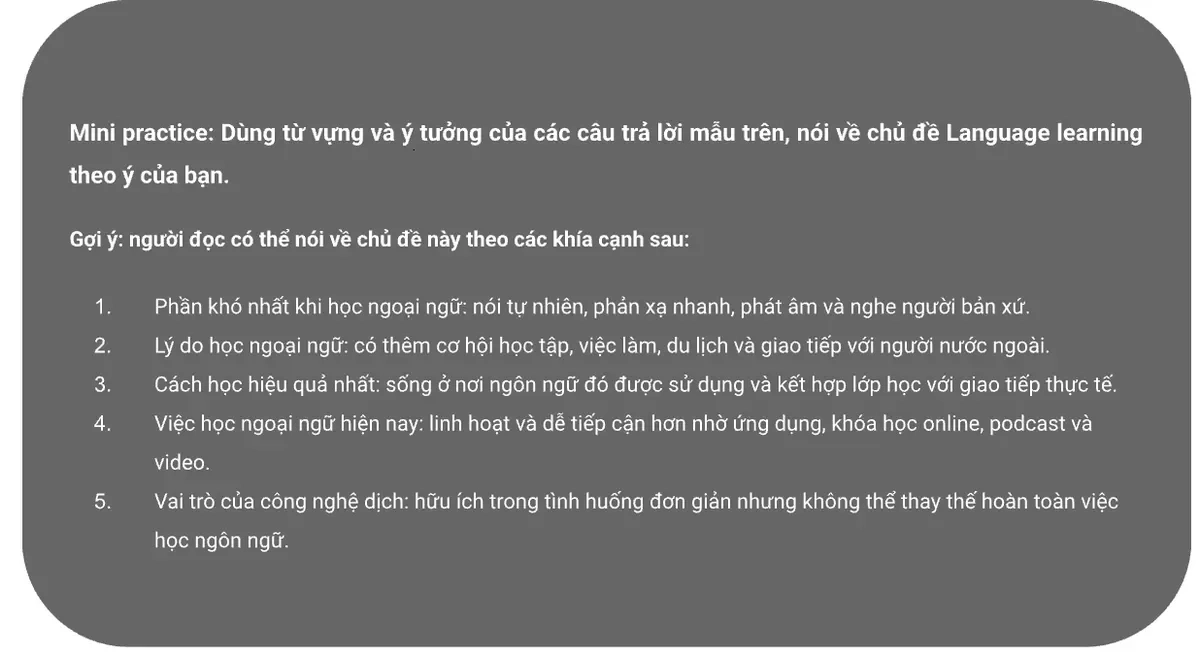
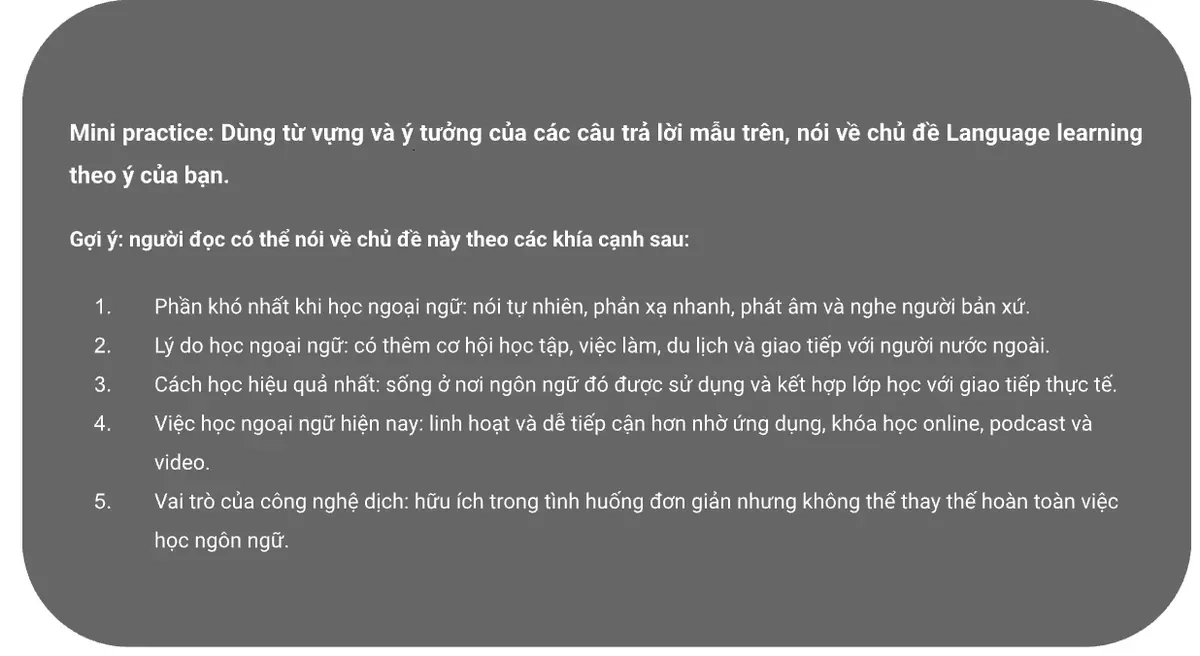
Mini practice: Sử dụng từ vựng và ý tưởng ở trên để trả lời các câu hỏi sau
Why is learning English becoming more important nowadays?
(Gợi ý: globalised world, educational and career opportunities, communicate effectively, broaden one’s horizons)Do you think technology has made language learning easier? Why or why not?
(Gợi ý: online courses, virtual language exchanges, translation tools, constant exposure)What is the best way to become fluent in a foreign language?
(Gợi ý: language immersion, real-life communication, practical communication skills, make an effort)
Tổng kết
Hy vọng rằng qua việc phân tích hai cấp độ trả lời từ Simple Answer để đảm bảo sự trôi chảy đến Upgraded Answer để ghi điểm ấn tượng, bạn đã nắm vững được lộ trình để chinh phục chủ đề Language learning (Part 3). Bằng cách cá nhân hóa các câu trả lời thông qua "Nhật ký Từ vựng & Ý tưởng", bạn sẽ xây dựng được sự tự tin. Đừng quên thực hành các bài tập nhỏ (mini practice) để khắc phục những lỗi ngữ pháp thường gặp và làm chủ ngôn ngữ của mình nhé!
Nếu bạn muốn nâng cao kỹ năng IELTS Speaking theo lộ trình cá nhân hóa, Hệ thống giáo dục ZIM cung cấp các khóa luyện thi IELTS cam kết đầu ra, giúp bạn tối ưu hiệu quả học tập và tiết kiệm đến 80% thời gian tự học. Để được tư vấn chi tiết, vui lòng liên hệ hotline 1900-2833 (nhánh 1) hoặc truy cập Khóa học IELTS.
Nguồn tham khảo
1
“Bài mẫu IELTS Speaking Part 3.” OpenAI, https://chatgpt.com/share/e/6961b6c8-4368-8002-995c-cd65b4729b18. Accessed 25 July 2026.
Bình luận - Hỏi đáp