Từ vựng chủ đề History and Civilization: artifact, archaeology, excavate, ruin, revolutionary, transform,…
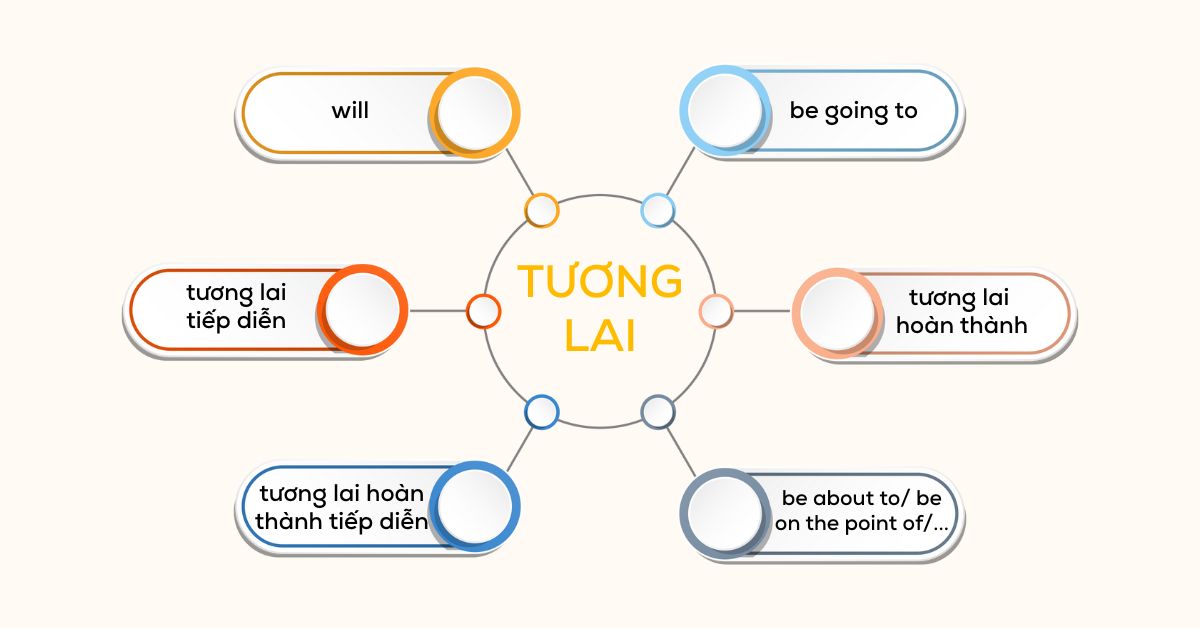
Ngữ pháp các thì tương lai:
will
be going to
tương lai tiếp diễn
tương lai hoàn thành
tương lai hoàn thành tiếp diễn
các cách diễn đạt khác
Người học có thể áp dụng kiến thức về ngữ pháp này để dự đoán đáp án cho các dạng bài Matching information, matching headings, True/False/ Not given trong IELTS.
Bài viết nằm trong series Grammar and vocabulary for IELTS Reading (Level 1) - Unit 7: History and Civilization giới thiệu đến người học một số từ vựng thuộc chủ đề Lịch sử và Văn minh. Ngoài ra, người học sẽ củng cố ngữ pháp các thì về tương lai. Bài đọc IELTS theo chủ đề cũng giúp người học nâng cao kỹ năng làm bài đọc.
Phần 1: Từ vựng
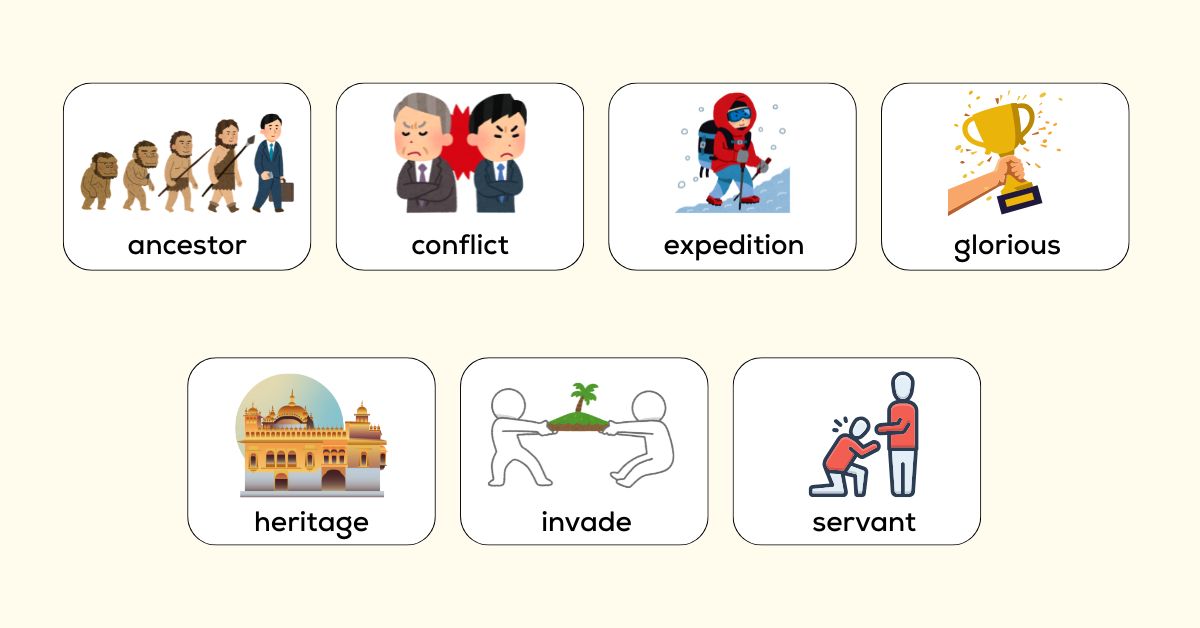
Bài 1: Nối các từ sau với định nghĩa của chúng
ancestor
conflict
expedition
glorious
heritage
invade
servant
Nối các từ sau với định nghĩa của chúng
a. a trip made for a special reason, usually to explore or discover
b. a person who works in someone’s house and does chores
c. to enter a place by force, especially during a war
d. a serious fight or disagreement between groups or countries
e. bringing great pride or honor
f. the history, traditions, and culture of a country or group
g. an early human or animal that lived a long time ago and led to modern forms
Bài 2: Hãy chuyển đổi từ loại đúng các từ đã cho
colony (noun) → ………………………………….. (verb)
expand (noun) → …………………………………. (noun)
evolve (verb) → ……………………………………. (noun)
industrial (adjective) → …………………………………….. (noun)
isolation (noun) → …………………………………… (adjective)
revolution (noun) → …………………………………….. (adjective)
transform (verb) → …………………………………. (noun)
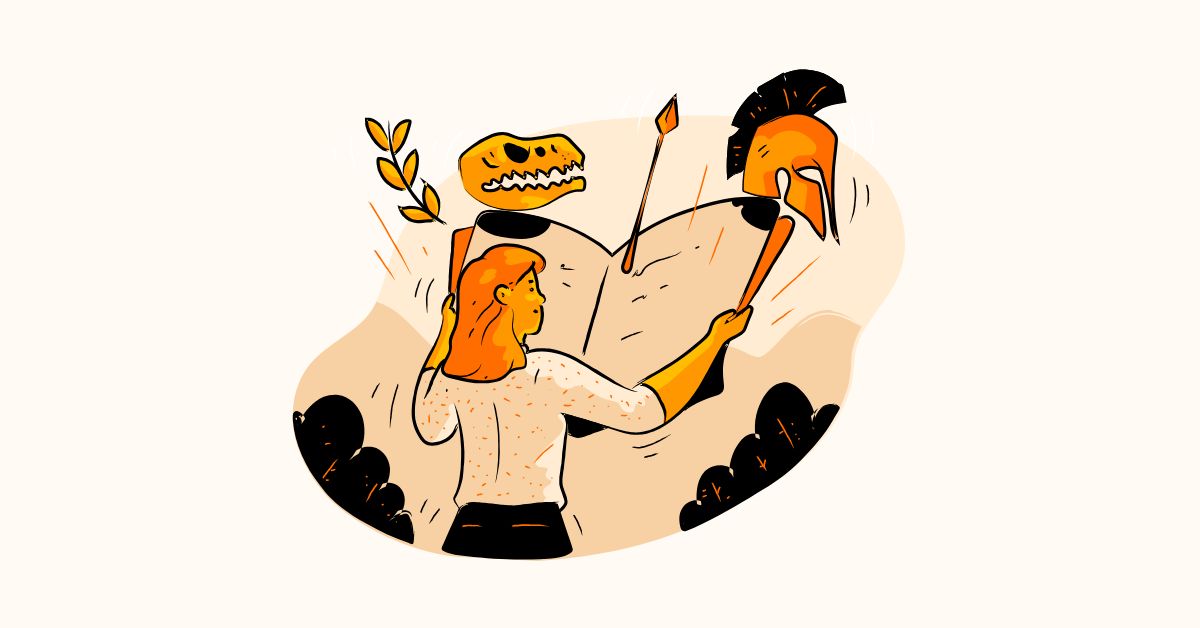
Hình minh họa chủ đề History and Civilization
Bài 3: Chọn phương án phù hợp để điền vào chỗ trống trong mỗi câu.
1. The Roman __________ was one of the most powerful political systems in ancient history, ruling over diverse cultures and regions.
A. kingdom
B. colony
C. empire
D. tribe
2. According to one widely accepted __________, early humans left Africa and gradually spread across the continents.
A. conflict
B. theory
C. story
D. invention
3. A group of researchers returned to the ancient city ruins to __________ the site and uncover new evidence about past civilizations.
A. decorate
B. enact
C. excavate
D. destroy
4. After a long journey through the mountains, the group decided to __________ near the river, where land was fertile and water was available.
A. settle
B. conquer
C. escape
D. rule
5. In feudal societies, a __________ gave a large portion of the harvest to the landowner in exchange for protection.
A. knight
B. priest
C. merchant
D. peasant
6. Thanks to advances in __________, we can now learn how ancient people lived, what they ate, and how they built their homes.
A. Chemistry
B. Biology
C. Archeology
D. Geography
Bài 4: Điền các từ được cho dưới đây vào chỗ trống thích hợp trong đoạn văn
reveal
unearth
ruins
preserve
artifacts
insights
Over the years, historians and scientists have worked together to (1) __________ ancient cities buried beneath layers of earth and time. These efforts often lead to the discovery of valuable (2) __________, such as tools, pottery, and jewelry, which help us understand how people once lived. Even a single object can provide important (3) __________ into daily life, religious beliefs, or trade networks of early civilizations.
Unfortunately, many historical sites lie in (4) __________ due to war, natural disasters, or neglect. That’s why it is essential to (5) __________ what remains, using careful techniques to avoid damage. New technologies, such as ground scanning and 3D modeling, now allow researchers to (6) __________ secrets hidden for centuries without destroying the site.
Xem thêm: Gợi ý 8 cuốn sách học IELTS Reading từ cơ bản đến nâng cao
“Shall” có thể được dùng thay cho “will” khi chủ ngữ là “I” hoặc “we” trong ngữ cảnh trang trọng.
Cách dùng:
Cách dùng
Ví dụ
Diễn tả dự đoán cho một hành động/ sự kiện sẽ xảy ra ở tương lai, thường dựa trên quan điểm hoặc trải nghiệm trước đây của cá nhân
Based on what I've studied, I think future historians will view the fall of the Roman Empire as a gradual decline rather than a sudden collapse. (Dựa trên những gì tôi đã học, tôi nghĩ các nhà sử học tương lai sẽ xem sự sụp đổ của Đế chế La Mã là một quá trình suy tàn dần dần chứ không phải sụp đổ đột ngột.)
Diễn tả sự thật sẽ xảy ra trong tương lai
The museum will open its new ancient civilization exhibition next month. (Bảo tàng sẽ khai mạc triển lãm về các nền văn minh cổ đại vào tháng tới.)
Diễn tả hành động trong tương lai nhưng chưa được lên kế hoạch hoặc sắp xếp trước
Maybe one day, I will visit the ancient city of Petra to understand how it was carved into the rock. (Có thể một ngày nào đó, tôi sẽ đến thăm thành phố cổ Petra để hiểu cách nó được chạm khắc vào đá.)
Diễn tả những quyết định được đưa ra ngay thời điểm nói
Oh, I didn’t know about the Mayan calendar. I will look it up right now. (Ồ, tôi không biết về lịch của người Maya. Tôi sẽ tra cứu ngay bây giờ.)
Diễn tả lời đề nghị, lời hứa, lời yêu cầu hoặc đe dọa
I will help you prepare for the history test on ancient civilizations. (Tôi sẽ giúp bạn chuẩn bị cho bài kiểm tra lịch sử về các nền văn minh cổ đại.)
Will you explain how the Great Wall of China was constructed? (Bạn có thể giải thích cách Vạn Lý Trường Thành được xây dựng không?)
Dấu hiệu nhận biết:
Từ chỉ chỉ thời gian trong tương lai: tomorrow, next month, in 2 years,…
Từ thể hiện nghĩa suy đoán hoặc mong muốn trong tương lai: think/ believe/ guess/…, perhaps, probably, expect, promise, hope,…
Diễn tả hành động/ sự kiện trong tương lai mà người nói đã nghĩ về và dự định sẽ làm
We’re going to visit the historical ruins of Pompeii this summer. I have just booked a ticket. (Chúng tôi dự định sẽ đến thăm tàn tích lịch sử của Pompeii vào mùa hè này. Tôi mới mua vé rồi.)
Diễn tả dự đoán cho một hành động/ sự kiện sẽ xảy ra ở tương lai và có bằng chứng cho dự đoán đó ở hiện tại.
Look at all the interest in ancient civilizations lately, students are going to become even more passionate about history in the coming years. (Nhìn vào sự quan tâm ngày càng tăng đối với các nền văn minh cổ đại, học sinh sẽ ngày càng đam mê lịch sử hơn trong những năm tới.)
Diễn tả mệnh lệnh hoặc một điều gì đó là bắt buộc
You’re going to complete the timeline of ancient civilizations before class ends. (Em sẽ phải hoàn thành dòng thời gian các nền văn minh cổ đại trước khi hết tiết học.)
Dấu hiệu nhận biết:
Từ chỉ thời gian tương lai: tomorrow, next month, in 2 years,…
Tuy nhiên, trong ngữ cảnh câu cần có thêm thông tin về một kế hoạch, dự định đã có trước thời điểm nói (như cách dùng thứ nhất).
Diễn tả hành động/ sự kiện đang diễn ra tạm thời trong một thời gian cụ thể trong tương lai
Ví dụ: At this time tomorrow, the archaeologists will be excavating a newly discovered ancient site in Greece. (Vào giờ này ngày mai, các nhà khảo cổ sẽ đang khai quật một địa điểm cổ mới được phát hiện ở Hy Lạp.)
Dấu hiệu nhận biết:
Từ chỉ thời gian cụ thể trong tương lai: At this time next month, at 7 pm tomorrow,…
Mệnh đề thời gian chỉ ý tương lai. Ví dụ: When John arrives in the airport tomorrow, I will be taking an exam.
Diễn tả một hành động sẽ kết thúc trong một thời gian cụ thể ở tương lai thường đi cùng thời gian như before, by + thời gian cố định hoặc in + khoảng thời gian
Ví dụ: In ten years, the research team will have translated all the inscriptions found at the archaeological site. (Trong vòng mười năm nữa, nhóm nghiên cứu sẽ đã dịch xong tất cả các dòng chữ khắc tìm thấy tại địa điểm khảo cổ.)
Dấu hiệu nhận biết:
By + Mốc thời gian trong tương lai. Ví dụ:
I will have finished my project by tomorrow.
By the time + mốc thời gian trong tương lai. Ví dụ:
By the time she is 20 years old, I will have lived in another city.
By the end of + mốc thời gian trong tương lai.
Ví dụ: By the end of next week, they will have fixed my car.
Sử dụng dạng tương lai hoàn thành tiếp diễn khi nhìn lại quá khứ từ một thời điểm trong tương lai và muốn nhấn mạnh độ dài hoặc thời lượng của một hoạt động hoặc sự kiện.
Ví dụ: By next year, the historian will have been researching the origins of the Silk Road for over a decade. (Tính đến năm sau, nhà sử học đó sẽ đã nghiên cứu về nguồn gốc Con đường Tơ lụa được hơn mười năm.)
Dấu hiệu nhận biết:
Dấu hiệu nhận biết của thì tương lai hoàn thành tiếp diễn là thường đi cùng với các cụm từ:
By + mốc thời gian trong tương lai kèm với f
or + khoảng thời gian (để thể hiện độ dài thời gian tính đến một mốc thời gian trong tương lai)
dùng để chỉ những điều mà người nói mong đợi sẽ xảy ra sớm, thường sử dụng kèm với “just” để nhấn mạnh.
We are about to begin a seminar on the fall of the Byzantine Empire. (Chúng tôi sắp bắt đầu buổi hội thảo về sự sụp đổ của Đế chế Byzantine.)
be on the point of + V-ing
dùng để chỉ những điều mà người nói mong đợi sẽ xảy ra sớm, tương tự “be about to”
The historian is on the point of announcing a groundbreaking theory about early human civilizations. (Nhà sử học sắp công bố một giả thuyết mang tính đột phá về các nền văn minh sơ khai.)
be due to + V-inf
dùng để chỉ chỉ hoạt động/ sự kiễn đã được lên lịch
Ví dụ: The new exhibit on ancient writing systems is due to open next Thursday. (Triển lãm mới về hệ thống chữ viết cổ đại dự kiến sẽ mở cửa vào thứ Năm tới.)
Các thì và cách diễn đạt cho tương lai
B. Áp dụng vào IELTS Reading
Trong các dạng bài trong IELTS Reading, người học có thể thường thấy các câu hỏi liên quan đến tương lai. Dựa vào các dấu hiệu trong công thức, cách diễn đạt thể hiện nghĩa trong tương lai, người học có thể khoanh vùng định vị đoạn thông tin nào trong bài đọc thể hiện thông tin liên quan đến tương lai, từ đó người học có thể loại trừ án phương án không liên quan đến tương lai và thu hẹp các lựa chọn.
Trong dạng Matching information:
Người học thấy có cụm “a prediction of …”, “an intention of…”, “an expectation that …”, … thì khả năng cao thông tin này có thể nằm trong các đoạn văn nói về tương lai. Người học có thể nhanh chóng nhận diện các thì/ cấu trúc thể hiện ý tương lai trong bài đọc như “will”, “be going to”, … và các cụm từ thể hiện thời gian tương lai như “in the next few years”, “in the future”,... Sau đó, người đọc đọc kỹ đoạn thông tin đó có khớp với thông tin trong đề không.
Ví dụ: Đề bài "A prediction of how future societies might adapt to climate change."
Người đọc nhận thấy đoạn thông tin trùng khớp “Scientists believe that future societies will need to develop more resilient infrastructure…”
Trong dạng Yes/ No/ Not given:
Dạng Yes/ No/ Not given yêu cầu người đọc xác định các nhận định trong đề trùng khớp/ trái ngược hay không được đề cập so với quan điểm của tác giả hoặc một đối tượng nào đó trong bài đọc. Người học có thể nhận thấy các cách đưa ra quan điểm như “Scientists believed that … will …”, “Some argure that … will…”
Ví dụ: It is believed that early civilizations will continue to influence modern societies.
Although many of their systems have evolved or disappeared, the influence of early civilizations is far from over. Scholars argue that elements such as urban planning, governance, and even philosophical thought from ancient times will continue to shape the way modern societies develop in the future.
Khi người đọc hiểu và nhận diện được các headings mang nghĩa liên quan đến tương lai, ví dụ: “Future directions”, “Long-term consequences”, “Forecasting change”,..., người học có thể thu hẹp phạm vi lựa chọn (nghĩa là các đoạn văn A, B, C,...), tập trung nhiều vào các đoạn nói về tương lai, thay vì đoạn nói về quá khứ/ hiện tại. Các đoạn văn về tương lai có khả năng cao sử dụng nhiều cấu trúc tương lai như will, be going to, is expected to, hoặc cụm thời gian chỉ tương lai, thường mang chủ đề như: sự phát triển trong tương lai, kế hoạch, hoặc ảnh hưởng dài hạn,... Ví dụ:
Heading: “Predictions for archaeological research”.
Đoạn văn đề cập: “Archaeologists expect that future excavations in the Amazon basin will reveal new insights into pre-Columbian civilizations.” phù hợp với heading trên
Phần 3: Luyện tập tổng hợp
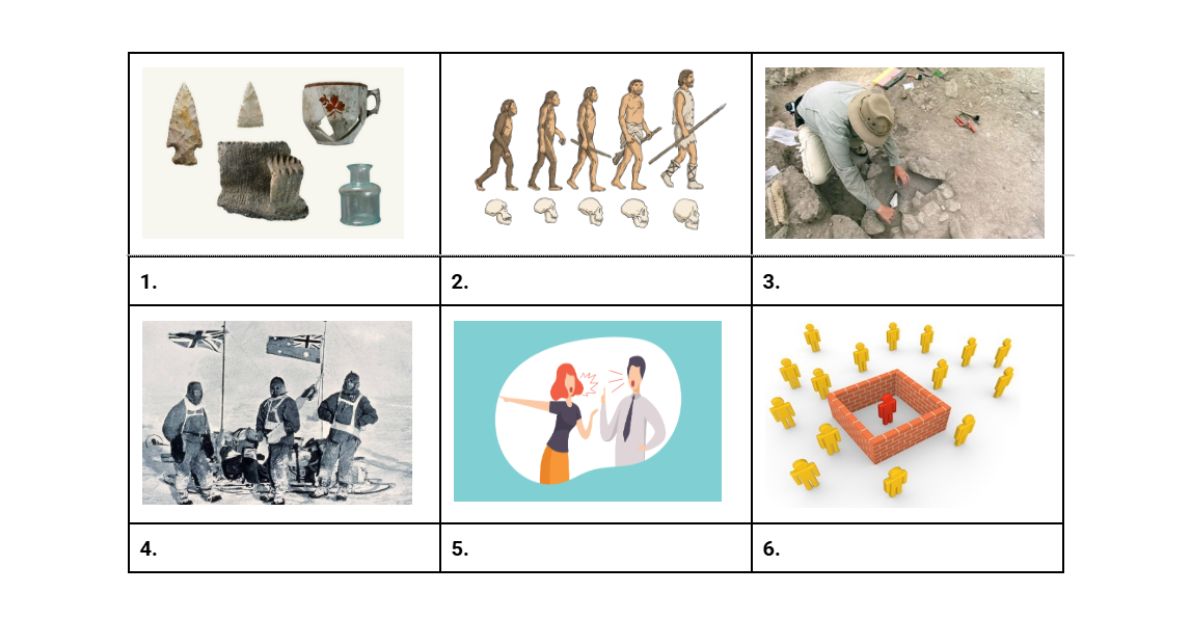
Bài 1: Điền các từ trong danh sách từ vựng đã học vào hình minh họa phù hợp
conflict
artifacts
isolated
excavate
evolution
expedition
Điền các từ trong danh sách từ vựng đã học vào hình minh họa phù hợp
Bài 2: Điền các từ được cho dưới đây vào chỗ trống thích hợp trong mỗi câu
invade
industrialization
expedition
reveal
heritage
revolutionary
1. The museum was built to protect the country's cultural __________ and educate future generations about their traditions.
2. During the war, enemy forces attempted to __________ the capital through the mountains, but were stopped at the last moment.
3. Ancient writings on the temple walls __________ how early civilizations worshipped their gods and organized their daily life.
4. The invention of the steam engine was a __________ change that transformed both transportation and manufacturing in Europe.
5. The process of __________ led to the growth of cities, new technologies, and major changes in social and economic life.
6. In the 15th century, a famous __________ was launched to find a sea route to Asia, opening new paths for global trade.
Bài 3: Chọn đáp án A, B hoặc C để điền vào chỗ trống trong mỗi câu
1. “We’ve spent years gathering this data. If anyone tries to steal it, we ______ them to the historical society.”
A. will report
B. is reporting
C. report
2. Archaeologists believe that a new civilization ______ beneath the ruins.
A. will be discovered
B. discovers
C. is due discovering
3. We ______ the site for signs of ancient trade routes for over a year by next summer.
A. will study
B. will have been studying
C. will be studying
4. The historian ______ publishing her new theory on the decline of the Mayan civilization. She’s just finalizing the references.
A. is about to
B. is on the point of
C. will
5.The team ______ a digital reconstruction of ancient Athens by 2027.
A. will have completed
B. will complete
C. will be completing
Bài 4: Chọn thì/ cách diễn đạt thể hiện ý tương lai phù hợp cho mỗi tình huống trong câu.
Tình huống:
1. By the time the new museum opens next year, the researchers will have been working on the ancient manuscripts for over a decade.
2. The historian made the decision to write a book about the rise of the Mongol Empire just now.
3. The excavation team is standing at the edge of the site with their tools ready. They will begin any second.
4. Archaeologists plan to restore a part of the ancient city of Pompeii. They’ve discussed it and made arrangements.
5. By the end of the decade, experts will have translated most of the scrolls found in the desert.
6. The team will be researching the ruins at this time tomorrow.
Thì/ cách diễn đạt:
a. Will + V-inf
b. be going to
c. Future perfect continuous
d. Future continuous
e. Be about to + V-inf
f. Future perfect
Bài 5:
a. Người đọc trả lời các câu hỏi sau dựa trên quan điểm của bản thân
Which of the following items do you think are likely to be found among the ruins after a war?
Electrical wires
Shopping bags
Broken ceramics
Children’s storybooks
Twisted metal
Plastic take-away cups
Which of these two reasons do you think might explain why a remote place like the Arctic could be important during a global war?
It is full of fertile farmland
It can serve as a hidden base for operations
Do you think remote areas like the Arctic can have strategic value in times of war? Why or why not?
b. Bài tập đọc hiểu
The secret Nazi bases in the Arctic: Nussbaum
The final German troops to lay down their arms were stationed in a remote Arctic wilderness.
The secret Nazi bases in the Arctic: Nussbaum
A. The Svalbard archipelago in the Arctic is among the most isolated regions on the planet, located over 500 miles north of Europe and roughly the same distance from the North Pole. Until the late 1800s, it had no permanent human presence, apart from a few unsuccessful and often tragic attempts by whalers to stay through the harsh winters. The area was originally called “Spitsbergen,” a Dutch word meaning “pointy mountains,” which perfectly describes what sailors see from afar: steep, snow-covered peaks divided by glaciers slowly making their way to the sea. Mining operations began in the early 1900s, but today, tourism has taken over, as the islands’ untouched, peaceful vastness attracts visitors from across the globe.
B. I arrived during the summer of 2024 as part of The Arctic Circle artist residency, a program that annually brings together writers and artists from around the globe to Svalbard. Surrounded by snow-dusted mountains, our group hiked across a gentle ridge and discovered a small flat area scattered with rusting debris on the western edge of the main island—the only one that is inhabited. Among the remains were a tangle of frayed wire partially buried in mud, a distorted metal container, and occasional fragments of ceramic. The debris spanned a roughly circular patch, about a hundred feet across. I moved through the site cautiously, making sure not to touch or disturb anything. Without any guides to explain what we were looking at, it would have been hard to realize that these items were remnants of a long-forgotten conflict. I was standing amidst what was left of a Nazi weather station, constructed in 1942 under the codename Nussbaum - one of the last surviving pieces of a strange and largely overlooked chapter of World War II, fought in the farthest reaches beyond the developed world.
C. At first glance, Svalbard seems like an unlikely site for any kind of conflict. For hundreds of years, it was treated as terra nullius - land that belonged to no country. This status shifted after the signing of the Svalbard Treaty in 1925, which granted Norway official sovereignty over the islands but allowed all participating nations equal rights to exploit natural resources, especially coal. To this day, only two countries have set up lasting mining communities there: Norway and Russia.
D. In principle, the entire archipelago remains open to anyone, and Svalbard has functioned for decades as a sort of in-between zone, outside the boundaries of conventional statehood. No visa is required to enter or work there and pregnant women past their first trimester must leave because babies born on the islands would technically have no citizenship. It’s a region that seems to exist outside national boundaries and politics altogether, a barren, icy place with little more than snow and stone to care about.
E. War has a way of turning priorities upside down - what was once important may become irrelevant, and places previously overlooked can suddenly take on great strategic significance. Prior to World War II, Svalbard was imagined as a kind of neutral zone where various nations could jointly engage in Arctic research and resource extraction. However, that idealistic vision ended abruptly and violently with the outbreak of the war, as competing powers began to recognize the archipelago’s potential military value.
F. Far removed from the theaters of war, Svalard still held advantages—less for its geographic positioning than for its crucial role in weather forecasting. Much of Europe’s weather patterns begin in the Arctic, and accurate reports were essential to both naval and air operations during the war. For military commanders and transport crews alike, knowing what weather to expect could mean the difference between success and failure.
Questions 1-3
The Reading Passage has six paragraphs, A-F
Which paragraph contains the following information?
Write the correct letter, A-F
A contrast between Svalbard’s pre-war role and its sudden importance during the war.
A mention of an international art program that was involved in the exploration of Svalbard.
An explanation of how Svalbard functioned as a politically neutral area for many years.
Questions 4-7
Complete the sentences below using NO MORE THAN TWO WORDS from the passage.
Tourism became the primary activity in Svalbard after the decline of ______.
The site, littered with decaying objects, was located on the western edge of the only island in Svalbard that is ______.
The Svalbard Treaty allowed Norway sovereignty, but also gave countries shared rights over ______.
Weather forecasting from the Arctic was vital for ______ as well as air operations during the war.
g (ancestor: an early human or animal that lived a long time ago and led to modern forms)
d (conflict: a serious fight or disagreement between groups or countries)
a (expedition: a trip made for a special reason, usually to explore or discover)
e (glorious: bringing great pride or honor)
f (heritage: the history, traditions, and culture of a country or group)
c (invade: to enter a place by force, especially during a war)
b (servant: a person who works in someone’s house and does chores)
Bài 2:
colonize
expansion
evolution
industry/ industrialization
isolated
revolutionary
transformation
Bài 3:
C (Empire: một đế chế - đúng với mô tả về đế chế La Mã cổ đại, vốn từng kiểm soát nhiều vùng đất và dân tộc.)
B (Theory: giả thuyết hoặc lý thuyết khoa học - phù hợp với bối cảnh nghiên cứu.)
C (Excavate: khai quật - đúng ngữ cảnh khảo cổ học, khi các nhà nghiên cứu đào bới để tìm di tích, hiện vật.)
A (Settle: định cư - đúng ngữ cảnh khi nhóm người tìm một nơi ở lâu dài, thường là gần nước và đất màu mỡ.)
D (Peasant: nông dân - tầng lớp thấp trong xã hội phong kiến, làm việc trên đất của lãnh chúa và phải nộp sản phẩm.)
C (Archeology: khảo cổ học - ngành nghiên cứu các nền văn minh cổ qua di tích, đồ vật, nhà cửa, v.v.)
Bài 4:
unearth - Được dùng để thể hiện hành động của “ historians and scientists” (các nhà sử học và khoa học) đối với “ancient cities” (các thành phố cổ).
artifacts - Là những đồ vật như công cụ, đồ gốm, trang sức,… được đề cập ngay sau đó
insights - Mỗi hiện vật có thể cung cấp cái nhìn sâu sắc về đời sống, tín ngưỡng hoặc kinh tế thời xưa.
ruins - Các địa điểm lịch sử có thể trở thành tàn tích vì chiến tranh, thiên tai, hoặc sự lãng quên
preserve - Mô tả hành động giữ gìn di tích là cần thiết để không làm hỏng những gì còn sót lại.
reveal - Công nghệ mới giúp tiết lộ những bí mật ẩn giấu trong lòng đất mà không phá hủy di chỉ khảo cổ.
PHẦN LUYỆN TẬP
Bài 1:
artifacts
evolution
excavate
expedition
conflict
isolated
Bài 2:
heritage
invade
reveal
revolutionary
industrialization
expedition
Bài 3:
A - dùng “will” để chỉ lời đe dọa sẽ làm việc gì đó trong tương lai trong một tình huống nào đó
A - dùng “will” để chỉ dự đoán về tương lai. Ở ngữ cảnh này là sự đoán một nền văn minh mới sẽ được phát hiện dưới đống tàn tích và dùng thể bị động.
B - dùng thì tương lai hoàn thành tiếp diễn để nhấn mạnh độ dài thời gian tính đến tương lai. Trong ngữ cảnh này là độ dài hơn một năm tính đến mùa hè tới.
B - dùng “be on the point of …” để chỉ hành động sắp xảy ra vì cố ấy đã sắp hoàn tất (She’s just finalizing the references). động từ “publishing” ở dạng V-ing.
A - dùng thì tương lai hoàn thành để chỉ hành động hoàn thành trước một mốc thời gian cụ thể. Trong ngữ cảnh trên, hành động “complete” hoàn thành trước mốc thời gian trong tương lai là năm 2027.
Bài 4:
c - dùng thì tương lai hoàn thành tiếp diễn để diễn tả hành động sẽ tiếp tục kéo dài đến một thời điểm cụ thể trong tương lai.
a - dùng “will” để chỉ quyết định đưa ra ngay tại thời điểm nói.
e - dùng “be on the point of …” để chỉ hành động sắp xảy ra.
b - dùng “be going to” để chỉ hành động sẽ xảy ra trong tương lai mà người nói đã lên kế hoạch hoặc dự định từ trước.
f - dùng thì tương lai hoàn thành để chỉ hành động hoàn thành trước một mốc thời gian cụ thể.
d - dùng thì tương lai tiếp diễn để chỉ hành động đang diễn ra tạm thời trong một thời gian cụ thể trong tương lai.
Bài 5:
E (Đoạn E - “War has a way of turning priorities upside down - what was once important may become irrelevant, and places previously overlooked can suddenly take on great strategic significance.” Dịch: “Chiến tranh có thể đảo ngược các ưu tiên - những gì từng quan trọng có thể trở nên không còn liên quan, và những nơi trước đây bị bỏ qua đột nhiên có thể mang ý nghĩa chiến lược to lớn.”)
B (Đoạn B - “I arrived during the summer of 2024 as part of The Arctic Circle artist residency, a program that annually brings together writers and artists from around the globe to Svalbard. Surrounded by snow-dusted mountains, our group hiked across a gentle ridge and discovered a small flat area scattered with rusting debris on the western edge of the main island—the only one that is inhabited.” Dịch: “Tôi đến vào mùa hè năm 2024 với tư cách là một phần của chương trình lưu trú nghệ sĩ The Arctic Circle, một chương trình hàng năm quy tụ các nhà văn và nghệ sĩ từ khắp nơi trên thế giới đến Svalbard. Được bao quanh bởi những ngọn núi phủ đầy tuyết, nhóm của chúng tôi đi bộ qua một sườn núi thoai thoải và phát hiện ra một khu vực bằng phẳng nhỏ rải rác các mảnh vụn rỉ sét ở rìa phía tây của hòn đảo chính—nơi duy nhất có người sinh sống.”)
D (Đoạn D - “It’s a region that seems to exist outside national boundaries and politics altogether, a barren, icy place with little more than snow and stone to care about.” Dịch: “Đó là một khu vực dường như tồn tại bên ngoài biên giới quốc gia và chính trị, một nơi băng giá, cằn cỗi, chẳng có gì đáng quan tâm ngoài tuyết và đá.”)
mining operations (Đoạn A - “Mining operations began in the early 1900s, but today, tourism has taken over, as the islands’ untouched, peaceful vastness attracts visitors from across the globe.” Dịch: “Hoạt động khai thác bắt đầu vào đầu những năm 1900, nhưng ngày nay, du lịch đã phát triển, vì sự rộng lớn, yên bình và nguyên sơ của hòn đảo thu hút du khách từ khắp nơi trên thế giới.”)
inhabited(Đoạn B - “Surrounded by snow-dusted mountains, our group hiked across a gentle ridge and discovered a small flat area scattered with rusting debris on the western edge of the main island—the only one that is inhabited.” Dịch: “Được bao quanh bởi những ngọn núi phủ đầy tuyết, nhóm chúng tôi đi bộ qua một sườn núi thoai thoải và phát hiện ra một khu vực bằng phẳng nhỏ rải rác những mảnh vỡ gỉ sét ở rìa phía tây của hòn đảo chính—nơi duy nhất có người sinh sống.”)
natural resources (Đoạn C - “This status shifted after the signing of the Svalbard Treaty in 1925, which granted Norway official sovereignty over the islands but allowed all participating nations equal rights to exploit natural resources, especially coal.” Dịch: “Tình trạng này đã thay đổi sau khi Hiệp ước Svalbard được ký kết vào năm 1925, trong đó trao cho Na Uy chủ quyền chính thức đối với quần đảo nhưng vẫn cho phép tất cả các quốc gia tham gia có quyền bình đẳng trong việc khai thác tài nguyên thiên nhiên, đặc biệt là than đá.”)
naval (Đoạn F - “Much of Europe’s weather patterns begin in the Arctic, and accurate reports were essential to both naval and air operations during the war.” Dịch: Phần lớn các kiểu thời tiết ở châu Âu bắt đầu từ Bắc Cực và các báo cáo chính xác đóng vai trò thiết yếu đối với cả hoạt động trên không và trên biển trong chiến tranh.”)
hình minh họa chủ đề History and Civilization
Phần 5: Tổng hợp từ vựng
Từ vựng
Phiên âm
Nghĩa
Ví dụ
Artifact (n)
/ˈɑː.tɪ.fækt/
đồ tạo tác
The museum displayed ancient Roman artifacts.
Archaeology (n)
/ˌɑː.kiˈɒl.ə.dʒi/
khảo cổ học
Archaeology helps us understand early civilizations.
Ancestor (n)
/ˈæn.ses.tər/
tổ tiên
Our ancestors shaped the foundation of civilization.
Colony (n)
/ˈkɒl.ə.ni/
thuộc địa
India was once a British colony.
Conflict (n)
/ˈkɒn.flɪkt/
xung đột
The conflict lasted for several decades.
Excavate (v)
/ˈek.skə.veɪt/
khai quật
Workers carefully excavated beneath the old church floor.
Expansion (n)
/ɪkˈspæn.ʃən/
sự mở rộng
The kingdom’s expansion led to new trade routes.
Evolution (n)
/ˌiː.vəˈluː.ʃən/
sự tiến hóa
Human evolution spans millions of years.
Expedition (n)
/ˌek.spəˈdɪʃ.ən/
cuộc thám hiểm
They joined an expedition to find new lands.
Empire (n)
/ˈem.paɪər/
đế chế
The Roman Empire lasted for centuries.
Glorious (adj)
/ˈɡlɔː.ri.əs/
huy hoàng
The painting captures a glorious sunset over the valley.
Heritage (n)
/ˈher.ɪ.tɪdʒ/
di sản
We must protect our cultural heritage.
Industrialization (n)
/ɪnˌdʌs.tri.ə.laɪˈzeɪ.ʃən/
công nghiệp hóa
Industrialization changed how people lived.
Insight (n)
/ˈɪn.saɪt/
sự hiểu biết sâu sắc
History gives us insight into human nature.
Isolated (adj)
/ˈaɪ.sə.leɪ.tɪd/
bị cô lập
The tribe remained isolated for centuries.
Invade (v)
/ɪnˈveɪd/
xâm lược
The army planned to invade the small city.
Preserve (v)
/prɪˈzɜːv/
bảo tồn
We preserve ancient manuscripts in libraries.
Peasant (n)
/ˈpez.ənt/
nông dân
The peasants worked on the farm during the Middle Ages.
Ruin (n)
/ˈruː.ɪn/
tàn tích
They visited ancient ruins in Greece.
Revolutionary (adj)
/ˌrev.əˈluː.ʃən.ər.i/
mang tính cách mạng
Revolutionary leaders fought for freedom and justice.
Settle (v)
/ˈset.l̩/
định cư
They settled near the river long ago.
Servant (n)
/ˈsɜː.vənt/
người hầu, đầy tớ
The servant brought water to the king.
Theory (n)
/ˈθɪə.ri/
lý thuyết
Darwin’s theory changed biological science.
Transform (v)
/ trænsˈfɔːm/
biến đổi
Industrialization transformed rural communities.
Unearth (v)
/ʌnˈɜːθ/
khai quật
The ancient tools from the Bronze Age have been recently unearthed.
Reveal (v)
/rɪˈviːl/
tiết lộ
Old diaries reveal the hardships of life during the war.
Bài viết trên cung cấp đến người học một số từ vựng liên quan đến chủ đề Grammar and vocabulary for IELTS Reading (Level 1) - Unit 7: History and Civilization và kiến thức ngữ pháp future tenses, giúp người học có thêm kiến thức nền về chủ đề thông qua bài đọc. Người học có thể tham khả sách Sách Practicing for IELTS Vol 3 - Tuyển tập đề thi thử IELTS kèm giải thích đáp án chi tiếtđược biên soạn bởi đội ngũ giáo viên giàu kinh nghiệm tại ZIM Academy.
Là một người từng nhiều lần chật vật trên hành trình học tập, cô thấu hiểu rằng thành công không đến từ tài năng bẩm sinh, mà từ sự kiên trì và kỷ luật mỗi ngày. Cô tin rằng ai cũng mang trong mình một tiềm năng riêng, chỉ cần được khơi gợi đúng cách sẽ có thể tỏa sáng theo cách của chính mình.
Phương châm giảng dạy của cô là lấy cảm hứng làm điểm khởi đầu, và sự thấu hiểu làm kim chỉ nam. Cô không dạy để học sinh ghi nhớ, mà để các em đặt câu hỏi, khám phá và tự nhìn thấy giá trị của việc học. Mỗi giờ học là một không gian mở – nơi các em được thử, được sai, và được trưởng thành.
Nguồn tham khảo
1
“Future: will and shall.” Cambridge Dictionary - Grammar,https://dictionary.cambridge.org/grammar/british-grammar/future-will-and-shall. Accessed 19 April 2025.
2
“Future: be going to (I am going to work).” Cambridge Dictionary - Grammar,https://dictionary.cambridge.org/grammar/british-grammar/future-be-going-to-i-am-going-to-work#google_vignette. Accessed 19 April 2025.
3
“Future: present continuous to talk about the future (I’m working tomorrow).” Cambridge Dictionary - Grammar,https://dictionary.cambridge.org/grammar/british-grammar/future-present-continuous-to-talk-about-the-future-i-m-working-tomorrow. Accessed 19 April 2025.
4
“Future: present simple to talk about the future (I work tomorrow).” Cambridge Dictionary - Grammar,https://dictionary.cambridge.org/grammar/british-grammar/future-present-simple-to-talk-about-the-future-i-work-tomorrow. Accessed 19 April 2025.
5
“Future continuous (I will be working).” Cambridge Dictionary - Grammar,https://dictionary.cambridge.org/grammar/british-grammar/future-continuous-i-will-be-working. Accessed 19 April 2025.
6
“Future perfect simple (I will have worked eight hours).” Cambridge Dictionary - Grammar,https://dictionary.cambridge.org/grammar/british-grammar/future-perfect-simple-i-will-have-worked-eight-hours. Accessed 19 April 2025.
7
“Future perfect continuous (I will have been working here ten years).” Cambridge Dictionary - Grammar,https://dictionary.cambridge.org/grammar/british-grammar/future-perfect-continuous-i-will-have-been-working-here-ten-years. Accessed 19 April 2025.
8
“Future: other expressions to talk about the future.” Cambridge Dictionary - Grammar,https://dictionary.cambridge.org/grammar/british-grammar/future-other-expressions-to-talk-about-the-future. Accessed 19 April 2025.



Bình luận - Hỏi đáp