Từ vựng chủ đề The Natural World: aquatic, bark, biodiversity, conservation, cell, creature, carbon footprint,…
Ngữ pháp:
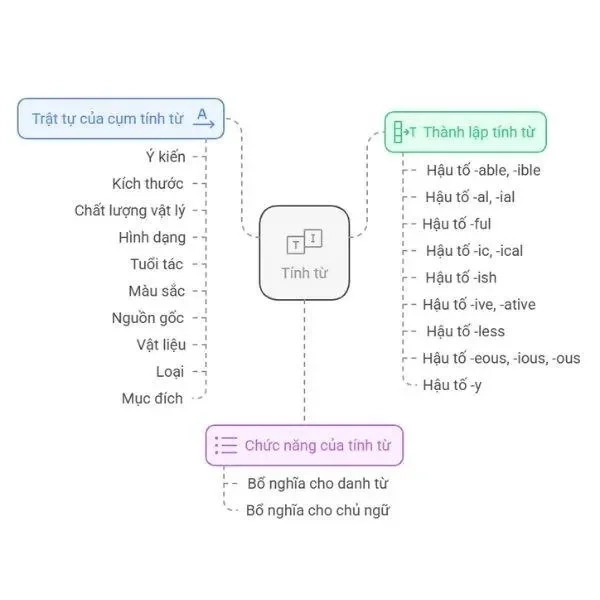
tính từ: bổ nghĩa cho danh từ hoặc chủ ngữ; có thể được thành lập bằng cách thêm tiền tố, hậu tố; có trật tự tính từ nhất định
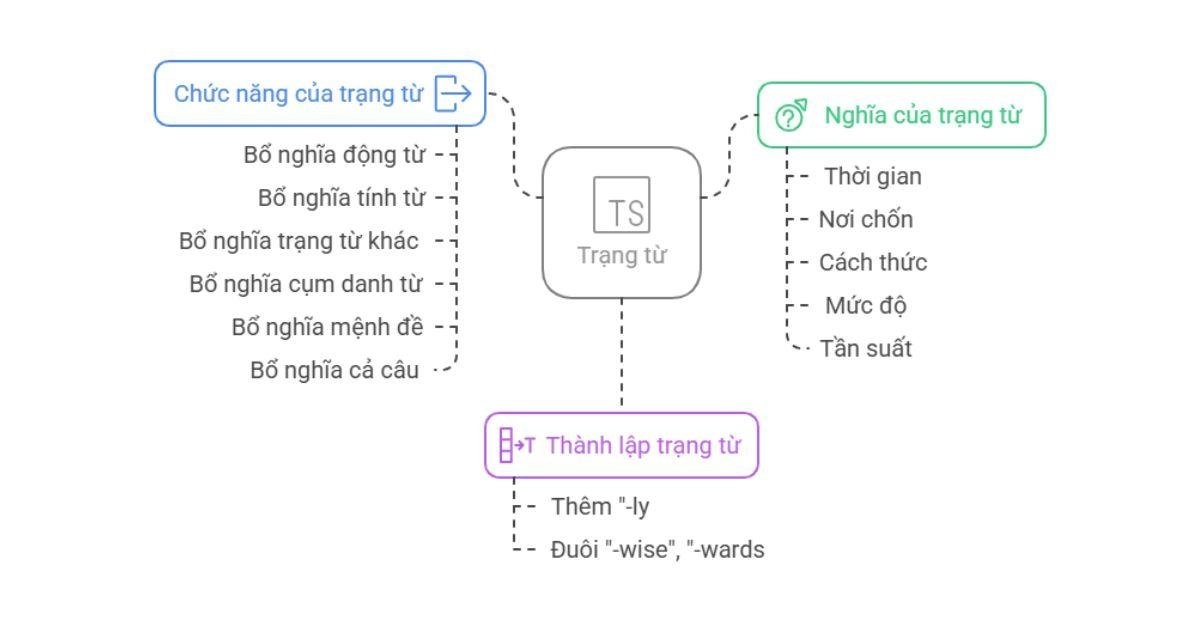
trạng từ: bổ nghĩa cho động từ, tính từ,…; có nhiều loại trạng từ với chức năng khác nhau; thường được thành lập bằng cách thêm -ly
Bài viết thuộc series Grammar and Vocabulary for IELTS Reading (Level 1). Unit 4: The Natural World giới thiệu từ vựng về Thế giới tự nhiên, đồng thời củng cố kiến thức về tính từ và trạng từ. Bài đọc theo chủ đề giúp người học nâng cao kỹ năng IELTS Reading hiệu quả.
Phần 1: Từ vựng
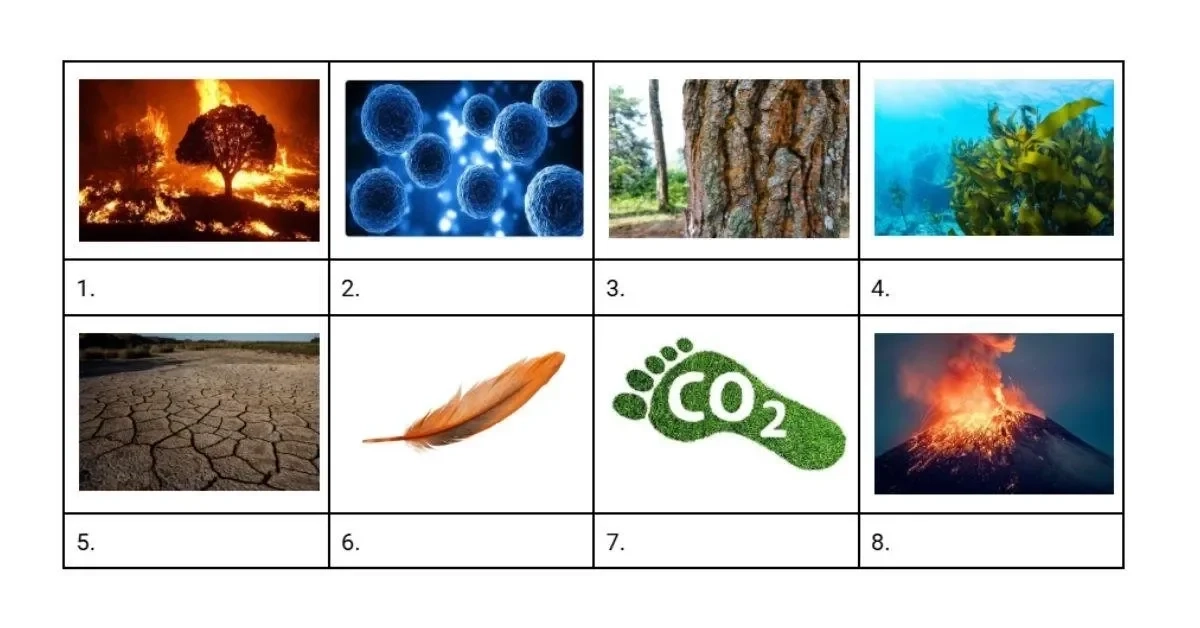
Bài 1. Chọn từ thích hợp đã cho để nối với hình minh họa phù hợp
carbon footprint
drought
wildfire
volcanic eruption
cell
feather
bark
seaweed
Bài 1. Chọn từ thích hợp đã cho để nối với hình minh họa phù hợp
Bài 2. Chọn phương án phù hợp để điền vào chỗ trống trong mỗi câu
1. The Amazon rainforest is home to a vast range of __________ that have not yet been discovered.
A. cells
B. creatures
C. roots
D. minerals
2. Coral reefs are delicate __________ ecosystems that are highly sensitive to changes in water temperature.
A. volcanic
B. tropical
C. aquatic
D. land
3. Scientists are concerned that excessive burning of __________ is accelerating climate change.
A. fossil fuel
B. green waste
C. mineral water
D. fresh gas
4. The climate in this region is extremely __________, making it difficult to grow stable crops.
A. humid
B. consistent
C. fertile
D. unpredictable
5. Bees collect __________ from flowers and help with plant reproduction.
A. dust
B. pollen
C. seeds
D. honey
6. The vet discovered a harmful __________ growing inside the cat’s ear.
A. mineral
B. feather
C. fungus
D. root
7. The dense __________ in the jungle made it nearly impossible to move forward.
A. pollution
B. vegetation
C. creatures
D. erosion
8. Many __________ rainforests are threatened by illegal logging and mining.
A. polar
B. continental
C. tropical
D. mountainous
Bài 3. Hãy điền từ đúng với vào ô từ loại
conservation (noun) → …………………………………. (verb)
erosion (noun) → …………………………………. (verb)
generate (verb) → …………………………………. (noun)
migrate (verb) → …………………………………. (noun)
reintroduction (noun) → …………………………………. (verb)
resistance (noun) → …………………………………. (adjective)
Bài 4. Điền các từ được cho dưới đây vào chỗ trống thích hợp trong mỗi câu
indigenous
lush
humid
dump
biodiversity
marine
1. The region’s __________ has made it a priority area for global conservation efforts and scientific research.
2. Some factories still __________ chemical waste into nearby rivers, causing long-term damage to local ecosystems.
3. The climate in coastal rainforests is extremely __________, making it ideal for ferns, orchids, and other moisture-loving plants.
4. These birds are __________ to New Zealand and play a crucial role in the balance of the local ecosystem.
5. Oil spills are one of the most serious threats to __________ life, affecting fish, coral, and sea mammals.
6. After the rainy season, the hills were covered in __________ vegetation that attracted many insects and small animals.
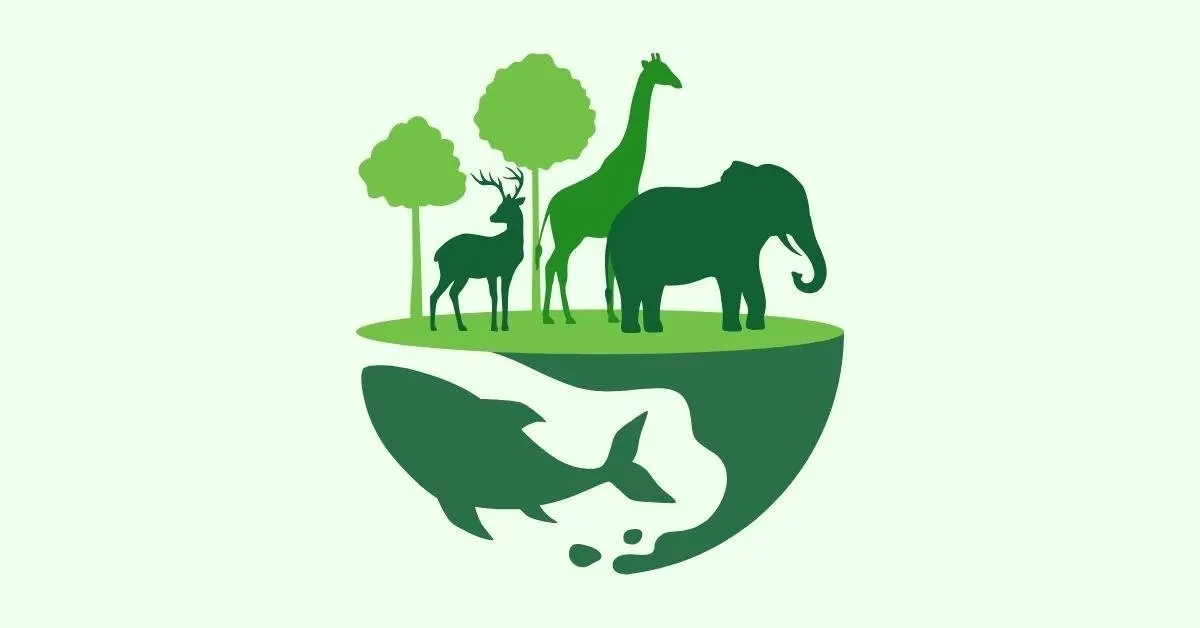
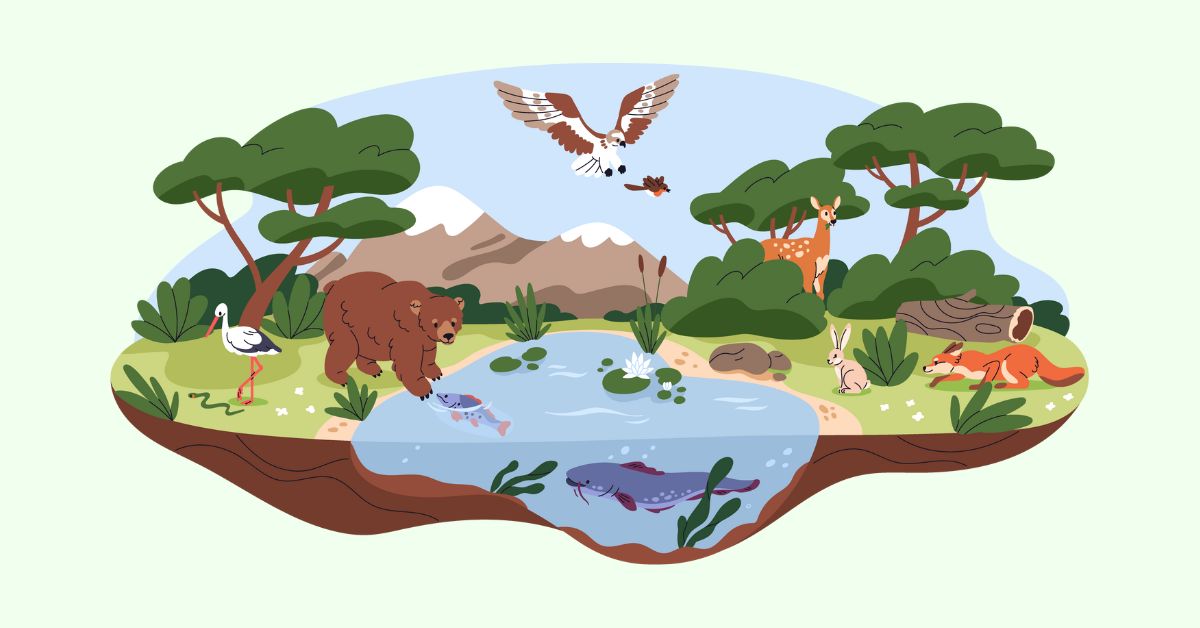
hình minh họa chủ đề The Natural World
Phần 2: Ngữ pháp
1. Tính từ (Adjectives)
Tính từ là một trong 4 từ loại chính trong tiếng Anh (danh từ, động từ, tính từ, trạng từ). Tính từ được dùng để cung cấp thêm thông tin bổ nghĩa cho người, con vật, đồ vật,... [1]
Thành lập tính từ:
Không có quy luật chung trong việc thành lập tính từ. Tuy nhiên, thông thường có thể nhận biết tính từ bằng hậu tố của chúng. [1]
Lưu ý: Đây là các hậu tố thường gặp của tính từ. Tuy nhiên, người học không nên tự cho rằng một từ nào đó là tính từ chỉ vì nó có các hậu tố này. Ví dụ: "detective" cũng có đuôi -ive, nhưng lại là danh từ trong trường hợp "a detective" (một thám tử)
Ngoài ra, tính từ có thể đi kèm tiền tố và thường khiến chúng mang nghĩa phủ định
Ví dụ: The researchers discovered a rare plant in the remote jungle. (Các nhà nghiên cứu đã phát hiện ra một loài thực vật quý hiếm trong khu rừng rậm xa xôi.)
Bổ nghĩa cho chủ ngữ, đứng sau động từ to be hoặc động từ nối (linking verbs)
Một số động từ nối thường gặp: become (trở nên), appear (hóa ra), remain (vẫn), look (trông có vẻ), smell (có mùi), sound (nghe có vị), taste (có vị), feel (cảm thấy),…
Ví dụ:
The water in this region remains clear throughout the year. (Nước ở khu vực này trong xanh quanh năm.)
The climate in this mountainous area is unpredictable, especially during the rainy season. (Khí hậu ở vùng núi này rất khó đoán, đặc biệt là vào mùa mưa.)
Trật từ của cụm tính từ:
Khi có nhiều hơn một tính từ đứng trước một danh từ, các tính từ thường được sắp xếp theo một thứ tự cụ thể như sau: [2]
Trạng từ là một trong 4 từ loại chính trong tiếng Anh (danh từ, động từ, tính từ, trạng từ). Trạng từ được dùng để thêm thông tin về một động từ, tính từ, một trạng từ khác, một mệnh đề hoặc toàn bộ câu hoặc trường hợp ít phổ biến hơn là bổ nghĩa cho một cụm danh từ. [3]
Trong nhiều trường hợp, trạng từ (đa số là trạng từ chỉ cách thức) được thành lập bằng cách thêm “-ly” vào sau tính từ. Ví dụ: careful (adj) → carefully (adv), safe (adj) → safely (adv).
Ngoài ra, trạng từ còn ở nhiều dạng khác như:
Trạng từ có đuôi “-wise”, “-wards”: clockwise, likewise, upwards, eastwards,...
Trạng từ ở cùng dạng với tính từ: fast (adj) - fast (adv), late (adj) - late (adv),...
Trạng từ không liên quan đế tính từ: quite, very, just, ….
Trạng từ “silently” bổ nghĩa cho động từ “moves”, thể hiện cách thức di chuyển.
Bổ nghĩa cho tính từ
The soil here is very rich in nutrients.
Trạng từ “very” bổ nghĩa cho tính từ “rich”, thể hiện mức độ
Bổ nghĩa cho một trạng từ khác
The wind blew very strongly during the storm.
Trạng từ “very” bổ nghĩa cho trạng từ “strongly”, thể hiện mức độ.
Bổ nghĩa cho cụm danh từ
This plant requires quite a lot of sunlight to grow.
Trạng từ "quite" bổ nghĩa cho cụm danh từ "a lot of sunlight", thể hiện mức độ.
Bổ nghĩa cho cả mệnh đề
Interestingly, while many animals migrated to avoid the drought, some species adapted to survive in the extreme conditions.
Trạng từ “interestingly” bổ nghĩa cho mệnh đề thứ 2, thể hiện thái độ bất ngờ.
Bổ nghĩa cho cả câu
Surprisingly, the desert was full of life after the rain.
Trạng từ "Surprisingly" bổ nghĩa cho cả mệnh đề, thể hiện thái độ với toàn bộ mệnh đề.
3. Ứng dụng trong việc dịch câu IELTS Reading
a. Hiểu cấu trúc thứ tự của tính từ và trạng từ trong cụm danh từ
Trong tiếng Anh, các tính từ thường tuân theo trật tự sau:
Opinion → Size → Physical quality → Shape → Age → Color → Origin → Material → Type → Purpose + Noun
Ví dụ: Archaeologists discovered an large rough oval 200-year-old dark Amazonian stone ceremonial object
Khi dịch sang tiếng Việt, người học nên đảo ngược lại thứ tự để đúng với cách nói tự nhiên:
Dịch từ danh từ chính ra trước: object (vật)
Sau đó dịch các tính từ, bắt đầu từ cuối cụm trở về đầu.
→ Các nhà khảo cổ đã phát hiện một vật thể nghi lễ bằng đá, có nguồn gốc từ vùng Amazon, màu sẫm, 200 năm tuổi, hình bầu dục, bề mặt thô ráp, kích thước lớn.
b. Xác định thành phần bổ nghĩa để dịch chính xác
Các cụm danh từ dài thường chứa:
Tính từ bổ nghĩa cho danh từ
Trạng từ bổ nghĩa cho tính từ hoặc động từ rút gọn
Cụm giới từ hoặc mệnh đề rút gọn
Ví dụ: The severely damaged habitat of endangered species requires immediate conservation efforts.
Tìm danh từ chính → “habitat”
Xác định cụm giới từ → “of endangered species” bổ nghĩa cho danh từ “habitat”
Xác định tính từ “damaged” bổ nghĩa cho danh từ “habitat”
Xác định trạng từ “severely” bổ nghĩa cho tính từ “damanged”
→ Môi trường sống của các loài có nguy cơ tuyệt chủng bị tàn phá nghiêm trọng đang đòi hỏi những nỗ lực bảo tồn khẩn cấp.
c. Trật tự dịch dựa vào chức năng của trạng từ
Khi trạng từ thể hiện thái độ đứng đầu hoặc giữa câu, người học có thể dịch ra đầu câu và thêm cụm cảm thán (thật, thay,...)
Ví dụ:
Unfortunately, the forest was destroyed by illegal logging. (Thật đáng tiếc, khu rừng đã bị tàn phá bởi nạn khai thác gỗ trái phép.)
The findings, crucially, enabled scientists to track slight variations in the seasonal timing of each species' transformation into adult butterflies. (Quan trọng là, những phát hiện này giúp các nhà khoa học theo dõi những thay đổi nhỏ trong thời gian theo mùa của quá trình biến thành bướm trưởng thành ở từng loài.)
Trạng từ quan hệ logic đứng giữa các mệnh đề/ câu (however, therefore, consequently,...) đứng đầu hoặc giữa câu, người học có thể dịch trạng từ trước
Ví dụ: Deserts are dry and hot. Tropical rainforests, in contrast, are warm and humid all year round. (Sa mạc thì khô và nóng. Ngược lại, rừng mưa nhiệt đới lại ấm và ẩm quanh năm.)
Phần 3: Luyện tập tổng hợp
A. Luyện tập từ vựng
Bài 1: Nối các từ vựng với định nghĩa đúng của chúng.
Từ vựng
Định nghĩa
1. tropical
a. The process by which soil or rock is gradually worn away by wind, water, or other natural forces.
2. migrate
b. Refers to warm, wet climates usually found near the equator.
3. aquatic
c. The variety of different species of plants and animals in a particular environment.
4. reintroduce
d. Water-related, living in or around water.
5. unpredictable
e. To move from one region or habitat to another, often seasonally.
6. erosion
f. Lacking consistency or regularity; difficult to forecast or expect.
7. drought
g. To return a species or plant to its original habitat after it has disappeared.
8. biodiversity
h. A long period of time with no rain, causing water shortages.
Bài 2: Chọn từ đúng trong danh sách từ vựng
generate
cell
resistant
fossil fuel
indigenous
carbon footprint
conservation
vegetation
1. Many national parks were established to support wildlife __________ and protect endangered species from extinction.
2. Some plants can __________ energy from sunlight through photosynthesis to support their growth and reproduction.
3. A large _________________ contributes to climate change, which threatens wildlife habitats and delicate natural ecosystems.
4. This new variety of wheat is highly __________ to drought and certain common plant diseases.
5. Scientists warn that continued use of __________ will accelerate the effects of climate change.
6. A single animal __________ can carry genetic information that determines traits like fur color or body size.
7. These birds are __________ to the region and do not naturally live anywhere else in the world.
8. After years of deforestation, the hillside slowly recovered and became covered with thick, green __________.
B. Luyện tập ngữ pháp
Bài 3: Thay đổi dạng từ của các từ trong ngoặc ở mỗi câu để điền vào chỗ trống cho phù hợp.
The soil in this region is not particularly ________, making it unsuitable for farming. (fertility)
Polar bears rely on ________ ice platforms to hunt for seals during the colder months. (stability)
Some chemicals used in farming can be ______ to soil and water. (harmful)
The rainforest is home to many ______ species of plants and animals. (diversity)
Several species in the region are considered ________ and are protected by international law. (danger)
The weather in the mountains can change _______, so hikers must be careful. (predict)
Bài 4: Hãy gạch chân các lỗi sai trong các câu sau và sửa lại cho đúng.
Although the weather was changing rapid, the hikers continued their journey without stopping.
These flowers grow beautiful along the riverbank during the spring season.
The water in the lake looked clearly after the heavy rainfall had stopped.
The researchers were amazed by the extreme high temperatures recorded in the canyon.
Some animals remain calmly even when they are threatened by larger predators.
The environmental report was written accurate, using recent data collected from field studies.
C. Luyện tập đọc hiểu tổng hợp
Bài 5:
a. Dựa trên quan điểm cá nhân, hãy cho biết người học đồng ý hay không đồng ý với các ý kiến dưới đây.
Local communities should play a leading role in wildlife conservation efforts.
Poaching is no longer a serious problem in the 21st century.
b. Người học trả lời các câu hỏi sau dựa trên kiến thức của bản thân
Can you name 4 animals that are endangered or already extinct?
Have you ever visited a national park or nature reserve? If yes, what was the experience like for you?
c. Bài tập đọc hiểu
Community-Led Rhino Conservation in Samburu
The remote Samburu conservancy is the first of its kind in the area, where conservation efforts are made to bring back rare rhinos.
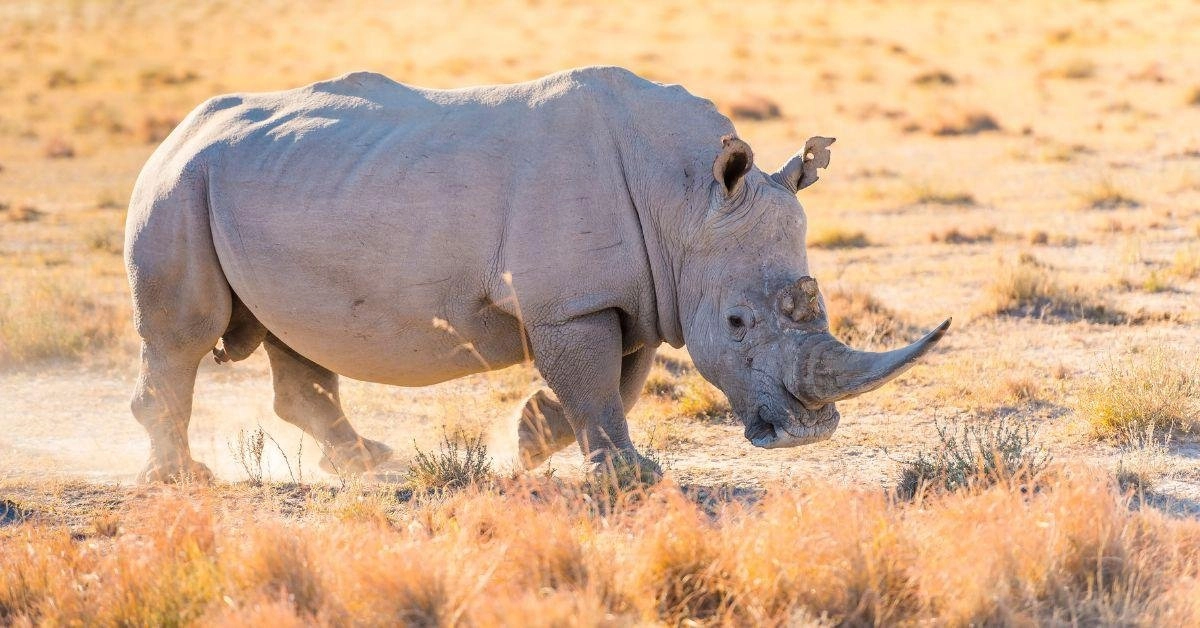
Sand slips through the fingers of Jimmy Lekiondo, a safari guide working at Saruni Rhino who specializes in tracking rhinoceroses. As the sand falls to the ground, he narrows his eyes to observe the trees closely. Signaling me to come along, he adds softly, “Step lightly.” Rhinos are extremely sensitive to sound as well. “There!” Lekiondo abruptly halts and points ahead. Between the bushes, I notice what resembles a large, grey rock. Suddenly, it moves. A huge southern white rhino stands.
Until that point, I hadn’t realized that white rhinos are actually grey, or fully grasped their enormous size. They are the second-largest land animals after the African elephant. Our rhino tracking is an authentic experience. We are looking for the rarely seen black and white rhinos that inhabit the 10,700-hectare (26,000-acre) Sera Rhino Sanctuary within Samburu’s Sera Conservancy.
I am one of only two participants on this thrilling trek, guided by Lekiondo. This is the first and only black rhino sanctuary in East Africa managed by a local community, and the sole place in Northern Kenya where visitors can track both black and white rhinos on foot. It is reassuring to know that every step we take here not only brings us closer to these endangered creatures but also contributes to their preservation and the support of the communities protecting them.
Until February 2024, white rhinos had never lived in Samburu; their natural habitats include South Africa, Namibia, and Zimbabwe. In the previous year, four adult southern white rhinos, two males and two females, were relocated from Lewa Wildlife Conservancy to Sera, marking the species' first recorded presence in the area. This project builds upon Sera’s earlier achievement of bringing black rhinos back to Samburu. According to Albert Leturuka, Manager of the Sera Rhino Sanctuary, prior to their relocation in 2015, black rhinos had not been seen in the region since the late 1980s. Historically, black rhinos lived in the area for thousands of years but were driven to extinction by poaching. Nearly three decades later, through Sera’s groundbreaking work - not only in reintroducing the species, but also by adopting a community-based conservation model, creating wildlife corridors to reduce human-wildlife conflict and allow other animals to move freely, and using advanced tracking and notching techniques to closely monitor the rhinos. The black rhino population has returned and is now thriving.
Rhino poaching may sound like an archaic problem, but it’s a concern even today. In 2025 alone, 35 rhinos have been poached from South Africa’s Kruger National Park, with 19 incidents occurring at the same location in 2024. Rhino translocations reduce overpopulation, resource competition, and threats in high-density areas. Since their arrival, Sera has seen zero poaching incidents and a 92-percent population increase—from 10 black and 4 white rhinos to 22 black (9 adults, 13 young) and 5 white, including a newborn. And it’s not just about the rhinos, these efforts are directly supporting the local community too.
All staff at Sera Conservancy, including Albert, are members of the local community. “I’m from the Seriolipi Group Ranch,” Albert shares. “I know this land well. I’ve been taking care of animals here since I was a child.” This deep-rooted connection enhances the team’s value to the sanctuary. They are personally committed to conservation and witness the advantages it brings to their communities. Albert credits Sera’s achievements to the strong involvement of local people. With support from the Basecamp Explorer Foundation, the charitable branch of Saruni Basecamp, and through conservancy fees, essential services such as healthcare, educational scholarships, access to clean water, jobs, and transportation to clinics are provided. “This partnership has fostered a sense of belonging within the community,” Albert explains. “Decisions are made by a local board, giving residents a real say in the process.”
Questions 1-4
Do the following statements agree with the information given in the Reading Passage?
Write
TRUE if the statement agrees with the information
FALSE if the statement contradicts with the information
NOT GIVEN if there is no information on this
Tourists are allowed to use vehicles when tracking rhinos at the Sera Conservancy.
The relocation of white rhinos to Sera marks their first documented presence in Samburu.
Since rhino translocations began, Sera has reported no rhino poaching cases.
The management of Sera Conservancy is handled entirely by individuals from outside the local community.
Questions 5-7
Complete the sentences below using NO MORE THAN TWO WORDS AND/OR A NUMBER from the passage.
Rhinos are difficult to approach because of their sense of ______________.
The introduction of wildlife corridors at Sera helps to reduce ______________.
Community involvement has led to a strong sense of ______________ among local residents.
Phần 4: Đáp án và giải thích
Phần từ vựng
Bài 1:
1. wildfire
2. cell
3. bark
4. seaweed
5. drought
6. feather
7. carbon footprint
8. volcanic eruption
Bài 2:
1. B (creatures)
2. C (aquatic)
3. A (fossil fuel)
4. D (unpredictable)
5. B (pollen)
6. C (fungus)
7. B (vegetation)
8. C (tropical)
Bài 3:
1. conserve
2. erode
3. generation
4. migration
5. reintroduce
6. resistant
Bài 4:
1. biodiversity
2. dump
3. humid
4. indigenous
5. marine
6. lush
Phần luyện tập
Bài 1:
1. b
2. e
3. d
4. g
5. f
6. a
7. h
8. c
Bài 2:
1. conservation
2. generate
3. carbon footprint
4. resistant
5. fossil fuel
6. cell
7. indigenous
8. vegetation
Bài 3:
1. fertile (Tính từ bổ nghĩa cho chủ ngữ “The soil in this region”.)
Dịch: Đất ở khu vực này không thực sự màu mỡ nên không thích hợp để trồng trọt.
2. stable (Tính từ bổ nghĩa cho cụm danh từ “ ice platforms”)
Dịch: Gấu Bắc Cực dựa vào các tảng băng ổn định để săn hải cẩu trong những tháng lạnh.
3. harmful (Tính từ bổ nghĩa cho danh từ “Some chemicals used in farming”)
Dịch: Một số hóa chất sử dụng trong nông nghiệp có thể gây hại cho đất và nước.
4. diverse (Tính từ bổ nghĩa cho danh từ “species”)
Dịch: Rừng mưa nhiệt đới là nơi sinh sống của đa dạng loài thực vật và động vật.
5. endangered (Tính từ bổ nghĩa cho chủ ngữ “Several species in the region”)
Dịch: Một số loài trong khu vực được coi là bị đe dọa và được luật pháp quốc tế bảo vệ.
6. unpredictably (Trạng từ bổ nghĩa cho động từ “change”)
Dịch: Thời tiết trên núi có thể thay đổi khó lường nên người đi bộ đường dài phải hết sức cẩn thận.
Bài 4:
rapid → rapidly
Trạng từ “rapidly” bổ nghĩa cho động từ “changing”.
beautiful → beautifully
Trạng từ “beautifully” bổ nghĩa cho động từ “grow”.
clearly → clear
Trạng từ “clearly” đứng sau động từ nối “looked”.
extreme → extremely
Trạng từ “
extremely” bổ nghĩa cho danh từ high.
calmly → calm
Tính từ “calm” đứng sau động từ nối “remain”.
accurate → accurately
Trạng từ “accurately” bổ nghĩa cho động từ “written”.
Bài 5:
1. NOT GIVEN (Đoạn thứ 3 - “This is the first and only black rhino sanctuary in East Africa managed by a local community, and the sole place in Northern Kenya where visitors can track both black and white rhinos on foot.” Dịch: Đây là khu bảo tồn tê giác đen đầu tiên và duy nhất ở Đông Phi do cộng đồng địa phương quản lý và là nơi duy nhất ở Bắc Kenya mà du khách có thể theo dõi cả tê giác đen và tê giác trắng bằng cách đi bộ.) Có thông tin du khách có thể đi bộ nhưng không có thông tin du khách không được sử dụng phương tiện đi lại.
2. TRUE (Đoạn thứ 4 - “In the previous year, four adult southern white rhinos, two males and two females, were relocated from Lewa Wildlife Conservancy to Sera, marking the species' first recorded presence in the area.” Dịch: Vào năm trước, bốn con tê giác trắng phương Nam trưởng thành, gồm hai con đực và hai con cái, đã được di dời từ Khu bảo tồn động vật hoang dã Lewa đến Sera, đánh dấu sự hiện diện đầu tiên được ghi nhận của loài này trong khu vực.)
3. TRUE (Đoạn thứ 5 - “Since their arrival, Sera has seen zero poaching incidents and a 92-percent population increase—from 10 black and 4 white rhinos to 22 black (9 adults, 13 young) and 5 white, including a newborn.” Dịch: Kể từ khi đến Sera, không có vụ săn trộm nào xảy ra và quần thể đã tăng 92 phần trăm - từ 10 con tê giác đen và 4 con tê giác trắng lên 22 con tê giác đen (9 con trưởng thành, 13 con non) và 5 con trắng, bao gồm một con mới sinh.)
4. FALSE (Đoạn thứ 6 - “All staff at Sera Conservancy, including Albert, are members of the local community.” Dịch: Tất cả nhân viên tại Sera Conservancy, bao gồm cả Albert, đều là thành viên của cộng đồng địa phương.)
5. sound (Đoạn thứ 1 - “Signaling me to come along, he adds softly, “Step lightly.” Rhinos are extremely sensitive to sound as well.” Dịch: Ra hiệu cho tôi đi theo, anh ấy nhẹ nhàng nói thêm: “Bước nhẹ thôi.” Tê giác cũng cực kỳ nhạy cảm với âm than.)
6. human-wildlife conflict (Đoạn thứ 4 - “Nearly three decades later, through Sera’s groundbreaking work - not only in reintroducing the species, but also by adopting a community-based conservation model, creating wildlife corridors to reduce human-wildlife conflict and allow other animals to move freely, and using advanced tracking and notching techniques to closely monitor the rhinos.” Dịch: Gần ba thập kỷ sau, thông qua công trình mang tính đột phá của Sera - không chỉ trong việc tái du nhập loài này mà còn bằng cách áp dụng mô hình bảo tồn dựa vào cộng đồng, tạo ra các hành lang động vật hoang dã để giảm xung đột giữa con người và động vật hoang dã và cho phép các loài động vật khác di chuyển tự do, đồng thời sử dụng các kỹ thuật theo dõi và đánh dấu tiên tiến để theo dõi chặt chẽ loài tê giác.)
7. belonging (Đoạn thứ 6 - “This partnership has fostered a sense of ownership within the community,” Albert explains.” Dịch: Albert giải thích: “Mối quan hệ đối tác này đã nuôi dưỡng ý thức gắn kết trong cộng đồng”.)
Bài viết trên cung cấp đến người học một số từ vựng liên quan đến chủ đề the Natural World và kiến thức ngữ pháp tính từ và trạng từ, giúp người học có thêm kiến thức nền về chủ đề thông qua bài đọc. Người học có thể tham khả sách Sách Practicing for IELTS Vol 3 - Tuyển tập đề thi thử IELTS kèm giải thích đáp án chi tiếtđược biên soạn bởi đội ngũ giáo viên giàu kinh nghiệm tại Zim Academy.
Là một người từng nhiều lần chật vật trên hành trình học tập, cô thấu hiểu rằng thành công không đến từ tài năng bẩm sinh, mà từ sự kiên trì và kỷ luật mỗi ngày. Cô tin rằng ai cũng mang trong mình một tiềm năng riêng, chỉ cần được khơi gợi đúng cách sẽ có thể tỏa sáng theo cách của chính mình.
Phương châm giảng dạy của cô là lấy cảm hứng làm điểm khởi đầu, và sự thấu hiểu làm kim chỉ nam. Cô không dạy để học sinh ghi nhớ, mà để các em đặt câu hỏi, khám phá và tự nhìn thấy giá trị của việc học. Mỗi giờ học là một không gian mở – nơi các em được thử, được sai, và được trưởng thành.
Nguồn tham khảo
1
“Adjectives.” Cambridge Grammar Dictionary ,https://dictionary.cambridge.org/grammar/british-grammar/adjectives_2. Accessed 11 April 2025.
2
“Adjectives: order.” Cambridge Grammar Dictionary,https://dictionary.cambridge.org/grammar/british-grammar/adjectives-order. Accessed 11 April 2025.
3
“Adverbs.” Cambridge Grammar Dictionary,https://dictionary.cambridge.org/grammar/british-grammar/adverbs_2. Accessed 11 April 2025.
4
“Adverbs: forms.” Cambridge Grammar Dictionary,https://dictionary.cambridge.org/grammar/british-grammar/adverbs-forms. Accessed 11 April 2025.
5
“Adverbs: functions.” Cambridge Grammar Dictionary,https://dictionary.cambridge.org/grammar/british-grammar/adverbs-functions. Accessed 11 April 2025.






Bình luận - Hỏi đáp