Bài viết giới thiệu hai khái niệm quan trọng trong hình học SAT: isosceles triangle (tam giác cân) và hypotenuse (cạnh huyền).
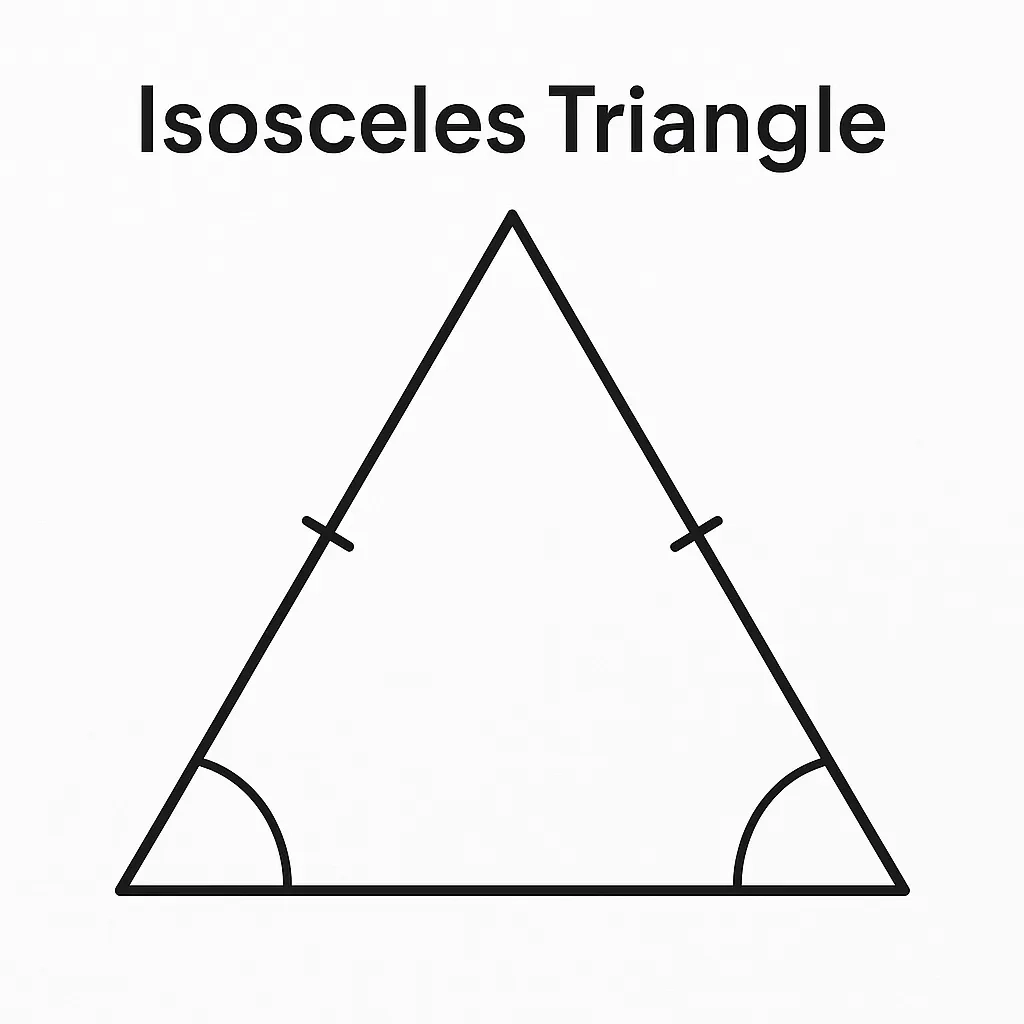
Isosceles triangle: Có ít nhất hai cạnh bằng nhau → Hai góc đối diện bằng nhau. Thường kết hợp định lý Pythagoras.
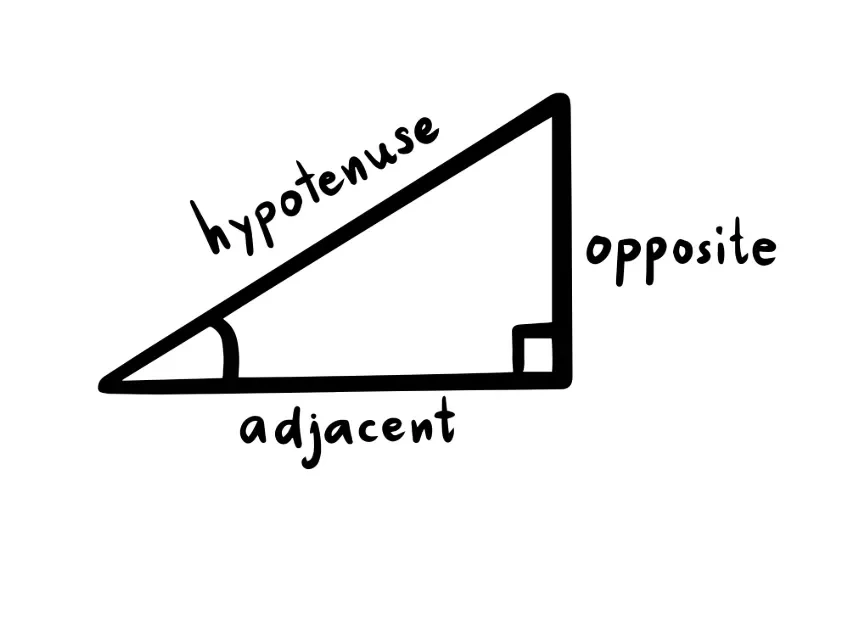
Hypotenuse: Cạnh dài nhất trong tam giác vuông, đối diện góc 90°.
Trong phần thi Toán của kỳ thi chuẩn hóa SAT, đặc biệt là ở nội dung Hình học, việc hiểu rõ và vận dụng chính xác các thuật ngữ chuyên môn đóng vai trò quan trọng trong việc giải quyết bài toán một cách hiệu quả. Hai trong số những khái niệm thường gặp và dễ gây nhầm lẫn đối với người học là “isosceles triangle” (tam giác cân) và “hypotenuse” (cạnh huyền). Cả hai đều xuất hiện trong nhiều dạng bài quen thuộc như nhận dạng tam giác, tính độ dài cạnh, hoặc áp dụng định lý trong tam giác vuông. Thông qua phần nội dung dưới đây, người học sẽ được hướng dẫn cách nhận diện đặc điểm của từng khái niệm, hiểu rõ mối liên hệ của chúng với các công thức toán học quen thuộc, và áp dụng linh hoạt vào các bài tập minh họa thực tế để củng cố kiến thức một cách hiệu quả.
Một isosceles triangle là tam giác có ít nhất hai cạnh bằng nhau. Trong hình học SAT, trường hợp phổ biến nhất là tam giác có hai cạnh bên bằng nhau, từ đó dẫn đến hai góc đối diện bằng nhau.
Tính chất thường gặp của tam giác cân trong trong SAT:
Hai cạnh bằng nhau → hai góc đối diện bằng nhau.
Tổng ba góc trong tam giác luôn bằng 180°.
Có thể áp dụng kết hợp với các định lý như định lý Pythagoras (nếu tam giác cân đồng thời vuông).
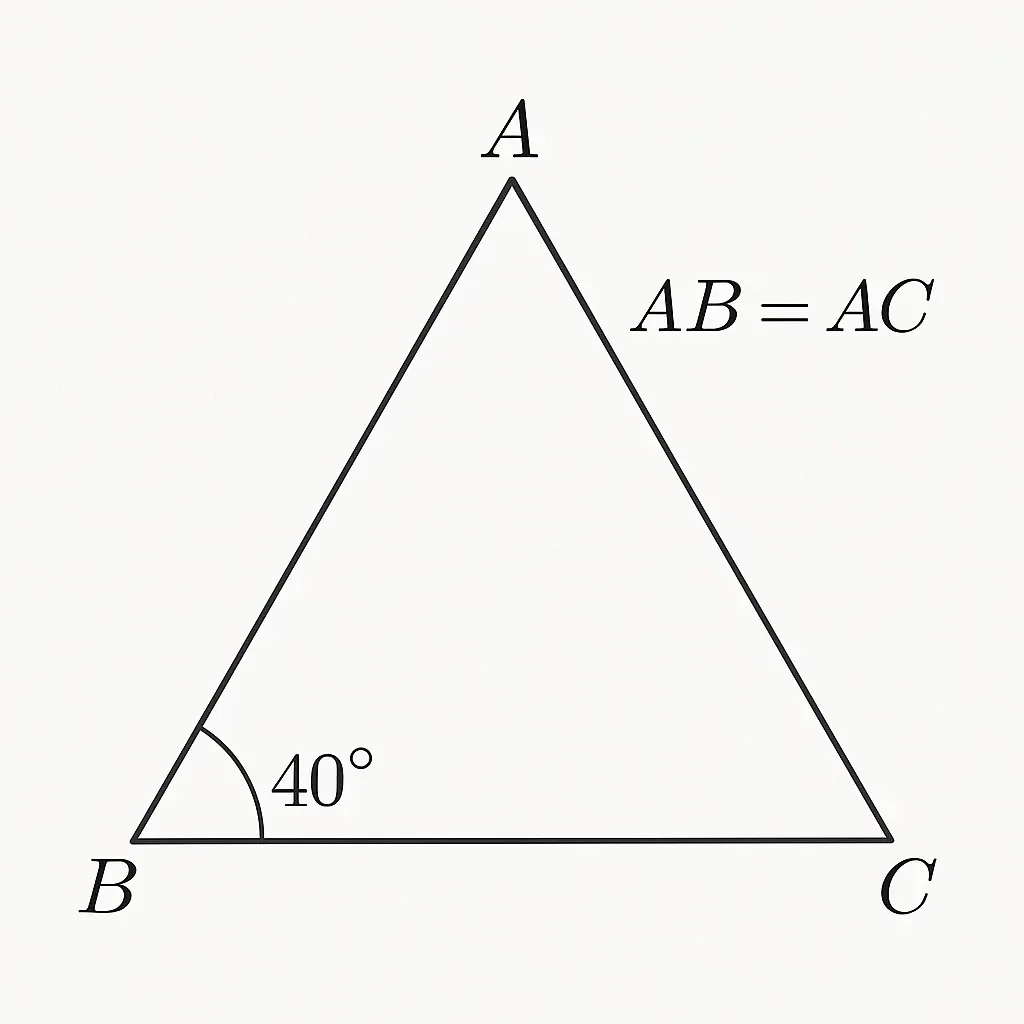
Ví dụ: Cho tam giác ABC cân tại A, với AB = AC và góc B = 40°. Tính góc C?
→ Vì tam giác cân, nên góc C = góc B = 40°, suy ra góc A = 100°.
Hypotenuse (cạnh huyền) là cạnh dài nhất trong một tam giác vuông, và luôn nằm đối diện với góc vuông (90°). Đây là cạnh được sử dụng trong các công thức quan trọng như định lý Pythagoras và tỉ số lượng giác (sine, cosine).
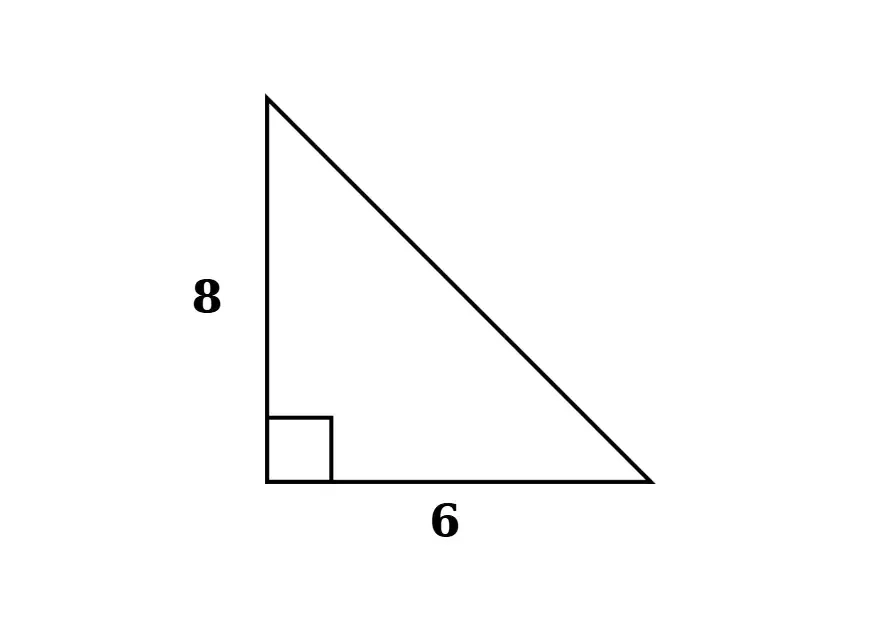
Ví dụ: Trong một tam giác vuông có hai cạnh góc vuông dài 6 và 8 đơn vị:
Áp dụng định lý Pythagoras:
\[c^2=6^2+8^2=36+64=100\Rightarrow c=10\]
→ Hypotenuse = 10
Kiểm tra từ vựng - isosceles triangle
Question 1:
Which of the following best defines an isosceles triangle?
A) A triangle with three equal sides
B) A triangle with one angle equal to 90°
C) A triangle with at least two equal sides
D) A triangle with no equal sides
Question 2:
Fill in the blank with one of these words: isosceles triangle, base angles, vertex angle, congruent sides, equilateral triangle.
A triangle where all three sides are equal is called an ________________.
A triangle with exactly two equal sides is called an ________________.
The angle formed between the two equal sides of an isosceles triangle is called the ________________.
In an isosceles triangle, the angles opposite the congruent sides are called the ________________.
In an isosceles triangle, the two equal sides are called the ________________.
Kiểm tra từ vựng - hypotenuse
Question 1:
What is the hypotenuse in a right triangle?
A) The shortest side
B) The side adjacent to the right angle
C) The side opposite the right angle and the longest side
D) The sum of the two legs
Question 2:
In the context of the Pythagorean theorem C² = A²+B², what does the variable C usually represent?
A) One of the legs
B) The angle in the triangle
C) The area of the triangle
D) The hypotenuse
Question 3:
Fill in the blank with one of these words: hypotenuse, right triangle, legs.
A triangle that has one 90-degree angle is called a _________________.
In a right triangle, the two sides that form the right angle are called the _________________.
The side opposite the right angle in a right triangle is called the _________________.
Bài toán thực tế - isosceles triangle
Exercise 1:
A roof truss is built in the shape of an isosceles triangle XYZ, where two of the rafters, XY and XZ, are the same length. If angle Y = 65°, what is the measure of angle Z?
A) 50° B) 65° C) 75° D) 85°
A triangular warning sign is in the shape of an isosceles triangle ABC, where AB = AC. If the angle at the top (angle A) measures 40°, what is the measure (in degrees) of angle B, one of the congruent base angles?
Exercise 2:
A garden is shaped like an isosceles triangle. The two equal sides are each 7 units, and the base (walkway) is 10 units. What is the perimeter of the garden?
A) 17 B) 24 C) 27 D) 30
A support beam is designed in the shape of an isosceles triangle with the vertex angle = 90°. Each of the equal sides measures 13 units. What is the length of the base (opposite the right angle)?
Bài toán thực tế - hypotenuse
Exercise 1:
A ramp leads from the ground up to a loading dock. The ramp is 12 units long, and the height of the dock is 5 units. What is the length of the hypotenuse (the diagonal ramp)?
A) 11 units B) 12 units C) 13 units D) 14 units
A right triangle is formed by a flagpole, its shadow, and the line connecting the top of the pole to the end of the shadow. If the shadow is 6 units, and the hypotenuse (diagonal line of sight) is 10 units, what is the height, in meters, of the flagpole?
Exercise 2:
A wheelchair-accessible ramp is built from the ground up to the entrance of a platform. The distance from the base of the ramp to the wall is 8 feet, and the diagonal ramp surface (the hypotenuse) is 17 feet long.
How high, in feet, is the platform from the ground?
A) 9 B) 15 C) 17 D) 19
A ladder leans against a vertical wall, forming a right triangle. The ladder is 25 feet long, and its base is 7 feet away from the wall. How high up the wall, in feet, does the ladder reach?
Đáp án - isosceles triangle
Kiểm tra từ vựng
Question 1: C Question 2: equilateral triangle, isosceles triangle, vertex angle, base angles, congruent sides
Bài toán thực tế
Exercise 1
B
70
Exercise 2
C
18.38
Đáp án - hypotenuse
Kiểm tra từ vựng
Question 1: C Question 2: D Question 3: right triangle, legs, hypotenuse
Việc thành thạo các khái niệm như surface area và right triangle không chỉ giúp học sinh tự tin hơn khi giải quyết các câu hỏi hình học trong SAT Math mà còn đóng vai trò như những công cụ nền tảng để tiếp cận các dạng toán ứng dụng và lập luận logic. Đây là bước đệm quan trọng để xây dựng tư duy hình học hiện đại và khả năng xử lý dữ liệu hình ảnh – những yếu tố ngày càng được chú trọng trong kỳ thi SAT.
Với định hướng học thông minh, tài liệu Think in SAT Digital Math và chương trình luyện thi SAT tại ZIMđược thiết kế nhằm giúp học sinh phát triển tư duy theo chiều sâu, nắm chắc bản chất khái niệm, đồng thời luyện tập qua các ngữ cảnh sát thực tế. Qua đó, người học không chỉ làm tốt bài thi mà còn hình thành kỹ năng tư duy toán học bền vững.
SAT® is a trademark registered by the College Board, which is not affiliated with, and does not endorse, this website.
Học là hành trình tích lũy kiến thức lâu dài và bền bỉ. Điều quan trọng là tìm thấy động lực và niềm vui từ việc học. Phương pháp giảng dạy tâm đắc: Lấy người học làm trung tâm, đi từ nhận diện vấn đề đến định hướng người học tìm hiểu và tự giải quyết vấn đề.



Bình luận - Hỏi đáp