

Concave shape là các hình lõm, có ít nhất một góc trong > 180 độ.
Acute angle là góc nhọn, độ lớn từ 0 - 90 độ.
Essential Vocab for SAT® Math - Geometry and Trigonometry | Unit 23: Concave + Acute angle
Bài học làm rõ hai khái niệm về concave (hình lõm) và acute angle (góc nhọn) qua lí thuyết và các bài tập cụ thể, phù hợp với kỳ thi SAT Math.
Key takeaways
Trong hình học, việc hiểu rõ các khái niệm cơ bản như “concave” (hình lõm) và “acute angle” (góc nhọn) là điều quan trọng để giúp người học phát triển tư duy không gian và khả năng giải quyết bài toán. Hai thuật ngữ này không chỉ thường xuyên xuất hiện trong các bài tập hình học cơ bản mà còn đóng vai trò nền tảng trong việc học các chủ đề nâng cao hơn. Bài học dưới đây sẽ giúp người học nhận diện, phân biệt, và vận dụng kiến thức về concave shape và acute angle thông qua định nghĩa, ví dụ thực tế và các bài tập ứng dụng.
Concave (adjective): lõm
Định nghĩa
Trong hình học, concave shape (hình lõm) là hình có ít nhất một góc lõm — tức là có ít nhất một góc trong lớn hơn 180°. Nói một cách dễ hiểu, nếu một đường nối bất kỳ giữa hai điểm trong hình nằm ra ngoài hình đó, thì hình đó là concave.
Ví dụ:
Một số hình như hình ngôi sao hoặc một số đa giác không đều có thể là đa giác lõm (concave polygon).

Xem thêm: Cách làm dạng bài Geometry and Trigonometry trong SAT Math
Acute angle (noun): góc nhọn
Định nghĩa
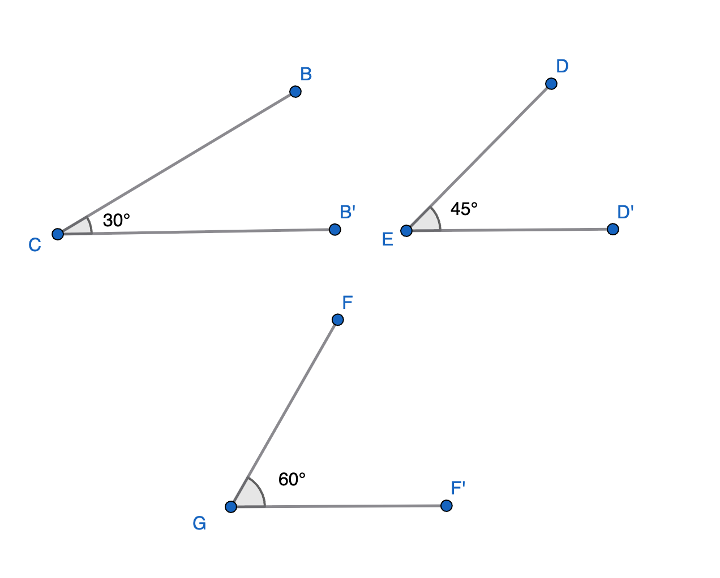
Trong hình học, acute angle (góc nhọn) là góc có số đo nhỏ hơn 90°. Đây là loại góc nhỏ nhất trong các loại góc cơ bản, bao gồm góc nhọn, góc vuông, góc tù, góc bẹt.
Ví dụ: Góc 30°, 45°, 60° đều là góc nhọn.
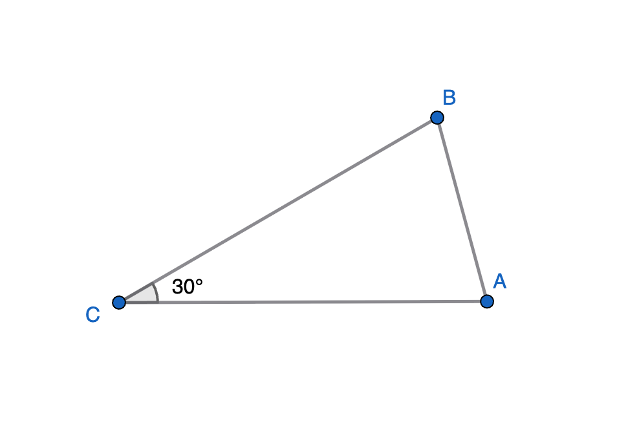
Một hình tam giác có 3 góc nhỏ hơn 90° được gọi là tam giác nhọn (acute triangle).
Đặc điểm của góc nhọn:
Acute angles luôn nằm trong khoảng từ 0° đến dưới 90°.
Góc nhọn là thành phần quan trọng trong nhiều hình học cơ bản như tam giác đều, tam giác nhọn.
Ứng dụng của góc nhọn dễ thấy trong các hình như mũi tên, phần đỉnh mái nhà, hay các mẫu thiết kế sắc nét.
Kiểm tra từ vựng – concave
Exercise 1: Which sentence uses concave as a mathematical term?
A. The mirror in the dressing room is slightly concave and makes the image appear closer.
B. The robot’s chest had a concave area where the battery fit perfectly.
C. The math teacher showed us a concave polygon with one angle pointing inward.
D. The dentist used a concave tool to examine the patient’s molars.
Exercise 2: Fill in the blank with one of these words: concave, line, corner, shape.
A polygon with an angle greater than 180° is called a __________ polygon.
A triangle is a type of __________ with three sides.
The point where two sides of a shape meet is called a __________.
A __________ is straight and has no curves or angles.
Kiểm tra từ vựng – acute
Exercise 1: Which sentence uses acute as a mathematical term?
A. She had an acute sense of smell.
B. The patient suffered from an acute illness.
C. The triangle has three acute angles.
D. He made an acute observation during the debate.
Exercise 2: Fill in the blank with one of these words: acute, sharp, triangle, obtuse.
An ________ angle is smaller than 90 degrees.
A ________ angle is more than 90 degrees but less than 180 degrees.
A triangle with three acute angles is called an acute ________.
This angle is very ________, like the top of a slice of pizza.
Bài toán thực tế – concave
Exercise 1: A carpenter is designing four different wooden tiles for a decorative wall. He wants to calculate how many of them have at least one interior angle greater than 180°, as these require special cutting tools.
Here are the four shapes he designed:
A. A regular hexagon
B. A square
C. A star-shaped polygon
D. An equilateral triangle
Which shape will require the special cutting tools?
Exercise 2: One of the interior angles of a polygon is 200°. Is the polygon concave or convex?
Exercise 3: A polygon has 8 sides and one of its angles is 210°. If the total interior angle sum of this polygon is 1080°, what is the sum of the remaining 7 angles?
Exercise 4: A polygon has 5 sides. The sum of its interior angles is 540°. One of its angles is 195°. The remaining four angles are all equal.
What is the measure of each of the other angles?
Is the polygon concave?
Exercise 5: A student draws a five-sided shape (with interior angles summing being 540°). The angles are: 210°, 85°, 95°, 88°, and x.
What is the value of x?
Is the polygon concave?
Exercise 6: Four students draw 7-sided polygons (heptagons). These are the angles they report:
Student A: All angles are 130°.
Student B: One angle is 200°, others are 125°.
Student C: All angles are 128.5°.
Student D: All angles are 135°.
Which student drew a concave polygon? Explain by using what you know about interior angles.
Bài toán thực tế – acute angle
Exercise 1: One angle of a triangle is 90°, and the second angle is 45°.
What is the measure of the third angle?
Is it acute?
Exercise 2: Linh draws a triangle with angles 40°, 60°, and 80°. How many acute angles does it have?
Exercise 3: A triangular sign board has the following two angles: Angle A = 40°, Angle B = 55°.
What is the measure of angle C?
Classify angle C as acute, right, or obtuse.
Exercise 4: Look at the image of a clock showing 2:00.
Is the angle between the hour and minute hands acute?
Estimate the angle.
Exercise 5: In a small triangle, all three angles are acute. One angle is 40°, and another is 65°.
Find the third angle.
Is this triangle an acute triangle?
Exercise 6: A triangle-shaped roof has a top angle of 35°, and the two base angles are equal.
What type of angle is the 35° angle at the top?
What is the measure of each base angle?
If the architect increases the peak angle to 50°, what will be the new size of each base angle?
Đáp án – concave
Exercise 1: C
Exercise 2:
1. concave
2. shape
3. corner
4. line
Exercise 1: C
Exercise 2: Concave
Exercise 3: 870°
Exercise 4:
86.25°
Yes
Exercise 5:
62°
Yes
Exercise 6: Student B drew a concave polygon because one angle is greater than 180°.
Đáp án – acute angle
Exercise 1: C
Exercise 2:
1. acute
2. obtuse
3. triangle
4. sharp
Exercise 1:
1. 45°
2. Yes
Exercise 2: 3 acute angles.
Exercise 3:
1. 85°
2. acute angle
Exercise 4:
1. Yes
2. 60°
Exercise 5:
1. 75°
2. Acute triangle
Exercise 6:
1. acute angle
2. 72.5°
3. 65°
Tác giả: Lê Cát Gia Linh
Qua bài học này, người học đã được tìm hiểu kỹ lưỡng về hai khái niệm quan trọng trong hình học: concave và acute angle. Thông qua các bài tập thực hành và tình huống thực tế, người học không chỉ biết cách nhận diện mà còn hiểu được vai trò và ứng dụng của các loại góc và hình trong toán học cũng như cuộc sống hàng ngày. Hy vọng kiến thức này sẽ giúp người học tự tin hơn khi tiếp cận các dạng bài tập hình học trong tương lai.
Với định hướng học thông minh, tài liệu Think in SAT Digital Math và chương trình luyện thi SAT tại ZIM được thiết kế nhằm giúp học sinh phát triển tư duy theo chiều sâu, nắm chắc bản chất khái niệm, đồng thời luyện tập qua các ngữ cảnh sát thực tế. Qua đó, người học không chỉ làm tốt bài thi mà còn hình thành kỹ năng tư duy toán học bền vững.
SAT® is a trademark registered by the College Board, which is not affiliated with, and does not endorse, this website.
- Essential Vocabulary for SAT Math - Geometry and Trigonometry
- Essential Vocab for SAT® Math - Geometry and Trigonometry | Unit 18: Equilateral triangle + Perimeter
- Essential Vocab for SAT® Math - Geometry and Trigonometry | Unit 12: Cone + Inscribe
- Essential Vocab for SAT® Math - Geometry and Trigonometry | Unit 11: Trapezoid + Cube
- Essential Vocab for SAT® Math - Geometry and Trigonometry | Unit 7: Area + Prism
- Essential Vocab for SAT® Math - Geometry and Trigonometry | Unit 26: Right angle + Associated angle
- Essential Vocab for SAT® Math - Geometry and Trigonometry | Unit 10: Cylinder + Similar
- Essential Vocab for SAT® Math - Geometry and Trigonometry | Unit 1: Measure + Length
- Essential Vocab for SAT® Math - Geometry and Trigonometry | Unit 16: Arc + Congruent
- Essential Vocab for SAT® Math - Geometry and Trigonometry | Unit 9: Sphere + Altitude
- Essential Vocab for SAT® Math - Geometry and Trigonometry | Unit 14: Perpendicular + Adjacent angles
Tham vấn chuyên môn
Học là hành trình tích lũy kiến thức lâu dài và bền bỉ. Điều quan trọng là tìm thấy động lực và niềm vui từ việc học. Phương pháp giảng dạy tâm đắc: Lấy người học làm trung tâm, đi từ nhận diện vấn đề đến định hướng người học tìm hiểu và tự giải quyết vấn đề.
Bình luận - Hỏi đáp