


Root (n) nghiệm, căn bậc hai.
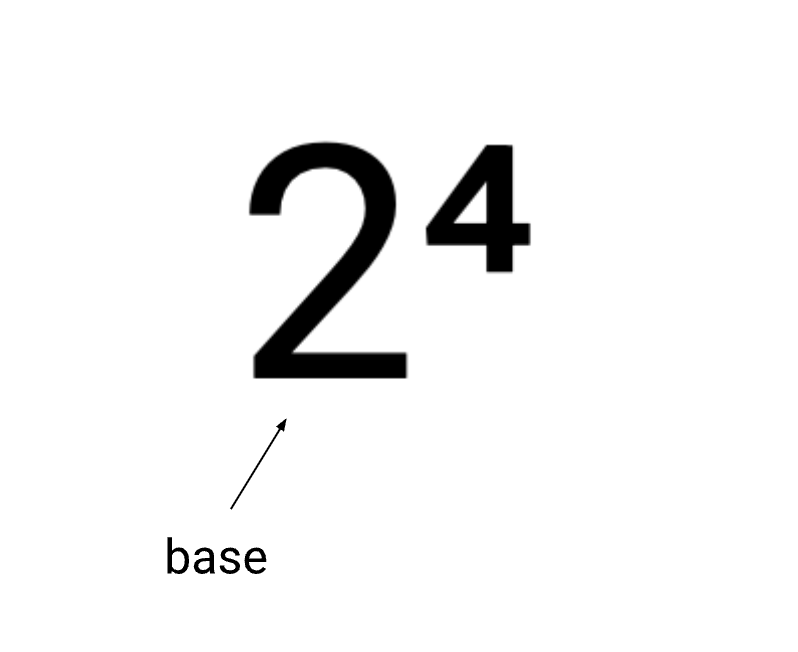
Base (n) cơ số trong lũy thừa. Ví dụ: \(3^2\), 3 là cơ số.
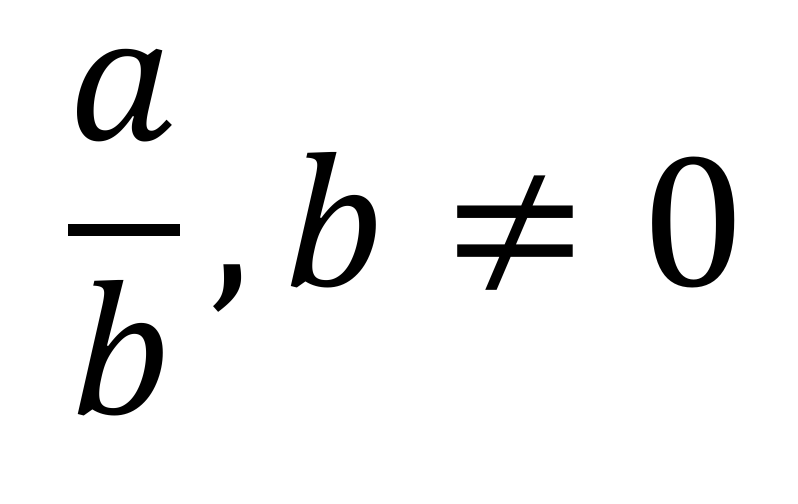
Rational number (n) số hữu tỉ là các số có thể biểu diễn dưới dạng phân số \(\frac{a}{b}\), trong đó a và b là số nguyên và b ≠ 0.
Essential vocabulary for SAT® Math - Advanced Math | Unit 12: Root + Base + Rational
Bài viết cung cấp định nghĩa đầy đủ và bài tập của các từ root, base, rational nhằm giúp người đọc tiếp thu kiến thức một cách hiệu quả.
Key takeaways
Trong toán học, việc hiểu rõ ý nghĩa và cách sử dụng từ vựng chuyên ngành là yếu tố quan trọng giúp học sinh nắm chắc kiến thức và vận dụng hiệu quả vào bài tập thực tế. Ba từ khóa "root", "base" và "rational" không chỉ mang ý nghĩa đặc trưng trong toán học mà còn xuất hiện với nhiều nghĩa khác trong đời sống hàng ngày. Bài viết này sẽ cung cấp định nghĩa, ví dụ minh họa, bài tập luyện tập và lời giải chi tiết cho từng từ, giúp người học dễ dàng phân biệt, ghi nhớ và áp dụng chính xác vào các ngữ cảnh khác nhau.
Root (noun): nghiệm, căn bậc hai
nghĩa thông dụng: rễ cây, nguồn gốc
từ đồng nghĩa: solution (nghiệm); square root (căn bậc hai)
Định nghĩa
Trong toán học, root có hai nghĩa phổ biến:
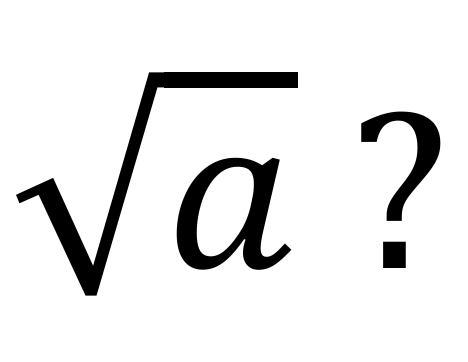
Trong toán học, root (square root - căn bậc hai) là giá trị mà khi nhân với chính nó một số lần nhất định sẽ cho ra một số đã biết. Ví dụ: √9 = 3 vì 3 × 3 = 9
Nghiệm của phương trình: là giá trị làm cho phương trình trở thành đúng. Ví dụ: Nghiệm của phương trình x² − 9 = 0 là x = 3 và x = −3, vì cả hai giá trị đều làm phương trình trở thành đúng.
Công thức
\(\sqrt[\cap]{ab}=\sqrt[\cap]{a}.\sqrt[\cap]{b}\) (a,b \(\ge\)0)
Ví dụ: \(\sqrt[3]{27.125}=\sqrt[3]{27}.\sqrt[3]{125}=3.5=15\)
\(\sqrt[\cap]{\frac{a}{b}}=\frac{\sqrt[\cap]{a}}{\sqrt[\cap]{b}}\) (b > 0)
Ví dụ: \(\sqrt[3]{\frac{27}{125}}=\frac{\sqrt[3]{27}}{\sqrt[3]{125}}=\frac35\)
Square root (Căn bậc hai): Nếu √a = b thì b² = a
Cube root (Căn bậc ba): Nếu ∛a = b thì b³ = a
Chú ý: Với số thực, căn bậc chẵn (ví dụ: căn bậc hai) của số âm là không xác định.
Xem thêm: Cách làm Advanced Math trong SAT Math
Base (noun): cơ số
nghĩa thông dụng: nền móng, căn cứ
Định nghĩa
Trong toán học, base (cơ số) là con số được sử dụng làm nền tảng trong các phép lũy thừa.
Ví dụ:
Trong biểu thức 2⁴ = 16, số 2 là base, số 4 là exponent (số mũ).
Rational (adjective): hữu tỉ
nghĩa thông dụng: hợp lý
Định nghĩa
Trong toán học, một số rational (hữu tỉ) là số có thể biểu diễn dưới dạng phân số , trong đó a và b là số nguyên và b ≠ 0. Ví dụ: \(\frac13\).
Khái niệm liên quan
Irrational number: số vô tỉ → không thể viết dưới dạng phân số (ví dụ: √2, π).
Repeating decimal: số thập phân tuần hoàn – là số thập phân vô hạn, trong đó một hoặc nhiều chữ số lặp đi lặp lại theo chu kỳ sau dấu thập phân, có thể được biểu diễn dưới dạng số hữu tỉ (ví dụ: 0.333333333… = \(\frac13\)).
Terminating decimal: số thập phân hữu hạn – là số thập phân có số lượng chữ số hữu hạn sau dấu thập phân, có thể được biểu diễn dưới dạng số hữu tỉ (ví dụ: 0.5 = \(\frac12\)).
Kiểm tra từ vựng – root
Exercise 1: Which sentence uses root as a mathematical term?
A. She decided to plant a tree with deep roots in her garden.
B. The square root of 16 is 4.
C. We traced the root of the problem to a simple misunderstanding.
D. His cultural roots are very important to him.
Exercise 2: Fill in the blank with one of these words: fourth root, cube root, square root.
1. The __________ of 64 is 8.
2. The __________ of 27 is 3.
3. The __________ of 16 is 2.
Kiểm tra từ vựng – base
Exercise 1: Which sentence uses base as a mathematical term?
A. The soldiers returned to their base after the mission.
B. The base of the triangle is 6 cm.
C. In 3⁴, the number 3 is the base.
D. She applied foundation to even out her base skin tone.
Exercise 2: Fill in the blank with one of these words: base, exponent, power, decimal.
1. In the expression 10³, the number 10 is called the __________.
2. In the expression 10³, the number 3 is called the __________.
3. The expression 2⁵ is read as “2 raised to the 5th __________.”
4. A __________ number includes digits to the right of the point.
Kiểm tra từ vựng – rational
Exercise 1: Which sentence uses rational as a mathematical term?
A. Try to stay calm and make a rational decision.
B. He gave a rational explanation for his lateness.
C. 0.75 is a rational number because it can be written as ¾.
D. That’s not a rational way to react to the situation.
Exercise 2: Fill in the blank with one of these words: rational, irrational, fraction, repeating.
1. A __________ number can be written as a/b, where a and b are integers and b ≠ 0.
2. The number √3 is __________ because it can’t be expressed as a fraction.
3. 0.333... is a __________ decimal and a rational number.
4. A number like ¾ is also called a __________.
Bài toán thực tế – root
Exercise 1: A farmer has a square field with an area of 225 square meters. He wants to put a fence around the entire field.
What is the length of one side of the field?
What is the total length of fence he needs (perimeter)?
Exercise 2: A company needs to tile a square floor that has an area of 324 square meters.
What is the length of one side of the floor?
If each tile covers 2 square meters, how many tiles will they need in total?
Bài toán thực tế – base
Exercise 1: A bacterial population triples every hour. If it starts with 2 bacteria, the population after
n hours is given by: P = 2 × 3^n
What will the population be after 4 hours?
After how many hours will the population exceed 1000?
Exercise 2: A shipping company uses cube-shaped boxes for packaging. If each side of the cube is 4 cm, the formula for the volume is: V = \(base^3\) = \(side^3\)
What is the volume of one cube-shaped box?
If the side length doubles to 8 cm, what is the new volume?
How many times larger is the new box compared to the old one?
Bài toán thực tế – rational
Exercise 1: Linh earns $120 per week from her part-time job. She decides to spend exactly 2/3 of her weekly earnings each week and save the rest.
How much money does Linh spend each week?
How much money does she save each week?
Are the amounts she spends and saves rational numbers?
Exercise 2: A cake recipe requires 1 and \(\frac12\) cups of flour for one layer. Huy wants to make a two-layer cake.
How many cups of flour does he need in total?
If he only has 2 cups of flour, does he have enough?
Are all the numbers in this problem rational numbers?
Đáp án
Đáp án – root
Exercise 1: B
Exercise 2:
1. Square root
2. Cube root
3. Fourth root
Exercise 1:
1. 15 meters
2. 60 meters
Exercise 2:
1. 18 meters
2. 162 tiles
Đáp án – base
Exercise 1: C
Exercise 2:
1. base
2. exponent
3. power
4. decimal
Exercise 1:
1. 162 batteria
2. After 6 hours
Exercise 2:
1. 64 \(\operatorname{\mathrm{cm}}^3\)
2. 512 \(\operatorname{\mathrm{cm}}^3\)
3. 8 times
Đáp án – rational
Exercise 1: C
Exercise 2:
1. rational
2. irrational
3. repeating
4. fraction
Exercise 1:
1. 80 dollars
2. 40 dollars
3. Yes
Exercise 2:
1. 3 cups
2. No
3. Yes
Thông qua việc học từ vựng theo chủ đề kết hợp với bài tập thực tế và kiểm tra ứng dụng, người học không chỉ hiểu rõ cách dùng các thuật ngữ toán học như "root", "base" và "rational", mà còn có thể vận dụng linh hoạt vào các bài toán và tình huống đời sống. Việc nắm vững ngôn ngữ toán học bằng tiếng Anh sẽ là nền tảng vững chắc cho học sinh trong việc học tập, nghiên cứu và giao tiếp trong môi trường học thuật quốc tế.
Để đạt kết quả cao trong kỳ thi SAT, việc nắm vững chiến lược và phương pháp giải các dạng toán là yếu tố then chốt. Sách Think in SAT Digital Math - Reasoning and Strategies cung cấp cho thí sinh cái nhìn tổng quan về các dạng toán trong kỳ thi, cùng hướng tư duy hiệu quả để giải quyết từng dạng bài. Mỗi chủ đề được trình bày với kiến thức cơ bản, ví dụ minh họa, cách giải mẫu và bài tập luyện tập kèm đáp án chi tiết.
Tác giả: Lê Cát Gia Linh
SAT® is a trademark registered by the College Board, which is not affiliated with, and does not endorse, this website.
- Essential Vocab for SAT Math - Advanced Math
- Essential vocabulary for SAT® Math - Advanced Math | Unit 6: Growth and Decay
- Essential vocabulary for SAT® Math - Advanced Math | Unit 2: Initial + Equivalent to
- Essential vocabulary for SAT® Math - Advanced Math | Unit 5: Distinct and Square
- Essential vocabulary for SAT® Math - Advanced Math | Unit 7: Interval and Quadratic
- Essential vocabulary for SAT® Math - Advanced Math | Unit 8: Parabola and Vertex
- Essential vocabulary for SAT® Math - Advanced Math | Unit 3: Real and Preceding
- Essential vocabulary for SAT® Math - Advanced Math | Unit 12: Root + Base + Rational
- Essential vocabulary for SAT® Math - Advanced Math | Unit 10: Coefficient and Equation
- Essential vocabulary for SAT® Math - Advanced Math | Unit 4: Original and Population
- Essential vocabulary for SAT® Math - Advanced Math | Unit 1: Interpretation and Shift
Tham vấn chuyên môn
Học là hành trình tích lũy kiến thức lâu dài và bền bỉ. Điều quan trọng là tìm thấy động lực và niềm vui từ việc học. Phương pháp giảng dạy tâm đắc: Lấy người học làm trung tâm, đi từ nhận diện vấn đề đến định hướng người học tìm hiểu và tự giải quyết vấn đề.
Bình luận - Hỏi đáp