


Vertical angles là các góc đối đỉnh. Trong hình học, 2 góc đối đỉnh luôn bằng nhau.
Complementary angles là góc phụ. Trong hình học, tổng của 2 góc phụ nhau bằng 90 độ.
Essential Vocab for SAT® Math - Geometry and Trigonometry | Unit 24: Vertical angle + Complementary angle
Bài viết cung cấp kiến thức về hai từ vựng vertical angle (góc đối đỉnh) và complementary angle (góc phụ) phù hợp trong kỳ thi SAT Math.
Key takeaways
Trong quá trình học hình học, việc nắm vững các khái niệm về các loại góc là yếu tố nền tảng để giải quyết các bài toán hình học từ cơ bản đến nâng cao. Hai khái niệm quan trọng mà người học thường gặp là vertical angle (góc đối đỉnh) và complementary angle (góc phụ). Đây là những kiến thức không chỉ xuất hiện trong bài kiểm tra mà còn giúp người học hiểu rõ hơn về cách các góc tương tác và bổ sung nhau trong các hình vẽ thực tế. Bài học dưới đây sẽ giúp người học củng cố định nghĩa, công thức, và cách áp dụng hai loại góc này thông qua các ví dụ minh họa và bài tập thực hành.
Xem lại phần trước: Essential Vocabulary for SAT Math - Geometry and Trigonometry - Unit 23: concave + acute angle
Vertical angle (noun): góc đối đỉnh
Định nghĩa
Trong hình học, vertical angles (góc đối đỉnh) là hai góc không kề nhau nhưng được tạo thành khi hai đường thẳng cắt nhau. Các cặp góc đối đỉnh có cùng số đo.
Đặc điểm:
Các góc đối đỉnh luôn bằng nhau;
Mỗi giao điểm của hai đường thẳng tạo thành hai cặp góc đối đỉnh.
Công thức
Nếu hai đường thẳng AB và CD cắt nhau tại giao điểm O và tạo ra 4 góc, thì:
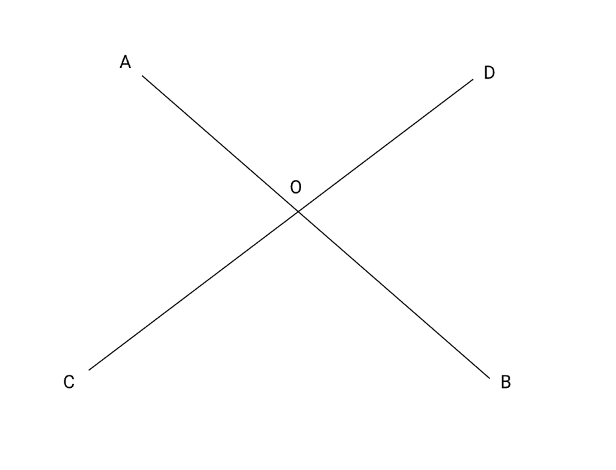
∠AOD và ∠COB là 2 góc đối đỉnh nhau. → ∠AOD = ∠COB
Ví dụ: Nếu ∠AOD = 60° thì ∠COB cũng bằng 60°.
Xem thêm: Cách làm dạng bài Geometry and Trigonometry trong SAT Math
Complementary angle (noun): góc phụ
Định nghĩa
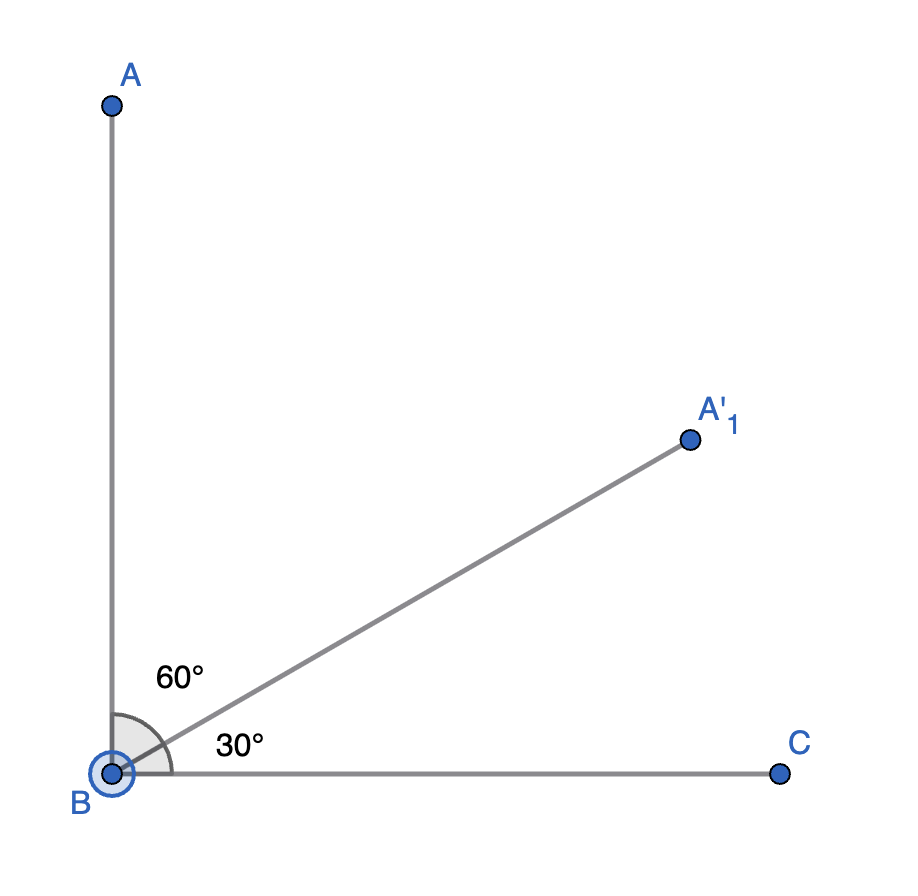
Trong hình học, complementary angles (các góc phụ nhau) là hai góc có tổng số đo bằng 90°. Nói cách khác, khi hai góc phụ nhau được đặt cạnh nhau, chúng sẽ tạo thành một góc vuông (90 độ). Góc 1 và góc 2 là góc phụ nhau nếu tổng của hai góc đó bằng 90 độ (tức là: góc 1 + góc 2 = 90°).
Ví dụ: góc 30 độ và góc 60 độ là hai góc phụ nhau vì 30° + 60° = 90°.
Công thức
Nếu ∠A và ∠B là hai góc phụ nhau:
→ ∠A + ∠B = 90°.
→ ∠A = 90° - ∠B hoặc ∠B = 90° - ∠A.
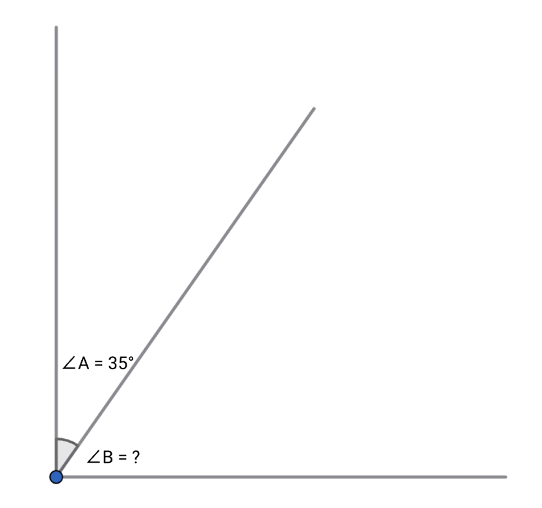
Ví dụ: Trong hình dưới ta có góc A và góc B là hai góc phụ nhau, ta có góc A = 35°.
→ góc B = 90° - 35° = 55°.
Kiểm tra từ vựng – vertical angle
Exercise 1: Which sentence uses vertical angle as a mathematical term?
A. The vertical angle of the camera needs adjustment.
B. Vertical angles are always equal when two lines cross.
C. Her vertical jump was measured at the gym.
D. The painter focused on the vertical lines of the building.
Exercise 2: Fill in the blank with one of these words: equal, opposite, intersect, vertical.
When two lines __________, they create vertical angles.
Vertical angles are always __________ in measure.
These angles appear on __________ sides of the intersection point.
A __________ angle is formed when two lines cross.
Kiểm tra từ vựng – complementary angle
Exercise 1: Which sentence uses complementary angle as a mathematical term?
A. They gave each other complementary gifts.
B. A 60° angle and a 30° angle are complementary.
C. She paid him a nice complement.
D. These colors are complementary on the color wheel.
Exercise 2: Fill in the blank with one of these words: ninety, complementary, degrees, add.
Two angles are __________ when their sum is 90.
Complementary angles always __________ up to a right angle.
A right angle measures __________ degrees.
The unit used to measure angles is __________.
Bài toán thực tế – vertical angle
Exercise 1: Two lines intersect and form four angles. One of the angles is 75°.
What is the measure of the vertical angle opposite it?
What are the measures of the other two angles at the intersection?
Exercise 2: A pair of scissors is opened so that the two blades form an angle of 40°.
What is the measure of the vertical angle formed between the opposite sides of the blades?
If the scissors are opened wider to 60°, what is the measure of their new vertical angle?
Exercise 3: At a traffic intersection, two roads cross and form vertical angles. One angle is labeled (3x)°, and its opposite angle is labeled (x + 40)°.
Find the value of x.
What is the measure of each vertical angle?
Exercise 4: A diagram shows two intersecting lines. One pair of vertical angles is shown as ∠1 = 95°, and the adjacent angle ∠2 shares the same vertex.
What is the measure of ∠2?
What is the measure of the angle vertically opposite ∠2?
Exercise 5: In a drawing, line CD intersects line AB at point O, forming ∠AOC = 110°.
What is the measure of ∠DOB?
What is the measure of the angle adjacent to ∠AOC on the same straight line?
Bài toán thực tế – complementary angle
Exercise 1: Two angles are complementary. One measures 58°.
What is the measure of the other angle?
Are both angles acute?
Exercise 2: An architect draws a right triangle where one non-right angle is three times the other.
What are the measures of the two non-right angles?
How do you know they are complementary?
Exercise 3: A math student says two angles measuring 55° and 35° are complementary.
Is the student correct?
How do you check whether two angles are complementary?
Exercise 4: In a classroom, the clock shows exactly 1 o’clock, where the hour and minute hands form a 30° angle.
15 seconds later, what is the measure of the other angle, formed by the hour and the second hands, that adds up to 30° to make a right angle?
Are these two angles complementary?
Exercise 5: A painter marks two angles on a canvas. One angle is 28°, and the other is marked as a right angle. Are these two angles complementary? Why or why not?
Đáp án – vertical angle
Exercise 1: B
Exercise 2:
1. intersect
2. equal
3. opposite
4. vertical
Exercise 1:
1. 75°
2. 105°
Exercise 2:
1. 40°
2. 60°
Exercise 3:
1. 20°
2. 60°
Exercise 4:
1. 85°
2. 85°
Exercise 5:
1. 110°
2. 70°
Đáp án – complementary angle
Exercise 1: B
Exercise 2:
1. complementary
2. add
3. ninety
4. degrees
Exercise 1:
1. 32°
2. Yes
Exercise 2:
1. 67.5° and 22.5°
2. Because the sum of the two angles is 90°, they are complementary angles.
Exercise 3:
1. Yes
2. Because the sum of the two angles is 90°.
Exercise 4:
1. 60°
2. Yes
Exercise 5: No, because the sum of the two angles is 118°, which is greater than 90°.
Tác giả: Lê Cát Gia Linh
Qua bài học này, người học đã được trang bị kiến thức vững chắc về vertical angles (góc đối đỉnh) và complementary angles (góc phụ). Việc thực hành thông qua các dạng bài tập thực tế không chỉ giúp người học nhận biết đúng hai loại góc này mà còn biết cách vận dụng linh hoạt trong việc giải các bài toán hình học. Hiểu rõ các mối quan hệ giữa các góc sẽ là nền tảng quan trọng để người học tiếp tục chinh phục những kiến thức nâng cao hơn trong môn Toán.
Với định hướng học thông minh, tài liệu Think in SAT Digital Math và chương trình luyện thi SAT tại ZIM được thiết kế nhằm giúp học sinh phát triển tư duy theo chiều sâu, nắm chắc bản chất khái niệm, đồng thời luyện tập qua các ngữ cảnh sát thực tế. Qua đó, người học không chỉ làm tốt bài thi mà còn hình thành kỹ năng tư duy toán học bền vững.
SAT® is a trademark registered by the College Board, which is not affiliated with, and does not endorse, this website.
- Essential Vocabulary for SAT Math - Geometry and Trigonometry
- Essential Vocab for SAT® Math - Geometry and Trigonometry | Unit 18: Equilateral triangle + Perimeter
- Essential Vocab for SAT® Math - Geometry and Trigonometry | Unit 12: Cone + Inscribe
- Essential Vocab for SAT® Math - Geometry and Trigonometry | Unit 11: Trapezoid + Cube
- Essential Vocab for SAT® Math - Geometry and Trigonometry | Unit 7: Area + Prism
- Essential Vocab for SAT® Math - Geometry and Trigonometry | Unit 26: Right angle + Associated angle
- Essential Vocab for SAT® Math - Geometry and Trigonometry | Unit 10: Cylinder + Similar
- Essential Vocab for SAT® Math - Geometry and Trigonometry | Unit 1: Measure + Length
- Essential Vocab for SAT® Math - Geometry and Trigonometry | Unit 16: Arc + Congruent
- Essential Vocab for SAT® Math - Geometry and Trigonometry | Unit 9: Sphere + Altitude
- Essential Vocab for SAT® Math - Geometry and Trigonometry | Unit 14: Perpendicular + Adjacent angles
Tham vấn chuyên môn
Học là hành trình tích lũy kiến thức lâu dài và bền bỉ. Điều quan trọng là tìm thấy động lực và niềm vui từ việc học. Phương pháp giảng dạy tâm đắc: Lấy người học làm trung tâm, đi từ nhận diện vấn đề đến định hướng người học tìm hiểu và tự giải quyết vấn đề.
Bình luận - Hỏi đáp