


Học trực tuyến đã mở rộng khả năng tiếp cận giáo dục thông qua công nghệ, giúp nhiều người tham gia học tập dễ dàng hơn. Tuy nhiên, nó cũng đối mặt với thách thức như tỷ lệ bỏ học cao do thiếu kỷ luật và cần các tiêu chuẩn mới để đảm bảo chất lượng.
IELTS Reading | Concepts and Vocabulary Unit 11: Education Systems
Unit 11: Hệ thống Giáo dục khám phá cách giáo dục trực tuyến đã thay đổi việc học tập, tập trung vào công nghệ và khả năng tiếp cận. Người học sẽ tìm hiểu về các khía cạnh như chương trình học, phương pháp giảng dạy và đào tạo nghề. Đơn vị này cung cấp từ vựng quan trọng để hiểu các đoạn văn IELTS Reading về chủ đề giáo dục, đồng thời thảo luận về lợi ích và thách thức của việc học trực tuyến trong thế giới hiện đại.
Key takeaways
Hệ thống Giáo dục là cách tổ chức và cung cấp việc học tập, tập trung vào chương trình, phương pháp giảng dạy và khả năng tiếp cận. Nó bao gồm các yếu tố như đào tạo nghề, giáo dục đại học và việc sử dụng công nghệ để nâng cao thành tựu. Đơn vị này sẽ giới thiệu cho bạn các từ vựng chính liên quan đến Hệ thống Giáo dục, điều này rất quan trọng để hiểu các đoạn văn IELTS Reading về chủ đề này.
Xem lại bài trước: IELTS Reading Concepts and Vocabulary - Unit 10: Social Media Impact
Mở đầu
Education Systems are the ways learning is organized and delivered, focusing on curriculum, teaching methods, and access to education. They involve institutions, technology, and training to improve literacy and skills. This unit will introduce you to key vocabulary related to Education Systems, which is essential for understanding IELTS Reading passages on this topic.
Hệ thống Giáo dục là cách tổ chức và cung cấp việc học tập, tập trung vào chương trình học, phương pháp giảng dạy và khả năng tiếp cận giáo dục. Chúng bao gồm các cơ sở giáo dục, công nghệ và đào tạo để nâng cao kỹ năng đọc viết và kỹ năng. Đơn vị này sẽ giới thiệu cho bạn các từ vựng chính liên quan đến Hệ thống Giáo dục, điều này rất quan trọng để hiểu các đoạn văn IELTS Reading về chủ đề này.
Before You Read
Connect with the topic. Check (✓) your answers to these questions about Education Systems:
Have you ever studied using a computer or online app?
Yes
No
Do you think technology makes learning easier?
Yes
No
What might help more people join school?
A. More books
B. Better access to education
C. More holidays
D. Fewer teachers
Why do some students stop studying early?
A. They finish school
B. They lack discipline
C. They become teachers
D. They win prizes
What can a scholarship do for a student?
A. Give them more homework
B. Help them pay for school
C. Teach them to cook
D. Make them play sports

Part A. Reading
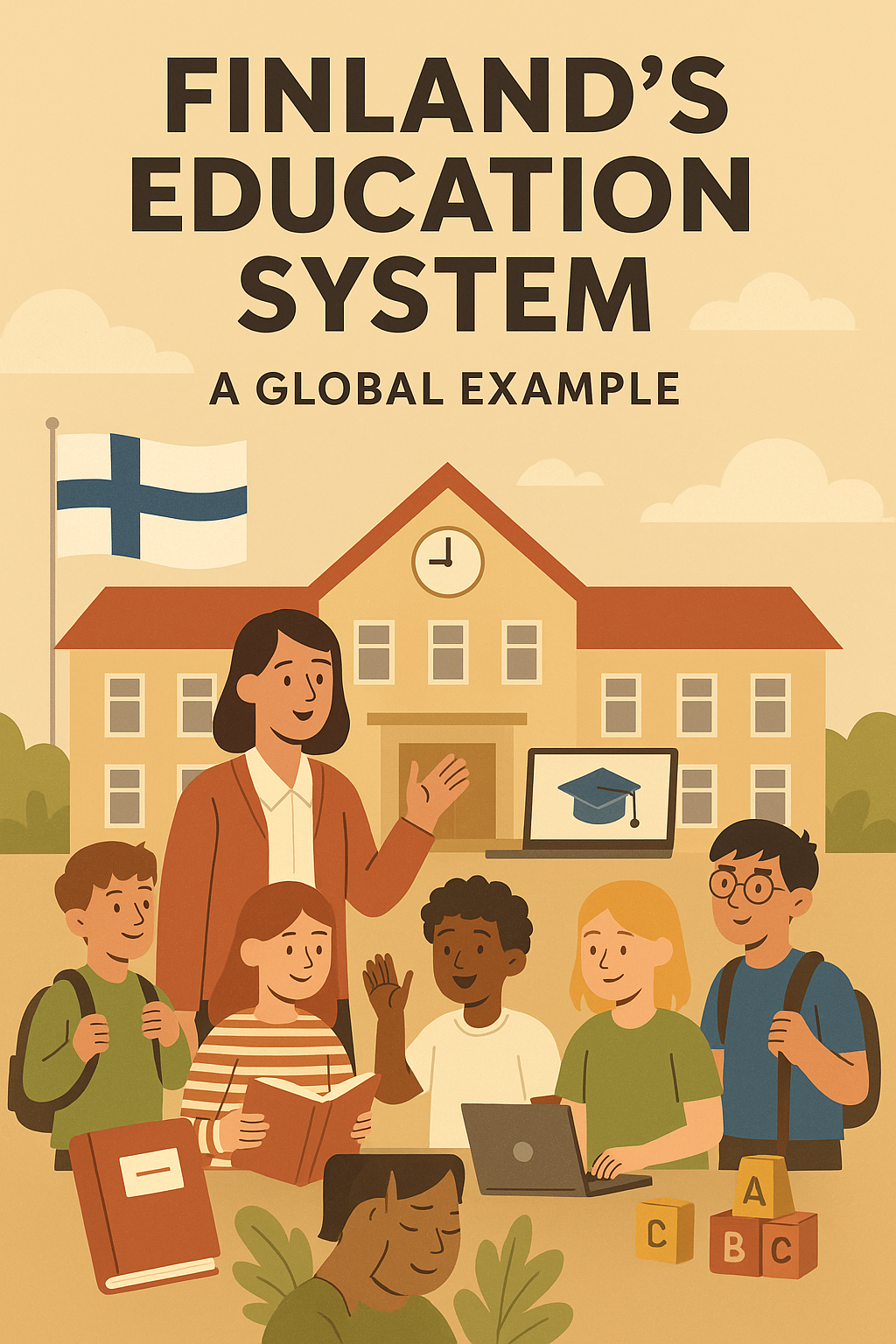
Finland’s Education System: A Global Example
Finland is a small nation that has built a world-famous educational system, known for its amazing achievement in global rankings. In Finland, every child has access to free education, starting with formal education at the age of seven. The system focuses on inclusion, ensuring that all children, no matter their background, can learn together in the same institution. This leads to very high enrollment rates, with almost no dropout cases. Finnish schools create a safe space where students feel supported, helping them succeed from an early age.
The Finnish pedagogy is unique because it avoids strict assessment methods like exams until students are older. Instead, teachers focus on a curriculum that encourages creativity and play, helping children develop literacy in reading, math, and problem-solving. They use resources such as books, games, and technology, like computers and apps, to make learning fun. Finnish schools also value discipline, but not through punishment—instead, they teach students to be responsible by trusting them. This method helps children enjoy school and builds a strong foundation for learning.
Finland supports diversity by welcoming students from all backgrounds, including those who speak different languages or have special needs. The government provides scholarships to help students continue into higher education, such as university, without worrying about money. Students can also choose vocational training to learn practical skills, like cooking or building, alongside academic subjects. This choice ensures that everyone finds a path that suits them, which further reduces dropout rates. Finland’s system shows how inclusion can help all students succeed.
Finland sets a high standard for education systems around the world. Many countries study Finnish institutions to learn how to improve their own schools. Today, technology plays a big role in Finnish classrooms, with tools like online learning platforms becoming more common. Looking forward, Finland aims to improve access even more, especially for students in remote areas. The impact of Finland’s system is clear—it inspires global achievement in education and shows how a focus on equality can create a better future for everyone.
Xem thêm: Từ vựng IELTS Reading theo chủ đề thường gặp
Part B: Vocabulary Boosting
Information | Picture |
|---|---|
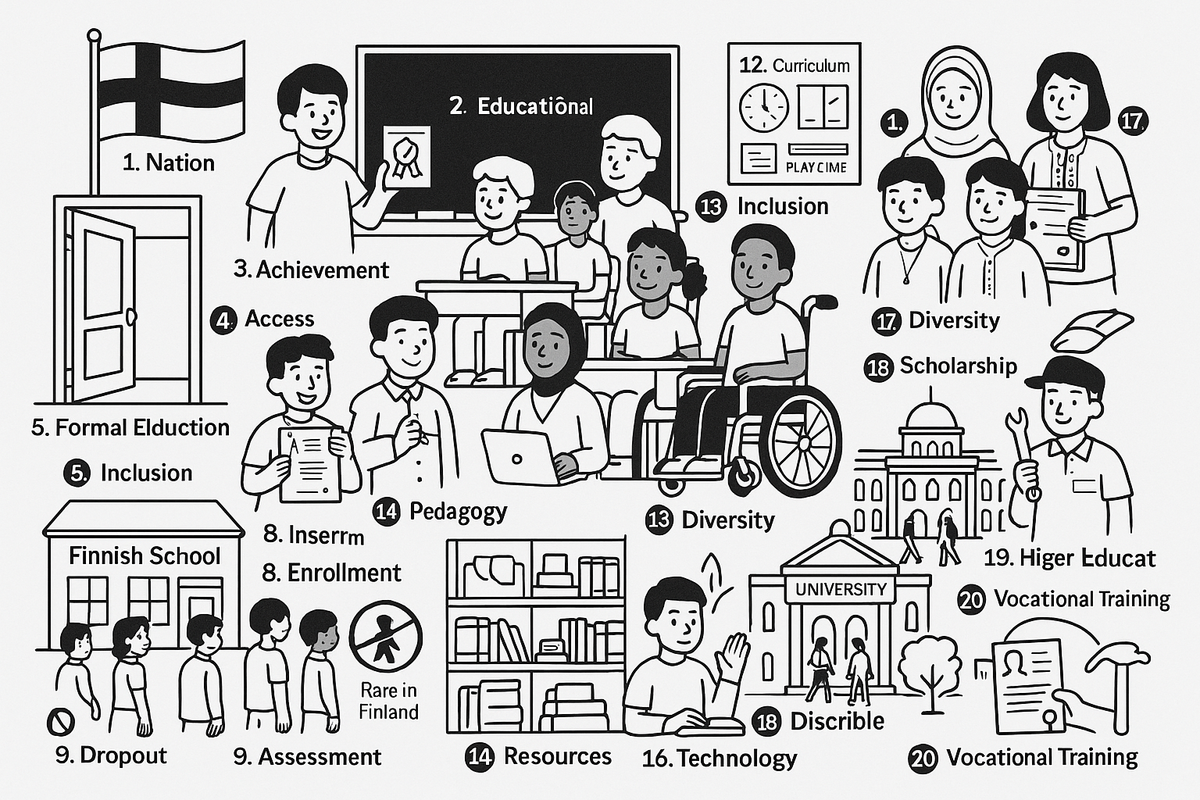
nation (noun) - quốc gia Finland is a nation with a famous education system. (Phần Lan là một quốc gia có hệ thống giáo dục nổi tiếng.) |  |
educational (adjective) - thuộc về giáo dục Finland has an amazing educational system. (Phần Lan có một hệ thống giáo dục tuyệt vời.) | 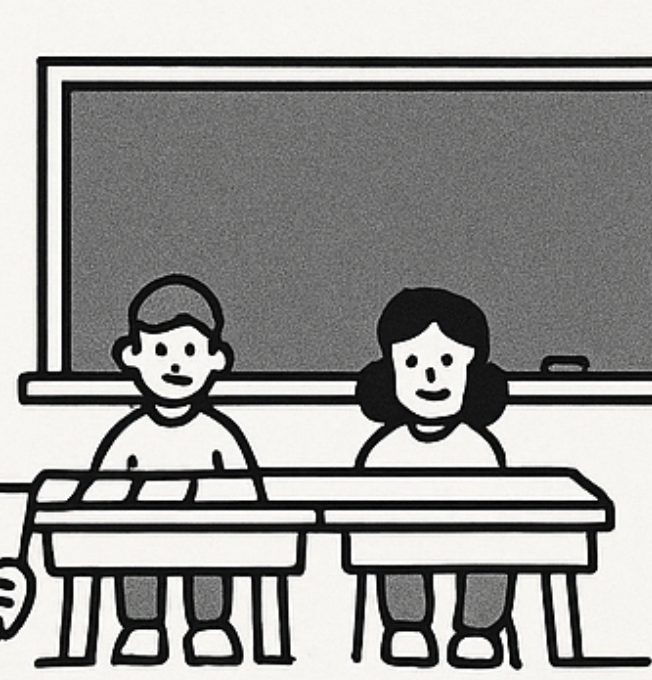 |
achievement (noun) - thành tựu Finland’s schools are known for their achievement. (Các trường học ở Phần Lan nổi tiếng với thành tựu của họ.) |  |
access (noun) - khả năng tiếp cận Every child in Finland has access to free education. (Mọi trẻ em ở Phần Lan đều có khả năng tiếp cận giáo dục miễn phí.) | |
formal education (noun) - giáo dục chính quy Formal education in Finland starts at age seven. (Giáo dục chính quy ở Phần Lan bắt đầu từ năm bảy tuổi.) | 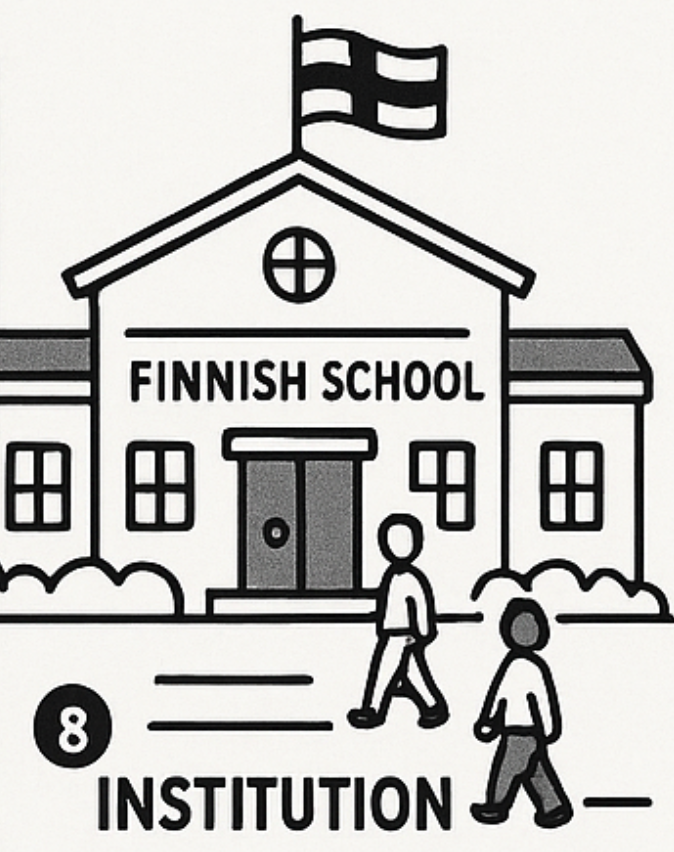 |
inclusion (noun) - sự bao gồm Finland’s system focuses on inclusion for all students. (Hệ thống của Phần Lan chú trọng vào sự bao gồm cho tất cả học sinh.) |  |
institution (noun) - cơ sở giáo dục Finnish schools are great institutions for learning. (Các trường học ở Phần Lan là những cơ sở giáo dục tuyệt vời để học tập.) | |
enrollment (noun) - sự ghi danh Finland has high enrollment rates in schools. (Phần Lan có tỷ lệ ghi danh cao ở các trường học.) | 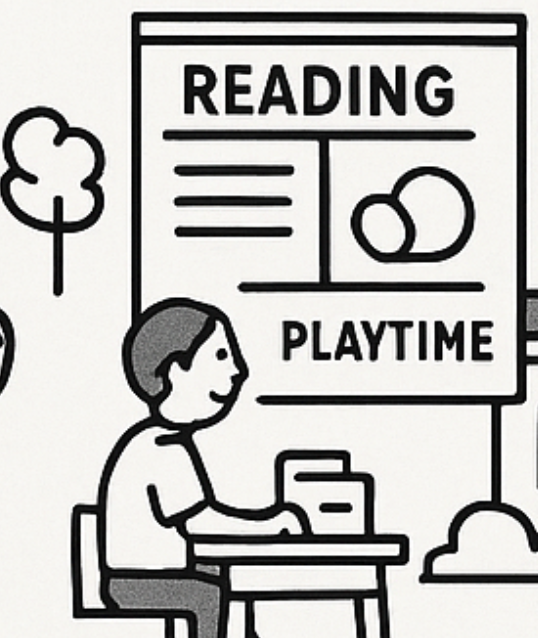 |
dropout (noun) - bỏ học Finland has almost no dropout cases in schools. (Phần Lan hầu như không có trường hợp bỏ học ở các trường.) | 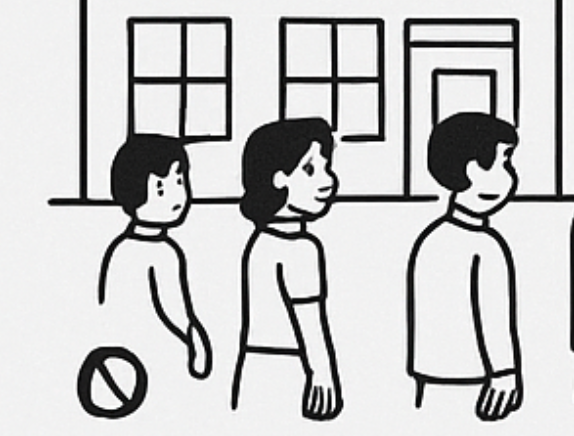 |
pedagogy (noun) - phương pháp giảng dạy Finnish pedagogy encourages creativity. (Phương pháp giảng dạy ở Phần Lan khuyến khích sự sáng tạo.) |  |
assessment (noun) - đánh giá Finland avoids strict assessment methods. (Phần Lan tránh các phương pháp đánh giá nghiêm ngặt.) |  |
curriculum (noun) - chương trình học The curriculum in Finland focuses on play. (Chương trình học ở Phần Lan tập trung vào việc vui chơi.) | 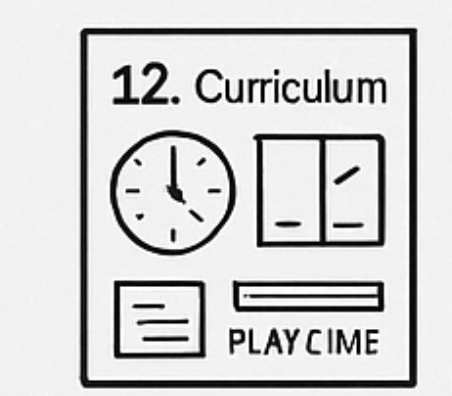 |
literacy (noun) - khả năng đọc viết Finland’s curriculum improves literacy skills. (Chương trình học của Phần Lan cải thiện kỹ năng đọc viết.) |  |
resources (noun) - tài nguyên Teachers use resources like books and apps. (Giáo viên sử dụng các tài nguyên như sách và ứng dụng.) |  |
technology (noun) - công nghệ Technology helps students learn in Finland. (Công nghệ giúp học sinh học tập ở Phần Lan.) |  |
discipline (noun) - kỷ luật Finnish schools teach discipline through trust. (Các trường học ở Phần Lan dạy kỷ luật thông qua sự tin tưởng.) |  |
diversity (noun) - sự đa dạng Finland supports diversity in its schools. Phần Lan ủng hộ sự đa dạng trong các trường học của mình.) | |
scholarship (noun) - học bổng Scholarships help students study for free. (Học bổng giúp học sinh học miễn phí.) |   |
higher education (noun) - giáo dục đại học Higher education in Finland is free. (Giáo dục đại học ở Phần Lan là miễn phí.) |  |
vocational training (noun) - đào tạo nghề Vocational training teaches practical skills. Đào tạo nghề dạy các kỹ năng thực tế.) |  |
standard (noun) - tiêu chuẩn Finland sets a high standard for education. (Phần Lan đặt ra tiêu chuẩn cao cho giáo dục.) | |
impact (noun) - tác động Finland’s system has a big impact globally. (Hệ thống của Phần Lan có tác động lớn trên toàn cầu.) |
Part C: Vocabulary Exercise
Exercise 1: Matching Definitions
Instructions: Match each word to its correct definition. Write the letter (A-H) next to the word.
Words: | Definitions: |
|---|---|
| A. The ability to read, write, and understand information. |
Exercise 2: Gapped Short Paragraph
Instructions: Read the paragraph below about education in Finland and choose the best word from the four options provided to fill in each gap.
Finland is famous for its education system, which helps all students succeed. Every child starts school at age seven, focusing on (1) __________ skills like reading and writing. Schools are free, so there is equal (2) __________ for everyone to learn. Many students stay in school because the (3) __________ rate is very low. Teachers use (4) __________ to make learning fun, such as playing games. Students can also get a (5) __________ to help pay for university. Finland offers (6) __________ for those who want to learn skills like cooking or building. The system supports (7) __________ by welcoming students from different backgrounds. This helps create a sense of (8) __________ in the classroom.
a) literacy
b) math
c) history
d) sciencea) cost
b) access
c) time
d) spacea) enrollment
b) achievement
c) dropout
d) standarda) books
b) tests
c) technology
d) homeworka) scholarship
b) job
c) book
d) prizea) higher education
b) vocational training
c) formal education
d) diversitya) inclusion
b) discipline
c) diversity
d) standarda) achievement
b) discipline
c) inclusion
d) technology
Exercise 3: Read the passage about online learning and answer questions
Online Learning – A New Way to Study
Online learning has changed how students gain access to education around the world. Using technology like computers, tablets, and apps, anyone can join an educational program from home, making it different from formal education in traditional schools. Many institutions, such as universities and training centers, now offer classes on the internet, leading to a big increase in enrollment numbers. Students can learn through a curriculum that includes videos, games, and quizzes, which helps improve their literacy skills, such as reading and writing. This method also supports diversity by bringing together learners from different backgrounds into one community.
However, online learning comes with challenges. Some students dropout because they lack discipline to study on their own without a teacher watching them. Others struggle with assessment tasks, like online tests, because they need more resources, such as faster internet or better computers. To help, many platforms offer interactive methods, such as live chats with teachers or group discussions, to keep students motivated. Online learning also provides flexibility, allowing students to choose when and where they study, which is great for those with busy schedules.
For example, someone working a job can still study at night. After finishing a course, students often earn certificates that prove their achievement, which can help them get jobs or continue to higher education. Some even receive a scholarship to study for free. Online learning can also include vocational training, teaching skills like coding or cooking. This new way of learning sets a high standard for education, showing how inclusion and technology can change lives.
Exercise 3A: Read the passage about online learning. For each underlined word, choose the option that best matches its meaning based on how it is used in the text.
Flexibility in online learning means:
a) Choosing your study time
b) Following strict rules
c) Taking more exams
d) Studying in a classroomInteractive methods refer to:
a) Reading books alone
b) Talking and working with others
c) Watching movies
d) Writing essaysCertificates after a course are:
a) Books for studying
b) Documents showing you finished
c) Games to play
d) Teachers’ notesCommunity in online learning means:
a) A group of people learning together
b) A school building
c) A library
d) A playgroundMotivated students are those who:
a) Feel tired of studying
b) Want to work hard
c) Skip classes
d) Play games all day
Exercise 3B: Read the passage about online learning and choose the best option (A, B, C, or D) to answer each question.
What does online learning use to help students study from home?
a) Books
b) Technology
c) Sports
d) MusicHow has online learning affected enrollment numbers?
a) It has decreased them
b) It has not changed them
c) It has increased them
d) It has stopped themWhat does the online curriculum help students improve?
a) Literacy
b) Cooking
c) Painting
d) DancingWhy do some students dropout of online learning?
a) They lack discipline
b) They finish early
c) They win prizes
d) They travel abroadWhat does flexibility in online learning allow students to do?
a) Skip classes
b) Choose their study times
c) Take more tests
d) Study in a schoolHow do interactive methods help students?
a) They make them tired
b) They keep them motivated
c) They stop them from learning
d) They teach them cookingWhat can students earn after finishing an online course?
a) Certificates
b) Games
c) Clothes
d) FoodWhat does online learning create for students from different places?
a) A library
b) A community
c) A playground
d) A museum
Exercise 4: Answer the following questions based on the reading passage in Part A: Finland’s Education System: A Global
Example. Choose the best option (A, B, C, or D) for each question.
What is a synonym for "achievement" as used in the passage?
A) Failure
B) Success
C) Challenge
D) ProblemWhat is a synonym for "inclusion" in the context of the passage?
A) Exclusion
B) Separation
C) Togetherness
D) CompetitionIn the sentence "The system focuses on inclusion for every child," what does "the system" refer to?
A) Finland’s government
B) Finland’s education system
C) Finland’s technology
D) Finland’s teachersIn the phrase "resources like books and apps," what does "resources" refer to?
A) Tools for learning
B) Places to play
C) Types of food
D) Rules for studentsWhy does Finland avoid strict assessment methods?
A) To make learning fun
B) To increase dropout rates
C) To reduce literacy skills
D) To limit access to educationWhat does vocational training in Finland teach?
A) Academic subjects only
B) Practical skills like cooking
C) How to use technology
D) Rules for disciplineHow does Finland support students in higher education?
A) By giving them more tests
B) By offering scholarships
C) By closing universities
D) By charging high feesWhich statement below is TRUE according to the passage?
A) Finland starts formal education at age five.
B) Finland’s system increases dropout rates.
C) Finland sets a high standard for education globally.
D) Finland does not use technology in schools.
Xem thêm: Làm chủ thời gian IELTS Reading - Chiến lược để tối ưu band điểm
Part D: Key and Explanation
Exercise 1: Matching Definitions
curriculum - D (The subjects and activities taught in a school.) - chương trình học
assessment - H (The way teachers check how well students are learning.) - đánh giá
pedagogy - E (The way teachers help students learn.) - phương pháp giảng dạy
literacy - A (The ability to read, write, and understand information.) - khả năng đọc viết
enrollment - C (The process of joining or signing up for school.) - sự ghi danh
educational - F (Related to learning and teaching.) - thuộc về giáo dục
institution - B (A place where people go to learn, like a school or university.) - cơ sở giáo dục
access - G (The ability to join or use something, like education.) - khả năng tiếp cận
Exercise 2: Gapped Short Paragraph
literacy (khả năng đọc viết)
access (khả năng tiếp cận)
dropout (bỏ học)
technology (công nghệ)
scholarship (học bổng)
vocational training (đào tạo nghề)
diversity (sự đa dạng)
discipline (kỷ luật)
Exercise 3A: Guessing the Meaning of New Vocabulary
flexibility - a) Choosing your study time (Sự linh hoạt)
interactive - b) Talking and working with others (Tương tác)
certificates - b) Documents showing you finished (Chứng chỉ)
community - a) A group of people learning together (Cộng đồng)
motivated - b) Want to work hard (Có động lực)
Exercise 3B: Multiple Choice Questions
What does online learning use to help students study from home?
Key: b) Technology
Vietnamese Explanation: Đáp án đúng là "Technology" (công nghệ), vì đoạn văn nói rằng học trực tuyến sử dụng công nghệ như máy tính và ứng dụng để giúp học sinh học tại nhà. "Books" (sách) và "Music" (âm nhạc) không được đề cập, còn "Sports" (thể thao) không liên quan đến việc học trực tuyến.
How has online learning affected enrollment numbers?
Key: c) It has increased them
Vietnamese Explanation: Đáp án đúng là "It has increased them" (nó đã tăng chúng lên), vì đoạn văn đề cập rằng các chương trình trực tuyến đã làm tăng số lượng ghi danh. "It has decreased them" (giảm) và "It has stopped them" (dừng lại) là sai vì không đúng với nội dung. "It has not changed them" (không thay đổi) không được nhắc đến.
What does the online curriculum help students improve?
Key: a) Literacy
Vietnamese Explanation: Đáp án đúng là "Literacy" (khả năng đọc viết), vì đoạn văn nói rằng chương trình học trực tuyến giúp cải thiện kỹ năng đọc viết. "Cooking" (nấu ăn), "Painting" (vẽ), và "Dancing" (nhảy múa) không được đề cập trong ngữ cảnh học trực tuyến.
Why do some students dropout of online learning?
Key: a) They lack discipline
Vietnamese Explanation: Đáp án đúng là "They lack discipline" (họ thiếu kỷ luật), vì đoạn văn giải thích rằng một số học sinh bỏ học do thiếu kỷ luật khi tự học. "They finish early" (hoàn thành sớm) và "They win prizes" (thắng giải thưởng) không hợp lý, còn "They travel abroad" (du lịch nước ngoài) không được nhắc đến.
What does flexibility in online learning allow students to do?
Key: b) Choose their study times
Vietnamese Explanation: Đáp án đúng là "Choose their study times" (chọn thời gian học), vì đoạn văn nói rằng sự linh hoạt cho phép học sinh chọn thời gian và địa điểm học. "Skip classes" (bỏ lớp), "Take more tests" (làm nhiều bài kiểm tra), và "Study in a school" (học ở trường) không đúng với ý nghĩa của sự linh hoạt.
How do interactive methods help students?
Key: b) They keep them motivated
Vietnamese Explanation: Đáp án đúng là "They keep them motivated" (chúng giữ họ có động lực), vì đoạn văn nói rằng các phương pháp tương tác như trò chuyện trực tiếp giúp học sinh có động lực. "They make them tired" (làm họ mệt) và "They stop them from learning" (ngăn họ học) là sai, còn "They teach them cooking" (dạy họ nấu ăn) không liên quan.
What can students earn after finishing an online course?
Key: a) Certificates
Vietnamese Explanation: Đáp án đúng là "Certificates" (chứng chỉ), vì đoạn văn đề cập rằng học sinh có thể nhận chứng chỉ sau khi hoàn thành khóa học. "Games" (trò chơi), "Clothes" (quần áo), và "Food" (thức ăn) không được nhắc đến và không hợp lý.
What does online learning create for students from different places?
Key: b) A community
Vietnamese Explanation: Đáp án đúng là "A community" (cộng đồng), vì đoạn văn nói rằng học trực tuyến tạo ra một cộng đồng nơi học sinh từ các nơi khác nhau chia sẻ ý tưởng. "A library" (thư viện), "A playground" (sân chơi), và "A museum" (bảo tàng) không phù hợp với ngữ cảnh.
Exercise 4: Comprehension Questions Based on Part A
What is a synonym for "achievement" as used in the passage?
Key: B) Success
Vietnamese Explanation: Đáp án đúng là "Success" (thành công), vì "achievement" trong đoạn văn nói về thành tích cao của Phần Lan trong bảng xếp hạng toàn cầu, có nghĩa là sự thành công. "Failure" (thất bại) và "Problem" (vấn đề) là trái ngược, còn "Challenge" (thử thách) không phải từ đồng nghĩa.
What is a synonym for "inclusion" in the context of the passage?
Key: C) Togetherness
Vietnamese Explanation: Đáp án đúng là "Togetherness" (sự gắn kết), vì "inclusion" trong đoạn văn nghĩa là đảm bảo tất cả trẻ em học cùng nhau, tương ứng với sự gắn kết. "Exclusion" (loại trừ) và "Separation" (chia tách) là trái ngược, còn "Competition" (cạnh tranh) không liên quan.
In the sentence "The system focuses on inclusion for every child," what does "the system" refer to?
Key: B) Finland’s education system
Vietnamese Explanation: Đáp án đúng là "Finland’s education system" (hệ thống giáo dục của Phần Lan), vì "the system" trong câu ám chỉ hệ thống giáo dục của Phần Lan, chủ đề chính của đoạn văn. "Finland’s government" (chính phủ Phần Lan) quá rộng, còn "technology" (công nghệ) và "teachers" (giáo viên) không phải đối tượng chính của câu.
In the phrase "resources like books and apps," what does "resources" refer to?
Key: A) Tools for learning
Vietnamese Explanation: Đáp án đúng là "Tools for learning" (công cụ học tập), vì "resources" như sách và ứng dụng là các công cụ được sử dụng để học. "Places to play" (nơi chơi), "Types of food" (loại thức ăn), và "Rules for students" (quy tắc cho học sinh) không liên quan.
Why does Finland avoid strict assessment methods?
Key: A) To make learning fun
Vietnamese Explanation: Đáp án đúng là "To make learning fun" (để làm cho việc học vui vẻ), vì đoạn văn nói rằng Phần Lan tránh đánh giá nghiêm ngặt để tập trung vào sáng tạo và vui chơi. "To increase dropout" (tăng bỏ học), "To reduce literacy skills" (giảm kỹ năng đọc viết), và "To limit access to education" (hạn chế tiếp cận giáo dục) là sai vì không phù hợp với nội dung.
What does vocational training in Finland teach?
Key: B) Practical skills like cooking
Vietnamese Explanation: Đáp án đúng là "Practical skills like cooking" (kỹ năng thực tế như nấu ăn), vì đoạn văn đề cập rằng đào tạo nghề dạy các kỹ năng thực tế như nấu ăn hoặc xây dựng. "Academic subjects only" (chỉ các môn học thuật), "How to use technology" (cách dùng công nghệ), và "Rules for discipline" (quy tắc kỷ luật) không đúng với mô tả.
How does Finland support students in higher education?
Key: B) By offering scholarships
Vietnamese Explanation: Đáp án đúng là "By offering scholarships" (bằng cách cung cấp học bổng), vì đoạn văn nói rằng học bổng giúp học sinh tiếp tục học đại học. "By giving them more tests" (cho nhiều bài kiểm tra), "By closing universities" (đóng cửa đại học), và "By charging high fees" (tính phí cao) là sai vì không đúng với nội dung.
Which statement below is TRUE according to the passage?
Key: C) Finland sets a high standard for education globally.
Vietnamese Explanation: Đáp án đúng là "Finland sets a high standard for education globally" (Phần Lan đặt tiêu chuẩn cao cho giáo dục toàn cầu), vì đoạn văn nói rằng Phần Lan đặt tiêu chuẩn cao cho các hệ thống giáo dục trên thế giới. "Finland starts formal education at age five" (bắt đầu giáo dục chính quy lúc 5 tuổi) là sai vì bắt đầu lúc 7 tuổi. "Finland’s system increases dropout rates" (tăng tỷ lệ bỏ học) và "Finland does not use technology" (không dùng công nghệ) là sai vì Phần Lan có tỷ lệ bỏ học thấp và sử dụng công nghệ.
Unit 11 đã cung cấp cái nhìn sâu sắc về Hệ thống Giáo dục, đặc biệt là thông tin về hệ thống giáo dục ở Finland. Bạn đã học được các từ vựng quan trọng như chương trình học, đánh giá và đào tạo nghề, giúp hiểu rõ hơn về cách công nghệ cải thiện khả năng tiếp cận giáo dục. Đồng thời, đơn vị cũng chỉ ra những thách thức như bỏ học và tầm quan trọng của kỷ luật. Những kiến thức này sẽ hỗ trợ bạn trong việc đọc hiểu các đoạn văn IELTS về giáo dục một cách hiệu quả.
Người học có thể tìm đọc thêm về các phương pháp đọc khác tại website của ZIM để nâng cao kỹ năng đọc hiểu của bản thân và chuẩn bị tốt cho các kỳ thi.
- Học từ vựng IELTS Reading theo Conceptual Learning
- Học từ vựng IELTS Reading theo Conceptual Learning: Các khám phá và phát hiện khảo cổ
- Học từ vựng IELTS Reading theo Conceptual Learning: Giá trị Lịch Sử và Văn Hóa từ khảo cổ
- Học từ vựng IELTS Reading theo Conceptual Learning: Công nghệ trong khảo cổ
- Từ vựng IELTS Reading General Training Section 1 - Chủ đề: Sử dụng nước
- Từ vựng IELTS Reading General Training Section 1 - Chủ đề: Tái chế rác thải
- Từ vựng IELTS Reading General Training Section 1 - Chủ đề: Phương tiện công cộng
- Từ vựng IELTS Reading General Training Section 1 - Chủ đề: Công viên địa phương
- Từ vựng IELTS Reading General Training Section 1 - Chủ đề: Các khoá học cho người lớn
- Từ vựng IELTS Reading General Training Section 1 - Chủ đề: Dịch vụ thư viện
- Từ vựng IELTS Reading General Training Section 1 - Chủ đề: Hoạt động tình nguyện
Tham vấn chuyên môn
Việc giảng dạy không chỉ đơn thuần là trình bày thông tin mà còn khiến chúng trở nên dễ hiểu và khơi dậy sự tò mò ở người học. Bằng cách lấy người học là trung tâm, tôi mong muốn có thể biến những khái niệm phức tạp trở nên đơn giản, và truyền tải kiến thức theo những cách phù hợp với nhiều người học khác nhau.
Bình luận - Hỏi đáp