


Các nỗ lực bảo tồn, như tái thả và phục hồi môi trường sống, đã giúp tăng dân số gấu trúc khổng lồ và bảo vệ đa dạng sinh học. Tuy nhiên, vẫn cần hành động toàn cầu để đối phó với các mối đe dọa như phá rừng và biến đổi khí hậu, đảm bảo tương lai cho động vật hoang dã.
IELTS Reading | Concepts and Vocabulary Unit 9: Wildlife Conservation
Unit 9: Bảo tồn Động vật Hoang dã tập trung vào việc bảo vệ các loài động vật như gấu trúc khổng lồ, một loài đang bị đe dọa. Người học sẽ khám phá các nỗ lực bảo tồn, từ phục hồi môi trường sống đến chống săn trộm, và vai trò của nhận thức cộng đồng. Đơn vị này cung cấp từ vựng quan trọng để hiểu các đoạn văn IELTS Reading về bảo tồn động vật hoang dã, nhấn mạnh tầm quan trọng của hành động toàn cầu.
Key takeaways
Bảo tồn Động vật Hoang dã là việc bảo vệ động vật và môi trường tự nhiên của chúng, tập trung vào các loài bị đe dọa, môi trường sống và đa dạng sinh học. Nó bao gồm các nỗ lực như bảo tồn, phục hồi và quy định để ngăn chặn sự tuyệt chủng. Đơn vị này sẽ giới thiệu cho bạn các từ vựng chính liên quan đến Bảo tồn Động vật Hoang dã, điều này rất quan trọng để hiểu các đoạn văn IELTS Reading về chủ đề này. Hãy cùng tìm hiểu cách cứu gấu trúc và bảo vệ thiên nhiên!
Xem lại bài trước: IELTS Reading | Concepts and Vocabulary Unit 8: Economic Development
Mở đầu
Wildlife Conservation is the practice of protecting animals and their natural environments, focusing on endangered species, habitats, and biodiversity. It involves efforts like preservation, restoration, and regulation to prevent extinction. This unit will introduce you to key vocabulary related to Wildlife Conservation, which is essential for understanding IELTS Reading passages on this topic.
Bảo tồn Động vật Hoang dã là việc bảo vệ động vật và môi trường tự nhiên của chúng, tập trung vào các loài bị đe dọa, môi trường sống và đa dạng sinh học. Nó bao gồm các nỗ lực như bảo tồn, phục hồi và quy định để ngăn chặn sự tuyệt chủng. Đơn vị này sẽ giới thiệu cho bạn các từ vựng chính liên quan đến Bảo tồn Động vật Hoang dã, điều này rất quan trọng để hiểu các đoạn văn IELTS Reading về chủ đề này.
Before You Read
Connect with the topic. Check (✓) your answers to these questions about Wildlife Conservation:
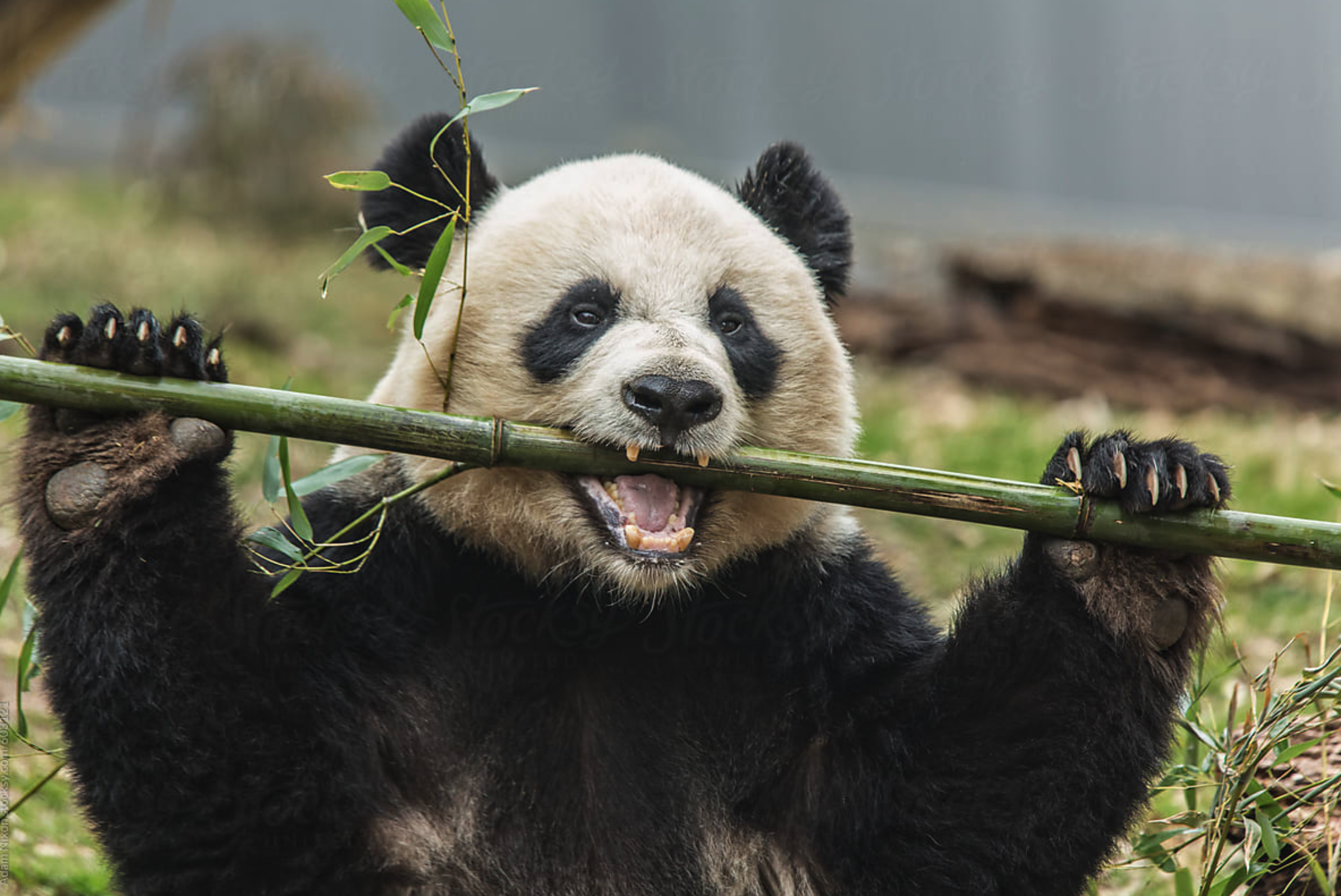
Have you ever seen a panda in a zoo or on TV?
Yes
No
Do you think animals like pandas need protection?
Yes
No
What might hurt a panda’s habitat?
A. Planting trees
B. Deforestation
C. Building schools
D. Feeding animals
Why do some animals become endangered?
A. They migrate too much
B. They face threats
C. They live too long
D. They eat too much
Part A: Reading
Protecting the Giant Panda: A Conservation Success Story
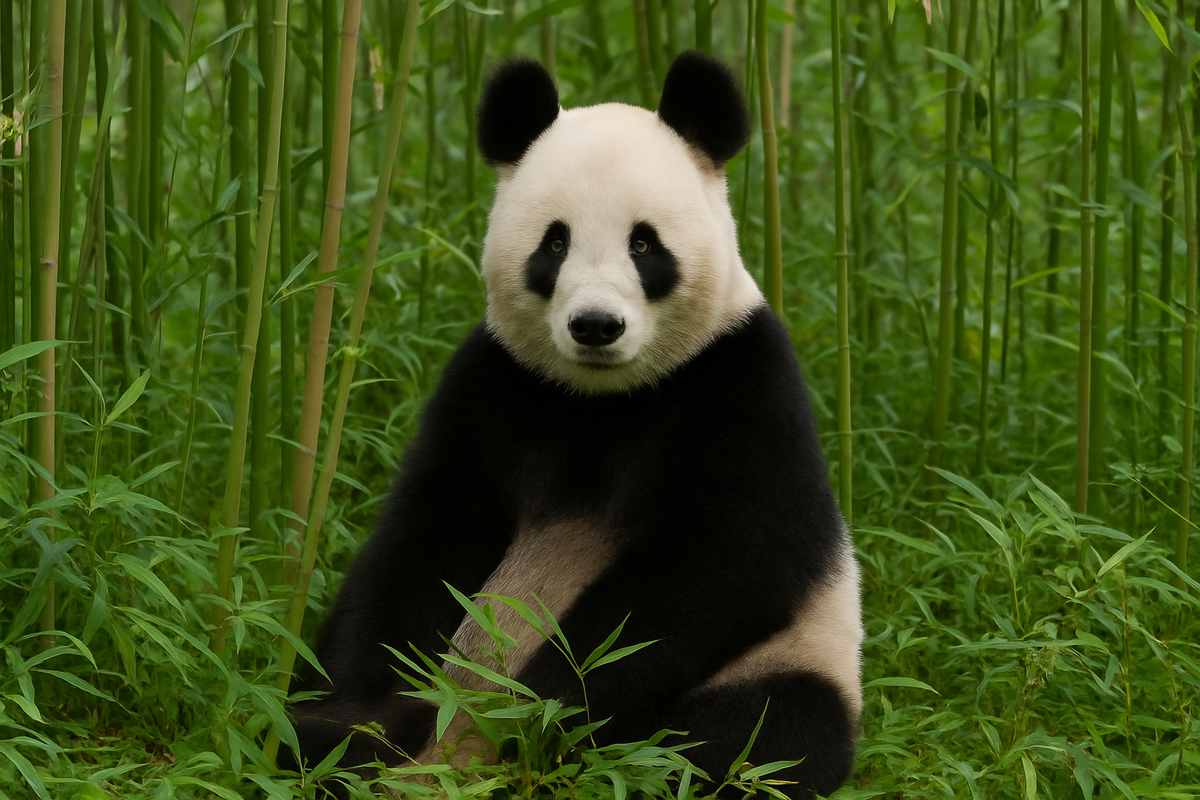
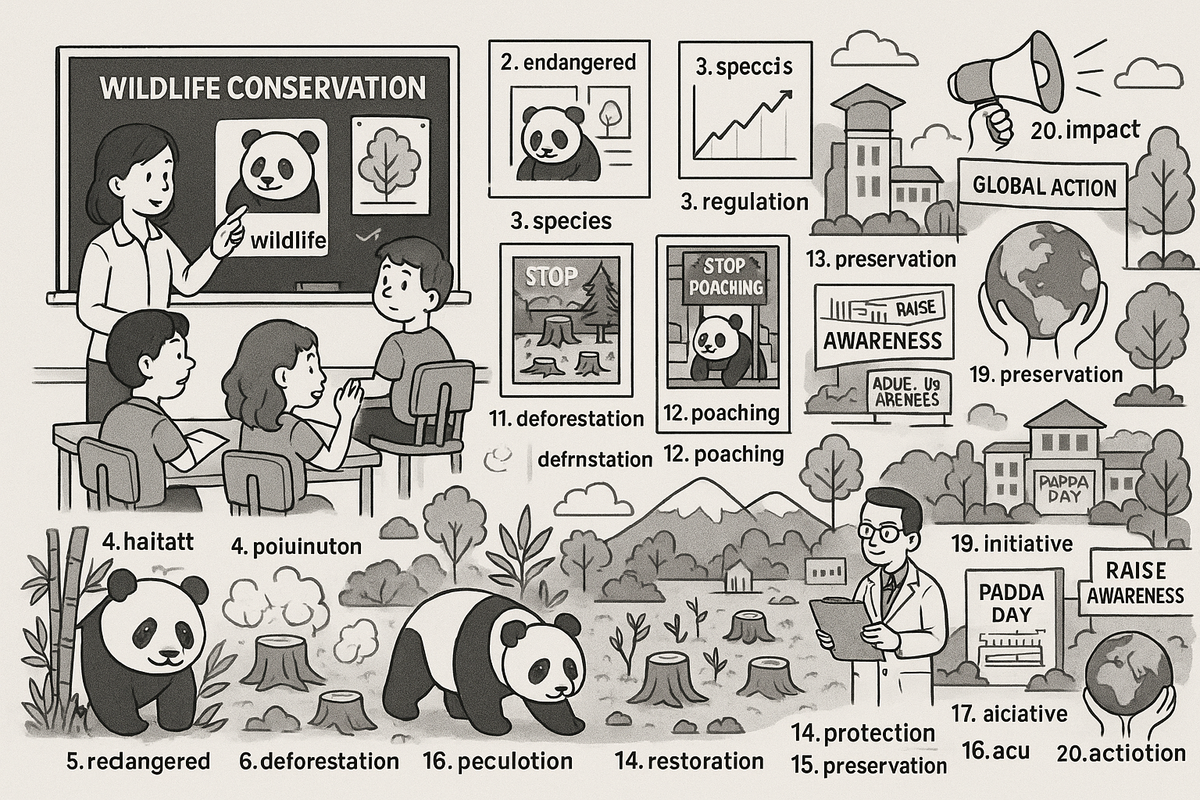
The giant panda, a beloved wildlife animal, is an endangered species that has faced serious threats for many years. Living in the bamboo forests of China, pandas depend on their habitat for food and shelter. However, deforestation has destroyed much of these forests, reducing the panda’s population and putting them at risk of extinction. This loss of habitat also harms the ecosystem, as pandas help spread seeds that support other plants and animals.
To save the pandas, global conservation efforts have grown. Many countries now have regulations to stop poaching, which is when people illegally hunt pandas for their fur. Organizations also work on the restoration of bamboo forests to rebuild the panda’s home. Rescue programs take injured pandas to special centers, where they are cared for until they are healthy again. These efforts are part of a larger plan for protection, ensuring pandas can live safely in the wild.
The reintroduction of pandas into the wildlife has been a big success. By moving pandas to protected areas, their population has slowly increased, helping the biodiversity of the forests. Scientists also study the panda’s migration patterns to make sure they have enough food and space. Initiatives like panda day events raise awareness, encouraging people to support conservation. These programs show how important it is to protect all species.
However, challenges remain. The work of preservation is ongoing, as new threats like climate change appear. More global action is needed to keep the panda’s population growing. The success with pandas has had a big impact, showing how people can work together to save endangered animals and prevent extinction. This story is a great example for future wildlife projects.
Xem thêm: Từ vựng IELTS Reading theo chủ đề thường gặp
Part B: Vocabulary Boosting
Information | Picture |
|---|---|
wildlife (noun) - động vật hoang dã The giant panda is a wildlife animal. (Gấu trúc khổng lồ là một loài động vật hoang dã.) |  |
endangered (adjective) - bị đe dọa The giant panda is an endangered species. (Gấu trúc khổng lồ là một loài bị đe dọa.) | 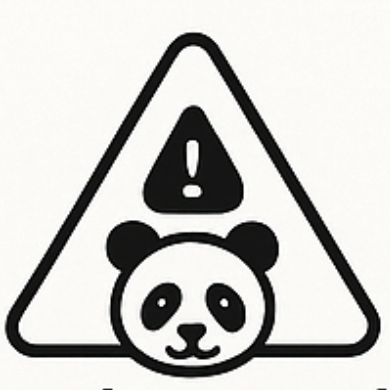 |
species (noun) - loài Pandas are a species that needs protection. (Gấu trúc là một loài cần được bảo vệ.) | 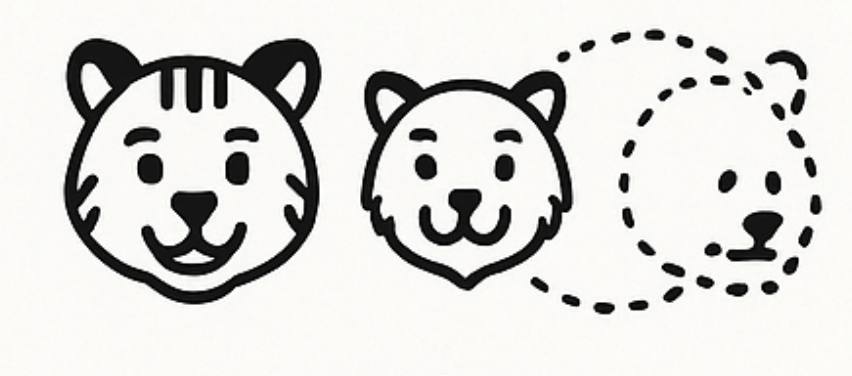 |
threat (noun) - mối đe dọa Deforestation is a threat to pandas. (Phá rừng là một mối đe dọa đối với gấu trúc.) |  |
habitat (noun) - môi trường sống Pandas live in a habitat of bamboo forests. (Gấu trúc sống trong môi trường sống là rừng tre.) |  |
deforestation (noun) - phá rừng Deforestation destroys panda habitats. (Phá rừng phá hủy môi trường sống của gấu trúc.) |  |
population (noun) - dân số The panda population is slowly increasing. (Dân số gấu trúc đang tăng lên từ từ.) |  |
extinction (noun) - sự tuyệt chủng Pandas were at risk of extinction. (Gấu trúc từng có nguy cơ tuyệt chủng.) |  |
ecosystem (noun) - hệ sinh thái Pandas help the ecosystem by spreading seeds. (Gấu trúc giúp hệ sinh thái bằng cách phát tán hạt.) |  |
conservation (noun) - bảo tồn Conservation efforts are saving pandas. (Các nỗ lực bảo tồn đang cứu gấu trúc.) |  |
regulation (noun) - quy định Regulations stop poaching of pandas. (Quy định ngăn chặn việc săn trộm gấu trúc.) |  |
poaching (noun) - săn trộm Poaching is a big problem for pandas. (Săn trộm là một vấn đề lớn đối với gấu trúc.) |  |
restoration (noun) - phục hồi Restoration of forests helps pandas. (Phục hồi rừng giúp gấu trúc.) |  |
rescue (noun) - cứu hộ Rescue programs care for injured pandas. (Các chương trình cứu hộ chăm sóc gấu trúc bị thương.) |  |
protection (noun) - sự bảo vệ Protection ensures pandas can live safely. (Sự bảo vệ đảm bảo gấu trúc có thể sống an toàn.) |  |
reintroduction (noun) - tái thả Reintroduction brings pandas back to the wild. (Tái thả đưa gấu trúc trở lại tự nhiên.) |  |
biodiversity (noun) - đa dạng sinh học Panda conservation helps forest biodiversity. (Bảo tồn gấu trúc giúp đa dạng sinh học của rừng.) |  |
initiative (noun) - sáng kiến Panda day is an initiative to raise awareness. (Ngày gấu trúc là một sáng kiến để nâng cao nhận thức.) |  |
awareness (noun) - sự nhận thức Awareness helps people support panda conservation. (Sự nhận thức giúp mọi người ủng hộ bảo tồn gấu trúc.) |  |
preservation (noun) - sự bảo tồn Preservation of pandas is an ongoing task. (Sự bảo tồn gấu trúc là một nhiệm vụ liên tục.) |  |
Xem thêm: Gợi ý 8 cuốn sách học IELTS Reading từ cơ bản đến nâng cao
Part C: Vocabulary Exercise
Exercise 1:Match each word to its correct definition. Write the letter (A-J) next to the word.
Words: | Definitions: |
|---|---|
| A. The variety of life in a habitat, like plants and animals. |
Exercise 2: Read the passage below about protecting the sea turtle. Decide if each statement below is True (T), False (F), or Not Given (NG). Write T, F, or NG next to each statement.
Saving the Sea Turtle: A Race Against Time
Sea turtles are a unique species of wildlife that have lived in Earth’s oceans for over 100 million years. But today, they are endangered due to several threats, including pollution, poaching, and the loss of nesting habitats. Coastal deforestation and human activities have reduced the number of safe beaches where sea turtles can lay eggs, leading to a drop in their population.
To stop the slide toward extinction, conservation groups have launched many initiatives. These include beach patrols, rescue missions for injured turtles, and regulations to protect nesting areas. Some projects also focus on the restoration of natural beaches and removing plastic waste that harms the marine ecosystem.
One success has been the reintroduction of turtles into protected waters, which has helped improve local biodiversity. Raising awareness in coastal communities has led to better protection of turtle nests. But preservation work continues, as climate change still affects the temperature of sand, which determines turtle hatchlings’ gender.
Sea turtles have lived in the ocean for millions of years.
Poaching and pollution are threats to sea turtles.
Deforestation in mountain areas affects turtle populations.
Conservation groups have created rescue programs for sea turtles.
Sea turtles are not considered an endangered species anymore.
Restoration projects focus on cleaning natural beaches.
Reintroduction of turtles has harmed marine biodiversity.
Community awareness helps protect turtle nesting areas.
Exercise 3A: Guessing the Meaning of New Vocabulary
Reading Passage: Enforcing Laws to Protect African Elephants
African elephants are an endangered species, facing serious threats from poaching for their ivory tusks. This illegal activity destroys their habitat and reduces their population, putting the ecosystem at risk. In many African countries, new regulations have been created to stop poaching and promote wildlife protection. One important law makes it illegal to trade ivory, aiming to enforce strict rules against hunters. Governments also work with rangers who patrol forests to catch poachers and ensure the safety of elephants.
To support these efforts, conservation groups raise awareness about the danger of extinction. They educate people about the biodiversity of African forests and the need for preservation. Some countries have started initiatives to help elephants, such as moving them to safer areas through reintroduction programs. These programs also include monitoring the elephants’ migration patterns to keep them safe. However, enforcing laws can be hard because poachers often break the rules in secret.
Despite challenges, law enforcement has saved many elephants. Some rescue centers care for injured elephants and return them to the wild. These efforts show how regulation and global action can make a difference in protecting wildlife.
For each underlined word, choose the option that best matches its meaning based on how it is used in the text.
Law against ivory trade means:
a) A game rule
b) A school rule
c) A government rule
d) A family ruleEnforce these laws means:
a) To break the rules
b) To make sure rules are followed
c) To change the rules
d) To ignore the rulesRangers who patrol forests are:
a) Teachers in schools
b) People protecting wildlife
c) Farmers growing crops
d) Drivers on roadsSafety of elephants refers to:
a) Keeping them safe from harm
b) Feeding them more food
c) Teaching them to run
d) Making them famousMonitoring migration patterns means:
a) Feeding the elephants
b) Watching their movements
c) Building new homes
d) Selling their tusks
Exercise 3B: Answer the following questions in complete sentences based on the passage.
What is one threat to African elephants mentioned in the passage?
How do regulations help protect elephants?
What do rangers do to help elephants?
Why do conservation groups raise awareness?
What is one way initiatives support elephants?
How do rescue centers help elephants?
What does monitoring migration patterns do for elephants?
Why is enforcing laws difficult according to the passage?
Exercise 4: Answer the following questions based on the reading passage in Part A: Protecting the Giant Panda: A Conservation Success Story. Choose the best option (A, B, C, or D) for each question.
What is a synonym for "threats" as used in the passage?
A) Solutions
B) Dangers
C) Benefits
D) PlansWhat is a synonym for "preservation" in the context of the passage?
A) Destruction
B) Protection
C) Damage
D) ChangeIn the sentence "This loss of habitat also harms the ecosystem," what does "ecosystem" refer to?
A) A group of pandas
B) A system of living things and their environment
C) A bamboo forest only
D) A conservation programIn the phrase "initiatives like panda day events," what does "initiatives" refer to?
A) Problems in conservation
B) Plans to help pandas
C) Types of forests
D) Laws against poachingWhy are pandas at risk of extinction?
A) Because they eat too much
B) Because of deforestation
C) Because they migrate too often
D) Because they are not protectedWhat does the reintroduction of pandas achieve?
A) It reduces their population
B) It brings them back to the wild
C) It stops their migration
D) It ends all conservation effortsHow do rescue programs help pandas?
A) They care for injured pandas
B) They build new forests
C) They stop all poaching
D) They feed pandas more bambooWhich statement below is TRUE according to the passage?
A) Pandas are no longer endangered.
B) Deforestation helps pandas survive.
C) Conservation efforts have increased panda populations.
D) Panda day events cause extinction.
Part D: Key and Explanation
Exercise 1: Matching Definitions
habitat - B (The natural home where an animal lives.) - môi trường sống
endangered - E (In danger of disappearing forever.) - bị đe dọa
species - C (A group of animals or plants that are similar, like pandas.) - loài
biodiversity - A (The variety of life in a habitat, like plants and animals.) - đa dạng sinh học
preservation - G (The act of keeping something safe for the future.) - sự bảo tồn
ecosystem - I (A system of living things and their environment working together.) - hệ sinh thái
poaching - F (Illegal hunting of animals.) - săn trộm
restoration - H (Fixing or rebuilding a damaged natural area.) - phục hồi
conservation - J (Protecting animals and nature from harm.) - bảo tồn
regulation - D (Rules made to control or protect something.) - quy định
Exercise 2: True/False
True (Đúng)
Đoạn văn đề cập rằng rùa biển là một loài đặc biệt, đã sống trên đại dương của trái đất hơn 100 triệu năm ("Sea turtles... have lived in Earth’s oceans for over 100 million years.").
Thông tin này khớp với nội dung trong câu hỏi 1: "sea turtles", "for millions of years".
Đáp án là Đúng (True).
True (Đúng)
Bài viết nói rõ rùa biển đang bị đe dọa bởi nhiều yếu tố như ô nhiễm và săn trộm ("they are endangered due to several threats, including pollution, poaching...").
Thông tin trùng khớp với câu hỏi về "Poaching and pollution".
Đáp án là Đúng (True).
False (Sai)
Đoạn văn đề cập đến việc phá rừng ven biển ("Coastal deforestation") chứ không phải phá rừng ở vùng núi.
Câu hỏi nhắc đến “mountain areas”, nên không đúng với thông tin gốc.
Đáp án là Sai (False).
True (Đúng)
Bài viết có nói rằng có các chương trình cứu hộ rùa biển bị thương ("rescue missions for injured turtles...").
Thông tin này khớp hoàn toàn với câu hỏi.
Đáp án là Đúng (True).
False (Sai)
Trong bài viết, rùa biển được mô tả là “bị đe dọa” ("they are endangered") – nghĩa là vẫn còn trong danh sách các loài bị đe dọa.
Câu hỏi nói rùa biển không còn bị đe dọa, trái ngược hoàn toàn với nội dung.
Đáp án là Sai (False).
True (Đúng)
Bài viết nói về việc phục hồi các bãi biển tự nhiên và loại bỏ rác thải nhựa ("restoration of natural beaches and removing plastic waste..."), phù hợp với câu hỏi.
Đáp án là Đúng (True).
False (Sai)
Câu hỏi nói việc tái thả rùa làm hại đa dạng sinh học, trong khi đoạn văn nói điều ngược lại: "Reintroduction... has helped improve local biodiversity."
Đáp án là Sai (False).
True (Đúng)
Đoạn văn cho biết việc nâng cao nhận thức trong cộng đồng ven biển đã giúp bảo vệ tổ rùa tốt hơn ("Raising awareness in coastal communities has led to better protection...").
Nội dung này hoàn toàn đúng với câu hỏi.
Đáp án là Đúng (True).
Exercise 3A: Guessing the Meaning of New Vocabulary
law - c) A government rule (Luật)
enforce - b) To make sure rules are followed (Thi hành)
rangers - b) People protecting wildlife (Nhân viên bảo vệ)
safety - a) Keeping them safe from harm (Sự an toàn)
monitoring - b) Watching their movements (Giám sát)
Exercise 3B: Short Answer Questions
What is one threat to African elephants mentioned in the passage?
Key: One threat to African elephants is poaching for their ivory tusks.
Vietnamese Explanation: Đáp án đúng là săn trộm để lấy ngà voi, vì đoạn văn đề cập rằng voi châu Phi bị đe dọa bởi săn trộm vì ngà của chúng. Các mối đe dọa khác như ô nhiễm hoặc mất nước không được nhắc đến trong đoạn văn.
How do regulations help protect elephants?
Key: Regulations help protect elephants by making ivory trade illegal.
Vietnamese Explanation: Đáp án đúng là quy định giúp bảo vệ voi bằng cách cấm buôn bán ngà voi, vì đoạn văn nói rằng quy định này ngăn chặn hành vi bất hợp pháp. Các cách khác như xây dựng công viên hoặc cấm săn bắn nói chung không được đề cập cụ thể.
What do rangers do to help elephants?
Key: Rangers patrol forests to catch poachers and ensure the safety of elephants.
Vietnamese Explanation: Đáp án đúng là nhân viên bảo vệ tuần tra rừng để bắt săn trộm và đảm bảo an toàn cho voi, vì đoạn văn nói rõ vai trò của họ trong việc bảo vệ voi. Các hành động như nuôi voi hoặc giáo dục dân chúng không được nhắc đến.
Why do conservation groups raise awareness?
Key: Conservation groups raise awareness to educate people about extinction dangers.
Vietnamese Explanation: Đáp án đúng là để giáo dục mọi người về nguy cơ tuyệt chủng, vì đoạn văn nói rằng các nhóm bảo tồn nâng cao nhận thức về mối nguy này. Các lý do khác như kiếm tiền hoặc tổ chức sự kiện không được đề cập.
What is one way initiatives support elephants?
Key: One way initiatives support elephants is by moving them to safer areas.
Vietnamese Explanation: Đáp án đúng là di chuyển voi đến khu vực an toàn hơn, vì đoạn văn đề cập rằng các sáng kiến bao gồm việc tái thả voi vào nơi an toàn. Các cách khác như xây dựng hàng rào hoặc cung cấp thức ăn không được nhắc đến.
How do rescue centers help elephants?
Key: Rescue centers care for injured elephants and return them to the wild.
Vietnamese Explanation: Đáp án đúng là trung tâm cứu hộ chăm sóc voi bị thương và thả chúng về tự nhiên, vì đoạn văn nói rõ rằng các trung tâm này giúp voi phục hồi và trở lại môi trường sống. Các cách khác như huấn luyện voi hoặc giữ voi mãi mãi không được đề cập.
What does monitoring migration patterns do for elephants?
Key: Monitoring migration patterns keeps elephants safe by watching their movements.
Vietnamese Explanation: Đáp án đúng là giữ voi an toàn bằng cách theo dõi di chuyển của chúng, vì đoạn văn nói rằng giám sát mô hình di cư giúp bảo vệ voi. Các mục đích khác như tìm thức ăn hoặc xây nhà cho voi không được nhắc đến.
Why is enforcing laws difficult according to the passage?
Key: Enforcing laws is difficult because poachers often break rules in secret.
Vietnamese Explanation: Đáp án đúng là vì săn trộm thường vi phạm luật một cách bí mật, như đoạn văn đã đề cập. Các lý do khác như thiếu tiền hoặc không có luật không được đề cập trong đoạn văn.
Exercise 4: Comprehension Questions Based on Part A
What is a synonym for "threats" as used in the passage?
Key: B) Dangers
Vietnamese Explanation: Đáp án đúng là "Dangers" (nguy hiểm), vì "threats" trong đoạn văn nói về những mối nguy như phá rừng đối với gấu trúc, có nghĩa là nguy hiểm. "Solutions" (giải pháp) và "Benefits" (lợi ích) là trái ngược, còn "Plans" (kế hoạch) không phù hợp với ngữ cảnh.
What is a synonym for "preservation" in the context of the passage?
Key: B) Protection
Vietnamese Explanation: Đáp án đúng là "Protection" (bảo vệ), vì "preservation" trong đoạn văn nghĩa là giữ gấu trúc an toàn trước các mối đe dọa, tương ứng với bảo vệ. "Destruction" (phá hủy) và "Damage" (hư hại) là trái ngược, còn "Change" (thay đổi) không phù hợp.
In the sentence "This loss of habitat also harms the ecosystem," what does "ecosystem" refer to?
Key: B) A system of living things and their environment
Vietnamese Explanation: Đáp án đúng là "A system of living things and their environment" (hệ thống các sinh vật và môi trường của chúng), vì "ecosystem" trong đoạn văn ám chỉ hệ sinh thái mà gấu trúc hỗ trợ. "A group of pandas" (nhóm gấu trúc) và "A bamboo forest only" (chỉ rừng tre) quá hẹp, còn "A conservation program" (chương trình bảo tồn) không đúng.
In the phrase "initiatives like panda day events," what does "initiatives" refer to?
Key: B) Plans to help pandas
Vietnamese Explanation: Đáp án đúng là "Plans to help pandas" (kế hoạch giúp gấu trúc), vì "initiatives" trong đoạn văn ám chỉ các sáng kiến như ngày gấu trúc để nâng cao nhận thức. "Problems in conservation" (vấn đề trong bảo tồn) và "Types of forests" (loại rừng) không đúng, còn "Laws against poaching" (luật chống săn trộm) không được nhắc đến cụ thể.
Why are pandas at risk of extinction?
Key: B) Because of deforestation
Vietnamese Explanation: Đáp án đúng là "Because of deforestation" (vì phá rừng), vì đoạn văn nói rằng phá rừng phá hủy môi trường sống của gấu trúc, dẫn đến nguy cơ tuyệt chủng. "Because they eat too much" (ăn quá nhiều) và "Because they migrate too often" (di cư quá thường xuyên) không đúng, còn "Because they are not protected" (không được bảo vệ) là sai vì có các nỗ lực bảo vệ.
What does the reintroduction of pandas achieve?
Key: B) It brings them back to the wild
Vietnamese Explanation: Đáp án đúng là "It brings them back to the wild" (đưa chúng trở lại tự nhiên), vì đoạn văn nói rằng tái thả gấu trúc là đưa chúng về môi trường hoang dã. "It reduces their population" (giảm dân số) và "It stops their migration" (ngăn di cư) là sai, còn "It ends all conservation efforts" (kết thúc nỗ lực bảo tồn) không đúng.
How do rescue programs help pandas?
Key: A) They care for injured pandas
Vietnamese Explanation: Đáp án đúng là "They care for injured pandas" (chăm sóc gấu trúc bị thương), vì đoạn văn nói rằng các chương trình cứu hộ chăm sóc gấu trúc bị thương. "They build new forests" (xây rừng mới) và "They stop all poaching" (ngăn săn trộm) không được đề cập, còn "They feed pandas more bamboo" (cho ăn nhiều tre hơn) không chính xác.
Which statement below is TRUE according to the passage?
Key: C) Conservation efforts have increased panda populations.
Vietnamese Explanation: Đáp án đúng là "Conservation efforts have increased panda populations" (nỗ lực bảo tồn đã tăng dân số gấu trúc), vì đoạn văn nói rằng dân số gấu trúc tăng nhờ các nỗ lực bảo tồn. "Pandas are no longer endangered" (không còn bị đe dọa) là sai vì chúng vẫn là loài bị đe dọa. "Deforestation helps pandas survive" (phá rừng giúp gấu trúc sống sót) và "Panda day events cause extinction" (ngày gấu trúc gây tuyệt chủng) là sai vì không đúng với nội dung.
Unit 9 đã mang đến cái nhìn sâu sắc về Bảo tồn Động vật Hoang dã, đặc biệt là câu chuyện thành công trong việc bảo vệ gấu trúc khổng lồ. Bạn đã học được các từ vựng quan trọng như bảo tồn, tái thả và đa dạng sinh học, giúp hiểu rõ hơn về cách bảo vệ động vật hoang dã. Đồng thời, đơn vị nhấn mạnh tầm quan trọng của nhận thức và hành động toàn cầu. Những kiến thức này sẽ hỗ trợ bạn trong việc đọc hiểu các đoạn văn IELTS về bảo tồn một cách hiệu quả.
Người học có thể tìm đọc thêm về các phương pháp đọc khác tại website của ZIM để nâng cao kỹ năng đọc hiểu của bản thân và chuẩn bị tốt cho các kỳ thi.
- Học từ vựng IELTS Reading theo Conceptual Learning
- Học từ vựng IELTS Reading theo Conceptual Learning: Các khám phá và phát hiện khảo cổ
- Học từ vựng IELTS Reading theo Conceptual Learning: Giá trị Lịch Sử và Văn Hóa từ khảo cổ
- Học từ vựng IELTS Reading theo Conceptual Learning: Công nghệ trong khảo cổ
- Từ vựng IELTS Reading General Training Section 1 - Chủ đề: Sử dụng nước
- Từ vựng IELTS Reading General Training Section 1 - Chủ đề: Tái chế rác thải
- Từ vựng IELTS Reading General Training Section 1 - Chủ đề: Phương tiện công cộng
- Từ vựng IELTS Reading General Training Section 1 - Chủ đề: Công viên địa phương
- Từ vựng IELTS Reading General Training Section 1 - Chủ đề: Các khoá học cho người lớn
- Từ vựng IELTS Reading General Training Section 1 - Chủ đề: Dịch vụ thư viện
- Từ vựng IELTS Reading General Training Section 1 - Chủ đề: Hoạt động tình nguyện
Tham vấn chuyên môn
Tôi đã có gần 3 năm kinh nghiệm giảng dạy IELTS tại ZIM, với phương châm giảng dạy dựa trên việc phát triển toàn diện năng lực ngôn ngữ và chiến lược làm bài thi thông qua các phương pháp giảng dạy theo khoa học. Điều này không chỉ có thể giúp học viên đạt kết quả vượt trội trong kỳ thi, mà còn tạo nền tảng vững chắc cho việc sử dụng ngôn ngữ hiệu quả trong đời sống, công việc và học tập trong tương lai. Ngoài ra, tôi còn tích cực tham gia vào các dự án học thuật quan trọng tại ZIM, đặc biệt là công tác kiểm duyệt và đảm bảo chất lượng nội dung các bài viết trên nền tảng website.
Bình luận - Hỏi đáp